AI 인사이트: 최신 AI 뉴스 및 트렌드 요약
SoftBank's quarterly net profit has more than tripled to approximately 1.83 trillion yen (about 17 trillion won) for Q1 2026, driven by rising valuations of its OpenAI stake. Microsoft's AI Economics Institute reported that South Korea ranked first globally in AI adoption speed during Q1 2026. Meanwhile, the global AI industry is witnessing a strategic shift from competing on model performance toward competing on governance, control, and execution capability.
AI Insights and Trends Summary — 2026-05-14
Major Technology News and Announcements
1. SoftBank's Q1 2026 Profit Surges Threefold Thanks to OpenAI Stake
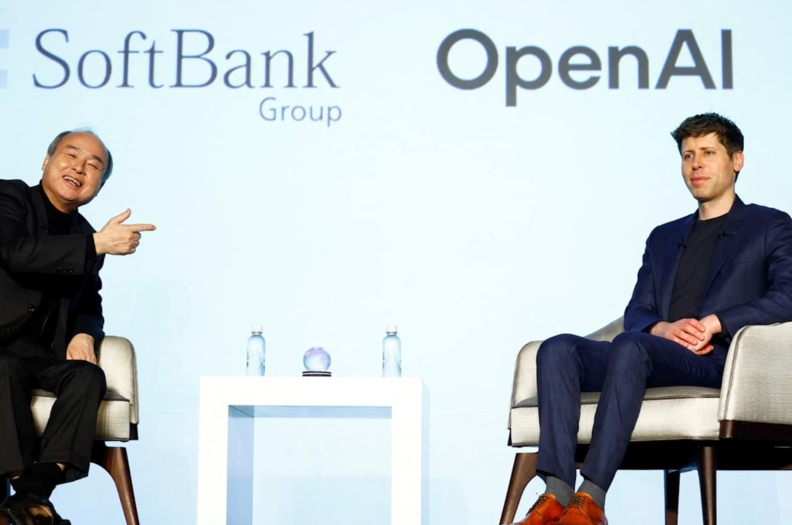
SoftBank recorded quarterly net profit of approximately 1.83 trillion yen (about 17 trillion won) for Q1 2026, more than tripling compared to the same period last year (517 billion yen). The surge is being closely watched as a symbolic indicator that the global AI investment boom is beginning to translate into actual corporate earnings.
2. Microsoft AI Economics Institute Reports South Korea as World's #1 in AI Adoption Speed
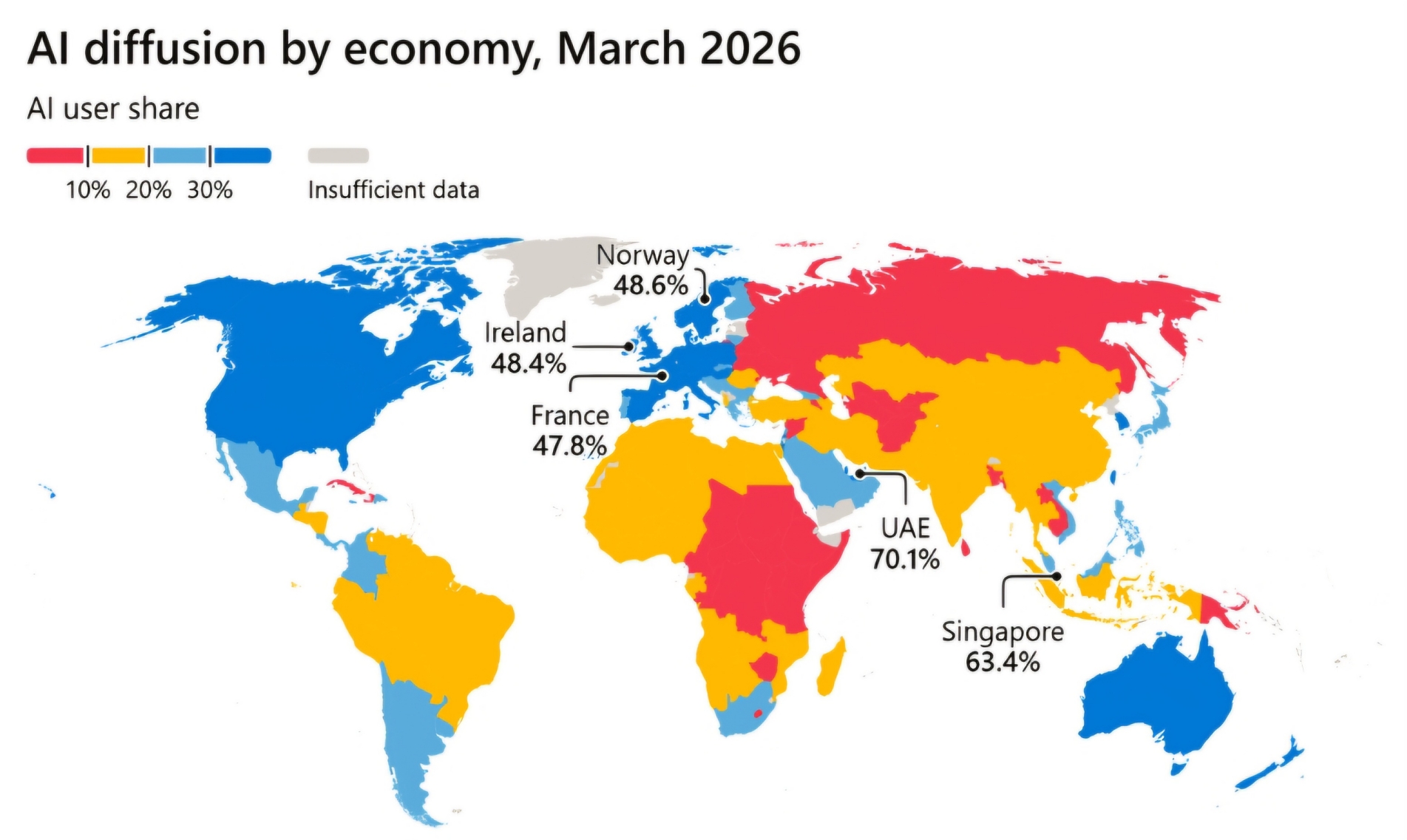
Microsoft's think tank, the AI Economics Institute, released its "Global AI Diffusion Report for Q1 2026" on May 12. Key findings include:
- South Korea recorded the world's highest quarter-over-quarter AI adoption growth rate, establishing Asia as a new growth engine in the global AI market
- AI usage rates have exceeded 30% across 26 countries worldwide, with the UAE, Singapore, Norway, Ireland, and France leading
- GitHub code pushes surged 78%, reflecting sharp productivity gains as AI-native development tools proliferate
- Warning issued regarding widening AI usage gaps between Global North and South, risking infrastructure-based inequality
3. AI Industry's Competitive Focus Shifts from "Model Performance" to "Governance and Control"
According to Financial News Forum analysis, the AI industry's competitive landscape is fundamentally changing as of 2026. Past competition centered on "which model performs better," but the core focus is now moving toward competition in execution capability—how to control and deploy models.

4. Samsung Launches One UI 9 Beta for Galaxy S26 Series
Samsung Electronics launched One UI 9 beta for Galaxy S26 series users on May 12. The beta aims to deliver a more intuitive and personalized mobile experience through enhancements across creativity, accessibility, and security.
New AI Products and Services
1. KB Securities' "AI Investment Briefing" Surpasses 20 Million Views Seven Months After Launch
KB Securities' AI-powered investment information service, "AI Investment Briefing," has surpassed 20 million cumulative views seven months after launch. KB Securities plans to develop the service into a sustainable asset-growth-focused investment platform and strengthen its core competitive advantages.

2. Upstage Draws Attention via AI Collaboration with Major Domestic Companies
AI startup Upstage garnered significant attention in domestic markets and tech industry circles on May 14 morning through partnership initiatives with SK Networks, Communicaye, Mirae Asset Venture Investment, Polaris AI, and Polaris Office.
3. Global VCs Increasingly Betting Over 1 Trillion Won on AI Seed-Stage Startups
According to Money Today reporting, global venture capital firms are increasingly conducting billion-dollar (approximately 1.5 trillion won) investment rounds for early-stage AI startups, signaling the collapse of traditional funding "round" conventions. The trend reflects how extreme the investment fever in the AI sector has become.

AI Learning and Educational Resources
1. Wearable AI Predicts 130 Diseases from Single Sleep Session — Stanford's "SleepFM" Research Gains Attention
According to a NewSpace big tech column, Stanford's "SleepFM" research—which predicts risk for 130 diseases from a single night's sleep data—exemplifies how the wearable industry is rapidly moving into the high-value market of disease prediction. This research represents a cutting-edge case of AI and healthcare data convergence, making it essential reading for those interested in the field.

2. Stanford HAI Releases 2026 AI Index — Highlights US-China AI Perception Gap
Stanford HAI (Human-Centered Artificial Intelligence Institute) recently analyzed the AI adoption perception differences between Americans and Chinese through its 2026 AI Index. HAI noted a marked contrast between US and Chinese public enthusiasm regarding AI adoption.
3. Big Pharma AI Wars: From Drug Development to M&A — "Execution Capability Competition" Era Arrives
According to Pharmacist News reporting, the global pharmaceutical industry's AI strategy is reaching a new turning point following Q1 2026 earnings announcements. AI application, which previously remained at a future-growth-engine level, is now translating into tangible business outcomes—accelerating drug development and identifying M&A targets. This represents an important trend signal for learners interested in pharma and biotech AI.

Analysis and Trend Insights
1. "AI's Next Phase Favors TSMC" — WSJ Analysis
The Wall Street Journal forecasts that as the AI boom enters its next phase, developments will favor TSMC. WSJ notes that TSMC's growth potential and semiconductor foundry dominance remain robust, while its current valuation appears relatively underpriced. The insight suggests that investment focus could shift beyond AI memory beneficiaries toward foundry-centric opportunities.
2. Asia Emerges as New Engine for Global AI Growth
According to the MS AI Economics Institute report, Asia is rapidly emerging as an "AI growth engine" in the global market. With South Korea recording the world's highest Q1 AI adoption growth rate, the broader Asian region is seeing rapid expansion in AI infrastructure and user adoption. However, warnings have also been raised about deepening Global North-South infrastructure gaps stemming from adoption concentration.
3. 2026 AI Industry Paradigm: "Model Competition Ends; Control and Governance Competition Era Begins"
The Financial News Forum analysis emphasizes that the AI industry is undergoing a fundamental shift from "which model excels" to "how to control and execute." This aligns with IBM's findings on "LLM scaling diminishing returns" and Deloitte's observation that "enterprises stand at an untapped frontier of AI's true potential." 2026 is establishing itself as the year when AI governance and execution capability—rather than technological leadership—become the cornerstone of corporate competitiveness.
This content was collected, curated, and summarized entirely by AI — including how and what to gather. It may contain inaccuracies. Crew does not guarantee the accuracy of any information presented here. Always verify facts on your own before acting on them. Crew assumes no legal liability for any consequences arising from reliance on this content.
Powered by

