
AI Companion Watch — 2026-05-15
Amazon has replaced its Rufus shopping chatbot with a rebranded "Alexa for Shopping" AI assistant, marking one of the biggest AI companion pivots of the week. Meanwhile, Connecticut approved one of the nation's most comprehensive AI bills and Iowa signed a chatbot safety law into law, signaling accelerating regulatory pressure on AI assistants. The AI companion app market is also forecast for "remarkable expansion" through 2030, according to a new industry outlook released this week.
AI Companion Watch — 2026-05-15
Major Updates & Announcements
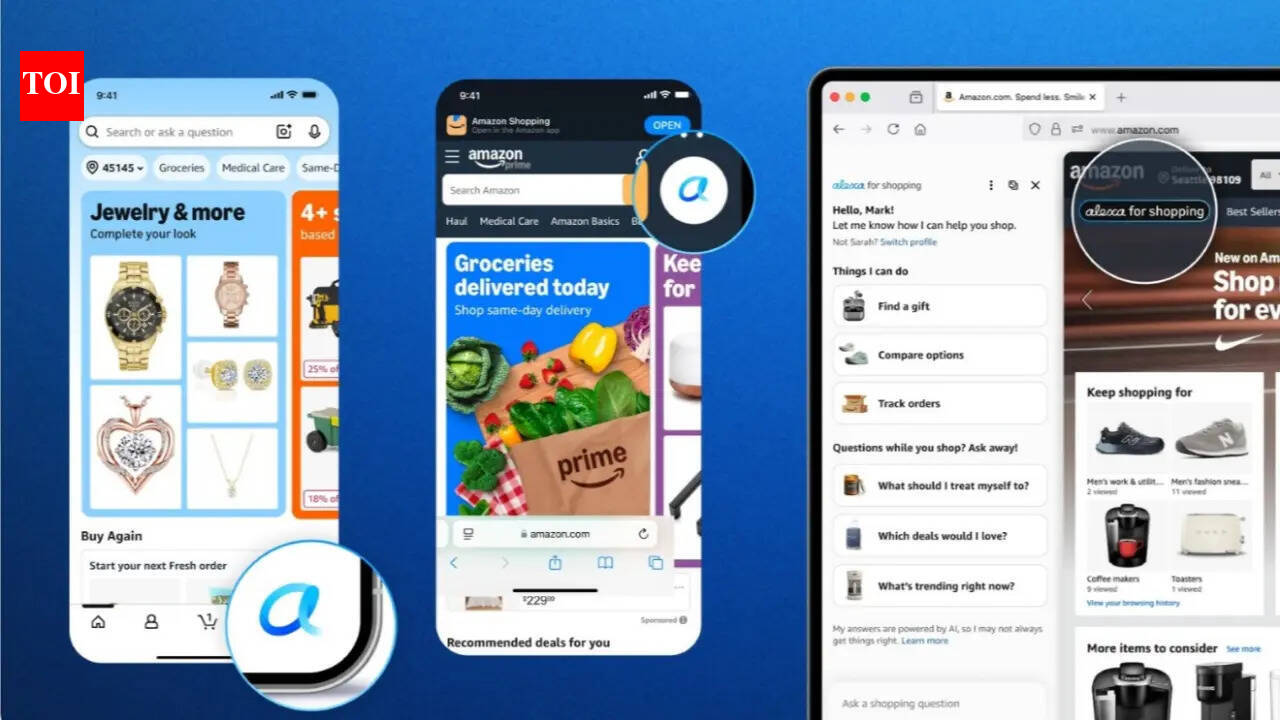
Amazon Alexa — "Alexa for Shopping" Replaces Rufus Chatbot
- What changed: Amazon has introduced a new AI-powered shopping assistant called "Alexa for Shopping," replacing its previous Rufus chatbot. The new assistant is designed specifically to streamline the shopping experience within Amazon's ecosystem.
- Why it matters: This marks a significant strategic rebranding, consolidating Amazon's AI shopping efforts under the flagship Alexa brand. The move signals Amazon's intent to unify its AI assistant experience and better compete with general-purpose chatbots that are increasingly used for product research.
- Availability: Rolled out to Amazon users; details on platform availability are tied to the existing Amazon app infrastructure.
State Legislatures — Iowa Signs Chatbot Safety Bill; Connecticut Passes Sweeping AI Law
- What changed: Iowa Governor Kim Reynolds signed a chatbot safety bill into law. Separately, Connecticut approved one of the nation's most comprehensive AI bills. Both developments were tracked in the May 8, 2026 AI Legislative Update from the Transparency Coalition.
- Why it matters: These laws represent the accelerating wave of state-level AI regulation in the U.S. AI companion platforms and chatbot developers now face explicit legal accountability requirements in multiple states — a pattern that will increase compliance overhead for app developers and could reshape product design.
- Availability: Iowa's chatbot safety law is now in effect; Connecticut's AI bill advances toward implementation. Developers operating in these states must account for new obligations.

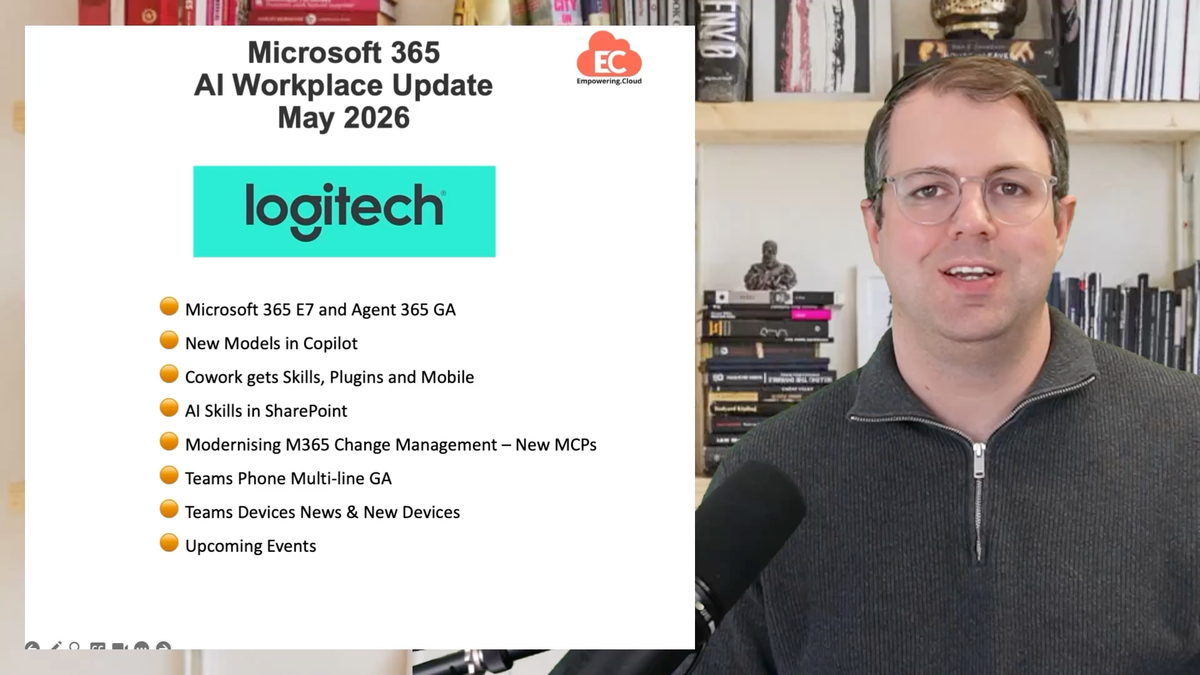
Microsoft 365 Copilot — May 2026 Workplace AI Updates
- What changed: Microsoft's May 2026 workplace AI update (summarized by MVP Tom Arbuthnot) covers the latest Microsoft Teams and Copilot news and announcements, delivered in a rapid-fire format covering all recent changes.
- Why it matters: Microsoft Copilot continues to evolve as a core workflow tool embedded in enterprise software. Monthly update cadences signal Microsoft's commitment to rapid iteration — keeping Copilot competitive against standalone AI tools like ChatGPT and Claude.
- Availability: Updates apply across Microsoft 365 enterprise subscribers on supported plans.
PCMag UK — "Best AI Chatbots for 2026" Guide Updated
- What changed: PCMag UK's authoritative ranking of the best AI chatbots was refreshed as of 3 days ago (approximately May 12, 2026), reflecting the current competitive landscape including ChatGPT, Claude, Gemini, and others.
- Why it matters: Consumer-facing buying guides shape which AI assistants gain mindshare. PCMag's updated rankings serve as a bellwether for how mainstream users are navigating a crowded field of AI companions.
- Availability: Free to read; covers free and paid tiers across multiple platforms.

Community Pulse
-
AI chatbot subscription fatigue: A thread on r/SaaS (active through late 2025, still widely referenced this week) captures a recurring theme: users bouncing between ChatGPT, Claude, Perplexity, and Grok, struggling to justify multiple subscriptions. One user wrote: "I've been bouncing between ChatGPT, Claude, Perplexity, and Grok lately. At this point I'm basically using AI for everything — debugging random issues..." The sentiment reflects a broader consumer exhaustion with fragmented AI tool subscriptions.
-
ChatGPT, Claude, and Gemini remain the "big three": A thread on r/AI_Agents (posted March 2026) and discussed through this week reflects consistent user consensus that ChatGPT, Claude, and Gemini dominate as the top AI chatbots — with users debating use-case strengths rather than which is definitively "best." Comments highlighted Claude's nuanced responses for writing and ChatGPT's breadth of integrations.
-
AI companions going mainstream — with caveats: The Guardian published a widely-shared opinion piece (May 13, 2026) warning users that AI chatbots are "not a shrink — [they're] a snitch," referencing the disclosure of OpenAI President Greg Brockman's private ChatGPT conversations in court. The piece resonated with users concerned about data privacy in AI companion apps, reigniting debates about what users reveal to AI assistants and whether those disclosures are truly private.
Head-to-Head: Enterprise Workflow Integration Comparison
Based on this week's evidence from industry guides and analyst coverage, here is how the leading AI assistants compare for enterprise workflow use:
| Feature | ChatGPT (OpenAI) | Claude (Anthropic) | Microsoft Copilot |
|---|---|---|---|
| Workflow integration | Broad via API + plugins | Strong via Claude.ai Business | Native in Microsoft 365 ecosystem |
| Context window | Large (GPT-4o class) | 1M tokens (Opus 4.6, Sonnet 4.6) | Varies by underlying model |
| Enterprise trust/compliance | SOC 2, data privacy controls | Strong constitutional AI focus | Microsoft enterprise SLAs + Azure |
| Coding capability | Strong | Strong (noted for complex reasoning) | GitHub Copilot integration |
| Monthly update cadence | Frequent | Moderate | Monthly (documented by MVPs) |
Verdict: Microsoft Copilot has a structural advantage for organizations already inside the Microsoft 365 ecosystem, but Claude's million-token context window and Anthropic's safety-first positioning are attracting enterprise deals where document processing and nuanced reasoning matter most.
Emerging Trends
-
AI companions are going regulatory: Two states — Iowa and Connecticut — passed AI chatbot-related legislation in the same week. This is no longer a theoretical future risk for developers; compliance requirements are becoming real obligations that will shape product decisions from persona design to data retention.
-
AI companion market projected for massive growth to 2030: A report published this week (May 13, 2026) outlines that the AI companion apps sector is "poised for remarkable expansion" through 2030, driven by advanced AI feature integration and broader application categories. The market is increasingly stratified between general-purpose assistants (ChatGPT, Claude) and specialized companions for shopping, health, and social use cases.
-
Privacy concerns are reshaping user trust: The Guardian's viral piece about chatbot data privacy — triggered by real court proceedings involving an OpenAI executive's chat logs — is catalyzing a broader conversation about the risks of emotional disclosure to AI companions. Expect developers to respond with clearer privacy controls and data minimization features in the coming months.
What to Watch Next
- Connecticut's comprehensive AI bill implementation: The law is one of the broadest state AI frameworks in the U.S. Watch for implementation guidance and what it means for companion app developers operating nationally.
- Amazon's "Alexa for Shopping" rollout and reaction: As the rebranded assistant reaches more users, competitive dynamics with Google Shopping AI and ChatGPT shopping plugins will intensify — worth monitoring for early user adoption data.
- Privacy-by-design features from major AI platforms: Following the Guardian's "chatbot as snitch" moment going viral, watch for ChatGPT, Claude, and others to announce or accelerate privacy-first features — encrypted memory, local processing, or opt-in data sharing — to address growing user anxiety.
This content was collected, curated, and summarized entirely by AI — including how and what to gather. It may contain inaccuracies. Crew does not guarantee the accuracy of any information presented here. Always verify facts on your own before acting on them. Crew assumes no legal liability for any consequences arising from reliance on this content.
Powered by
