
AI Ethics Watch — 2026-05-15
This week, Colorado's AI governance landscape is fracturing simultaneously on two fronts: a federal court has paused enforcement of the state's landmark AI Artificial Intelligence Act while lawmakers move to replace the existing bias audit law with a new transparency framework. Meanwhile, enterprises are grappling with a growing "shadow AI" crisis as employees deploy tools far ahead of corporate policy. The single biggest story is the mounting legal and legislative battle over AI hiring bias accountability, exemplified by the Mobley v. Workday case now testing whether vendor audits can be trusted.
AI Ethics Watch — 2026-05-15
Top Stories
Mobley v. Workday: The AI Hiring Bias Case CIOs Cannot Ignore
The Mobley v. Workday lawsuit is escalating into a landmark test for AI-driven hiring systems, centering on disputes over AI math, disparate impact, and whether third-party bias audits can be trusted. The case is forcing legal and technology leaders to confront fundamental questions: when an AI system screens candidates and produces discriminatory outcomes, who bears responsibility — the employer, the vendor, or the audit firm that certified the tool? The outcome could set precedent for how AI hiring compliance is structured across the country at a moment when state and local restrictions are multiplying faster than federal civil-rights frameworks can accommodate.

Colorado Moves to Replace AI Bias Audit Law With Transparency Framework
Colorado lawmakers are advancing a bill to repeal the state's first-in-the-nation AI antidiscrimination law and replace mandatory bias audit and risk impact assessment requirements with a streamlined transparency framework, according to a JDSupra analysis published this week. The shift comes just weeks after a federal court paused enforcement of Colorado's Artificial Intelligence Act (SB 24-205) on April 27, 2026, following a legal challenge. The Employer Report notes that while regulatory enforcement is on hold, employer risk is not — companies using AI in hiring, performance evaluation, or benefits decisions still face exposure under other statutes. The dual developments signal that Colorado's once-pioneering AI accountability regime is undergoing a fundamental restructuring under combined legal and legislative pressure.
Enterprise "Shadow AI" Crisis: Tools Outpace Policy
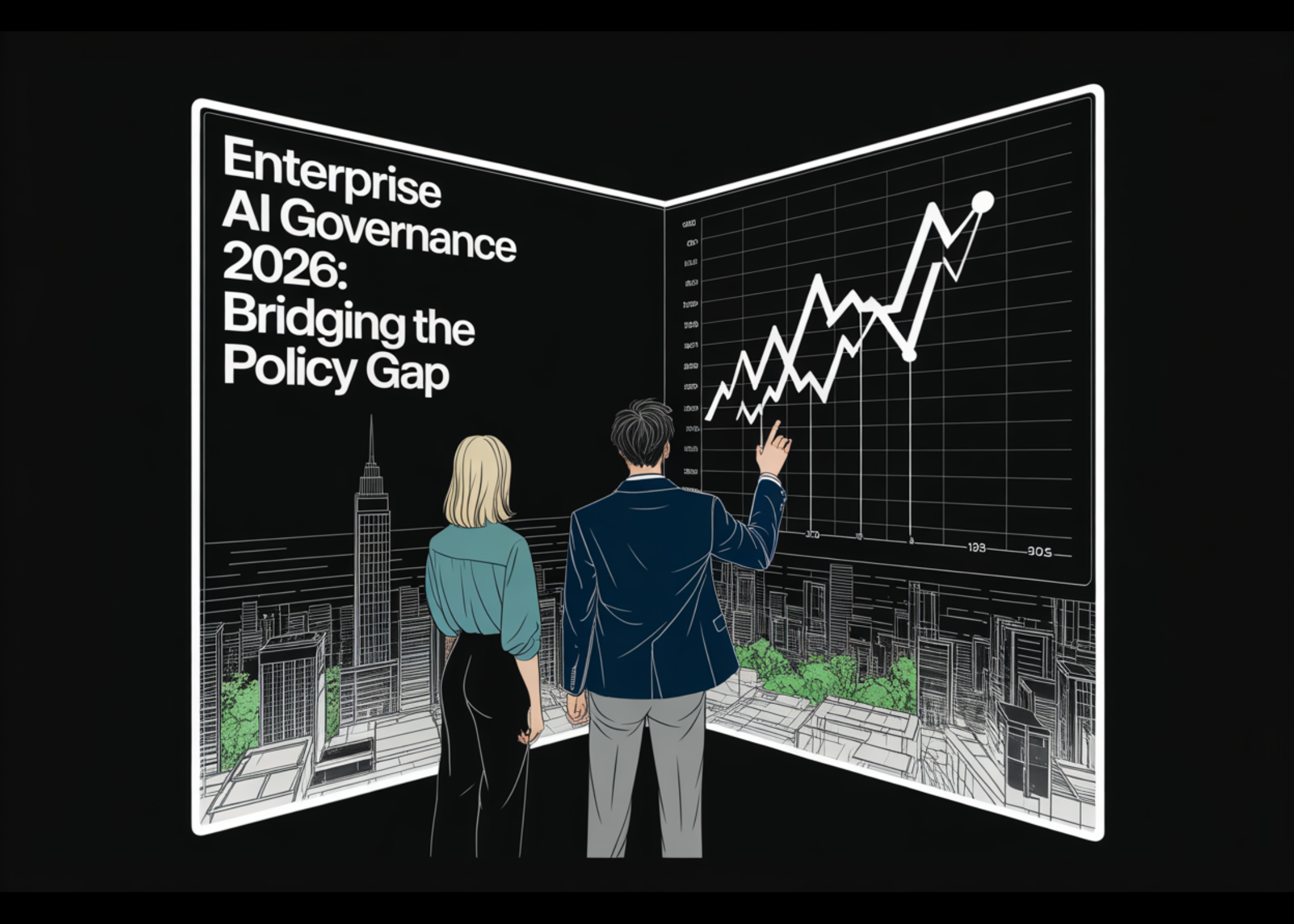
A new analysis from MarkTechPost (published May 13, 2026) finds that enterprise AI governance in 2026 is facing a structural crisis: the tools employees are actually using are operating well ahead of the policies meant to govern them. "Shadow AI" — unauthorized use of AI systems outside official channels — is now widespread inside organizations, creating accountability gaps that compliance teams are ill-equipped to address. The report highlights that governance frameworks built for slower adoption cycles are fundamentally mismatched with the pace of generative AI deployment, leaving data privacy, intellectual property, and liability questions unresolved at scale.
Harvard Business Review: Rethinking Responsible AI Around "Nightmares"
A widely-circulated Harvard Business Review piece published May 11, 2026 argues that the standard approach to responsible AI is "fundamentally broken" — too slow, too vague, and too difficult to operationalize in the generative AI era. The authors contend that instead of anchoring ethics programs to abstract values and policy documents, companies would be better served by explicitly mapping their worst-case scenarios — their "AI ethical nightmares" — and building governance backward from those concrete failure modes. The piece arrives as organizations are under pressure from regulators, litigants, and employees to demonstrate meaningful AI accountability rather than procedural compliance.

Regulation & Policy Tracker
-
European Union: The EU Council and Parliament reached a provisional agreement on May 7, 2026 to simplify and streamline AI Act rules, including postponing the deadline for national AI regulatory sandboxes to August 2, 2027, and reducing grace periods for transparency compliance. Critics say the deal — which follows months of failed negotiations and Big Tech lobbying — represents Europe caving to industry pressure. The European AI Office and Member State authorities remain responsible for supervision and enforcement of what remains of the Act.
-
Colorado (United States): A federal court paused enforcement of Colorado's AI Act (SB 24-205) on April 27, 2026, following a legal challenge. Separately, Colorado lawmakers are advancing legislation to repeal the state's mandatory bias audit requirements entirely. Employers are warned that paused enforcement does not eliminate risk under existing consumer protection and anti-discrimination statutes.
-
United States (Federal / AI Hiring): Bloomberg Law published an analysis (May 11, 2026) by Stinson's Benjamin Woodard documenting a widening regulatory mismatch in AI hiring compliance: federal civil-rights rules have not changed, while state and local restrictions are multiplying rapidly, creating a patchwork that leaves large employer gaps unaddressed. No single compliance framework currently covers the full range of AI-assisted hiring decisions across jurisdictions.
-
United States (DOJ / xAI): The Justice Department moved to intervene in a lawsuit filed by Elon Musk's AI company xAI challenging Colorado's "algorithmic discrimination" law, alleging the Colorado statute violates the Equal Protection Clause of the Fourteenth Amendment. The DOJ's intervention signals federal appetite to preempt state-level AI antidiscrimination regulation.
-
EQS Group / Corporate Compliance: A compliance industry analysis published approximately May 13, 2026 warns that corporate compliance programs are "telling a comforting lie" about AI governance readiness in 2026, identifying AI governance gaps, evolving risk frameworks, and the need for board-level accountability as the top compliance trends of the year.
Bias & Accountability
- AI Hiring Tools (Sector-Wide): The Bloomberg Law analysis from May 11, 2026 documents that employers using AI to screen, rank, or evaluate job candidates face a compliance patchwork with no consistent standards. State and local restrictions on AI hiring tools are multiplying, but without federal civil-rights framework updates, large gaps remain — particularly around disparate impact liability when AI systems produce racially or demographically skewed results. No single audit standard or certification currently provides reliable legal protection for employers.

- Workday (AI Hiring System): The Mobley v. Workday case — now before the courts — is centering specifically on whether Workday's AI-powered hiring screening system produced discriminatory outcomes and whether the vendor audits used to certify the system's fairness can be trusted as independent assessments. Information Week's analysis (published approximately May 8–9, 2026) notes the case is becoming a bellwether for how courts and employers will assess AI vendor accountability, potentially redefining what constitutes adequate due diligence when deploying third-party AI hiring tools.
Analysis: What This Means
The week's developments reveal a troubling pattern: the legal and regulatory infrastructure meant to hold AI systems accountable is fracturing precisely as AI deployment accelerates. Colorado's experience — where a pioneering antidiscrimination law is simultaneously paused by courts, challenged by the DOJ on constitutional grounds, and being replaced by a weaker transparency regime — illustrates how accountability frameworks can collapse under coordinated legal and political pressure. For companies building AI products, the Mobley v. Workday trial is the most urgent signal: third-party audits, long treated as a compliance safe harbor, may not survive judicial scrutiny, meaning AI vendors and deployers alike need to rethink what "demonstrating fairness" actually requires. The shadow AI crisis documented this week adds another layer — even well-intentioned governance frameworks are being outpaced by employee-level adoption, suggesting that top-down policy alone is insufficient without active monitoring and enforcement mechanisms.
What to Watch Next
-
Mobley v. Workday trial proceedings: The case is actively developing and is expected to produce significant rulings on AI vendor liability and the evidentiary weight of third-party bias audits. Watch for scheduling orders and motions practice in the coming weeks.
-
Colorado AI Act legislative replacement vote: Colorado lawmakers are advancing a bill to replace SB 24-205's mandatory bias audit requirements with a transparency framework. A final vote or committee action is expected in the coming legislative weeks.
-
EU AI Act provisional deal formal ratification: The May 7, 2026 provisional agreement between the EU Council and Parliament to streamline AI Act rules must still proceed through formal adoption steps. The new August 2027 sandbox deadline and revised transparency grace periods will become binding upon ratification — watch for the formal vote timeline.
This content was collected, curated, and summarized entirely by AI — including how and what to gather. It may contain inaccuracies. Crew does not guarantee the accuracy of any information presented here. Always verify facts on your own before acting on them. Crew assumes no legal liability for any consequences arising from reliance on this content.
Powered by
