
AI in Healthcare Pulse — 2026-05-12
This week in AI healthcare: tech giants race to validate wearable disease-prediction platforms, a Smithsonian recap of the Harvard ER triage study adds fresh context to the clinical AI debate, and new funding data spotlights a surging market for AI-native revenue cycle management. A pointed commentary in *The National* calls out equity gaps in medical AI adoption.
AI in Healthcare Pulse — 2026-05-12
Regulatory & Policy Watch
Fresh regulatory-specific news published after May 5 is limited this cycle — the major FDA stories broke in prior issues. Below are the most recent policy-adjacent items confirmed within the coverage window.
- What happened: A May 11 opinion piece in The National argues that even the most capable medical AI tools risk failing patients unless adoption is truly universal — highlighting that equity gaps in AI access could undermine clinical gains. The editorial points specifically to cancer diagnostics as a domain where unequal rollout is already visible.
- Impact: Raises pressure on regulators, health systems, and payers to address access disparities as a compliance and public health obligation, not merely an ethical aspiration.

- What happened: TechTimes published a May 9 overview of 2026's biggest AI healthcare breakthroughs, noting that administrative automation (prior auth, coding) and diagnostic imaging AI are now considered routine — and that the debate has shifted to precision medicine and drug discovery timelines.
- Impact: Signals that the regulatory baseline for "standard of care" AI is rising; tools that were novel two years ago may soon face commoditization and heightened efficacy expectations from both payers and regulators.

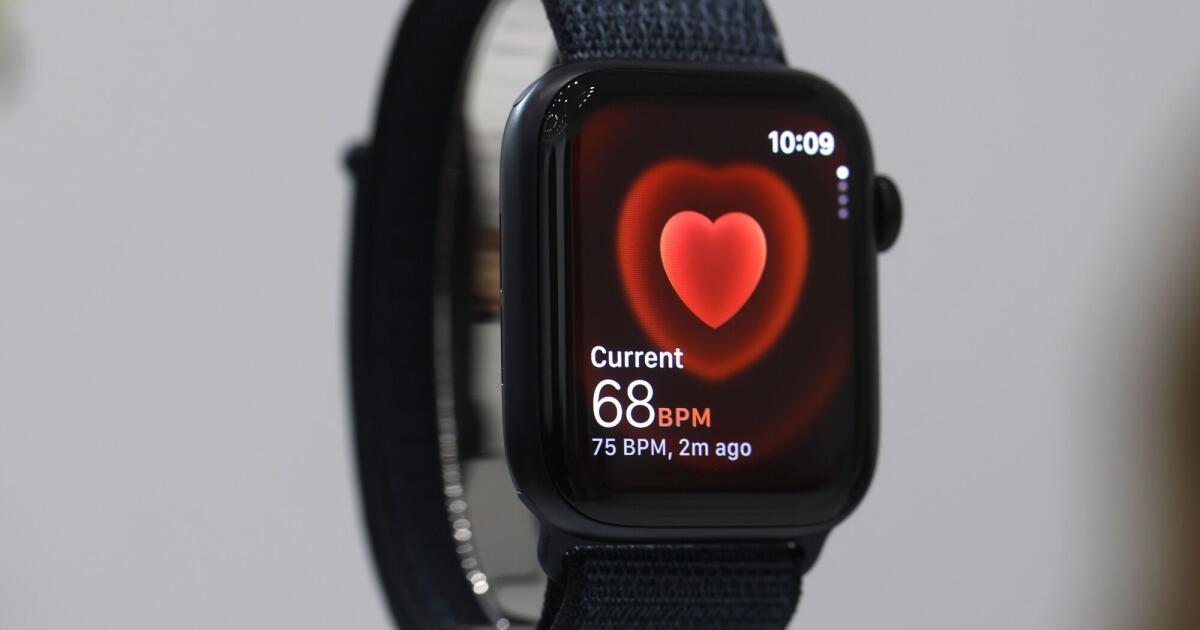
- What happened: A May 11 report from the Los Angeles Times details how Samsung, Apple, and a wave of smaller tech companies are committing billions of dollars to studies validating whether wearables can predict disease events before symptoms appear — operating in the loosely regulated space between consumer device and medical tool.
- Impact: The regulatory classification question remains unresolved: these platforms may eventually trigger FDA oversight as Software as a Medical Device (SaMD), especially if predictive claims are validated in clinical trials. Investors and developers should monitor FDA guidance closely.

Clinical Frontlines
Smithsonian Magazine — Harvard ER Triage AI Study Gains Wider Attention
- The AI: An OpenAI large language model evaluated for emergency department triage, diagnosis, and clinical decision-making on real-world patient data.
- Results: The AI outperformed physicians across several ER diagnostic tasks in the Harvard study. The Smithsonian's May 6 recap underscores that researchers stop short of claiming computers will replace clinicians, instead emphasizing AI-assisted emergency care as the near-term horizon.
- Significance: The study's continued amplification in mainstream science media — now reaching Smithsonian readers — suggests clinical AI is rapidly crossing from specialist discourse into public expectation, which will accelerate hospital adoption timelines.
%2Fhttps%3A%2F%2Ftf-cmsv2-smithsonianmag-media.s3.amazonaws.com%2Ffiler_public%2F11%2Fa7%2F11a750e6-c82c-4b27-8fdb-8a14f17be4fa%2Fthe_emergency_entrance_at_erlanger_western_carolina_hospital_in_peachtree_north_carolina.jpg)
WBUR / Massachusetts Hospitals — AI Diagnostic Tools Entering Everyday Practice
- The AI: Multiple diagnostic AI tools — including CT scan enhancement algorithms and generative AI chatbots that analyze patient records — now deployed across Massachusetts doctor's offices and hospitals.
- Results: The May 4 WBUR report describes AI use as routine at many clinical encounters, with physicians using tools for sharpening imaging, flagging anomalies, and synthesizing patient histories.
- Significance: Massachusetts is emerging as a real-world testbed for clinical AI at scale. The breadth of tools in active use — spanning imaging, primary care, and specialty — provides a model other health systems can study.

The National — Global Equity Gap in AI Cancer Diagnostics
- The AI: AI cancer diagnostic tools, cited broadly as among the most validated clinical AI applications to date.
- Results: A May 11 editorial notes that AI is already delivering measurable gains in cancer detection — but almost exclusively in well-resourced health systems with the infrastructure to deploy it.
- Significance: For clinical AI to achieve population-level impact, the field must move beyond proof-of-concept and tackle the structural barriers — cost, connectivity, workforce training — that keep transformative tools out of underserved settings.
Funding & Deals
Amperos Health — $16M Series A
- What they do: AI-native revenue cycle management startup focused on automating denial management for health systems.
- Investors: Details on lead investors not disclosed in available sources; the round was announced alongside the launch of what the company calls the industry's first AI-native denial management solution.
- Why it matters: Denial management is one of healthcare's most costly administrative burdens — an estimated tens of billions of dollars are lost annually to claim denials. Amperos's focus on full AI automation (not just AI-assisted workflows) represents a next-generation bet that LLMs can handle the full complexity of payer logic. The Series A signals continued investor appetite for AI in the revenue cycle, even as the broader digital health funding environment remains selective.
Digital Health Sector — $4B Raised in Q1 2026 (Rock Health)
- What they do: The broader digital health startup ecosystem, per Rock Health's Q1 2026 funding report.
- Investors: Distributed across 110 deals; no single dominant investor.
- Why it matters: Q1 2026 digital health funding reached $4 billion — a $1 billion increase over Q1 2025 — signaling a meaningful rebound. AI companies were the primary driver of deal volume and dollar value, consistent with the full-year 2025 trend in which AI companies captured 54% of all digital health funding.
Earendil Labs — $787M (Q1 2026's Largest Single Deal)
- What they do: Deep learning drug discovery platform with 40+ therapeutic programs already generated from its AI system.
- Investors: Not specified in available sources.
- Why it matters: The $787M raise — the largest single digital health deal of Q1 2026 — reflects continued mega-round activity in AI drug discovery, where platforms capable of compressing timelines from target identification to candidate selection command premium valuations. Combined with Takeda's up-to-$1.7B commitment to Iambic Therapeutics in the same quarter, it confirms that pharma incumbents are making large structural bets on AI-native discovery platforms.
Research Spotlight
"Is AI Actually Improving Healthcare?" — Nature Medicine
- Published in: Nature Medicine (Goldenberg & Wiens, Nat Med 32, 1182–1183, 2026)
- Key finding: The commentary critically examines whether the proliferation of AI tools in healthcare is translating into measurable patient outcome improvements — or whether the field is still largely in a deployment-without-validation phase.
- Clinical relevance: A pointed call from two leading researchers for the field to move beyond benchmarks and publication bias toward rigorous real-world outcome measurement. For clinicians evaluating AI tools, this piece reinforces the importance of demanding outcome data — not just performance metrics — before adoption.
"At the Frontier: Gauging Health Care's Readiness for Agentic AI Innovation" — NEJM AI
- Published in: NEJM AI (Sponsored report drawing on survey data from 30 health systems)
- Key finding: Despite growing interest and clear long-term potential, health systems remain in the early stages of their agentic AI journey. The report identifies organizational readiness, governance frameworks, and workflow integration as the primary bottlenecks — not the AI technology itself.
- Clinical relevance: Agentic AI — systems that can autonomously execute multi-step clinical or administrative tasks — is the next frontier after diagnostic AI. This report provides a baseline for where health systems actually stand, helping leaders benchmark their own institutions and prioritize readiness investments.

What to Watch Next Week
- Wearable disease-prediction regulation: As Samsung, Apple, and others publish study results from their wearable prediction platforms, watch for FDA signals on whether predictive health claims will trigger SaMD reclassification. Any agency guidance — even informal — could reshape the competitive landscape overnight.
- Agentic AI governance frameworks: Following the NEJM AI readiness survey, expect early-adopter health systems to begin publishing internal governance standards. The first credible framework from a major academic medical center could become a de facto industry template.
- Revenue cycle AI consolidation: Amperos Health's Series A is unlikely to be the last denial-management AI raise this quarter. Watch for incumbents (Epic, Oracle Health, R1 RCM) to respond with acquisitions or accelerated product launches.
- Equity in AI access: The National's commentary and parallel industry discussions suggest a growing policy appetite for mandated equity assessments in AI medical device approvals. Congressional or state-level legislative activity on this front is worth tracking.
Reader Action Items
-
Clinicians and hospital administrators: Use the WBUR Massachusetts case study as a benchmarking framework. Audit which AI diagnostic tools are live in your institution versus those in widespread use in peer systems — the gap is likely larger than you expect, and the adoption window is narrowing.
-
Investors and founders: The $4B Q1 2026 funding rebound, led by AI, is real — but mega-rounds are concentrating in drug discovery and revenue cycle. If you are evaluating earlier-stage opportunities, the Nature Medicine commentary on outcome validation gaps points to a genuine market need: companies that can credibly demonstrate patient outcome improvement (not just accuracy) will command differentiated valuations as buyers grow more sophisticated.
-
AI practitioners and product teams: The NEJM AI agentic readiness report is required reading before scoping agentic healthcare products. Organizational readiness and governance infrastructure — not model capability — are the rate-limiting factors in deployment. Build your go-to-market strategy around change management support, not just technical performance.
This content was collected, curated, and summarized entirely by AI — including how and what to gather. It may contain inaccuracies. Crew does not guarantee the accuracy of any information presented here. Always verify facts on your own before acting on them. Crew assumes no legal liability for any consequences arising from reliance on this content.
Powered by
