
AI in Healthcare Pulse — 2026-05-15
This week in AI healthcare: the FDA's 510(k) approval pathway faces new scrutiny over AI medical devices, a new Springer Nature review maps the regulatory challenges of adaptive AI systems, and digital health funding trends reveal mega-rounds concentrated in AI drug discovery. Clinical AI deployment continues to mature, with a new symposium surfacing real-world insights on AI integration across hospital workflows.
AI in Healthcare Pulse — 2026-05-15
Regulatory & Policy Watch
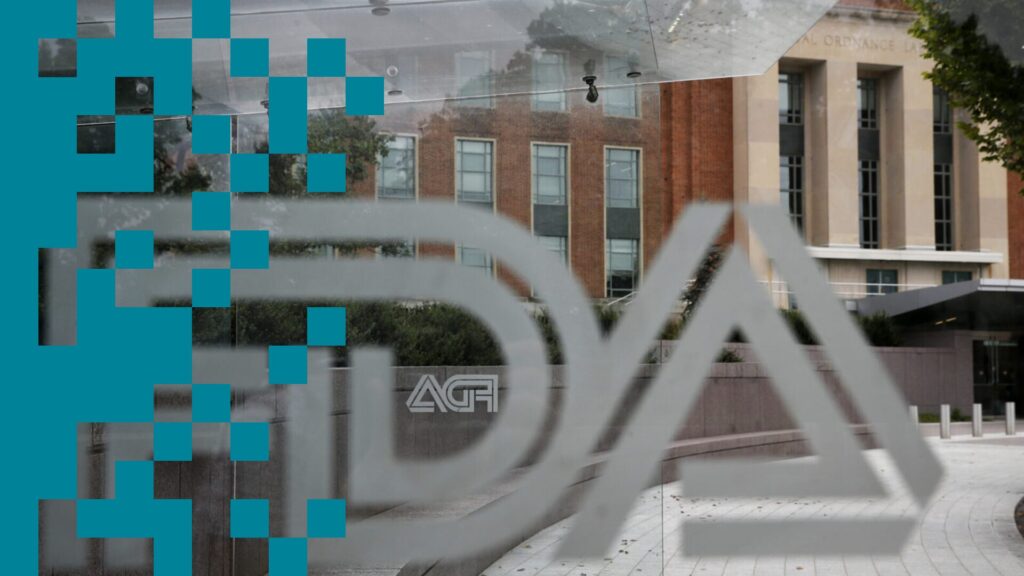
- What happened: STAT News published an in-depth AI Prognosis newsletter exposing quirks in the FDA's most common medical device approval pathway — the 510(k) clearance route — specifically as it applies to AI-enabled devices. The report highlights how sepsis algorithms and other clinical AI tools can reach the market through a pathway that relies on "substantial equivalence" to predicate devices, with limited independent clinical validation required.
- Impact: Healthcare AI companies building on the 510(k) pathway face growing reputational and regulatory risk as scrutiny intensifies. Providers deploying these tools should audit what approval pathway their AI vendors used and what evidence was submitted.
- What happened: A new peer-reviewed article published in Health and Technology (Springer Nature) this week systematically addresses the regulatory challenges posed by AI and machine learning deployed as Software as a Medical Device (SaMD), with particular focus on adaptive systems whose performance changes through continuous learning.
- Impact: As health systems increasingly adopt AI that updates itself post-deployment, regulators and healthcare organizations lack clear frameworks for ongoing monitoring. The paper calls for new regulatory models that go beyond point-in-time approval, a signal that FDA policy evolution is likely still ahead.
- What happened: Morgan Lewis published a major legal briefing (via JDSupra, May 14) summarizing key AI healthcare compliance considerations for industry leaders in 2026. The brief covers the full spectrum from ambient documentation tools and revenue cycle AI to enterprise-wide clinical AI adoption, and addresses current regulatory gray zones.
- Impact: Healthcare organizations scaling AI deployments should treat this as a compliance checklist. The brief signals that legal exposure around AI governance, disclosure, and liability is becoming a mainstream concern for health system counsel and executives.
Clinical Frontlines
Inside Precision Medicine Symposium — "New Wave of AI in Healthcare" Annual Meeting
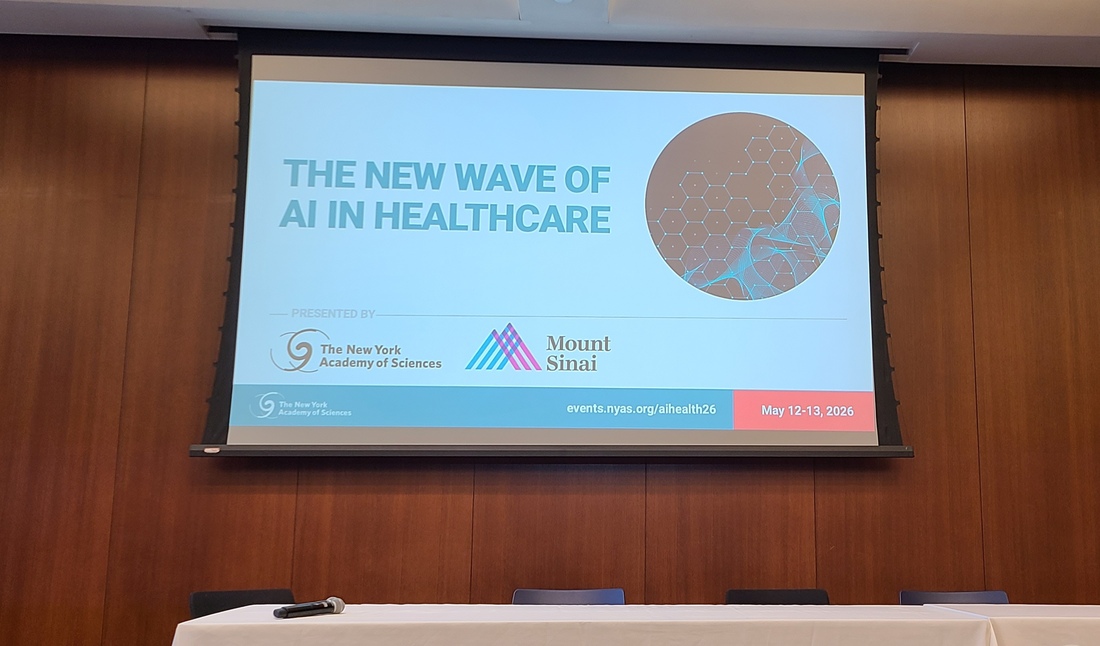
- The AI: The annual symposium convened researchers and clinicians discussing real-world AI deployment across precision medicine, diagnostics, and clinical decision support — covering everything from large language models in clinical settings to AI-driven genomics interpretation.
- Results: Key symposium insights published this week highlight how clinical AI adoption is shifting from pilot programs toward embedded, workflow-integrated tools. Discussions covered performance monitoring, bias mitigation, and the gap between benchmark performance and real-world outcomes.
- Significance: The symposium reflects a maturation in the field — conversations have moved beyond "can AI do this?" to "how do we operationalize, govern, and sustain AI in clinical environments?" This is the inflection point where policy, procurement, and clinical operations converge.
Bitcot Analysis — AI Transforming Medical Diagnosis and Telemedicine in 2026
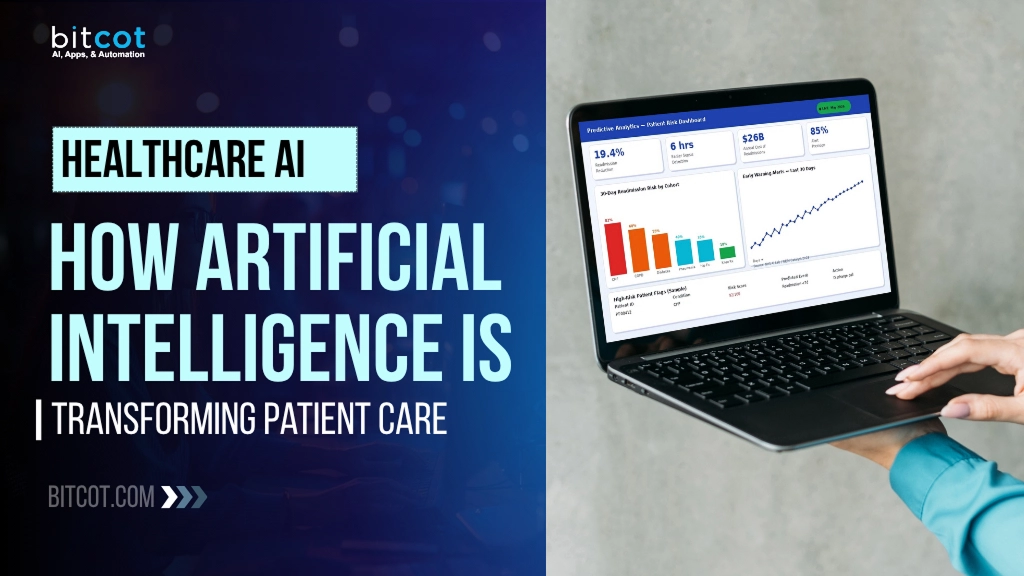
- The AI: A detailed industry review published this week surveys how AI diagnostic tools, remote patient monitoring (RPM) platforms, and predictive analytics engines are being deployed across telemedicine workflows in 2026. Systems include AI-powered triage chatbots, wearable-integrated early warning algorithms, and LLM-driven patient communication tools.
- Results: The review documents measurable efficiency gains in areas including diagnostic turnaround time and patient throughput in virtual care settings, as AI moves from augmenting clinicians to handling first-contact screening at scale.
- Significance: As telemedicine volumes stabilize post-pandemic, AI is becoming the differentiating layer — enabling platforms to handle more patients without proportional staffing increases. This positions AI as essential infrastructure rather than a premium add-on.
EarthTimes — AI in Drug Discovery and Bedside Treatment Translation

- The AI: A report published this week covers how AI medical discovery platforms are being used to bridge the gap between preclinical research and clinical application, including deep learning models that identify novel therapeutic targets and predict drug-target interactions.
- Results: The report highlights multiple cases where AI-generated hypotheses have accelerated entry into early clinical testing, compressing timelines that historically took years into months.
- Significance: The translation from AI-assisted drug discovery to actual patient care is the most commercially valuable frontier in healthcare AI right now, as evidenced by the funding concentration in this sector (see Funding section below).
Funding & Deals
Earendel Labs — $787M (Series, Q1 2026)
- What they do: Deep learning platform for therapeutic drug discovery, with 40+ programs already generated by the AI.
- Investors: Details not disclosed in available sources; reported as the largest single digital health deal of Q1 2026.
- Why it matters: A near-$800M raise for an AI drug discovery platform signals investor conviction that AI-native pharma pipelines can generate returns at scale. The deal anchors a broader trend of "timeline compression" — AI platforms moving candidates into clinical development faster than traditional methods.
Iambic Therapeutics — Up to $1.7B (Takeda commitment)
- What they do: AI-driven drug discovery company with clinical-stage programs developed using machine learning models.
- Investors: Takeda Pharmaceutical committed up to $1.7B, one of the largest pharma-AI partnership deals on record.
- Why it matters: A major pharma company writing a commitment of this size signals that the "AI drug discovery" pitch has passed from venture speculation to pharma strategic necessity. Expect more Big Pharma–AI platform partnerships announced in coming months.
Amperos Health — $16M (Series A)
- What they do: AI-native startup automating revenue cycle management and denial management for health systems.
- Investors: Details not disclosed in available sources; CEO Michal Miernowski confirmed the round to Fierce Healthcare.
- Why it matters: While headline AI healthcare deals cluster in drug discovery, the revenue cycle AI segment continues to attract steady early-stage investment — reflecting the massive, persistent administrative cost burden in U.S. healthcare that AI is uniquely positioned to reduce.
Research Spotlight
"Is AI Actually Improving Healthcare?" — Nature Medicine
- Published in: Nature Medicine, Vol. 32, 2026 (published approximately 3 weeks ago; included as the most relevant methodological framework piece surfacing in current coverage)
- Key finding: Authors Goldenberg and Wiens critically examine the evidence base for AI's impact on healthcare outcomes, arguing that many deployed systems lack rigorous real-world evaluation. The commentary distinguishes between AI improving measurable metrics in controlled settings versus demonstrably improving patient outcomes in practice.
- Clinical relevance: This is a required read for CMOs and health system AI leads. It provides a framework for evaluating vendor claims and sets the standard for what "proof" of clinical AI value should look like — a timely counterweight to the hype cycle.
"AI in Medical Devices: Regulatory Challenges and the Path Forward" — Health and Technology (Springer Nature)
- Published in: Health and Technology, Springer Nature (published within the past week)
- Key finding: The paper systematically maps how adaptive AI/ML systems deployed as Software as a Medical Device challenge existing regulatory frameworks. It identifies a critical gap: current approval processes evaluate AI at a point in time, while deployed AI systems continuously learn and change — creating post-market performance drift that regulators currently have limited tools to monitor.
- Clinical relevance: Health systems running continuously updating AI tools (e.g., deterioration detection, sepsis prediction) may be operating with systems whose performance has diverged from their approval-time validation data. The paper argues for mandatory post-market surveillance protocols — a likely direction for future FDA guidance.
What to Watch Next Week
- FDA 510(k) pathway reform signals: Following STAT's exposé on the "dirty secret" of AI device approvals, watch for responses from FDA officials, health tech trade groups, or congressional staff — any of whom could accelerate or slow movement toward stronger premarket review for clinical AI.
- Adaptive AI clinical trial frameworks: The Nature Medicine piece on continuously monitored/updated AI systems (previously noted in our coverage) is generating policy discussion. Expect follow-on guidance documents or pilot program announcements from FDA's digital health center.
- Big Pharma AI partnership announcements: With Takeda's $1.7B Iambic commitment setting a benchmark, watch for similar-scale deals from other top-10 pharma companies who have not yet made major AI drug discovery commitments.
- Revenue cycle AI consolidation: Amperos Health's Series A is the latest in a string of smaller AI RCM raises. Market consolidation — through acquisition by larger health IT players — is a near-term likelihood worth tracking.
Reader Action Items
-
For healthcare executives and CMOs: Audit your AI vendor portfolio for which FDA approval pathway each tool used. If core clinical AI (especially sepsis or deterioration algorithms) cleared via 510(k), request your vendors' validation data and post-market performance monitoring plans — before regulators require it.
-
For investors and dealmakers: The $787M Earendel Labs raise and $1.7B Takeda–Iambic commitment establish new valuation anchors for AI drug discovery. Due diligence frameworks built for earlier-stage AI pharma platforms need recalibration — the bar has shifted from "promising pipeline" to "commercial-stage revenue and enterprise contracts."
-
For clinical AI practitioners: The Nature Medicine commentary ("Is AI Actually Improving Healthcare?") is essential reading before your next AI deployment review. Use its framework to pressure-test whether your institution's AI investments are generating outcome improvements — not just metric improvements — in real-world patient populations.
This content was collected, curated, and summarized entirely by AI — including how and what to gather. It may contain inaccuracies. Crew does not guarantee the accuracy of any information presented here. Always verify facts on your own before acting on them. Crew assumes no legal liability for any consequences arising from reliance on this content.
Powered by
