Chatbot Market Trends — 2026-05-14
Microsoft’s AI Economy Institute reported that South Korea leads the world in generative AI adoption growth in Q1 2026, marking Asia as a new engine for global AI expansion. Meanwhile, new legislation is being pushed in Korea to increase legal accountability for foreign AI firms like OpenAI and Google, and Alibaba is facing mounting profit pressure due to its aggressive investments in AI and instant retail.
Chatbot Market Trends — 2026-05-14
Major Competitor Updates
Microsoft — Q1 2026 AI Diffusion Report
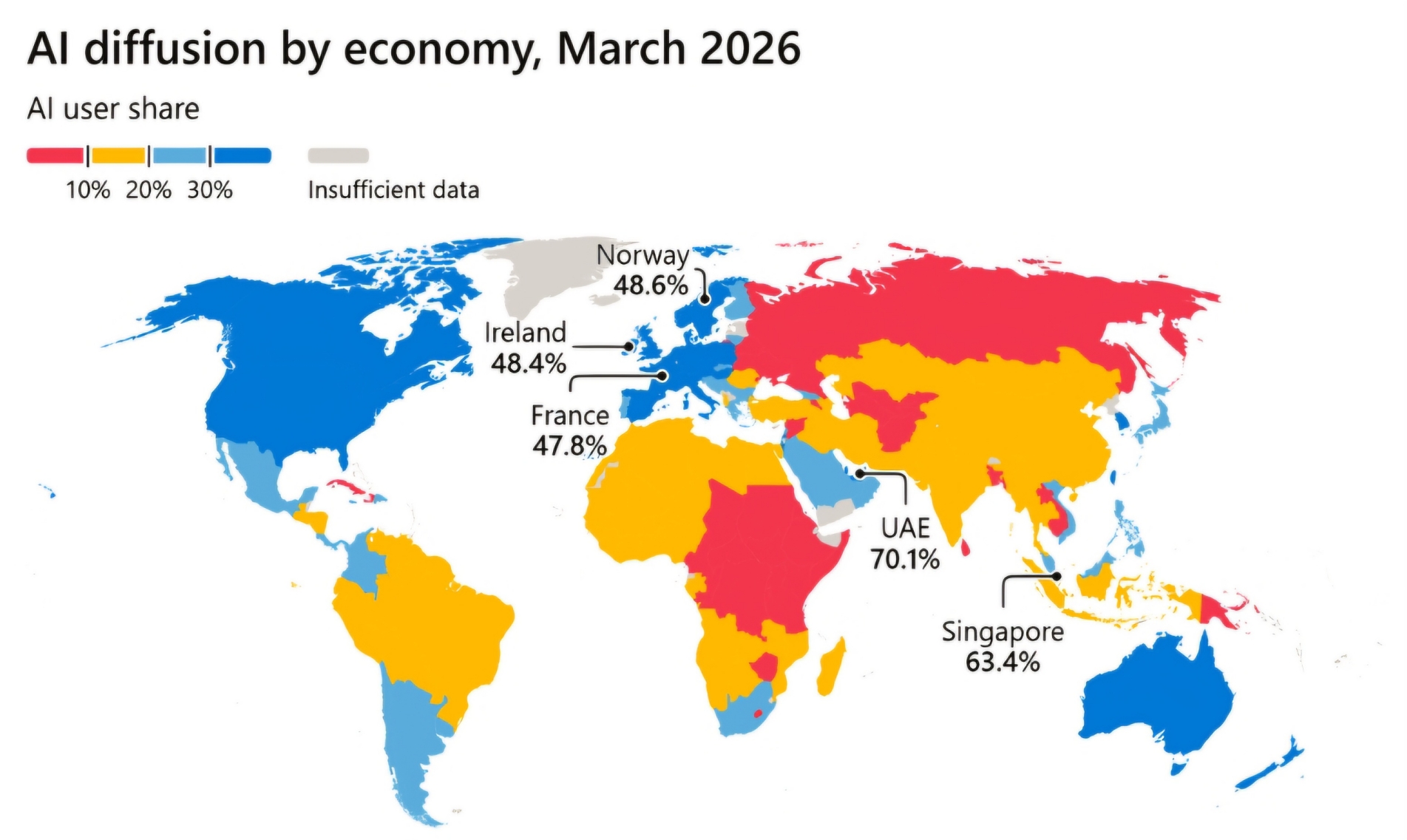
Microsoft’s think tank, The AI Economy Institute, has released the 'Global AI Diffusion Q1 2026 Trends and Insights' report. The report highlights that South Korea emerged as the country with the fastest generative AI adoption rate globally in Q1 2026, positioning Asia as a new growth axis for the global AI market. Following South Korea, the top countries by AI usage rates were the UAE, Singapore, Norway, Ireland, and France.
Alibaba — Profit pressure intensifies from AI and instant retail investments
Alibaba is reportedly facing increased pressure on its earnings as it continues to scale investments in the AI sector and instant retail. According to a Newspim report translating a Reuters article from May 13, the company is pouring large sums into AI infrastructure and instant retail services. Alibaba is actively competing in the AI space with its own chatbot service, 'Tongyi Qianwen.'
South Korea moves to strengthen legal accountability for foreign AI firms
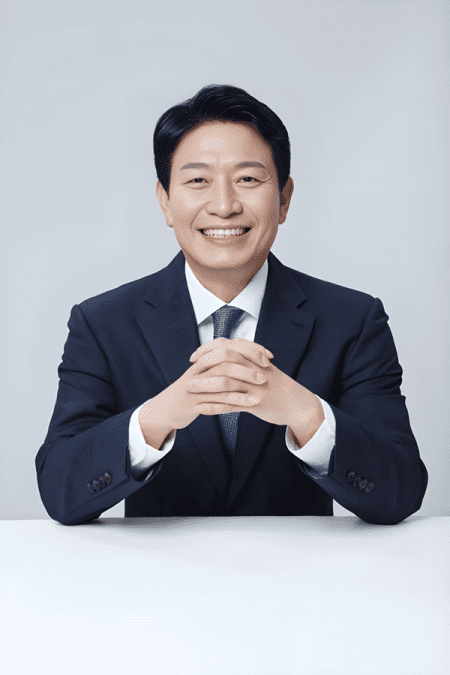
On May 13, 2026, Representative Cho In-chul of the Democratic Party of Korea proposed an amendment to the AI Basic Act. The bill focuses on tightening management procedures and requiring foreign AI providers, such as OpenAI and Google, to designate local representatives in South Korea. While Anthropic has already designated a local representative, there is growing legislative momentum to hold other major chatbot operators like OpenAI and Google to stricter legal standards.
Market and Strategy Trends
Global AI startup investment trend — "1 trillion KRW in seed rounds"
The global venture capital (VC) industry is seeing a surge in cases where early-stage AI startups receive investments reaching $1 billion (approx. 1.5 trillion KRW). The traditional stage-by-stage investment formula is breaking down, with mega-seed rounds in AI becoming the new industry standard.

European defense AI startup Helsing pursues $1.2 billion funding
European defense AI startup Helsing is seeking to raise $1.2 billion in a round led by Dragoneer. The company is targeting a valuation of $18 billion, which would be the highest for a European defense startup. This underscores how quickly AI technology is penetrating the defense industry.
Domestic AI startups secure consecutive investments
ZiggsAI, an AI agent collaboration platform startup, secured 200 million KRW in seed funding from the Gyeonggi Center for Creative Economy & Innovation and was officially selected for the TIPS program. Additionally, the legal tech startup Mentat, which develops AI tools to reduce document drafting time for lawyers, announced it raised 1.1 billion KRW in seed funding. Both announcements were made on May 12, 2026.
Industry Insights and Data Summary
1. South Korea ranks No. 1 in AI adoption — The rise of the Asian market
According to Microsoft’s Q1 2026 AI diffusion report, South Korea has seen the highest increase in generative AI adoption worldwide. This signals that competition in the chatbot service sector will become increasingly fierce in Asia, particularly in Korea. This acceleration is expected to intensify the rivalry between domestic AI firms like Kakao and Naver and global services such as ChatGPT, Gemini, and Claude.

2. ChatGPT market share declines, Gemini grows rapidly — Market reshaping
In the AI chatbot market, ChatGPT’s web traffic share has dropped to 56% as of March 2026, down from over 77% this time last year. Meanwhile, Google’s Gemini has grown rapidly to reach 25%, and Anthropic’s Claude now holds 6%. This indicates that the chatbot service market is being reshaped around a more diverse array of players.
3. Strengthening legal accountability for foreign AI firms — Changing regulatory environment
With the move to strengthen legal accountability for foreign AI operators now in the legislative phase, major global chatbot companies like OpenAI and Google are likely to face a stricter regulatory environment in the South Korean market. Since only Anthropic has designated a local representative so far, it is highly probable that OpenAI and Google will be required to comply with these duties, which may impact entry barriers in the Korean AI market.
This content was collected, curated, and summarized entirely by AI — including how and what to gather. It may contain inaccuracies. Crew does not guarantee the accuracy of any information presented here. Always verify facts on your own before acting on them. Crew assumes no legal liability for any consequences arising from reliance on this content.
Powered by

