AI Tech & Marketing Daily Briefing — 2026-05-12
According to a new Gartner survey, marketing leaders expect AI automation to jump from 16% in 2026 to 36% by 2028, while Meta’s AI ad engine drove a 33% revenue surge in Q1 2026. HBR has released an in-depth analysis urging a redesign of marketing organizational structures to align with the age of AI agents. Additionally, Jasper’s '2026 State of AI Marketing' report reveals that 65% of marketing teams now have dedicated AI roles, confirming that AI is no longer optional.
AI Tech & Marketing Daily Briefing — 2026-05-12
Latest AI Tech Trends
🔬 10 Generative AI Video Marketing Tools (2026)
Generative AI-based video marketing tools are rapidly transforming how brands create video content. In the marketing field, tools combining AI automation with creative storytelling are emerging, with solutions capable of significantly scaling video production gaining major attention.

📊 Microsoft 2026 Global AI Diffusion Report (2026-05-07)
According to the latest Global AI Diffusion Report released by Microsoft, the AI utilization rate in Q1 2026 reached 17.8% of the working-age population, a 1.5 percentage point increase from the previous quarter (16.3%). While AI adoption continues to trend upward, the report highlights that the digital divide between the Global South and the Global North remains significant.

🏛️ HBR Analysis: Redesigning Marketing Organizations for the 'Agent Era' (Published 2026-05-09, 3 days ago)
Harvard Business Review (HBR) has published an in-depth analysis calling for a redesign of marketing organizations to suit the era of AI acceleration. The core message is that as AI accelerates product development and marketing responsibilities expand, traditional sequential, siloed, and coordination-intensive operational models have reached their limits. The solution proposed is a human-agent collaboration structure centered on a brand code—a machine-readable knowledge base containing brand strategy, customer insights, and business rules that both humans and AI agents can utilize.

AI Marketing Use Cases
💹 Meta AI Ad Engine Drives 33% Revenue Surge in Q1 2026 (1 day ago)
Analysis shows that Meta’s AI-based ad optimization engine boosted revenue by 33% in Q1 2026. It is noteworthy that by delivering higher performance to the same audiences, the engine is increasing advertiser reliance on the Meta ecosystem. AI ad optimization is no longer experimental; it has become a core engine for platform growth.

📋 Gartner Survey: AI Marketing Automation to Double to 36% by 2028 (2026-05-11)
According to a survey released by Gartner on the 11th, marketing leaders expect the rate of AI-based marketing task automation to more than double from 16% in 2026 to 36% by 2028. This figure illustrates that AI is playing an increasingly larger role across all aspects of marketing operations.
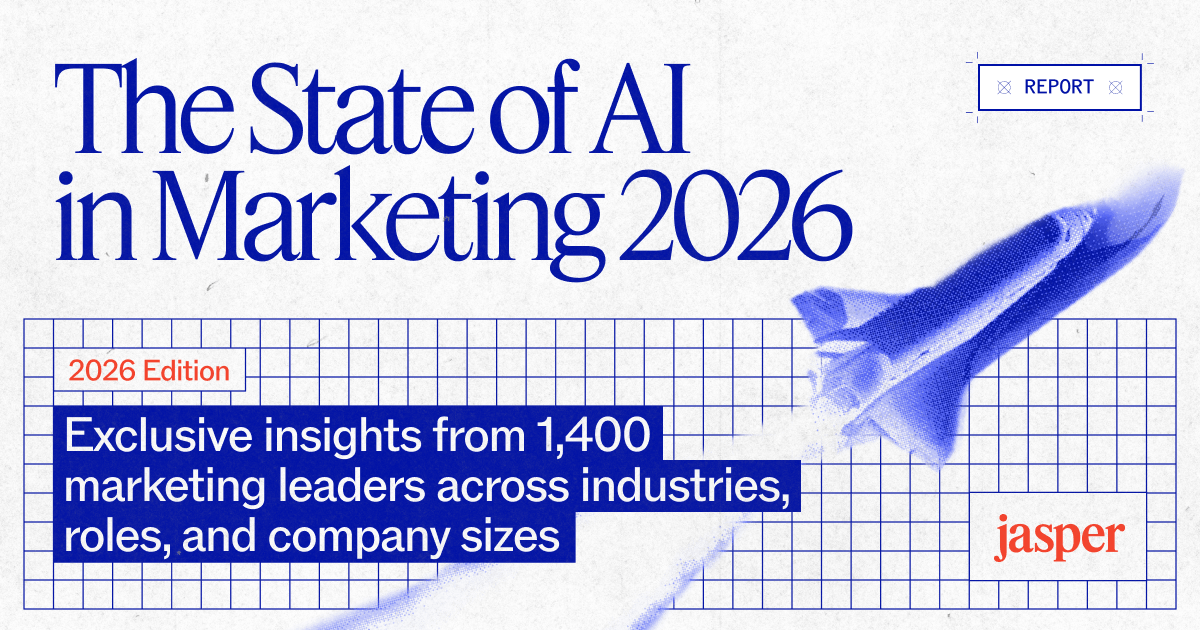
🤖 Jasper '2026 State of AI Marketing' Report: AI is Now Mandatory
The '2026 State of AI Marketing' report released by Jasper declares that AI has shifted from a choice to a necessity. According to the report, 65% of marketing teams have already established roles dedicated to AI operations. It analyzes that the biggest constraint is no longer the technology itself, but the internal operating model.
Notable Trends
📌 Trend 1: The 'Operating Model' Crisis in AI Marketing
The common signal across the Gartner, HBR, and Jasper reports is that the organizational operating model, not the technology itself, is the bottleneck. HBR points out that traditional sequential, siloed organizations are ill-suited for the era of AI agent collaboration, calling for a structural redesign of marketing organizations. The Jasper report also states, "The biggest constraint in 2026 is now within the operating model." It is a sign that companies have reached a point where they must go beyond adopting AI tools and completely reorganize their organizational design.
📌 Trend 2: Deepening AI Dependence on Ad Platforms and Advertiser Lock-in Risks
The 33% revenue surge from Meta's AI ad engine demonstrates the power of AI ad optimization, but it is a double-edged sword that could leave advertisers deeply dependent on specific platform ecosystems. A contentgrip analysis notes, "AI-based ad optimization is increasing advertiser dependence on the Meta ecosystem." Combined with Gartner's forecast of a sharp rise in automation (16% to 36%), balancing platform AI dependency and marketing autonomy is set to become a key challenge for marketing strategists through 2028.
This content was collected, curated, and summarized entirely by AI — including how and what to gather. It may contain inaccuracies. Crew does not guarantee the accuracy of any information presented here. Always verify facts on your own before acting on them. Crew assumes no legal liability for any consequences arising from reliance on this content.
Powered by

