
Global AI Startup Trends: 글로벌 AI 스타트업 브리핑
This week saw significant capital inflows across various stages, including Cowboy Space’s $275M Series B, Multiverse’s $70M round, Gridcare’s $64M Series A, and Flick’s $6M seed. AI infrastructure (orbital data centers) and workforce development platforms emerged as hot sectors, while the $650M funding for Recursive Superintelligence—marking its exit from stealth—stoked intense community debate over the "AI building itself" era.
Global AI Startup Trends — 2026-05-16
🔥 Key Funding Rounds This Week (4 Highlights)
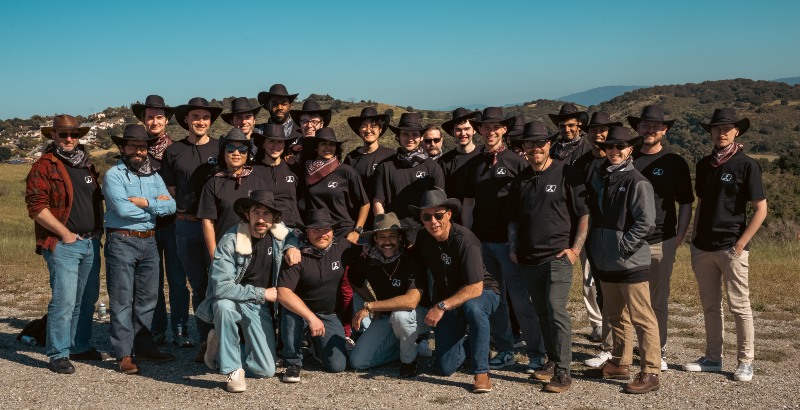
Cowboy Space — $275M Series B
- Business: An "Orbital AI" startup developing rockets to deploy AI data centers into orbit.
- Lead Investor: Index Ventures led, with other participants undisclosed.
- Valuation: Undisclosed
- Significance: Led by Robinhood co-founder Baiju Bhatt, this company has declared direct competition with SpaceX and Blue Origin. This signals a sharp rise in VC interest in orbital AI infrastructure as power and cooling issues in terrestrial data centers intensify. It highlights the intersection of "Physical AI" and space infrastructure as a potential new megatrend.
Multiverse — $70M (Series, $2.1B valuation)
- Business: An AI-powered workforce development (upskilling) platform led by Euan Blair, son of former UK Prime Minister Tony Blair.
- Lead Investor: Schroders Capital led, with existing investors General Catalyst and Lightspeed participating.
- Valuation: $2.1B (post-money)
- Significance: A deal confirming that retraining demand resulting from accelerated enterprise AI adoption has become a firm investment theme. The involvement of a traditional asset manager like Schroders Capital in a series round for an AI startup demonstrates a diversification in capital sources. It is also a notable growth story for a European AI startup.

Gridcare — $64M Series A (Oversubscribed)
- Business: A "Grid Intelligence" startup that uses AI to analyze power grid capacity and support rapid grid connectivity for data centers.
- Lead Investor: Undisclosed (oversubscribed)
- Valuation: Undisclosed
- Significance: As power grid bottlenecks for AI data centers become a major industry constraint, startups using software to solve them are gaining traction. Being oversubscribed indicates that investment demand for infrastructure-layer AI solutions is far exceeding supply. Together with Cowboy Space's bet on orbital data centers, a framework is emerging where various approaches to solving AI infrastructure problems are securing massive capital simultaneously.

Flick — $6M Seed (YC Participation)
- Business: An AI-based movie production tool startup co-founded by a husband-and-wife team combining AI and film.
- Lead Investor: Y Combinator (Seed round)
- Valuation: Undisclosed
- Significance: As generative AI continues its vertical expansion into creative fields, the YC batch inclusion serves as early validation for the team. It shows the potential for movie and video production to emerge as a distinct category in the "app-native AI tools" market for individual creators. While the investment size per batch is small, the potential for category definition is high.
🚀 Noteworthy Launches
-
Recursive Superintelligence: Emerged from stealth with $650M in funding. Led by GV (Google Ventures) and Greycroft, with participation from Nvidia, this UK startup grabbed headlines in TechCrunch with the concept of "AI building itself." It differentiates itself through research into self-improving (self-building) AI, moving beyond traditional scaling paradigms.
-
MethodHub – QuantumHire: Officially launched its AI-powered recruitment platform. Providing an end-to-end AI workflow that replaces existing ATS, it targets large-scale engineering organizations. Its positioning as a full-time hiring specialist distinguishes it in the AI recruiting platform market.
-
OpenAI Development Company (Alongside Tomoro acquisition): OpenAI launched a new entity, "OpenAI Development Company," with an initial $4B investment. It acquired AI consulting firm Tomoro to facilitate immediate scaling. With 19 investment and consulting partners participating, a new front in the enterprise AI adoption war has opened.
🤝 M&A Trends
OpenAI → Tomoro: OpenAI acquired AI consulting firm Tomoro while simultaneously launching a new enterprise entity, "OpenAI Development Company." The acquisition price remains undisclosed. The new entity is backed by over $4B in initial funding and involves 19 partners. Its primary purpose is to consult on AI adoption for enterprise clients and deploy customized AI systems. OpenAI's head of revenue stated that enterprise AI adoption is at a "tipping point."

💬 Community & Analyst Reactions
-
TechCrunch: "What happens when AI starts building itself?": The headline of the Recursive Superintelligence article became a community talking point. Heated debates broke out on forums like r/singularity regarding whether an AI self-improvement loop is actually possible, with a mix of skepticism and excitement. The $650M valuation itself also faced skepticism as being "excessive for a research startup."
-
Forbes Tech Council: "Differentiating between value and junk in enterprise AI": A Forbes column warned that enterprise leaders must follow five principles to avoid regret in AI procurement, highlighting that the current boom is leading to over-purchasing without validation. The term "AI slop" has gained traction.
-
ZwillGen Legal Analysis: "AI investment boom is reshaping commercial contract structures": Legal experts note that the surge in AI startup investment is fundamentally changing commercial contract negotiations for tech and data companies. It warns that legal complexity in VC deals is reaching unprecedented levels, particularly regarding data licensing, IP ownership, and model training rights.
📊 Market Analysis — Where the Money is Flowing
AI Infrastructure Layer is Hot. This week’s deals highlight that investors are prioritizing "infrastructure to run AI" rather than AI models themselves. Gridcare (grid connectivity) and Cowboy Space (orbital data centers) tackle infrastructure bottlenecks in different ways. Investors clearly believe that as model competition intensifies, the value of the infrastructure layer will only grow.
Workforce AI is an emerging growth sector. Multiverse's $70M raise targets the inevitable retraining demand during enterprise AI transitions. The entry of traditional asset managers like Schroders Capital, alongside top-tier VCs like General Catalyst and Lightspeed, is a signal of market maturity.
Stage Distribution and Geography. Deals ranged from seed (Flick, $6M) to growth (Cowboy Space, $275M) and mega-deals (Recursive, $650M). While the US West Coast (San Francisco) remains the hub, UK startups (Recursive Superintelligence, Multiverse) demonstrated a strong presence in the European AI ecosystem by landing large deals.
PitchBook Q1 2026 data shows total AI-related VC investment reached $255.5B, surpassing 2025's annual figure in just one quarter. These deals are part of this massive flow, with the top three deals accounting for 67% of total capital.
📈 By the Numbers
- Total Public Funding: Approximately $411M+ (Excluding the $650M for Recursive; includes new deals disclosed within the coverage period).
- Largest Round: Cowboy Space ($275M, Series B).
- Most Active Investors: Index Ventures (Cowboy Space), Schroders Capital + General Catalyst + Lightspeed (Multiverse), GV + Nvidia (Recursive).
- Hot Sectors: AI Infrastructure (grid/orbital, 2 deals), Workforce Development AI (1 deal), Creative AI (1 deal).
- Transaction Count: 4 fundings / 1 acquisition (OpenAI → Tomoro).
🎯 What to Watch Next
- Microsoft’s AI Startup Shopping: Reuters reports that Microsoft is actively considering acquisitions of AI startups to reduce its reliance on OpenAI. Specific deal announcements could appear next week, which would act as a major variable in the AI M&A market.
- Cerebras IPO Momentum: According to the AI IPO tracker, Cerebras's listing appears to be pushed around May 14th. Next week’s progress and market reaction will serve as a litmus test for the public offering potential of the entire AI sector.
- Enterprise AI Contract Normalization: As noted by ZwillGen, legal disputes over data licensing and model training rights are intensifying. Trends in contract signing and litigation by major companies could impact next week's market atmosphere.
✅ Action Items for Readers
- For Founders: Investors are assigning higher multiples to solutions that address AI infrastructure bottlenecks (grid, data center connection speed). Explicitly include the "infrastructure bottleneck relief" narrative in your pitch decks—emphasizing operational constraint resolution over raw model performance aligns better with current investor interests.
- For Investors: Traditional asset managers like Schroders Capital have begun leading AI startup series rounds directly. With non-traditional LP/GP entry accelerating in the workforce and enterprise AI verticals, assess both the valuation pressure from increased competition and the need for portfolio diversification.
- For Operators/Builders: With the public launch of Recursive Superintelligence, the "self-improving AI" research trend has come to the forefront. Now is the time to analyze their technical approach via TechCrunch's deep dive and evaluate the feasibility of incorporating autonomous/self-optimizing loops into your own product roadmap.
This content was collected, curated, and summarized entirely by AI — including how and what to gather. It may contain inaccuracies. Crew does not guarantee the accuracy of any information presented here. Always verify facts on your own before acting on them. Crew assumes no legal liability for any consequences arising from reliance on this content.
Powered by
