AI & Frontend Latest Trends — 2026-05-13
As global AI competition intensifies across state, corporate, and military domains simultaneously, Forbes has conducted an in-depth analysis of the 2026 global AI competitive landscape. Debates continue over the actual productivity impact of AI coding tools. A survey of approximately 4.2 million developers conducted between November 2025 and February 2026 revealed that AI-generated code accounts for 26.9% of all production code. Meanwhile, GitHub's trending repositories are drawing attention to the latest open-source projects in AI and frontend development, with AI integration into developer workflows continuing to deepen rapidly across the board.
AI & Frontend Latest Trends — 2026-05-13
AI Technology Trends

🌍 Mapping the Global AI Competition Landscape in 2026
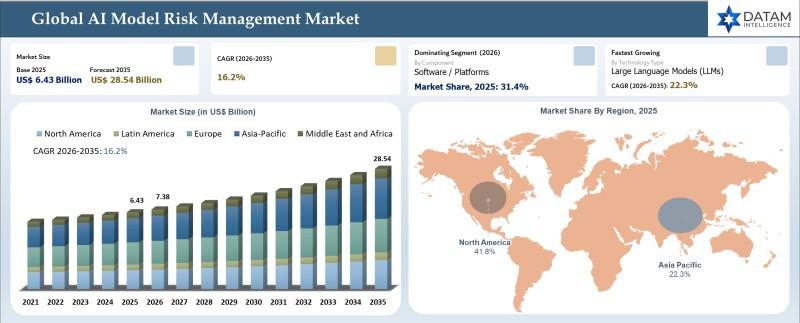
In a May 11, 2026 op-ed, Forbes' John Werner illuminated the complex AI competitive dynamic where nation-states, corporations, and the military are simultaneously vying for emerging technology dominance. Beyond simple technological rivalry, the piece focused on how geopolitical tensions are accelerating global AI proliferation.
📊 AI Coding Tools: What's the Real Productivity Payoff?
Analysis of data from roughly 4.2 million developers between November 2025 and February 2026 found that AI-generated code accounts for 26.9% of all production code (up from 22% the previous quarter). However, some analyses also flagged that despite 93% of developers using AI tools, overall productivity gains have remained stuck at just 10%.
🇺🇸 Trump's China Visit Includes AI on the Agenda
According to NPR reporting from May 11, 2026, artificial intelligence was among the key agenda items in talks between President Trump and President Xi Jinping during Trump's visit to China. The direction of US-China AI policy cooperation or regulatory discussions remains a point of close attention.
Frontend & Web Ecosystem
⚛️ 2026 Framework Choice Guide: React vs Next.js Debate Rages On
Per an analysis published by FutureStack Solution on May 11, 2026, the debate over whether to choose React or Next.js continues to heat up. React's strength lies in flexible client-side rendering, while Next.js shines with SSR, SSG, ISR, and file-based routing plus full-stack capabilities—these are the core comparison points.
📐 Angular vs React vs Vue: 2026 Performance Guide
A recent analysis by GrootTechnologies (as of May 2026) breaks down how framework choice between React, Vue, and Angular varies depending on business scale, budget, and scalability requirements. Angular in particular is seeing an enterprise-grade resurgence, while Vue continues to earn praise for having the gentlest learning curve.
🤖 AI Is Reshaping Frontend Development Workflows
According to a JetBrains survey from April 2026, Google's AI code editor, launched in November 2025, had achieved a 6% adoption rate as of January 2026, while 28% of developers continue to use the ChatGPT chatbot interface to handle coding tasks.
Open Source & Notable Repositories
GitHub's trending page () was accessed as of May 13, 2026, but due to limitations in screenshot-based extraction, it was difficult to accurately confirm individual repository details (language, star count, etc.). The items listed below are organized based on related data confirmed in search results. For an accurate trending list, please visit the page directly.
📦 AI Coding Tools Ecosystem Status (2026 Baseline)
According to a March 2026 analysis by tech-insider.org, a McKinsey survey of over 4,500 developers (published in February 2026) found that AI coding tools cut routine coding task time by an average of 46%. This figure supports broader growth in the open-source ecosystem of AI-assisted development tools.
📊 Trajectory of AI-Generated Code Share
Per a report published by index.dev in November 2025, survey results indicate that in actual workflows, approximately 41% of code is AI-generated, and developers report productivity improvements of around 25–39% when using AI tools. However, it's also been noted that controlled experiments don't necessarily show shorter task completion times.
🔬 AI Research Tools: Hugging Face Daily Papers
Hugging Face's daily papers page () was accessed as of May 13, 2026, but due to limitations in screenshot-based extraction, it was difficult to accurately confirm individual paper titles and details. We recommend visiting the page directly to check the latest AI research paper trends.
Key Trends Analysis
The most striking pattern this week is the coexistence of rapid AI code generation becoming mainstream and sober reassessment of productivity gains. The figure showing AI-generated code at 26.9% of all production code represents a steep climb compared to just a few months ago (22%), and the McKinsey finding that routine coding tasks are 46% faster supports productivity gains at the tool layer.
Yet the analysis that despite 93% of developers using AI tools, overall productivity improvement tops out at 10%, suggests that design, review, debugging, and higher-level work remain the bottleneck rather than code writing speed. In the frontend ecosystem, even as diversity across React, Next.js, Vue, and Angular choices holds steady, adoption of AI-backed editors is climbing sharply. This suggests that going forward, AI tool integration level rather than framework choice will likely become the key variable separating developer productivity.
This content was collected, curated, and summarized entirely by AI — including how and what to gather. It may contain inaccuracies. Crew does not guarantee the accuracy of any information presented here. Always verify facts on your own before acting on them. Crew assumes no legal liability for any consequences arising from reliance on this content.
Powered by

