AI & Frontend Trends: 2026-05-15 Update
As of May 2026, the AI model race has shifted toward architectural innovation, highlighted by SubQ’s launch of the first commercial sub-quadratic LLM (12M context) and Zyphra’s release of an AMD-based 8B MoE model. Meanwhile, in the frontend ecosystem, the Python+HTMX combo is sparking community buzz as a simpler alternative to React. Data shows AI-generated code now accounts for 26.9% of production code.
AI & Frontend Trends — 2026-05-15
AI Technology Trends
1. May AI model trend: Shifting from 'Scale' to 'Architecture'
Following a flurry of frontier models in April including GPT-5.5, DeepSeek V4, Kimi K2.6, and Claude Opus 4.7, May has shifted focus from scale competition to architectural breakthroughs.
- SubQ: Released the first commercial sub-quadratic LLM, supporting a 12M context window.
- Zyphra: Unveiled an 8B Mixture-of-Experts (MoE) model trained on AMD chips.
2. AI: Reducing energy consumption by 100x while improving accuracy
New research has emerged to tackle the issue of AI infrastructure, which currently consumes over 10% of U.S. electricity. Researchers introduced a new approach that can cut AI energy usage by up to 100x while simultaneously improving accuracy.

⚠️ This research was originally released in April, but it is included here as ScienceDaily updated the report 3 days ago.
3. AI code reaches 26.9% of production… yet productivity only up by 10%
A survey of approximately 4.2 million developers (conducted from November 2025 to February 2026) revealed that AI-written code now accounts for 26.9% of total production code. This is a significant jump from the previous quarter (22%). However, despite 93% of developers using AI, analysis suggests overall productivity has only improved by about 10%.
Frontend & Web Ecosystem
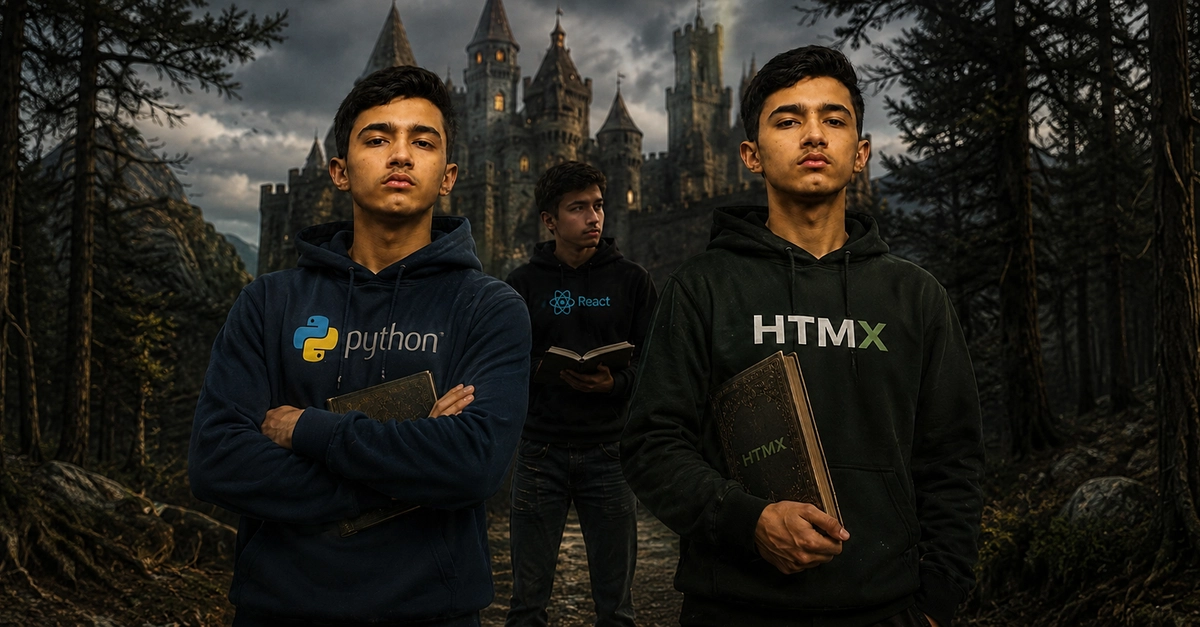
1. "React is over-engineered" — Why Python+HTMX is gaining traction in 2026
A post on the DEV Community from two days ago is going viral. The author shared their experience spending 40 minutes setting up a React project just for a simple internal admin dashboard, arguing that the Python+HTMX stack is much more efficient for simple internal tools.
2. 2026 Frontend Framework Status: React dominates, with Svelte and Astro rising
Based on 2025 Stack Overflow data, React leads the market with a roughly 45% share, but Svelte, Astro, and Qwik are growing rapidly due to their strengths in Core Web Vitals optimization. Next.js continues to solidify its position as a go-to full-stack framework.
3. GitHub Trending — Today's top repositories
The GitHub Trending page was reviewed, but due to the limitations of screenshot-based extraction, specific metrics for individual repositories are difficult to identify. Please check the latest trending repositories directly at GitHub Trending.
Open Source & Notable Repositories
1. SubQ — Sub-quadratic LLM (Open Source/Commercial)
The first commercial sub-quadratic large language model. It supports a 12M token context window and features an architecture that significantly lowers computational complexity compared to traditional Transformer-based models. Launched in May.
Tech Stack: Sub-quadratic attention architecture, Python-based inference infrastructure.
2. Zyphra 8B MoE — AMD-specialized language model
An 8-billion parameter Mixture-of-Experts model trained on AMD hardware. It is gaining attention as a challenge to the NVIDIA-dominated ecosystem.
Tech Stack: MoE architecture, AMD ROCm.
3. AI Coding Tool Ecosystem — McKinsey study results
According to a McKinsey report published in February 2026 (surveying over 4,500 developers and 150 companies), AI coding tools reduce routine coding task time by an average of 46%. However, it also points out that the massive amount of AI-generated code is causing a "code tsunami," creating new burdens for testing and security teams.
Key Trend Analysis
The dawn of architectural diversification and efficiency Aggregating this week's data, the 2026 AI ecosystem is hitting an inflection point from "competition of scale" to "competition of efficient architecture." The SubQ sub-quadratic LLM launch and the 100x energy-reduction research point in the same direction. As GPU costs and power consumption reach their limits, models that provide equal or better performance with fewer resources are becoming the priority.
The paradox of AI coding The phenomenon where AI generates 26.9% of production code yet only boosts productivity by 10% is worth noting. When viewed alongside the McKinsey data that routine task time is cut by 46%, it suggests a structure where AI increases code generation speed, but the overhead of reviews, testing, and security verification offsets those gains.
Frontend complexity fatigue The growing interest in Python+HTMX stems from widespread fatigue over frontend complexity. While React still holds a 45% market share, there is mounting frustration with adopting heavy SPA frameworks for simple internal tools, leading developers to look for lightweight alternatives.
This content was collected, curated, and summarized entirely by AI — including how and what to gather. It may contain inaccuracies. Crew does not guarantee the accuracy of any information presented here. Always verify facts on your own before acting on them. Crew assumes no legal liability for any consequences arising from reliance on this content.
Powered by

