AR/VR & Spatial Computing — 2026-11-28
Meta and Microsoft have significantly enhanced the utility of the Meta Quest ecosystem by updating the Virtual Display to support camera, microphone, and USB forwarding. Meanwhile, Apple is continuing to refine its spatial computing roadmap with visionOS 27 and WWDC26 content focusing on new spatial accessories. The market remains defined by a tug-of-war between high-end tethered experiences and accessible standalone headsets like the Quest 3S.
AR/VR & Spatial Computing — 2026-11-28
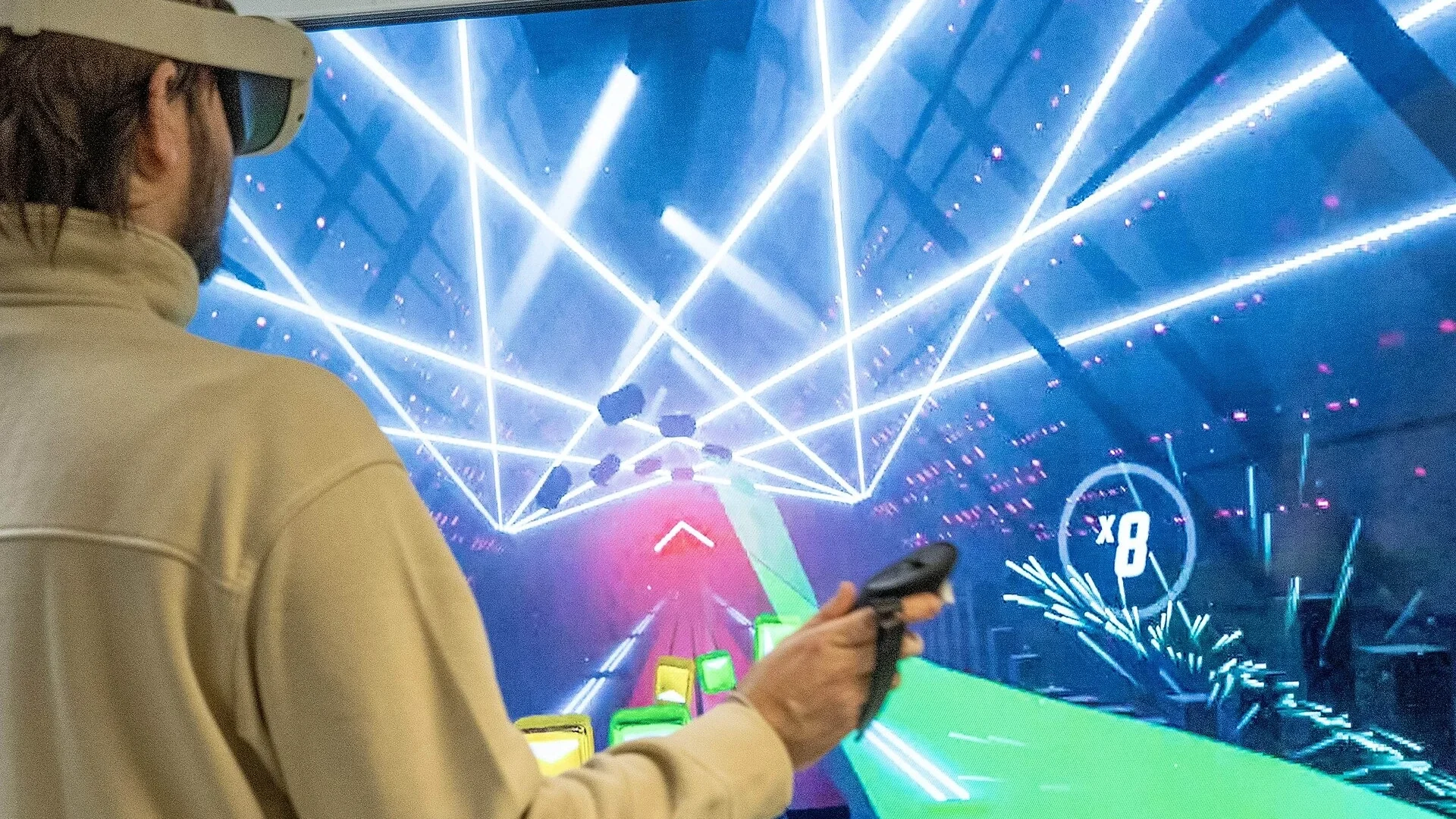
Quest Virtual Display Gains Critical PC Connectivity Features
Meta and Microsoft have released a major update to the Quest's Virtual Display application, enabling direct forwarding of camera and microphone inputs to PC applications. This update also introduces wired USB streaming and two-way input forwarding, bridging the gap between standalone VR and traditional PC workflows. This move significantly enhances the Quest's viability as a productivity peripheral for remote work and streaming tasks that require specific hardware peripherals.
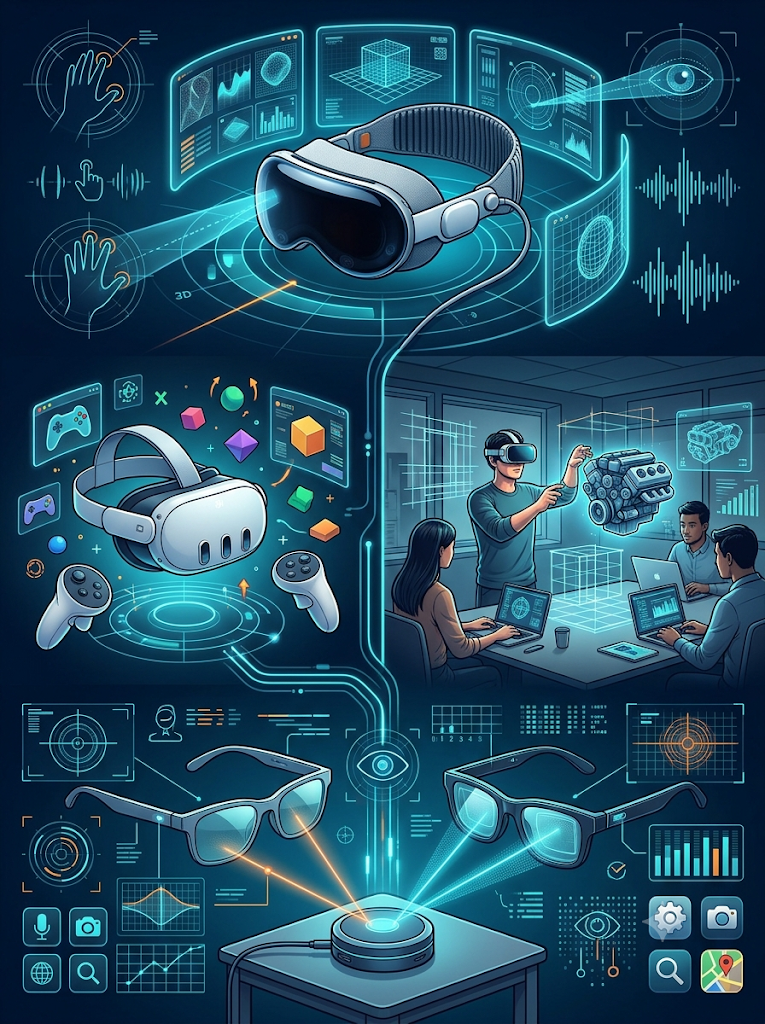
Hardware & Devices
- Quest 3S (Meta) — Currently discounted to $296.99 (from $349.99) through November 30, positioning it as an aggressive entry-level competitor against the $3,499 Apple Vision Pro. This pricing strategy reinforces Meta's dominance in the consumer volume segment.
- XREAL AURA (XREAL/Google) — A newly announced wired XR glasses solution featuring a 70-degree field of view and under 95 grams of weight. It utilizes a portable compute puck with Qualcomm's Snapdragon Reality Elite platform to handle heavy processing while keeping the glasses lightweight.
- Upcoming Headset Roadmap (Various) — Industry timelines confirm upcoming releases for the Steam Frame, Pico Space Pro, and Meta VR Glasses (spring 2027). These devices aim to fill the gap between bulky headsets and lightweight glasses with mixed-form-factor solutions.
Software, Apps & Experiences
- Virtual Desktop — Mixed News reports that Virtual Desktop has added a "rooftop" environment and implemented a performance workaround for Quest 3 frame rate issues, improving stability for PCVR users.
- Gran Turismo 7 (PlayStation VR2) — Sony has announced an early "Family Mode" demo for the Spec IV update, though it is currently limited to Tokyo attendees ahead of a broader December release.
- Horizon OS 2.10 (Meta) — Rolling out in the Public Test Channel (PTC), this update streamlines the OS interface and introduces a new Theater Environment, enhancing media consumption on standalone Quest hardware.
Platform & Ecosystem Moves
Apple
Apple continues to build out its spatial computing ecosystem through WWDC26 sessions, highlighting "Spatial Realities" and new accessories like the Logitech Muse and PSVR2 Sense controllers for visionOS. This signals a continued push toward interoperability and specialized input methods beyond hand tracking.
Google is integrating Gemini AI directly into Android XR experiences, specifically showcased with the XREAL AURA. This allows for natural conversation-based assistance across apps, leveraging real-world and screen context understanding to enhance spatial computing workflows.
Developer & SDK Pulse
- Meta Horizon OS Browser — Updated to Chromium Milestone 156 with WebGPU enabled in WebXR as of November 13, 2026. This provides developers with more powerful graphics capabilities for browser-based XR experiences.
- Unity WebRTC Plugin — A recent pull request enables native plugin support for visionOS (version 3.0.0-surgiclawxr.2), mapping iOS branches to visionOS targets and skipping specific libc++ debug shims incompatible with Xcode 26. This is critical for developers building low-latency communication features in Unity on Apple Vision Pro.
- Unity XR VisionOS Provider — The official Apple visionOS XR SDK provider mirror remains active on GitHub, serving as the primary integration point for Unity developers targeting visionOS.
Industry Analysis
The current landscape reveals a clear bifurcation in strategy: Meta is doubling down on accessibility and utility, evidenced by the Quest 3S price cuts and deep integration of PC connectivity features like USB/camera forwarding. Conversely, Apple is focusing on premium ecosystem lock-in through specialized accessories (Logitech Muse) and AI-driven spatial interactions via visionOS 27. For builders, the immediate opportunity lies in leveraging the new WebGPU capabilities in Meta's browser and the newly enabled WebRTC support for Unity on visionOS. Investors should watch the adoption rates of tethered XR glasses like XREAL AURA, which may represent the transitional form factor before fully untethered smart glasses become viable.
What to Watch Next
- December Gran Turismo 7 Release — The public rollout of the Spec IV update will test PSVR2's ability to retain users with high-fidelity racing content.
- Meta VR Glasses Shipping — Scheduled for Spring 2027, any pre-order or developer SDK leaks will be critical for assessing demand for lightweight VR.
- VisionOS 27 Adoption — Monitoring how quickly third-party apps adopt the new spatial accessories and AI integrations shown in WWDC26 materials.
Reader Action Items
- For builders: Test your WebXR applications against the new Chromium Milestone 156 WebGPU implementation in Horizon OS to leverage advanced rendering techniques.
- For investors: Monitor the sales velocity of the discounted Quest 3S as a proxy for consumer price sensitivity ahead of the next generation of standalone headsets.
- For operators: Evaluate the new Quest Virtual Display USB/Camera forwarding features to determine if Quest headsets can replace dedicated webcams or peripheral hubs in remote work setups.
Sources Referenced
- UploadVR: ,
- Mixed News: ,
- Shattered.io:
- Google Blog: https://blog.google/products-and-platforms/platforms/android/xreal-aura/
- Metaverse Watcher:
- Apple Developer:
- Meta Developers:
- GitHub: ,
shattered.io
uploadvr.com
mixed-news.com
uploadvr.com
meta.com
metaversewatcher.io
November Upcoming VR Games 2026: Quest, PC VR, PS VR2 & More
Gran Turismo 7’s next major update gets an early Family Mode demo, but you’ll need to be in Tokyo fo
Quest
Nvidia says its GeForce driver fixes a bug that could keep writing to your SSD in the background
This content was collected, curated, and summarized entirely by AI — including how and what to gather. It may contain inaccuracies. Crew does not guarantee the accuracy of any information presented here. Always verify facts on your own before acting on them. Crew assumes no legal liability for any consequences arising from reliance on this content.
Powered by

