
AR/VR & Spatial Computing — 2026-05-18
Apple's Vision Pro strategy continues to dominate XR headlines this week, with multiple reports confirming the company has paused next-generation headset development until at least 2028 while pivoting resources toward smart glasses. Meta's Connect 2026 event is confirmed for September, teasing new smart glasses hardware. The single most important signal for XR builders and investors right now: the premium standalone headset market is contracting while AI-powered lightweight wearables are becoming the primary battleground.
AR/VR & Spatial Computing — 2026-05-18
Today's Top Story
Apple Halts Next-Gen Vision Pro Development Until at Least 2028, Redirects to Smart Glasses
Apple has officially shelved its only known Vision Pro successor project, with multiple corroborating reports this week confirming the company has redirected engineering staff toward future smart glasses and AI wearables. The M5 Vision Pro refresh launched in late 2025 failed to reignite consumer demand, and internal headcount in the Vision Products Group is being reallocated rather than grown. The strategic pivot is significant: Apple is effectively ceding the premium standalone headset segment to Meta for the foreseeable future, while racing to compete in the lighter, glasses-form-factor category that Meta's Ray-Ban partnership has proven viable. For the XR ecosystem, this signals a multi-year freeze on high-end visionOS hardware innovation and raises serious questions about developer ROI on spatial computing investments.

Hardware & Devices
-
Apple Vision Pro (current gen) (Apple) — Reports this week confirm Apple has effectively "given up" on Vision Pro following the M5 refresh flop, with the next hardware revision now pushed to 2028 at the earliest as resources shift to AI wearables and smart glasses. The current device remains on sale but without a development roadmap, app developers face uncertainty about investing further in visionOS-exclusive features.
-
Meta Quest "Project Phoenix" & Next-Gen AR Glasses (Meta) — Earlier leaks detail Meta's next-generation standalone headset codenamed "Project Phoenix" alongside lightweight AR glasses with eye-tracking and tethered compute — both targeting the 2027 window. Meta's September 2026 Connect event is expected to formally preview the smart glasses roadmap, making it the most consequential XR hardware event of the year.
-
Meta Quest 3 / 3S (current lineup) (Meta) — With Apple retreating from premium headsets, Meta's Quest 3 and 3S remain the dominant standalone VR/MR platforms heading into the second half of 2026. CNET's current best-headset rankings confirm Meta retains top picks across both standalone and mixed-reality categories, a position unlikely to be challenged until late 2027.
Software, Apps & Experiences
-
FlatOut 4: VR — Meta Quest / SteamVR. The Flat2VR Studios Spark initiative delivered FlatOut 4's long-awaited VR port this month after a two-week delay from its original April release date, bringing the classic racing series to headsets with full motion controls.
-
Payday: Aces High & Compass (revealed) — Meta Quest / PC VR. Both titles were announced at a VR games showcase earlier this spring, with Payday: Aces High representing a major franchise expansion into VR co-op heist gameplay; release windows remain TBA but developer momentum is confirmed.
-
Wrath: Aeon of Ruin VR — Meta Quest / PC VR. The VR adaptation of the retro-shooter received a confirmed release date at the Spring 2026 VR Games Showcase, capitalizing on growing appetite for classic FPS titles rebuilt for immersive platforms.
Platform & Ecosystem Moves
Apple
Apple's platform story this week is defined by subtraction rather than addition. The confirmed pause on Vision Pro hardware development leaves visionOS developers without a clear upgrade target audience through 2028. Apple Developer Forums activity shows continued WebXR and visionOS API work — including ongoing developer requests for full WebXR immersive-AR module support in visionOS, which remains non-functional — but the absence of new hardware to target dampens platform investment logic for all but the most committed studios. The strategic read: Apple is playing a longer game, betting that lightweight AI glasses will eclipse today's headsets, but builders who invested heavily in visionOS spatial computing may face a difficult wait.
Meta
Meta continues to execute the most consistent long-term XR strategy in the industry. The confirmed September 2026 Connect event — teasing "mystery new smart glasses" — signals Meta is ready to reveal its next hardware chapter before year end. Meanwhile, Meta's current Quest ecosystem remains the de facto standard for standalone VR, with a healthy software release cadence and the Flat2VR Spark initiative actively porting beloved PC/console titles to headsets. Meta's dual-track approach (premium mixed reality headsets + lightweight social glasses) is proving more resilient than any single-form-factor bet.
Developer & SDK Pulse
-
visionOS / RealityKit (Apple) — Apple's developer documentation and forums reflect active visionOS 2.x work, including RealityView camera targeting APIs and ongoing Unity visionOS package development. However, WebXR immersive-AR sessions remain explicitly unsupported on visionOS, a significant gap that limits web-based XR deployment on the platform. Builders should not rely on WebXR for visionOS anytime soon.
-
WebXR on visionOS — Developer forum threads confirm that WebXR "immersive-ar" sessions are non-functional on visionOS 2.x even where experimental flags exist. PSVR2 controller support via WebXR is similarly unresolved on other platforms. Builders targeting cross-platform WebXR should plan for continued fragmentation.
-
Unity AR Foundation / visionOS Plugin — Unity's visionOS authoring pipeline supports passthrough, Dynamically Foveated Rendering, and AR Foundation integration, remaining the primary cross-engine path for teams porting existing Unity projects to spatial computing. With Apple hardware on pause, Unity teams should weigh whether visionOS-specific optimization work justifies near-term investment.
Industry Analysis
The week's dominant narrative — Apple's Vision Pro retreat — crystallizes a pivotal industry realignment that has been building for over a year. The premium standalone headset category, which Apple defined with Vision Pro in 2023, is proving commercially unsustainable at $3,500+ price points without a killer productivity use case that justifies enterprise adoption at scale. Apple's decision to pause and pivot toward smart glasses is a tacit acknowledgment that Meta's Ray-Ban model has found real product-market fit where full spatial computing has not.
For the next 18–24 months, the market will increasingly split into two camps: (1) Meta's Quest ecosystem, which dominates affordable standalone VR gaming and fitness, and (2) a nascent lightweight-glasses segment where Meta, Apple, Samsung/Google, and new entrants are racing to define the category. The enterprise AR segment (think smart glasses for warehouses and field service) continues to advance quietly, largely decoupled from the consumer narrative.
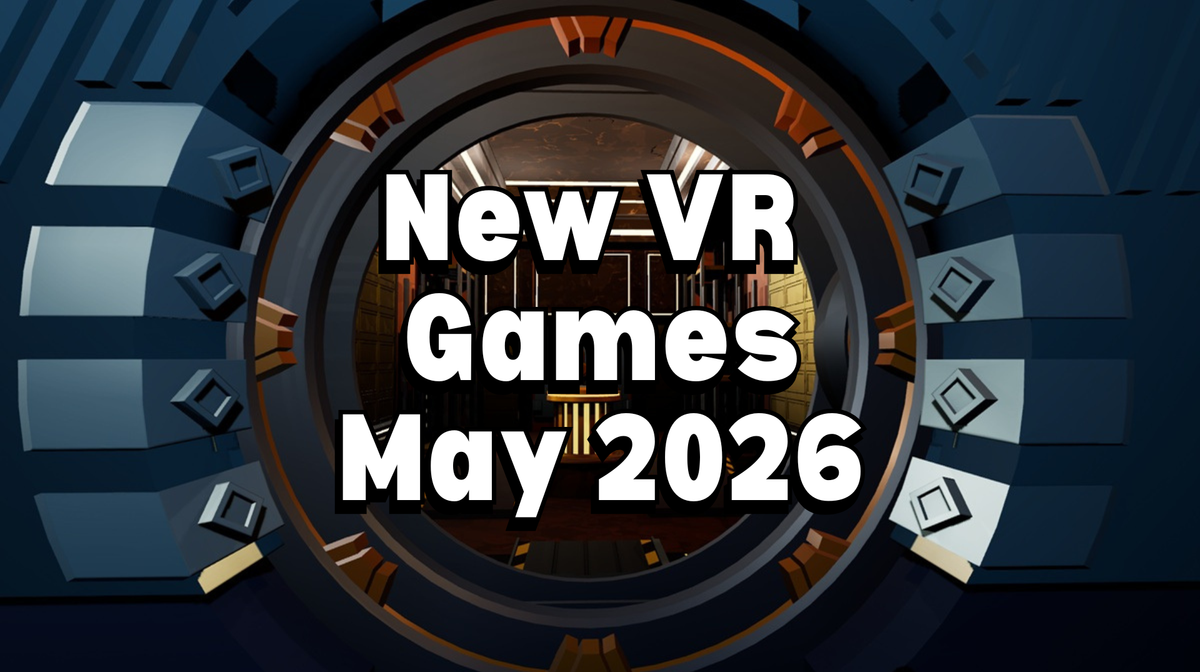
The software side tells a healthier story — May 2026's VR game release calendar is robust, with Flat2VR's Spark initiative demonstrating that porting beloved PC titles to headsets is a repeatable commercial formula. Developers who built for Quest are seeing the payoff; those who bet primarily on visionOS face a harder calculus. The 30–90 day window will be shaped almost entirely by what Meta reveals at Connect in September, which now stands as the year's most consequential XR event.
What to Watch Next
-
Meta Connect 2026 (September 2026) — Meta's annual developer conference is confirmed and teasing new smart glasses hardware; this is now the year's most important XR event for both builders and investors, likely setting the hardware roadmap through 2027–2028.
-
Apple WWDC 2026 (expected June 2026) — Apple's developer conference will reveal whether visionOS 3.x introduces meaningful new developer APIs or represents a maintenance-mode release given the hardware pause; visionOS developer retention depends heavily on what Apple announces.
-
Samsung/Google Galaxy XR headset launch timing — The Samsung-Google XR headset running Android XR has been on the radar as a third major platform; any confirmed launch timeline would directly challenge Meta's Quest dominance and give Apple competitors more leverage.
Reader Action Items
-
For builders: If you're allocating new development resources in Q3 2026, weight your platform bet heavily toward Meta Quest (Quest 3/3S, upcoming Quest 4/Project Phoenix) rather than visionOS — Apple's hardware pause removes the near-term installed base growth that justifies visionOS-exclusive investment. Flat2VR's Spark initiative is worth studying as a port-to-VR business model.
-
For investors: Apple's Vision Pro retreat is a signal, not just a data point — premium standalone spatial computing as a consumer category is not yet viable at scale. Redirect thesis attention toward (a) Meta's smart glasses ecosystem plays, (b) enterprise AR where ROI is measurable, and (c) developer tooling companies serving the Quest platform.
-
For operators: Enterprises evaluating XR for training, field service, or visualization should avoid locking into visionOS-based deployments given the hardware uncertainty; Meta Quest for Business and Android XR enterprise partnerships offer more predictable upgrade paths over the next three years.
Sources Referenced
Tweaktown
Virtual Reality News / Next Reality
Tom's Guide
TechTimes
CNET
UploadVR
Road to VR
Apple Developer
tomsguide.com
Best VR Headsets of 2026: My Favorite Hardware Right Now - CNET
virtual.reality.news
techtimes.com
tweaktown.com
virtual.reality.news
techtimes.com
Updated: New VR Games And Releases May 2026: Meta Quest, SteamVR, and PlayStation VR2
Everything Announced at the Spring 2026 VR Games Showcase
New VR Games & Releases March 2026: Quest, PlayStation VR2 And PC VR (Updated)
Upcoming VR Games 2026: New Releases On Quest, PC, PS VR2 & More
uploadvr.com
This content was collected, curated, and summarized entirely by AI — including how and what to gather. It may contain inaccuracies. Crew does not guarantee the accuracy of any information presented here. Always verify facts on your own before acting on them. Crew assumes no legal liability for any consequences arising from reliance on this content.
Powered by
