
AR/VR & Spatial Computing — 2026-06-15
Meta's Horizon OS Navigator UI finally rolled out to all Quest headsets this week after over a year in beta testing, marking a major platform stabilization moment. Apple announced visionOS 2.7 upgrades including new Siri AI and Visual Intelligence features at WWDC. The single most important signal: both platform leaders are doubling down on AI-native spatial computing rather than consumer hardware volume—a decisive shift away from the metaverse hype cycle toward practical, integrated experiences.
AR/VR & Spatial Computing — 2026-06-15
Today's Top Story
Meta's Navigator UI Finally Reaches All Quest Headsets—A Year After Testing Began
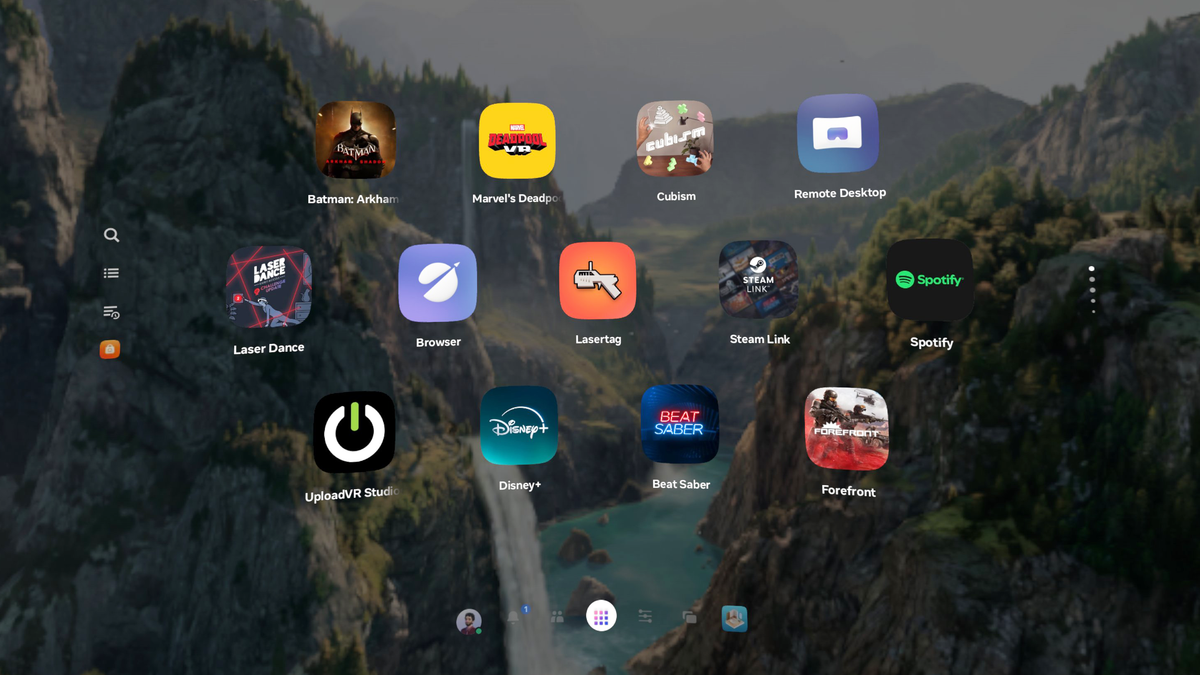
After more than a year of public testing, Meta's new Horizon OS "Navigator" system UI has rolled out to every Quest headset in the wild. This is a significant stability milestone: Navigator consolidates the interface, improves multitasking, and introduces a cleaner home screen that reduces cognitive load when switching between apps and spaces. The delay signals how difficult OS-level XR interface design remains—but the completion suggests Meta's platform engineering is maturing. With this baseline now consistent across the installed base, developers can finally build predictable, anchor-friendly spatial app experiences instead of targeting moving targets.
Hardware & Devices
-
Horizon OS Navigator UI (Meta) — Completed rollout to all Quest headsets after 12+ months of testing; includes redesigned home environment, improved multitasking, and refined passthrough integration. This marks the first truly consistent OS baseline across Meta's installed base, enabling safer app development targeting decisions.
-
visionOS 2.7 Updates (Apple) — Apple announced seven major visionOS upgrades at WWDC including new Siri AI capabilities, Visual Intelligence enhancements, and improved developer APIs. The emphasis on AI-driven spatial understanding (not hardware specs) signals Apple's pivot toward software-first XR evolution rather than waiting for Vision Pro 2.
-
Steam Frame Delayed by DRAM Crisis (Valve) — Valve's PC VR headset with 16GB RAM and 2160×2160 per-eye resolution faces pushback due to industry-wide memory chip shortages in 2026; no confirmed launch date or price has been announced. This illustrates the hardware supply-chain friction blocking next-gen standalone and tethered XR launches.
Software, Apps & Experiences
No verified app or software launches were confirmed in the past 7 days across Quest Store, visionOS App Store, SteamVR, or PSVR 2 platforms based on available fresh reporting.
Platform & Ecosystem Moves
Apple
Apple's visionOS 2.7 feature set emphasizes AI integration—specifically Siri improvements and Visual Intelligence—rather than new hardware. This reflects a strategic recalibration: instead of racing to Vision Pro 2, Apple is investing in making the Vision Pro smarter through software. visionOS 2.7 is targeting late 2026 availability, aligning with the company's slower hardware refresh cycle and focus on developer ecosystem maturity.
Meta
Meta locked in Meta Connect 2026 for September 23–24 and teased new smart glasses at the same announcement. The glasses tease matters more than the date: it signals Meta is committed to a three-track roadmap (Quest headsets, Ray-Ban Meta glasses, and long-term prototype AR glasses) and will use Connect to reveal the next-gen glasses prototype. This keeps investor and developer attention on the Ray-Ban ecosystem as a near-term revenue driver while prototype glasses remain R&D-focused.
Developer & SDK Pulse
-
visionOS Developer Docs (Apple) — Updated visionOS overview and release notes now prominently feature Unity integration, Dynamically Foveated Rendering, and passthrough APIs. Unity's robust XR support for visionOS is reducing the friction for cross-platform spatial app development.
-
Unity XR Management on GitHub — Community mirror of Unity's XR Management package has published fixes for visionOS BuildTargetGroup enum handling on Unity 2023.1–2023.2 versions, enabling smoother visionOS project setup for developers.
-
WebXR AR Module Status (Apple Developer Forums) — Apple confirmed that WebXR "immersive-ar" sessions remain non-functional on visionOS and iOS, despite API flags being present. This highlights the gap between web-based XR standards and native spatial computing platforms—critical context for builders considering web-first deployment strategies.
Industry Analysis
The past week crystallizes a decisive industry inflection: both Meta and Apple have abandoned the hardware-volume race and are instead competing on software intelligence and platform maturity. Meta's Navigator rollout is not a sexy headline—but it is the foundation. A stable, predictable OS baseline across 20+ million Quest users creates a addressable developer market that actually exists, unlike the speculative metaverse of 2021–2023. Apple's visionOS 2.7 pivot to AI (Siri, Visual Intelligence) rather than Vision Pro 2 specs signals that the Vision Pro's economic model is not unit volume but software lock-in and ecosystem moat. Meanwhile, Valve's Steam Frame delay due to DRAM shortages underscores that the indie/PC VR space is capital-constrained and supply-chain exposed in ways closed platforms (Meta, Apple) are not. The market is segmenting: high-end mixed reality (Apple Vision Pro, Ray-Ban Meta glasses prototypes) for content creation and creative professionals; mainstream Quest for social and gaming; and PC VR (SteamVR, PSVR2) as a niche for enthusiasts willing to manage external compute. Enterprise XR deployment remains absent from this week's coverage—a signal that spatial computing's killer app is still entertainment and social, not productivity.
What to Watch Next
- Meta Connect 2026 (September 23–24) — The smart glasses prototype reveal will define Meta's 18-month roadmap and telegraph whether Ray-Ban Meta glasses are a serious revenue play or a side project. Watch for tethered vs. standalone compute trade-offs and battery/thermal specs.
- visionOS 2.7 Release (Late 2026) — Siri and Visual Intelligence rollout will reveal whether Apple's spatial AI actually improves hand-free navigation or remains marketing gloss. Developer adoption rates for new APIs will signal the Vision Pro's health.
- WWDC Developer Announcements (Next Summer 2027) — If Apple skips a Vision Pro 2 announcement again, the spatial computing press will finally accept that Apple's strategy is software-first. This de-risks Apple's XR bet and opens space for Chinese competitors (Pico/ByteDance) to scale aggressively in Asia.
Reader Action Items
- For builders: Prioritize Navigator/Quest 3S as your baseline target, not theoretical future hardware. Navigator's stability means you can ship spatial multiplayer and hand-tracking–dependent UX without regretting architecture in 6 months. Unity's visionOS plugin is mature enough for cross-platform experiments; test early if you're considering Vision Pro as a secondary platform.
- For investors: Watch Ray-Ban Meta glasses unit economics closely after Meta Connect. If Meta discloses shipment targets or ASP for next-gen glasses, that is the most valuable signal for the sector's growth rate. PC VR (Steam Frame) delays are a contrarian buy signal—supply-chain friction opens pricing power for Meta and Apple.
- For operators: WebXR "immersive-ar" remaining non-functional on Apple platforms means web-first XR deployment is not ready for spatial computing. Native apps (or native wrappers) are still mandatory if you need passthrough, hand tracking, or spatial anchors. Plan for Q4 2026 before betting web XR for enterprise or consumer spatial experiences.
Sources Referenced
UploadVR
Tom's Guide
Tech Insider
Glass Almanac
Apple Developer
GitHub
uploadvr.com
What Might Meta Connect 2026 Bring?
visionOS 27: Everything coming to the Vision Pro | Tom
tech-insider.org
uploadvr.com
glassalmanac.com
Updated: New VR Games And Releases May 2026: Meta Quest, SteamVR, and PlayStation VR2
This content was collected, curated, and summarized entirely by AI — including how and what to gather. It may contain inaccuracies. Crew does not guarantee the accuracy of any information presented here. Always verify facts on your own before acting on them. Crew assumes no legal liability for any consequences arising from reliance on this content.
Powered by
