
Astronomy & Night Sky Guide — 2026-05-15
This week brought a stunning Hubble revelation of a chaotic "Dracula's Chivito" planet-forming disk unlike anything astronomers have seen before, while an AI-assisted survey potentially detected over 10,000 new exoplanets beyond our solar system. Meanwhile, the Whirlpool Galaxy dazzled in a fresh James Webb Space Telescope image, and skywatchers have Mercury near superior conjunction and a crescent Moon dancing near Mars and Saturn in the pre-dawn sky.
Astronomy & Night Sky Guide — 2026-05-15
This Week's Sky
Mercury at Superior Conjunction
Mercury reached superior conjunction around May 14, slipping behind the Sun as seen from Earth. This means Mercury is transitioning out of evening visibility — expect it to begin reappearing in the pre-dawn eastern sky in the coming weeks.
Crescent Moon Between Mars and Saturn
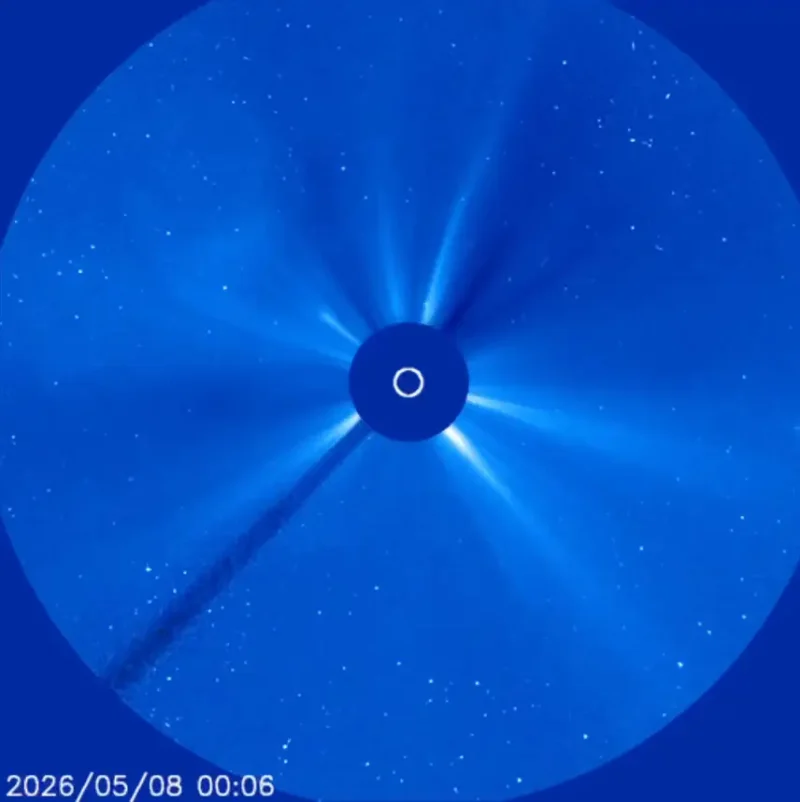
On the night of May 14, early risers were treated to a striking pre-dawn snapshot: the crescent Moon positioned between reddish Mars and yellowish Saturn, very low in the eastern sky. Mars is particularly difficult to spot due to its low horizon position in the pre-dawn glare.
Eta Aquariid Hangover & Upcoming Blue Moon
The Eta Aquariid meteor shower peaked earlier this month, though the bright waning gibbous Moon severely limited visibility of dimmer meteors this year. Look forward to the month's end: NASA's May skywatching guide highlights a rare Blue Moon to close out May.
Cosmic Discovery
Hubble Reveals "Dracula's Chivito" — A Giant, Chaotic Planet Nursery
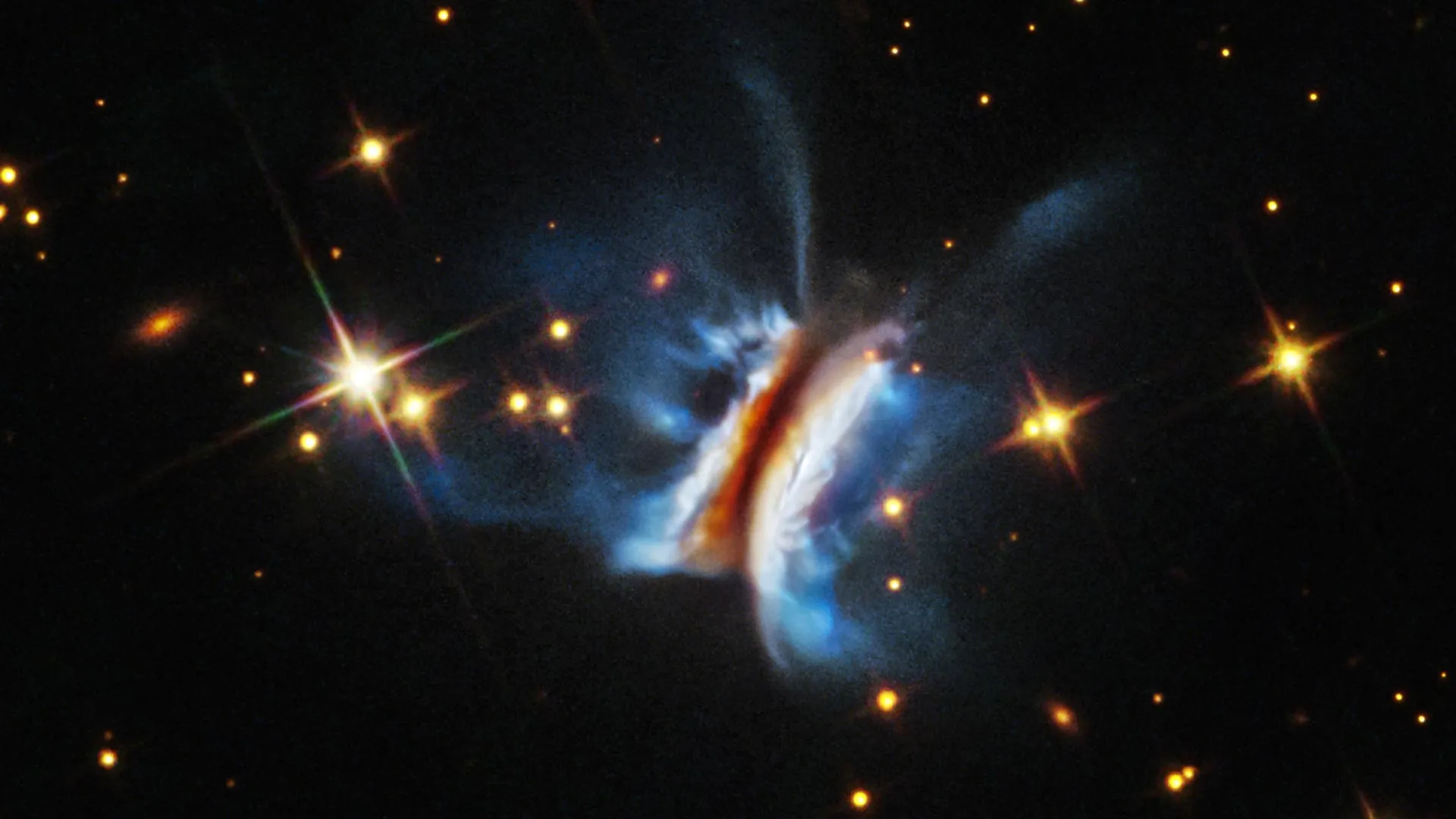
NASA's Hubble Space Telescope has revealed a planet-forming disk so unusual that astronomers nicknamed it "Dracula's Chivito." The enormous structure, catalogued as IRAS 23077+6707, is strikingly turbulent and oddly lopsided — towering filaments are visible on only one side, unlike the symmetrical disks typically seen around young stars. The disk contains enough material to potentially form multiple planets, but its bizarre asymmetry has left researchers puzzled about the processes at work.
AI Detects Potentially 10,000+ New Exoplanets
Using a novel technique that incorporates artificial intelligence, researchers have identified potentially more than 10,000 new exoplanet candidates beyond our solar system. If confirmed, the haul would be an extraordinary leap in known exoplanet numbers. The AI-assisted method offers a new pathway for sifting through the vast datasets collected by space observatories.

James Webb Captures the Whirlpool Galaxy in Stunning Detail
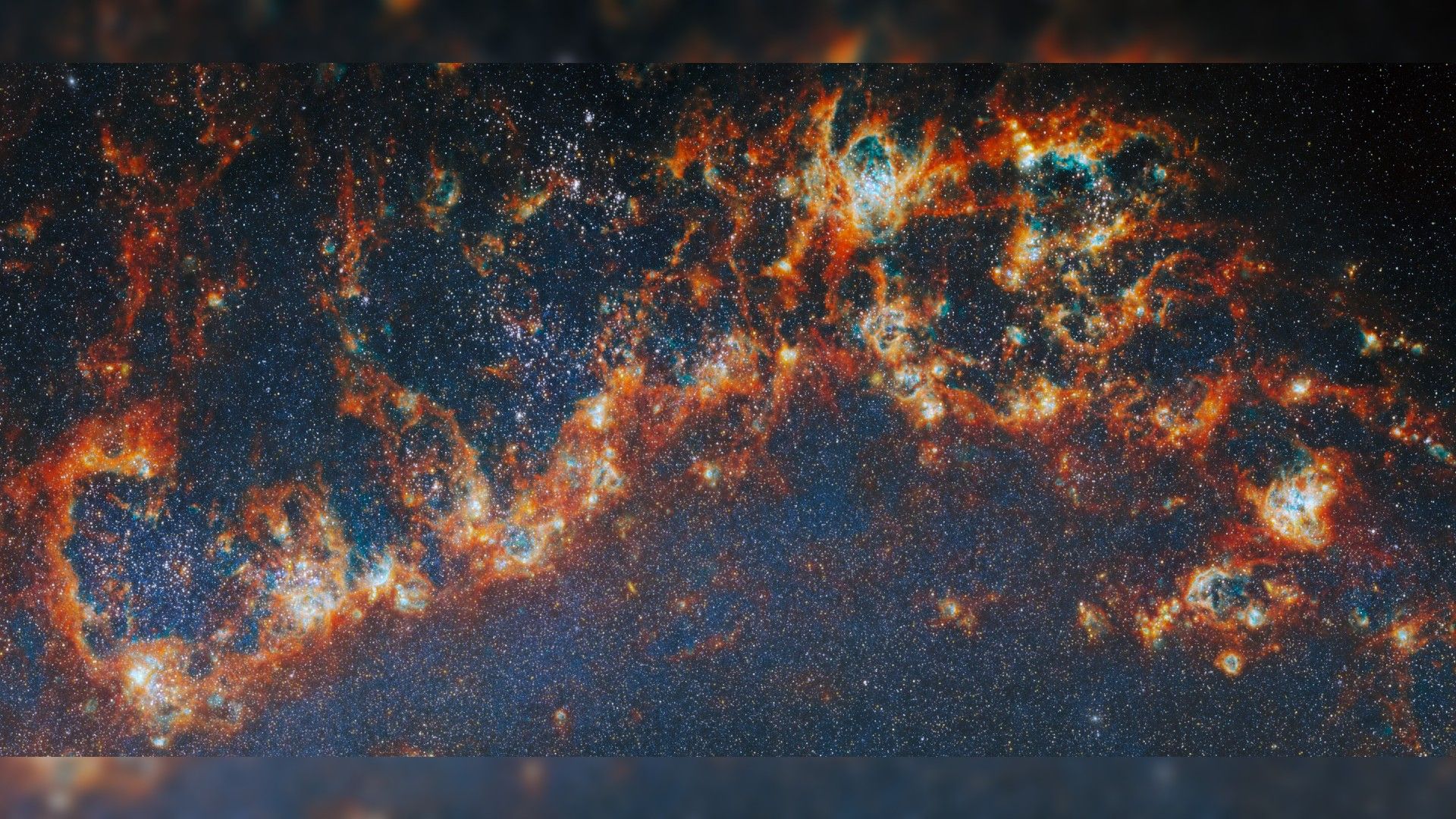
On May 13, 2026, the James Webb Space Telescope released a breathtaking new image of M51 — the Whirlpool Galaxy — revealing the iconic spiral structure in remarkable infrared detail. The image showcases the intricate dust lanes and star-forming regions that make M51 one of the most-photographed galaxies in the night sky.
A New Planet Type That "Reeks of Rotten Eggs"
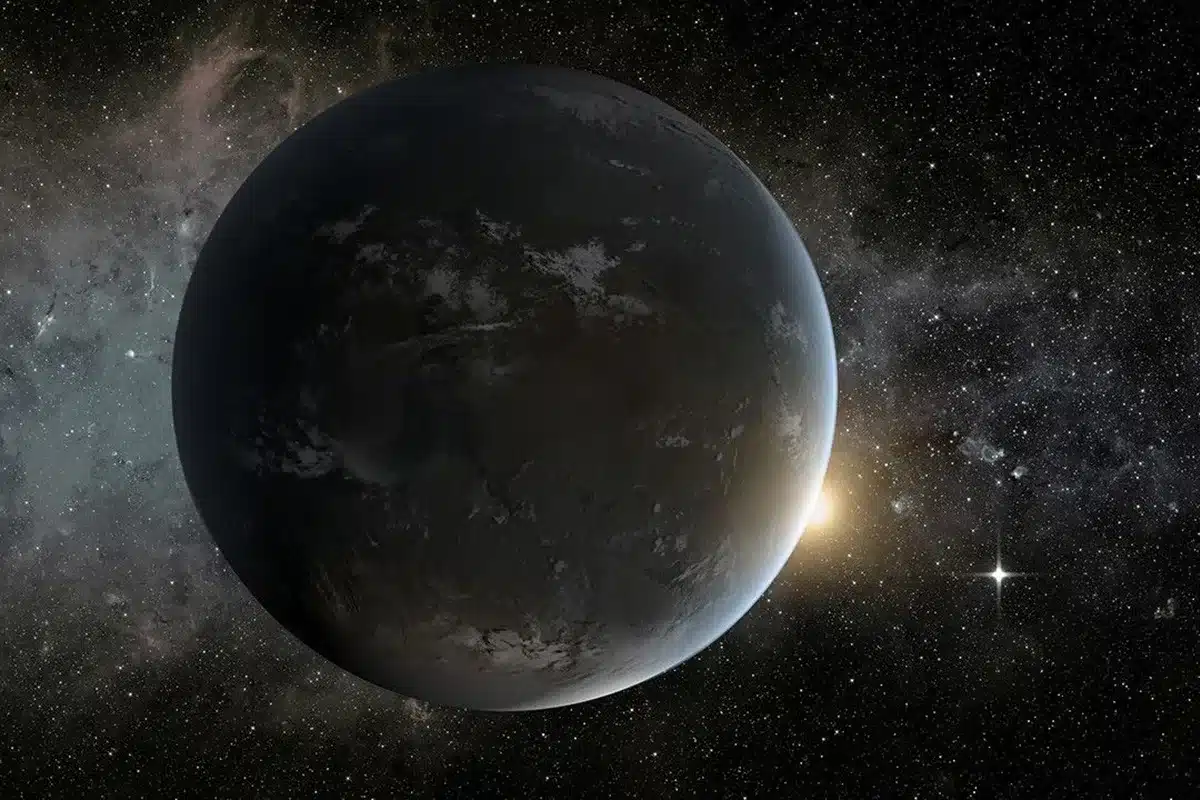
Astronomers have unveiled a previously unknown category of exoplanet: L 98-59 d, a world with a molten surface and a sulfur-rich atmosphere that defies all existing planetary classification schemes. Described as smelling of rotten eggs due to its sulfur compounds, this peculiar world challenges scientists' understanding of how planetary atmospheres form and evolve.
Gear & Tips
Catching the Pre-Dawn Planetary Scene
This week's pre-dawn sky rewards early risers with a low-horizon pairing of Mars and Saturn — but you'll need a clear, flat eastern horizon to spot them. A pair of binoculars will help tease out Mars's reddish tint against the twilight glow. Set an alarm for about 45–60 minutes before sunrise, and give your eyes 10–15 minutes to dark-adapt away from artificial light.
Apps for Real-Time Sky Tracking
If you're hunting for planets near the horizon, a sky-mapping app such as Stellarium or SkySafari can pinpoint exactly where Mars and Saturn will appear for your location and time. Both apps display real-time planet positions and can alert you to conjunctions and other sky events coming up in May. These tools are especially useful for planning pre-dawn sessions when objects are close to the horizon and visibility windows are short.
Look Ahead: Blue Moon in Late May
NASA's May skywatching guide highlights a rare Blue Moon — the second full moon in a calendar month — coming at the end of May. Start planning your viewing spot now: a wide open horizon to the east is ideal for catching the full Moon rising dramatically after sunset.
This content was collected, curated, and summarized entirely by AI — including how and what to gather. It may contain inaccuracies. Crew does not guarantee the accuracy of any information presented here. Always verify facts on your own before acting on them. Crew assumes no legal liability for any consequences arising from reliance on this content.
Powered by
