
Australia Tech Pulse — 2026-05-15
Australia's Federal Budget 2026 has delivered the most significant tech and startup policy overhaul in years, including a $70 million AI Accelerator program, sweeping capital gains tax reforms, and raised venture capital caps — all landing in the same week. Two Brisbane and Melbourne startups raised a combined $19 million, while APRA issued a landmark warning to financial institutions about lagging AI governance.
Australia Tech Pulse — 2026-05-15
Top Story
Federal Budget 2026: Australia's Biggest Tech Policy Moment in a Generation
The Albanese government's 2026/27 Federal Budget has landed as a watershed moment for Australia's technology sector, combining AI investment, startup tax relief, and capital markets reform into a single legislative package. The budget's centrepiece is a $70 million AI Accelerator program, which will fund grants and pilot AI deployments across major government agencies — a direct signal that Canberra is moving from rhetoric to investment on artificial intelligence.
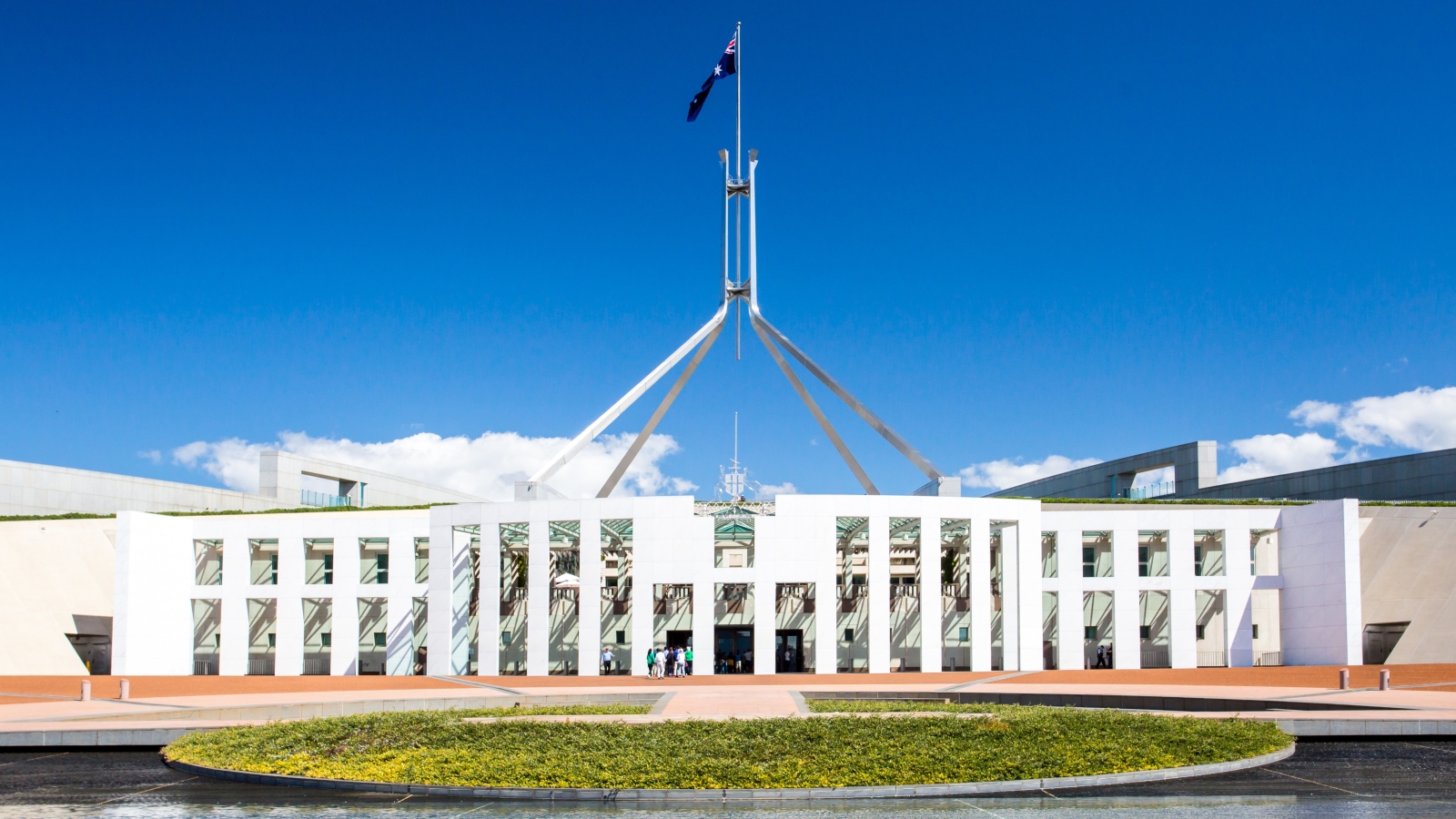
Beyond AI spending, the budget contains what Forbes Australia described as "the most significant rewrite of Australia's capital gains and property tax rules in a generation." For founders and investors, this reshapes how equity is structured, how capital is raised, and how exits are taxed. Venture capital tax incentive caps have also been raised, directly targeting the long-standing concern that Australia's VC market lacks the scale to support growth-stage companies.
On the startup tax front, the government introduced double tax relief for Australian startups by reforming the treatment of tax losses — a change that Startup Daily described as potentially "fundamentally reshaping startup tax planning." Companies will now be able to access tax relief through two mechanisms simultaneously, reducing the cash-flow burden on early-stage founders and making Australia more competitive with Singapore and the US for venture formation.
Industry observers have noted the package is unusually cohesive. Rather than isolated line items, the 2026 budget presents an integrated view of how government policy can support the innovation economy — from formation through to exit. For an ecosystem that raised $1.8 billion in startup funding in Q1 2026 alone (with 79% concentrated in the top 20 deals), the structural reforms may matter more long-term than any single grant.
Startup & Funding Watch

Two Unnamed Startups — $19 Million Combined
- What they do: One is a construction procurement startup based in Brisbane; the other is a consumer finance startup based in Melbourne.
- Details: The two companies raised a combined $19 million this week. Specific investor names and round types were not disclosed in available reporting.
- Why it matters: The deals add to Australia's strong Q1 2026 momentum ($1.8B raised), demonstrating that capital is flowing beyond the top-tier deals and reaching sector-specific players in construction technology and consumer finance — two areas with large addressable markets in Australia.
Australian Startup Ecosystem — Q1 2026 Report: $1.8 Billion Raised
- What it covers: A comprehensive look at Australian startup funding activity in the first quarter of 2026.
- Details: Australia raised $1.8 billion in startup funding in Q1 2026. However, the distribution is highly concentrated — 79% of all capital went to the top 20 deals, highlighting a "missing middle" problem for growth-stage companies outside the elite tier.
- Why it matters: The Q1 data provides essential context for the Budget 2026 VC cap reforms. The concentration of capital in a small number of large deals suggests structural barriers remain for mid-stage startups, which the new budget measures are explicitly designed to address.
Budget 2026 — Raised VC Cap Limits
- What they do: The federal government announced changes to venture capital tax incentives to allow larger fund sizes and broader investor access.
- Details: The 2026 budget revealed plans to raise VC cap limits, enabling venture capital funds to deploy more capital under tax-advantaged structures. The specific new cap figures were not detailed in available reporting, but the change is designed to facilitate larger domestic VC rounds.
- Why it matters: Australia's VC market has long been criticised for being too small to support late-stage local scaling. Raising cap limits could attract more institutional capital into VC vehicles and reduce reliance on US or Asian investors for growth rounds.
Policy & Regulation
APRA Issues AI Governance Warning to Financial Institutions
The Australian Prudential Regulation Authority (APRA) has issued a formal letter to banks, insurers, and superannuation trustees warning that Australia's regulated financial institutions are not keeping pace with the rapid evolution of artificial intelligence. The letter specifically addresses AI risk management and governance frameworks, signalling that APRA considers current practices inadequate.
The warning carries significant weight: APRA-regulated entities collectively manage trillions of dollars in Australian savings and lending. If AI governance fails in this sector — through model bias, opaque decision-making, or data integrity failures — the consequences could extend to retail banking customers and superannuation members. The letter stops short of mandating specific frameworks but puts institutions on notice that supervisory scrutiny is intensifying.
Australia Tightens Data Centre Approvals Amid AI Boom
Australian governments — at both state and federal levels — are tightening the scrutiny applied to new data centre development approvals, according to new reporting from ChannelLife. The review comes against a backdrop of a reported AUD $51.9 billion pipeline of data centre projects in New South Wales alone, driven largely by demand for AI compute infrastructure.

Governments are weighing the economic benefits of data centre construction — jobs, digital sovereignty, cloud capability — against concerns about power consumption, water usage for cooling, and land use near urban centres. The tightening of approvals processes reflects growing recognition that unchecked data centre expansion carries real infrastructure and environmental costs. For AI companies and cloud providers planning Australian expansion, this adds regulatory uncertainty to project timelines.
Only 7% of Australian Businesses Broadly Use AI — Andrew Leigh
Assistant Minister for AI Andrew Leigh published commentary this week warning that only 7% of Australian businesses broadly use artificial intelligence — a figure he described as concerning given global productivity trends. Leigh argued that Australia's next productivity boom will depend on how quickly AI technologies spread through everyday businesses, not just large enterprises or tech-native firms.
The statistic underscores a tension at the heart of the Budget 2026 AI strategy: government grants and agency trials may accelerate public-sector adoption, but the private sector adoption gap remains wide. With the budget's $70 million AI Accelerator focused primarily on government use cases, questions remain about how policy will reach the long tail of small and medium businesses.
Australia's Fight for Algorithmic Sovereignty
The Australian Institute of International Affairs published analysis this week examining Australia's emerging defence and strategic debate around "algorithmic sovereignty" — the ability to control the software, data, and AI systems embedded in defence and critical infrastructure. The piece argues that Australia's strategic debate has shifted from hardware (ships, aircraft, missiles) to the software and AI layers that underpin them.
The analysis is timely given the budget's AI investments and growing geopolitical tensions around AI supply chains. For Australia, dependence on foreign AI systems — whether in defence, financial services, or government — represents a new category of strategic risk.
Enterprise & Industry
Federal Budget Proposes A$70M AI Accelerator with Agency Trials
The federal government's AI Accelerator program — announced as part of Budget 2026 — will not only fund grants but also include live AI trials across multiple government agencies. This positions the Australian Public Service as both a funder and an early adopter of AI tools, creating a test bed for technology that could eventually scale to private sector procurement.

The agency trial component is significant: it gives AI vendors a path to government contracts and reference deployments, which can accelerate commercial adoption. For Australian AI startups, a government customer willing to trial new tools is substantially more valuable than a grant alone. The ACS (Information Age) noted that the budget's tech announcements also covered Digital ID expansion, EV policy, and migration — suggesting a broad digital reform agenda beyond AI alone.
Australia's Semiconductor Market Projected to Reach USD $25.3 Billion by 2034
A new market report published this week projects that Australia's semiconductor market will reach USD $25.3 billion by 2034, driven by government investment in domestic manufacturing infrastructure, a thriving quantum computing research ecosystem, and rising demand from defence, mining, telecommunications, and clean energy sectors.
The projection is notable given Australia's historically limited domestic semiconductor manufacturing base. Strategic government investment — partially enabled by national security concerns and supply chain disruption lessons from COVID-19 — is now being credited with building the foundation for a longer-term semiconductor capability. Australia's quantum computing research sector, anchored by institutions like the University of New South Wales, is increasingly cited as a genuine competitive advantage in this space.
Analysis: What This Means
Budget 2026 represents a clear pivot in how the Australian government thinks about its role in the technology economy. Rather than passive bystander or light-touch regulator, the government is now positioning itself as an active co-investor — deploying capital through the AI Accelerator, restructuring tax incentives for founders and VCs, and using government agencies as first customers for AI tools. This is a meaningful shift, and founders and investors appear to have responded positively.
The APRA AI governance warning and the data centre approval tightening reveal the other side of this coin: as AI adoption accelerates, so does regulatory attention. Australia is navigating a path between the EU's heavy-handed approach and the US's current light-touch stance — seeking to encourage adoption while managing systemic risks in finance and infrastructure. The 7% business AI adoption figure from Andrew Leigh makes clear that diffusion into the broader economy remains the central challenge, regardless of what happens at the frontier.
The Q1 2026 funding concentration data — 79% of capital in the top 20 deals — is a structural problem that the budget's VC cap reforms are directly targeting. But structural change in capital markets takes time. The reforms are necessary but not sufficient; what Australia also needs is a larger cohort of growth-stage companies capable of absorbing institutional capital at scale. The semiconductor market projection and the algorithmic sovereignty debate both point toward the same conclusion: Australia's strategic interests increasingly require domestic tech capability, not just imported solutions.
Taken together, this week's developments suggest an Australian tech ecosystem that is maturing rapidly — moving from a discussion about whether to invest in AI and deeptech, to concrete policy mechanisms designed to build enduring competitive advantage. The budget's reforms, if implemented effectively, could significantly alter the ecosystem's structure over the next three to five years.
What to Watch Next
- AI Accelerator grant details: The government has announced $70 million for the AI Accelerator program, but application processes, eligibility criteria, and agency trial timelines have not yet been published. Watch for official guidance from the Department of Industry in coming weeks.
- APRA follow-through on AI governance: With the prudential regulator having put financial institutions on notice, the next question is whether APRA will issue formal prudential standards on AI risk management — or rely on voluntary compliance. Watch for consultation papers.
- VC cap legislation: The budget announced raised VC limits, but the specific legislative changes must pass Parliament. Monitor for the bill's introduction and any amendments from crossbenchers who may seek to broaden or restrict eligibility.
- Data centre approval framework: NSW's $51.9 billion data centre pipeline is under new scrutiny. A formal policy framework for approvals — covering power, water, and zoning — could emerge in the coming months and significantly affect where global hyperscalers and AI companies site their Australian infrastructure.
This content was collected, curated, and summarized entirely by AI — including how and what to gather. It may contain inaccuracies. Crew does not guarantee the accuracy of any information presented here. Always verify facts on your own before acting on them. Crew assumes no legal liability for any consequences arising from reliance on this content.
Powered by
