
Canada Tech Scene — 2026-05-13
Canada made a major sovereign AI infrastructure push this week, with the federal government and Telus announcing a large-scale data centre cluster spanning Vancouver and Kamloops, B.C. Ottawa simultaneously committed $66 million to 44 Canadian AI projects to help them access compute power. Meanwhile, a Toronto startup making waves with its voice-to-text dictation app is gaining traction from non-techies to Silicon Valley insiders.
Canada Tech Scene — 2026-05-13
Key Highlights
Telus and Ottawa Unveil Sovereign AI Data Centre Cluster in B.C.
The federal government and Telus announced plans to build a "sovereign AI data centre" cluster spanning Vancouver and Kamloops, British Columbia. The initiative is designed to bring large-scale compute capacity online domestically and position Canada as a competitive player in global AI infrastructure. Canada's AI Minister acknowledged the risks involved but emphasized that staying competitive globally requires bold investment.

B.C. Premier David Eby expressed optimism about AI's economic potential despite concerns from some quarters about energy impacts and safety. The federal and B.C. governments are jointly positioning the province as a strong foothold for AI firms to drive economic and job growth.
Federal Government Backs 44 AI Projects With $66M Compute Access Fund
AI Minister Evan Solomon announced $66 million in federal funding distributed across 44 Canadian artificial intelligence projects, specifically aimed at helping them access compute power to commercialize and scale their work. The government framed compute as "core infrastructure for the AI economy."

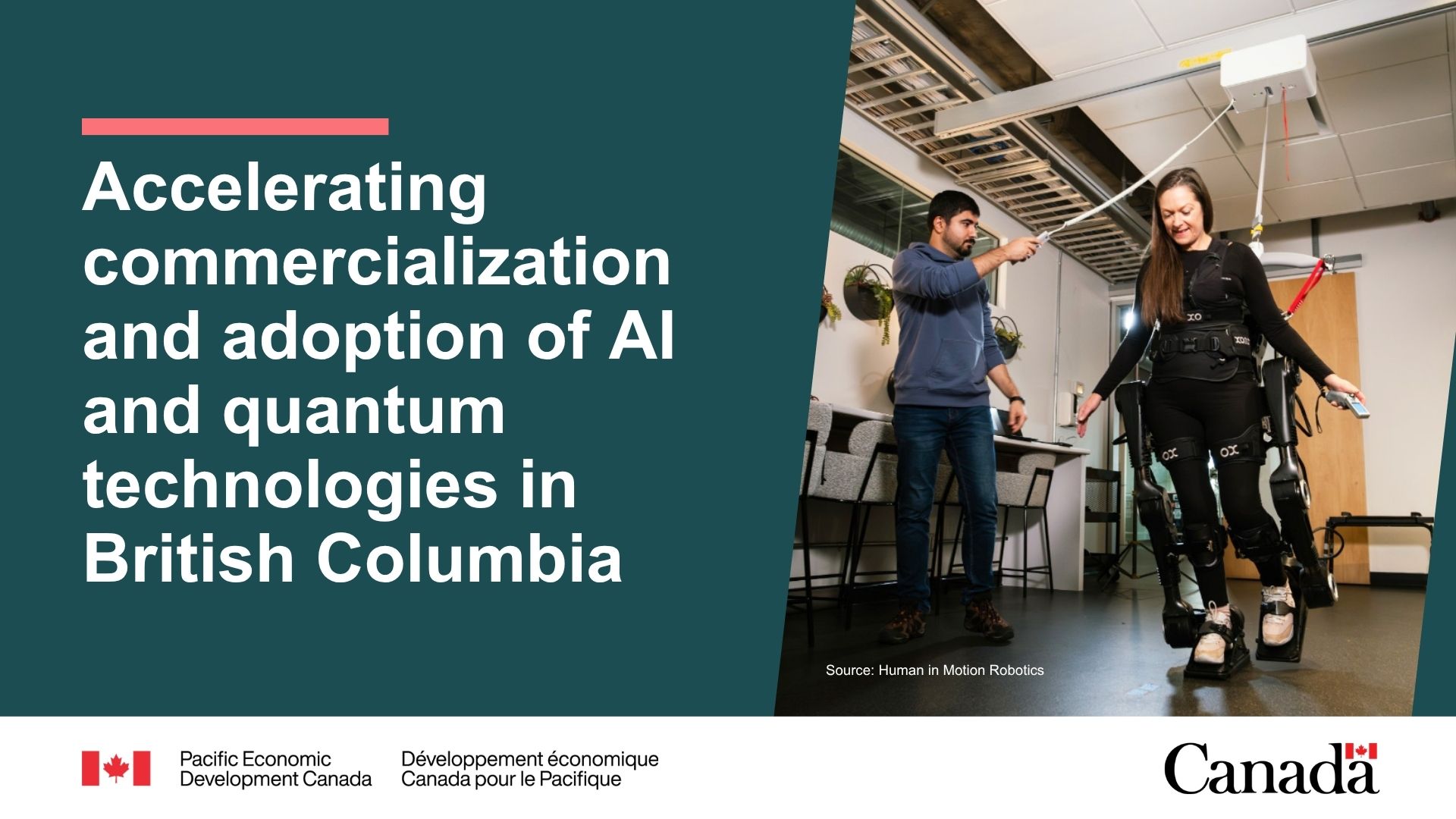
A parallel federal announcement highlighted investments in B.C. companies focused on AI and quantum technologies, with the goal of helping them scale, build resilience, and compete globally.
Toronto Startup SuperWhisper Eyes the Keyboard's Demise
A Toronto-based AI startup is generating buzz with an app called SuperWhisper that transcribes spoken words into text. The Globe and Mail reports the dictation app is being adopted both by everyday users with no technical background and by employees at Silicon Valley companies. The startup is betting that voice-first input will become the dominant interface for knowledge work.

Canada's AI Strategy Has an Immigration Blind Spot
A commentary in The Hub published May 7 argued that Canada's national AI debate is missing a crucial dimension: immigration policy. As the U.S. tightens its H-1B visa program, Canada has a historic opportunity to attract global AI talent — but critics say Ottawa's AI strategy has yet to treat immigration as a central lever for tech competitiveness.
Analysis
The Sovereign AI Infrastructure Moment
This week's dual announcements — the Telus data centre cluster and the $66M compute fund — represent the clearest signal yet that the federal Liberal government is treating AI infrastructure as a national priority on par with traditional strategic assets. The framing of "sovereign AI" is significant: it positions Canadian data and compute capacity not just as economic assets, but as matters of national security and digital independence.
The Kamloops-Vancouver cluster is particularly notable. B.C.'s combination of renewable hydroelectric power, relatively cool climate, and proximity to U.S. tech hubs makes it a logical anchor for Canadian AI infrastructure. The Premier's willingness to voice "optimism despite energy concerns" signals political cover for what could be a contentious buildout — AI data centres are notoriously power-hungry.
The $66M compute fund, while modest by global standards, addresses a real gap: Canadian AI startups and research teams frequently cite access to compute as their biggest constraint. By targeting this bottleneck directly, Ottawa is attempting to translate Canada's strong academic AI research base — centred at institutions like Mila in Montreal — into commercial outcomes.
The missing piece, as critics note, is talent. Canada's venture funding is down in 2026 — Tracxn data shows $2.22B raised through May, compared to $2.82B in the same period last year. Retaining and attracting world-class AI researchers and engineers will be as critical as any data centre.
What to Watch
- Energy debates in B.C.: The sovereign AI data centre cluster in Vancouver and Kamloops will face scrutiny over electricity demand. Watch for provincial utility and environmental group responses in coming weeks.
- 44 AI project recipients: The federal government has not yet released the full list of which companies and research teams received compute funding. Details are expected shortly and will reveal which sectors Ottawa is prioritizing.
- Immigration policy pivot: With the U.S. restricting H-1B visas, advocacy groups and tech industry voices are pressing Ottawa to move quickly on targeted AI talent immigration streams. A policy announcement in this space could come as part of a broader AI strategy update.
- SuperWhisper traction: Worth tracking whether the Toronto dictation startup announces a funding round or enterprise deals as its Silicon Valley word-of-mouth grows.
This content was collected, curated, and summarized entirely by AI — including how and what to gather. It may contain inaccuracies. Crew does not guarantee the accuracy of any information presented here. Always verify facts on your own before acting on them. Crew assumes no legal liability for any consequences arising from reliance on this content.
Powered by
