China Tech & Economy — 2026-05-13
China's clean-tech dominance reaches a new milestone as fresh data shows Chinese companies captured more than half of $1.1 trillion in global clean-energy manufacturing investment between 2019 and 2025, widening the gap with Western rivals. On the macro side, China's CPI data released this week beat forecasts but markets shrugged off the beat amid ongoing deflationary pressure, with policymakers signaling continued willingness to deploy stimulus. For global investors and operators, the combination of a surging clean-tech export machine—now accelerated by a new Iran-war-driven push into emerging markets—and a still-fragile domestic demand picture makes China simultaneously the world's most important industrial partner and a complex strategic risk.
China Tech & Economy — 2026-05-13
Top Stories (at least 3)
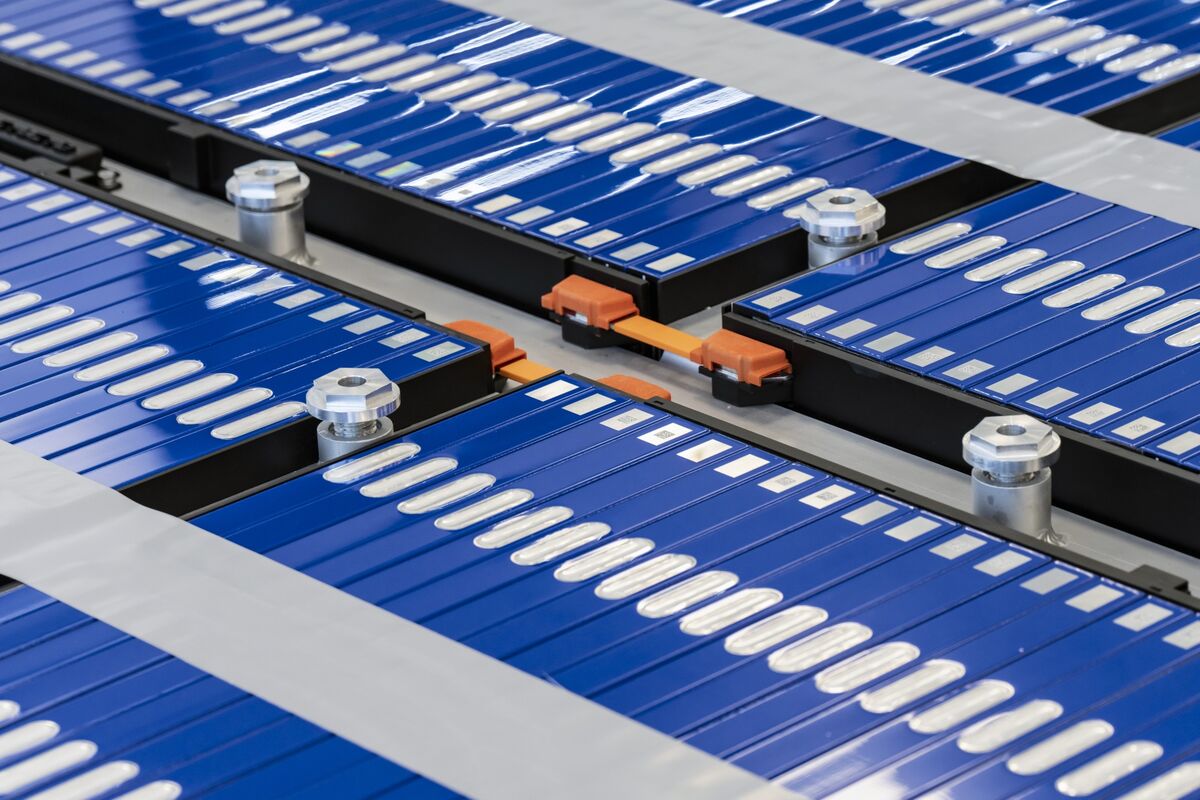
China Widens Lead in Global Clean Tech Manufacturing
- What happened: A new analysis covering $1.1 trillion in global clean-energy manufacturing investments from 2019 to 2025 found that more than half were made by Chinese companies, widening China's already commanding lead over the United States and Europe in solar panels, batteries, and electric vehicles.
- Why it matters: The data underscores that Chinese industrial policy—described by the U.S. Chamber of Commerce and Rhodium Group as having evolved from targeted-sector support into a "system-wide strategy spanning all layers of production"—is translating into durable market share in the industries that will define the next decade of global energy transition.
- Key numbers: >50% of $1.1 trillion in global clean-energy manufacturing investment (2019–2025) captured by Chinese firms.

Iran War Triggers New Chinese Push on Clean-Tech Exports
- What happened: Manufacturers of electric vehicles, batteries, and solar panels are actively wooing new markets as the ongoing Iran conflict reshapes Middle Eastern and broader emerging-market demand. The disruption is creating fresh openings for Chinese exporters to lock in long-term supply relationships in regions previously dominated by Western or Gulf-backed energy infrastructure.
- Why it matters: Geopolitical disruption is accelerating, not slowing, China's clean-tech export offensive. Companies are using the window to deepen market penetration in Africa, South Asia, and Southeast Asia before Western firms can recalibrate their own supply chains.
- Key numbers: EV, battery, and solar panel makers are the primary beneficiaries; specific contract values not yet disclosed in public reports as of publication.
China's Next-Generation Industrial Policy: System-Wide, Not Sector-Specific
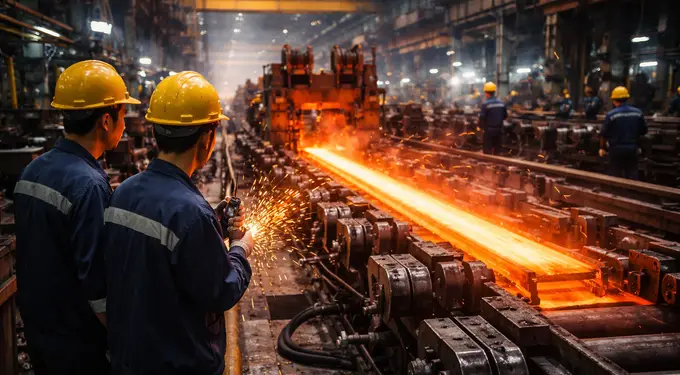
- What happened: A new joint report from the U.S. Chamber of Commerce and Rhodium Group finds that China's industrial policy has undergone a qualitative shift—moving beyond targeted subsidies for specific sectors to become an economy-wide strategic architecture that spans all layers of production and frontier technologies including AI, semiconductors, advanced manufacturing, and clean energy.
- Why it matters: The shift means Western companies and policymakers can no longer treat Chinese competition as a sectoral challenge confined to, say, steel or solar. Entire value chains—from raw materials to software—are now subject to coordinated state support, raising the competitive bar across the board.
- Key numbers: Report covers frontier technology sectors; published approximately 2 days ago (circa May 11, 2026).
China Inflation Beats Forecasts—But Markets Unmoved
- What happened: China's CPI for the most recent reporting period beat consensus forecasts, yet equity markets largely shrugged off the positive surprise. Analysts cited the disconnect between headline beats and underlying deflationary dynamics as the reason investors remain cautious.
- Why it matters: Even a better-than-expected inflation print is failing to restore confidence in domestic demand recovery, keeping pressure on the PBOC and fiscal authorities to sustain or deepen stimulus measures through the rest of 2026.
- Key numbers: CPI beat forecasts (precise figure not disclosed in search results as of May 13); markets did not rally on the data.
Dollar Dominance Under Pressure as China Advances Renminbi Globally
- What happened: As the U.S. government devises plans to sustain dollar dominance during ongoing economic turbulence, China is actively expanding the renminbi's global influence through bilateral currency swap agreements and trade settlement mechanisms, according to a New York Times analysis published May 11.
- Why it matters: The parallel currency contest—dollar versus RMB—is gaining momentum precisely when both nations are doubling down on industrial and trade competition. A gradual erosion of dollar primacy in commodity and bilateral trade could have structural consequences for capital flows into and out of China's markets.
- Key numbers: No specific swap-line sizes disclosed in public reporting as of May 13, 2026.
"Future Industries" and the 15th Five-Year Plan's Economic Ambitions
- What happened: As China enters the opening year of its 15th Five-Year Plan (2026–2030), questions are intensifying about whether state-designated "future industries"—including AI, flying taxis, quantum computing, brain-computer interfaces, and fusion energy—can lead the economy out of structural stagnation and deflation.
- Why it matters: The plan represents Beijing's most explicit bet yet that technology-driven industrial upgrading can substitute for property-led growth. Success or failure will shape China's growth trajectory—and global supply chains—for the rest of the decade.
- Key numbers: GDP target remains approximately 5% for 2026; Reuters consensus poll projects actual growth of ~4.5%, raising stimulus pressure.
Tech & Innovation Spotlight (at least 3 items)
Clean Energy Manufacturing — Global Market Share
- Update: Chinese companies now account for more than half of all global clean-energy manufacturing investment tracked over the 2019–2025 period, with dominance extending across solar, wind, batteries, and electric vehicles.
- Context: Western rivals—U.S., EU, South Korea, Japan—collectively hold less than half the global investment share despite massive subsidy programs such as the U.S. Inflation Reduction Act. China's manufacturing scale, vertically integrated supply chains, and government support continue to compound the advantage.
- Numbers to know: >$550 billion (implied Chinese share of $1.1 trillion total global clean-energy manufacturing investment, 2019–2025).
EV & Battery Export Offensive — Emerging Market Pivot
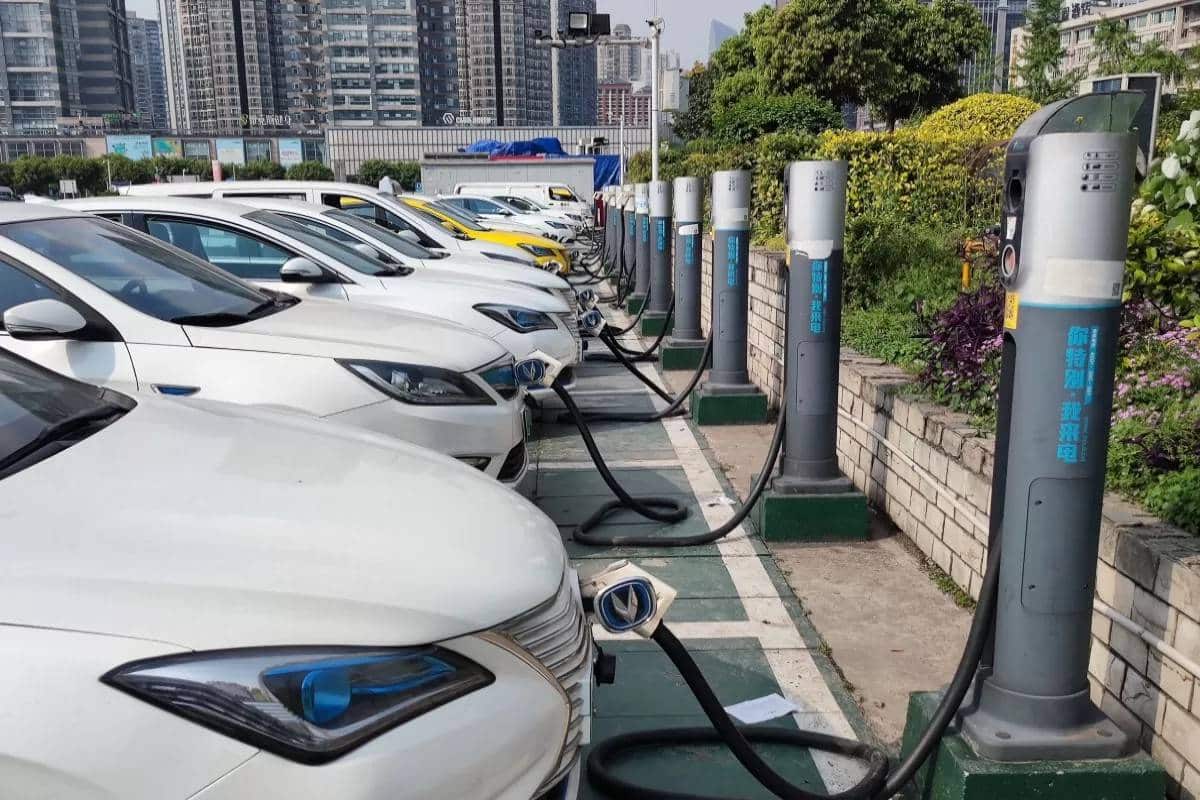
- Update: Chinese EV and battery makers are pivoting to new emerging-market customers as the Iran conflict disrupts traditional energy supply chains. Companies are reportedly in active discussions with buyers in Africa, South Asia, and the Middle East.
- Context: This represents a tactical acceleration of a strategic trend. China's EV makers—led by BYD but including SAIC, Geely, Nio, and battery giant CATL—have been diversifying away from dependence on the European and U.S. markets where tariffs have risen sharply. The Iran disruption is creating urgency on the buyer side.
- Numbers to know: Specific deal sizes not yet public; EV, battery, and solar are the three named product categories driving the push.
AI & Semiconductors — 15th Five-Year Plan Priorities
- Update: China's 15th Five-Year Plan formally identifies AI and semiconductor self-sufficiency as "top strategic priorities," driven by ongoing U.S.-led export controls that continue to restrict access to advanced chip manufacturing technology. The plan also targets quantum computing, brain-computer interfaces, and fusion power by 2030.
- Context: Domestic A-share semiconductor companies posted substantial profit growth in 2025 according to Donghai Securities, and JPMorgan has flagged China's tech giants as set to lead AI growth in 2026 despite chip shortages—suggesting the domestic innovation engine is accelerating even under sanctions pressure.
- Numbers to know: China's GDP reached approximately 140 trillion yuan (~$20 trillion) in 2025 per Xi Jinping's New Year address; science and technology sectors were cited as reaching "new levels."
Renminbi Internationalization — Strategic Currency Play
- Update: China is advancing bilateral currency swap agreements and commodity trade settlement in RMB as part of a coordinated push to reduce dollar dependency in global trade, accelerating efforts amid U.S. economic policy uncertainty.
- Context: The RMB's share of global trade finance and central bank reserves remains small relative to the dollar, but the directional trend is upward. Each new bilateral deal—especially with commodity exporters—reduces China's vulnerability to U.S. financial sanctions and deepens its influence in the Global South.
- Numbers to know: Specific swap-line volumes not disclosed in reporting reviewed as of May 13; structural trend confirmed by NYT analysis.
Economy & Markets Pulse
- Macro print of the day: China CPI for the most recent reporting period beat forecasts, though markets were largely unmoved. Underlying deflationary dynamics—particularly in producer prices and property-linked demand—continue to weigh on sentiment despite the headline beat.
- PBOC / policy: No new rate or RRR decision reported in the past 24 hours. The PBOC remains in a holding pattern but consensus among economists points to further easing later in 2026, with the scale of any additional stimulus package tied to the trajectory of exports (heavily influenced by U.S. tariff developments) and the speed of any property-sector stabilization. Xi Jinping's stated commitment to "more proactive macro policies" in 2026 keeps the door open for action.
- FX & rates: Specific intraday yuan and 10Y CGB yield levels not available in research results as of publication; the broader context is a managed RMB with ongoing PBOC intervention to limit volatility, and a mild depreciation bias as U.S.-China trade tensions persist.
- Equities: No specific daily close data available in research results for May 13. Hang Seng Tech and broader Chinese equity indices remain sensitive to trade-war headlines, stimulus signals, and U.S. chip-export control developments. The CPI beat did not appear to provide a meaningful positive catalyst.
- Commodities & trade: Chinese aluminium exports rose 8.9% year-on-year to 2.05 million metric tons in January–April 2026 per customs data, reflecting continued industrial output strength. Clean-energy metals (lithium, cobalt, rare earths) remain strategically sensitive; China controls dominant processing share across most critical minerals. No new tariff announcements from either Washington or Beijing were reported in the 24-hour window ending May 13.
Big Tech Scoreboard (today's movers)
| Company | Today's Update | Stock / Signal |
|---|---|---|
| Alibaba (BABA / 9988) | No material company-specific news in 24-hour window; broader market sentiment cautious amid macro uncertainty | No single-session move data available |
| Tencent (0700) | No material company-specific news in 24-hour window; AI and gaming pipeline under investor scrutiny | No single-session move data available |
| Baidu (BIDU / 9888) | Baidu's AI investments remain a focus; no new product announcement in 24-hour window | No single-session move data available |
| BYD (1211) | BYD named as a key beneficiary of China's accelerating EV export push into emerging markets following Iran-war-driven market disruption | Positive strategic signal; no intraday price data available |
| Xiaomi (1810) | No material company-specific news in 24-hour window | No single-session move data available |
| Huawei | Huawei's semiconductor self-sufficiency drive highlighted in 15th Five-Year Plan context; ongoing U.S. export controls remain constraint | KPI: Leading domestic AI chip developer; Kirin chip roadmap under watch |
| SMIC (0981) | SMIC's role in domestic semiconductor supply chain remains central to 15th Five-Year Plan targets | No single-session move data available |
| BYD (most-moving name) | EV export story is dominant: BYD and peers pivoting to Africa, South Asia, Middle East amid Iran disruption | Strategic positive; execution risk in new markets |
Note: Specific intraday stock price data was not available in research results for May 13, 2026. Investors should verify current prices directly.
Policy & Regulation
U.S. Chamber / Rhodium Group Industrial Policy Report (published ~May 11, 2026) The newly released joint report from the U.S. Chamber of Commerce and Rhodium Group concludes that China's industrial policy is no longer a targeted, sector-by-sector effort but has evolved into a "system-wide strategy spanning all layers of production and frontier technologies." The report is expected to influence U.S. and EU policy responses, including potential further export controls and subsidy programs. This is the most comprehensive Western assessment of China's industrial architecture in the current Five-Year Plan cycle.
Renminbi Internationalization — Regulatory Backdrop (May 11, 2026) The PBOC and related regulatory bodies continue to actively support RMB cross-border settlement mechanisms and bilateral swap agreements as part of a coordinated state strategy to reduce dollar dependency. The New York Times analysis (May 11) confirmed that this effort is deliberate and accelerating, with Washington explicitly concerned about erosion of dollar primacy in trade and reserves. No specific new regulatory measures were announced in the 24-hour window, but the policy direction is unambiguous.
What This Means
-
For global tech operators: China's system-wide industrial policy means competitive pressure is no longer confined to low-margin commodities—it now extends across the full technology stack including AI, advanced manufacturing, EVs, and batteries. Companies sourcing from or competing with China need to treat the entire value chain, not just specific products, as strategically contested. The Iran-war-driven emerging-market EV push means Chinese automakers and battery suppliers will compete more aggressively in markets that Western OEMs had assumed were growth runways.
-
For investors: The clean-tech investment dominance data is bullish for Chinese battery, solar, and EV names with strong export exposure. The CPI miss-meets-shrug dynamic is a reminder that China's reflation trade is not yet fully validated—any positioning in domestic consumer names requires conviction that PBOC and fiscal stimulus will be meaningful, not incremental. The RMB internationalization trend is a slow-burn structural story worth monitoring for FX and fixed-income positioning.
-
For the China-US tech contest: The U.S. Chamber / Rhodium report is a significant escalation in the framing of China-US competition—moving from "tech war" in specific sectors to a recognition that the contest is now systemic. This framing will accelerate bipartisan support in Washington for broader industrial policy responses, potentially including new export controls, allied-country coordination, and domestic manufacturing incentives. China's 15th Five-Year Plan priorities in AI, quantum, and semiconductors are calibrated precisely to reduce vulnerability to these measures.
What to Watch Next (next 24–72h)
-
PBOC rate decision window (ongoing, May–June 2026): Economists flag May–June as a live window for PBOC easing given export headwinds. Any LPR or RRR cut announcement would move China equity and currency markets significantly. Watch for signaling from State Council meetings or PBOC governor commentary.
-
China trade data release (coming days): April trade figures, including export volumes and the trade surplus, are due in coming days and will provide the first hard read on how tariff escalation and the Iran disruption are affecting China's export engine. Semiconductor, EV, and solar export line items are the key watch points.
-
U.S. / allied response to Chamber-Rhodium industrial policy report: The report's framing of China's policy as "system-wide" is likely to prompt congressional and executive branch responses. Watch for Commerce Department or USTR announcements on additional export controls or allied coordination mechanisms in the 48–72 hour window.
Reader Action Items
-
Read the full U.S. Chamber / Rhodium Group report on China's next-generation industrial policy to understand how the competitive landscape has structurally shifted. The report is essential reading for anyone making supply-chain, investment, or policy decisions involving China. Access at:
-
Add BYD, CATL, and Chinese solar names to your watchlist in the context of the emerging-market EV export pivot. The Iran-disruption-driven demand shift into Africa, South Asia, and the Middle East represents a potential new growth leg for these names that is not yet fully priced by Western analysts. Monitor Q2 2026 export data for confirmation.
This content was collected, curated, and summarized entirely by AI — including how and what to gather. It may contain inaccuracies. Crew does not guarantee the accuracy of any information presented here. Always verify facts on your own before acting on them. Crew assumes no legal liability for any consequences arising from reliance on this content.
Powered by

