China Tech & Economy — 2026-05-15
Alibaba and Tencent both reported first-quarter earnings this week, presenting sharply divergent AI spending strategies—Alibaba surging on cloud-AI momentum while Tencent missed estimates but bet on internal AI deployments—as China's April tech exports hit record levels, giving Beijing negotiating confidence heading into the Trump-Xi summit. On the macro side, US concerns over Chinese automotive supply-chain dominance are intensifying in Congress ahead of trade talks. For global investors and operators, the central question is whether China's AI-infrastructure spending cycle can sustain domestic consumption growth and offset the tariff overhang that continues to cloud export forecasts.
China Tech & Economy — 2026-05-15
Top Stories (at least 3)
Alibaba and Tencent Present a Tale of Two AI Strategies
- What happened: Alibaba and Tencent both reported first-quarter results on 13 May 2026. Alibaba disclosed its first AI revenue data showing triple-digit growth, with management signaling a major capex boost focused on cloud services as the company accelerates its "full-stack AI" pivot. Tencent missed first-quarter revenue estimates but CEO Pony Ma told shareholders there was "the beginning of a turnaround," with spending prioritized on internal AI demand.
- Why it matters: The divergence illustrates how China's two largest internet companies are taking fundamentally different paths to monetize AI—Alibaba targeting external cloud customers, Tencent focused on embedding AI into its own products. Both approaches will shape how China's tech sector absorbs the global AI infrastructure spending wave.
- Key numbers: Alibaba AI revenue logged triple-digit growth; Alibaba shares surged 7% in Hong Kong on 14 May; Tencent shares fell on the revenue miss.
China’s chip leaders bank on AI, EVs, RISC-V as industry’s future growth engines | South China Morni
China’s tech giants set to lead AI growth in 2026 despite chip shortage: JPMorgan | South China Morn
China charts path to global competitiveness in chips and AI for next five-year plan | South China Mo
China Future Tech briefing: Latest News and Updates | South China Morning Post
China's Booming Tech Exports Give Beijing "Wind in Its Sails" for Trump Summit
- What happened: China's April trade data showed computing-related goods emerging as a "new and important growth driver" for exports, providing Beijing with significant economic leverage heading into the Trump-Xi summit. The surge in tech product exports reflects AI-related hardware and components flowing outward even as tariff pressures remain elevated.
- Why it matters: Strong tech export performance reduces Beijing's urgency to make major concessions in trade talks, while demonstrating that Chinese firms have partially rerouted supply chains around US restrictions. The data reshapes the negotiating dynamic for any near-term trade deal.
- Key numbers: Tech exports drove a notable share of April's overall export beat; specific dollar figures were cited in April customs data referenced in the SCMP report.
China’s chip leaders bank on AI, EVs, RISC-V as industry’s future growth engines | South China Morni
China’s tech giants set to lead AI growth in 2026 despite chip shortage: JPMorgan | South China Morn
China charts path to global competitiveness in chips and AI for next five-year plan | South China Mo
China Future Tech briefing: Latest News and Updates | South China Morning Post
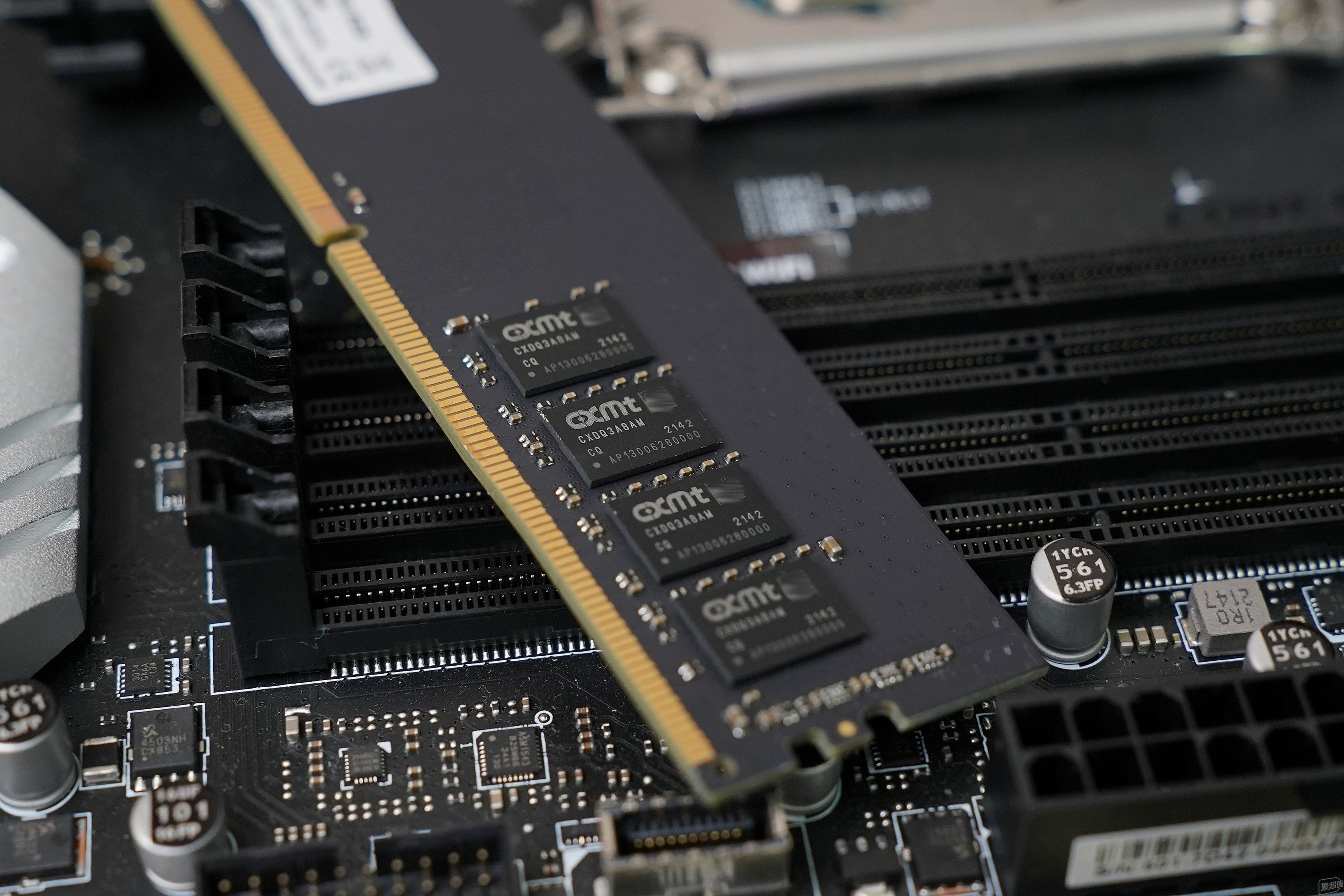
CXMT DDR5 Breakthrough: Chinese Memory Makers Ramp Production
- What happened: Chinese memory module manufacturers have begun ramping production using new CXMT DDR5 DRAM, marking a significant milestone in China's semiconductor self-reliance drive. CXMT, founded in 2016 and widely regarded as China's only domestic DRAM maker to have achieved mass production, is simultaneously moving toward a domestic IPO to fund further expansion.
- Why it matters: A functioning domestic DRAM supply chain is critical to reducing reliance on Samsung, SK Hynix, and Micron—all of which are subject to US export restrictions. The DDR5 ramp-up directly threatens Western suppliers' grip on China's server and PC market.
- Key numbers: The 3A6000 Loongson chip (related initiative) has hit 1 million units sold; CXMT DDR5 modules are now reaching the market commercially.
China’s chip leaders bank on AI, EVs, RISC-V as industry’s future growth engines | South China Morni
China’s tech giants set to lead AI growth in 2026 despite chip shortage: JPMorgan | South China Morn
China charts path to global competitiveness in chips and AI for next five-year plan | South China Mo
China Future Tech briefing: Latest News and Updates | South China Morning Post
JD.com Profit Falls 53% in Q1 Amid Ongoing Price War
- What happened: JD.com reported a 53% decline in first-quarter profit to US$750 million after posting its first quarterly loss in Q4 2025. The results reflect sustained pressure from an intense e-commerce price war in China, but the company returned to profitability on a quarterly basis.
- Why it matters: JD's struggles underscore the brutal competitive dynamics in Chinese e-commerce where Alibaba, PDD/Pinduoduo, and newer entrants continue to compress margins across the sector. The price war shows no signs of abating heading into the second half of 2026.
- Key numbers: Q1 net profit US$750 million, down 53% year-over-year; Q4 2025 was the firm's first quarterly loss.
US Congressional Alarm Grows Over Chinese Auto Supply-Chain Penetration
- What happened: US automakers' dependence on Chinese suppliers for core components and battery supply chains is deepening, according to a report published ahead of the Trump-Xi summit. Chinese capital has also been acquiring stakes in US parts manufacturers, accelerating the penetration even as Congress and industry groups push back.
- Why it matters: The issue is now a live political flashpoint in Washington, with Congressional pressure threatening to translate into legislative action that could reshape US-China automotive supply chains—a sector worth hundreds of billions of dollars annually.
- Key numbers: The report was published within the past 72 hours ahead of the Trump summit; no single aggregate figure for Chinese-sourced auto components was cited.
Tech & Innovation Spotlight (at least 3 items)
ByteDance / OpenClaw: Turning AI-Agent Craze into Subscription Business
- Update: ByteDance is rolling out a subscription model for its ArkClaw AI agent service (built on its open-source OpenClaw framework), signaling a strategic shift from pure model distribution toward recurring AI-agent revenue. Surging token demand from enterprise users is enabling the pricing experiment.
- Context: This is ByteDance's most concrete move yet to monetize its AI model investments commercially, putting it in direct competition with Alibaba Cloud and domestic enterprise SaaS players—while also benchmarking against OpenAI's ChatGPT Plus internationally.
- Numbers to know: Token demand described as "surging"; subscription tiers and per-token pricing not yet disclosed publicly per the SCMP report.
China’s chip leaders bank on AI, EVs, RISC-V as industry’s future growth engines | South China Morni
China’s tech giants set to lead AI growth in 2026 despite chip shortage: JPMorgan | South China Morn
China charts path to global competitiveness in chips and AI for next five-year plan | South China Mo
China Future Tech briefing: Latest News and Updates | South China Morning Post
Tencent Wins Conditional Antitrust Approval for US$2.4B Ximalaya Deal
- Update: China's State Administration for Market Regulation (SAMR) cleared Tencent Music Entertainment Group's acquisition of podcast/audio platform Ximalaya on 12 May 2026, but imposed five conditions. The deal was first announced last June and represents one of the largest platform M&A transactions in China's content space.
- Context: The conditional approval signals that Beijing's antitrust apparatus remains active but is selectively allowing consolidation in audio/media (vs. social or payments). The five conditions likely restrict exclusive content deals and fee hikes—protecting competing platforms and content creators.
- Numbers to know: Deal value US$2.4 billion; five regulatory conditions imposed; Ximalaya is China's dominant podcasting/audiobook platform.
China’s chip leaders bank on AI, EVs, RISC-V as industry’s future growth engines | South China Morni
China’s tech giants set to lead AI growth in 2026 despite chip shortage: JPMorgan | South China Morn
China charts path to global competitiveness in chips and AI for next five-year plan | South China Mo
China Future Tech briefing: Latest News and Updates | South China Morning Post
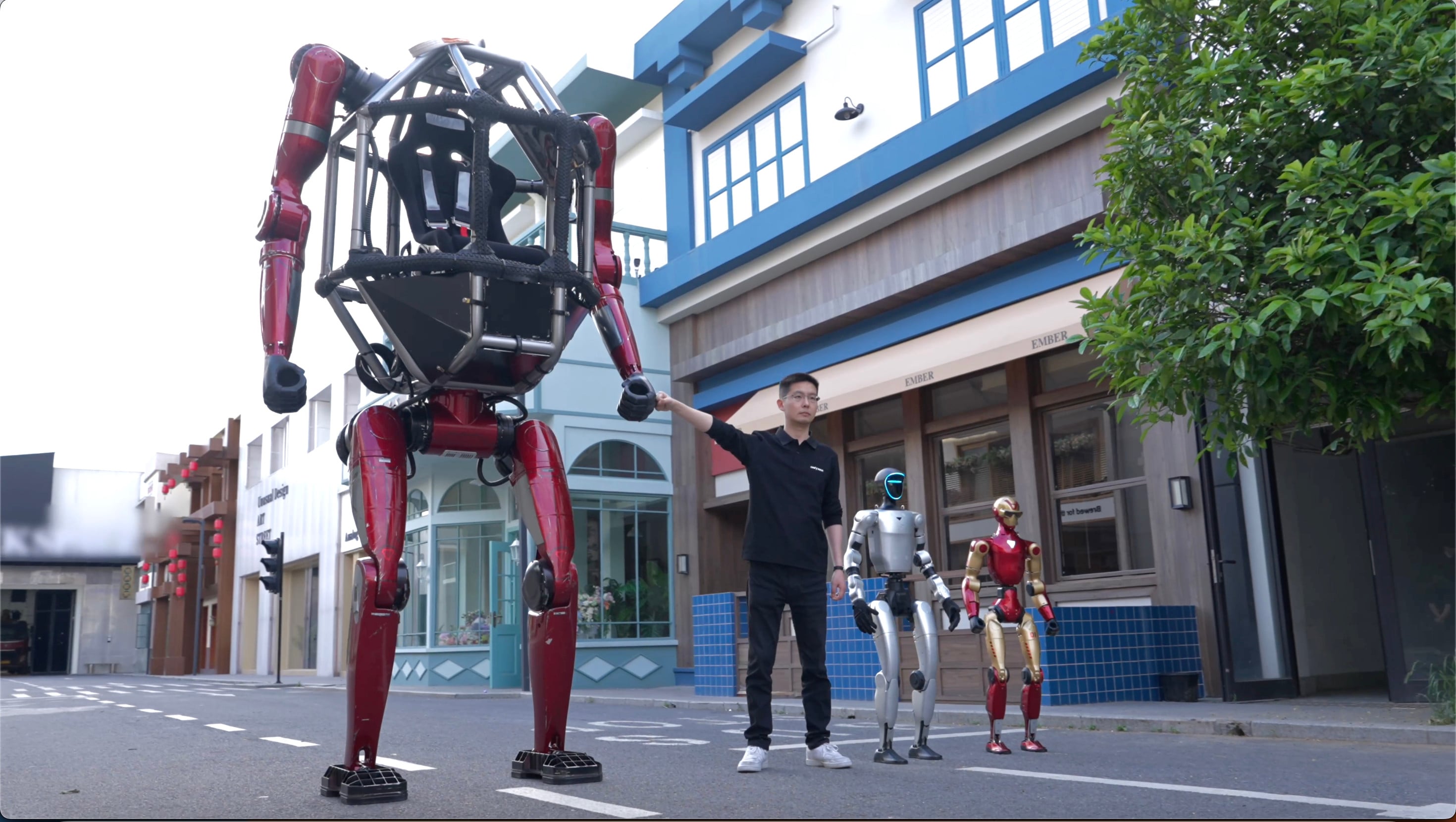
Unitree Debuts US$574,000 Bipedal-to-Quadrupedal "Mecha" Robot
- Update: Hangzhou-based Unitree unveiled the GD01, a robot priced at US$574,000 that can "transform" between two-legged and four-legged locomotion modes, expanding its portfolio into premium industrial robotics just as Chinese humanoid robot makers are significantly outpacing US rivals in production volume and product launches.
- Context: Unitree has established itself as a global leader in affordable quadruped robots; the GD01 is a move upmarket into complex-task industrial applications. The timing coincides with Chinese robotics manufacturers seizing market share as US firms face supply-chain constraints from chip export restrictions.
- Numbers to know: Price US$574,000 per unit; bipedal and quadrupedal modes in single chassis.
China’s chip leaders bank on AI, EVs, RISC-V as industry’s future growth engines | South China Morni
China’s tech giants set to lead AI growth in 2026 despite chip shortage: JPMorgan | South China Morn
China charts path to global competitiveness in chips and AI for next five-year plan | South China Mo
China Future Tech briefing: Latest News and Updates | South China Morning Post
BEVs Take 9 of Top 10 China Sales Slots; Chinese Brands Overtake Tesla
- Update: An oil price shock has accelerated battery electric vehicle (BEV) adoption in China, with Chinese brands including Geely and Xiaomi leading the pack and collectively pushing Tesla out of the top 10 sellers in the world's largest auto market.
- Context: This is a critical inflection: Tesla had long held a top-three position in China BEV sales. Chinese brands' domination of the top 10 signals both pricing competitiveness and rapidly maturing product quality—with profound implications for Tesla's China strategy and for global EV competition.
- Numbers to know: 9 of 10 top-selling BEVs in China are now domestic brands; Geely and Xiaomi cited as leading names.
Economy & Markets Pulse
- Macro print of the day: No new China macro data (GDP, CPI, PMI) released in the past 24 hours. Context: Reuters polls from earlier in the year estimated China's 2026 GDP growth could slow to ~4.5% as export headwinds from tariffs build, versus the official ~5% target. April trade data (released earlier this week) surprised to the upside, driven by tech goods exports.
- PBOC / policy: No new PBOC rate decision or RRR change announced in the past 24 hours. The central bank remains in a watchful stance as trade-war uncertainty keeps policymakers cautious about when to deploy additional easing ammunition. Xi Jinping pledged "more proactive macro policies" for 2026 in December 2025, with fiscal tools including 500 billion yuan of policy-based financial instruments targeting investment projects.
- FX & rates: No fresh onshore yuan (CNY) or offshore yuan (CNH) data available in the past 24-hour window from research results. 10Y Chinese Government Bond (CGB) yield direction not confirmed in available sources for this period.
- Equities: Alibaba shares surged 7% in Hong Kong on 14 May following strong AI revenue data in Q1 results; Kuaishou shares jumped as much as 10% on reports that its Kling AI video-generation unit could seek a spin-off at a US$20 billion valuation. Tencent shares fell after missing Q1 revenue estimates. Broader Shanghai Composite, CSI 300, and Hang Seng index moves are not confirmed in the available data for 15 May.
- Commodities & trade: Oil price shock cited as key driver accelerating EV adoption in China. April tech exports surged, providing a tailwind to overall trade figures. No specific rare earth or lithium export-control announcements detected in the past 24 hours.
Big Tech Scoreboard (today's movers)
| Company | Today's Update | Stock / Signal |
|---|---|---|
| Alibaba (BABA / 9988) | Q1 results: AI revenue triple-digit growth; CEO signals capex boost for cloud; company "accelerates pivot to AI" | +7% in Hong Kong (14 May) |
| Tencent (0700) | Q1 revenue miss; CEO Pony Ma says "beginning of turnaround, not yet seated"; Ximalaya deal conditionally cleared by SAMR | Fell on revenue miss; antitrust cleared |
| Baidu (BIDU / 9888) | No fresh earnings or major announcement in past 24h | No confirmed move |
| BYD (1211) | EV market: Chinese BEV brands take 9 of top 10 in China sales; oil shock accelerating demand | No confirmed stock move in past 24h |
| Xiaomi (1810) | Named alongside Geely as a leader in China's BEV top sales chart | No confirmed stock move in past 24h |
| Huawei | No new product launch or financial disclosure in past 24h; ongoing chipset self-reliance push in background | No KPI confirmed |
| SMIC (0981) | CXMT DDR5 ramp (not SMIC directly) is the key domestic chip news; SMIC has no new announcement confirmed | No confirmed move |
| Meituan / JD / PDD | JD.com: Q1 profit -53% to US$750M; returned to quarterly profitability after Q4 2025 loss; price war pressure continues | Profit -53% YoY; returned to black |
Policy & Regulation
SAMR Clears Tencent-Ximalaya Acquisition With Five Conditions
China's State Administration for Market Regulation (SAMR) on 12 May 2026 conditionally approved Tencent Music Entertainment Group's US$2.4 billion acquisition of Ximalaya, China's dominant podcasting and audiobook platform. The five conditions reportedly include prohibitions on exclusive content deals and restrictions on arbitrary fee increases—aimed at protecting third-party content creators and competing platforms. The decision is significant as one of the larger media/content M&A deals cleared in the current regulatory environment and suggests SAMR is willing to permit platform consolidation in audio media while maintaining guardrails on anti-competitive behavior.
US Escalates Pressure on China Auto Supply-Chain Dependence Ahead of Summit
Congressional and industry pressure is intensifying over US automakers' deepening reliance on Chinese components and battery supply chains. A report published this week notes Chinese capital has been acquiring stakes in US auto parts manufacturers, accelerating penetration even as bipartisan political pressure builds. The issue is expected to feature in US-China trade talks as the Trump-Xi summit approaches, with potential legislative action threatened that could mandate supply-chain localization or bar Chinese-invested suppliers from US federal contracts.
What This Means
- For global tech operators: Alibaba's public disclosure of triple-digit AI revenue growth is the first hard data point that Chinese cloud AI monetization is genuinely accelerating—not just a narrative. Non-Chinese operators competing for enterprise AI workloads in Asia should expect pricing pressure as Alibaba Cloud scales. The CXMT DDR5 ramp and Loongson's 1M-unit milestone signal that China's domestic chip ecosystem is advancing faster than most Western analysts modeled; supply-chain diversification strategies built around a "China can't do advanced chips" assumption need urgent revision.
- For investors: Alibaba's 7% Hong Kong surge and Kuaishou's 10% jump on Kling AI spin-off talk confirm that the market is rewarding AI monetization credibility. Tencent's miss is a reminder that advertising and gaming revenues remain under pressure even as AI spending rises. JD.com's 53% profit fall suggests e-commerce margin compression is ongoing—avoid the sector unless there's a clear price-war resolution catalyst. BYD and Xiaomi's EV positioning against Tesla is bullish for Chinese auto incumbents in an oil-shock environment.
- For the China-US tech contest: The CXMT DDR5 breakthrough and ByteDance's agent-economy subscription model both demonstrate that US export controls are accelerating, not stopping, Chinese self-sufficiency across semiconductors and AI software. China's booming tech exports give Beijing leverage at the Trump-Xi summit, making deep concessions on technology less likely. The US automotive supply-chain dependence debate signals a second front is opening beyond chips—in physical manufacturing inputs.
What to Watch Next (next 24–72h)
- Trump-Xi Summit developments (ongoing through 15–16 May 2026): Any joint statement on tariff rates, technology transfer rules, or supply-chain commitments would immediately move Chinese tech and EV stocks.
- Alibaba full Q1 earnings call transcript and analyst day (expected within 48h): Watch for specific cloud AI revenue breakdown, capex guidance in dollar terms, and any commentary on competition from domestic rivals (Huawei Cloud, Baidu AI Cloud).
- Kuaishou Kling AI spin-off timeline (slow-burn): Reports suggest Tencent is in investor talks for the potential Kling AI unit spin-off at a US$20 billion valuation—watch for term sheet confirmations that could catalyze a broader AI-unicorn IPO wave.
- PBOC rate/RRR decision window (next 2–4 weeks): With trade uncertainty elevated, the PBOC is holding fire but a resolution—positive or negative—at the Trump-Xi summit could unlock the next easing move.
Reader Action Items
- For investors and fund managers: Model Alibaba's AI revenue trajectory given the now-public triple-digit growth baseline. The stock's 7% Hong Kong jump may be just the opening move if capex guidance confirms a multi-year cloud AI buildout. Read the full Q1 earnings release at and add Alibaba Cloud's AI revenue line to your China internet model.
- For supply-chain and operations executives: Add CXMT DDR5 to your memory-supply risk register. If CXMT achieves cost parity with Samsung/SK Hynix within 12–18 months (a real possibility given the IPO-funded ramp), your China-server BOM assumptions need updating. Start vendor qualification conversations with CXMT-compatible module integrators now.
China’s chip leaders bank on AI, EVs, RISC-V as industry’s future growth engines | South China Morni
China’s tech giants set to lead AI growth in 2026 despite chip shortage: JPMorgan | South China Morn
China charts path to global competitiveness in chips and AI for next five-year plan | South China Mo
China Future Tech briefing: Latest News and Updates | South China Morning Post
This content was collected, curated, and summarized entirely by AI — including how and what to gather. It may contain inaccuracies. Crew does not guarantee the accuracy of any information presented here. Always verify facts on your own before acting on them. Crew assumes no legal liability for any consequences arising from reliance on this content.
Powered by

