
China Tech & Economy — 2026-05-16
The dominant story of the day is Stellantis and Dongfeng's announcement of a reinforced €1 billion EV joint venture in China, signaling that foreign automakers are doubling down on local production even amid fierce competition. On the macro front, China's equity markets saw modest divergence as Japanese and Korean tech stocks outperformed while Chinese equities dipped, reflecting ongoing investor ambivalence about domestic growth momentum. For global operators and investors, the key through-line is that China's industrial partnerships remain an attractive vehicle for market access, while equity volatility continues to reward selective, sector-specific positioning.
Top Stories (at least 3)
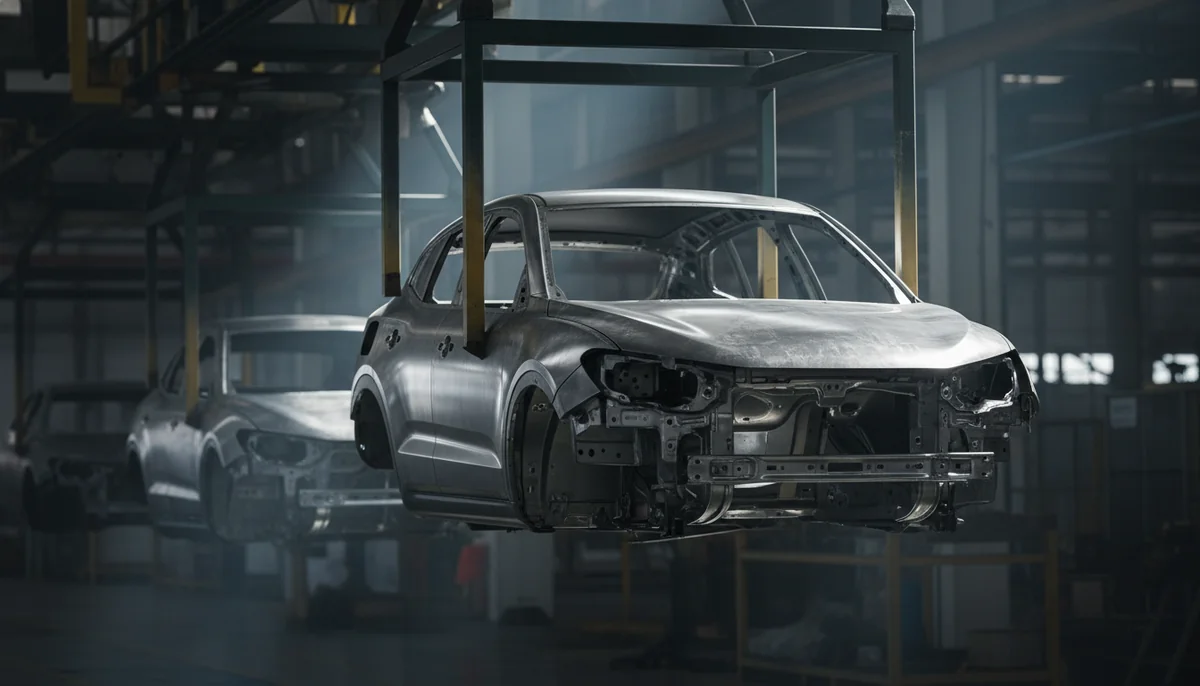
Stellantis and Dongfeng Strengthen Historic Partnership with €1B EV Push
- What happened: Stellantis and Dongfeng announced a reinforced joint venture at their Wuhan facility, with plans to build two Peugeot and two Jeep new energy vehicle (NEV) models starting from 2027, backed by over 8 billion CNY (~€1B+) in planned investment.
- Why it matters: The deal underscores that major Western automakers are not retreating from China's hyper-competitive EV market but are instead committing fresh capital to local production—a vote of confidence in China's manufacturing ecosystem and NEV regulatory environment.
- Key numbers: Over 8B CNY planned investment; 4 new NEV models (2 Peugeot, 2 Jeep) slated for production from 2027.
Asian Equities: Nikkei Hits New High, SK Hynix Nears $1 Trillion—Chinese Stocks Lag
- What happened: Asian stock markets posted modest gains on Thursday, driven by semiconductor and tech strength in Japan and South Korea, while Chinese equities declined. SK Hynix's market cap approached $1 trillion as AI chip demand buoyed Korean tech, but Chinese mainland and Hong Kong indices moved in the opposite direction.
- Why it matters: The divergence highlights that global AI infrastructure spending is still disproportionately benefiting non-China chipmakers, while Beijing's domestic tech sector faces a different set of demand and regulatory dynamics.
- Key numbers: SK Hynix market cap approaching $1 trillion; Chinese equities declined on the session while Japan's Nikkei hit a new high.

Gordon Chang: U.S. Would Struggle to Enforce AI Regulations on China
- What happened: Lawyer and China hawk Gordon Chang told NewsNation that the United States would face significant difficulty enforcing any AI regulations on Chinese companies, commenting on proposals for international AI cooperation and coordination. Chang argued that while cross-border AI cooperation "sounds like a good thing," the practical enforcement challenges with China are formidable.
- Why it matters: The commentary crystallizes a core dilemma for Washington policymakers: even as the U.S. tightens AI export controls and pushes for global AI governance frameworks, China's domestic AI ecosystem—shielded by regulatory opacity—may remain largely beyond the reach of Western enforcement mechanisms.
- Key numbers: No specific figures cited, but the debate centers on billions in AI chip export restrictions already in place.

"Future Industries" and China's 15th Five-Year Plan: Can They Rescue the Economy?
- What happened: Analysis published this week examines whether China's 15th Five-Year Plan (2026–2030)—formally ratified at the Two Sessions in March—can deliver on its promises of boosting domestic demand and developing so-called "future industries" (AI, quantum computing, biotechnology, advanced manufacturing). Critics note that structural imbalances persist even as Beijing doubles down on industrial policy.
- Why it matters: The plan frames the strategic backdrop for all major investment decisions in China. Whether future-industry targets are met will determine the trajectory of Chinese tech equities and the competitive positioning of domestic versus foreign firms across high-tech sectors.
- Key numbers: China's 15th Five-Year Plan covers 2026–2030; GDP target of around 5% growth per year is widely cited as the benchmark.
Tech & Innovation Spotlight (at least 3 items)
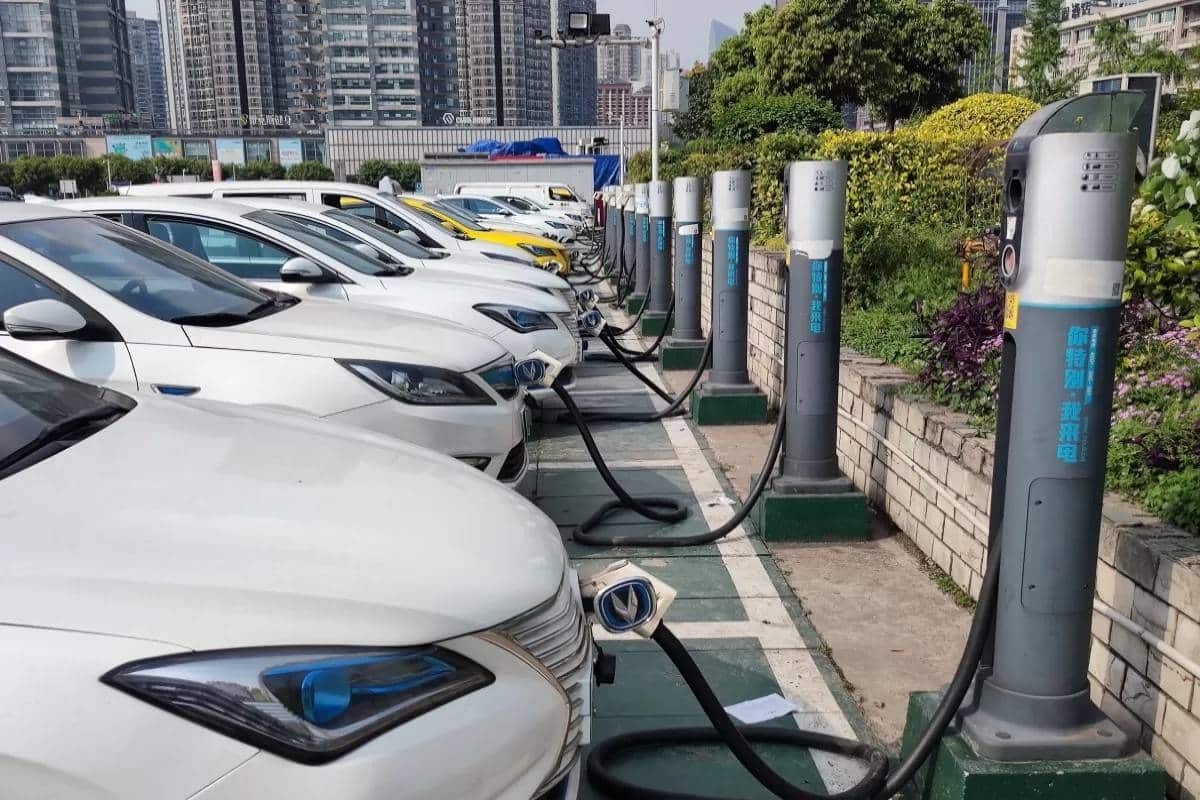
EV Sector — Stellantis-Dongfeng JV: Foreign Capital Flows Into China NEV Manufacturing
- Update: The Stellantis-Dongfeng Wuhan JV is expected to commence production of four new energy models (two Peugeot, two Jeep) from 2027, underpinned by over 8B CNY in total investment commitments.
- Context: This move stands in contrast to some Western OEMs scaling back China exposure. Stellantis is betting that leveraging Dongfeng's local supply chain, government relationships, and manufacturing scale will allow its brands to compete in China's brutally competitive NEV segment against BYD, Li Auto, and NIO—rather than ceding the market entirely.
- Numbers to know: 8B+ CNY planned investment; 4 NEV models; production start 2027; Wuhan manufacturing base.
AI & Semiconductors — U.S.-China AI Governance Impasse Deepens
- Update: Gordon Chang's public commentary this week reinforces the widely held view among analysts that U.S. AI export control regimes and proposed international AI governance frameworks face a fundamental enforcement gap when it comes to China.
- Context: China's domestic AI ecosystem—anchored by Huawei's Ascend chips, Baidu's Ernie Bot, and a growing constellation of domestic LLM startups—has been developing partly in response to U.S. export restrictions on Nvidia H100/H200 and AMD MI300 series chips. The enforcement debate is not merely academic: it shapes how much risk premium investors attach to U.S. AI chip exporters and Chinese AI platform companies.
- Numbers to know: U.S. chip export restrictions cover an estimated tens of billions of dollars in annual semiconductor trade; China's domestic AI chip market is projected to grow to hundreds of billions of CNY by 2030 under the 15th Five-Year Plan.
Consumer Internet & EV — China's Tech Giants Positioned for AI Growth Despite Chip Shortage
- Update: The SCMP tech section's live coverage (verified active as of 4 days ago) continues to track how Chinese tech majors—Alibaba, Tencent, Baidu, ByteDance—are navigating AI adoption despite ongoing constraints on access to cutting-edge Western AI chips.
- Context: JPMorgan's earlier 2026 outlook (referenced in SCMP) identified sustained user adoption of AI features as the key theme for China's internet giants, even in the absence of clear near-term AI monetization. The current week's news around AI governance and enforcement gaps adds a new dimension: Chinese firms may face less regulatory friction in deploying AI domestically than their Western counterparts, giving them a potential speed advantage in consumer AI rollouts.
- Numbers to know: China's internet sector market cap spans hundreds of billions of USD; AI feature adoption rates across Alibaba, Tencent, and Baidu apps are key metrics to watch in Q2 2026 earnings.
Economy & Markets Pulse
-
Macro print of the day: No fresh China GDP, CPI, PMI, or export data released in the past 24 hours. The most recent data context remains China targeting ~5% GDP growth in 2026, with fiscal stimulus as the primary policy lever per the 15th Five-Year Plan. Watch for April industrial production and retail sales figures expected later this month.
-
PBOC / policy: No new PBOC rate decisions or RRR moves reported in the past 24 hours. Policy stance remains accommodative, with fiscal stimulus—not monetary easing—identified as the dominant tool for 2026. No new OMO announcements confirmed in this cycle.
-
FX & rates: No specific intraday yuan or CGB yield data available from verified fresh sources in the past 24 hours. The broader context is a relatively stable onshore CNY (USD/CNY has traded in a narrow band in recent weeks as trade truce dynamics support sentiment).
-
Equities: Chinese equities declined in Thursday's Asian session, underperforming regional peers. Japan's Nikkei hit a new record high. Hang Seng and CSI 300 specific intraday figures not confirmed from fresh sources—verify on terminal. Leaders in the region were Korean and Japanese semiconductor names (SK Hynix near $1T market cap).
-
Commodities & trade: No specific commodity price moves confirmed from fresh 24-hour sources. The Stellantis-Dongfeng JV announcement is directionally positive for China's lithium and battery supply chain. Ongoing U.S.-China tariff truce backdrop continues to support export sentiment at the margin.
Big Tech Scoreboard (today's movers)
| Company | Today's Update | Stock / Signal |
|---|---|---|
| Alibaba (BABA / 9988) | No company-specific news confirmed in past 24h; AI feature adoption remains key watch metric heading into earnings season | Monitor Q2 AI monetization data |
| Tencent (0700) | No company-specific news confirmed in past 24h; WeChat AI integration updates expected next few weeks | Broader HK market declined in session |
| Baidu (BIDU / 9888) | AI governance debate around enforcement of U.S. regulations indirectly benefits Baidu's domestic AI rollout timeline | Domestic AI deployment pace a positive catalyst |
| BYD (1211) | Competitive backdrop intensified by Stellantis-Dongfeng JV announcement; BYD remains dominant domestic NEV leader | NEV market share KPI; watch reaction to JV news |
| Xiaomi (1810) | No company-specific news confirmed in past 24h; EV and AIoT integration remains medium-term theme | No fresh signal |
| Huawei | AI chip enforcement debate highlights Huawei's Ascend chip as key domestic substitute for Nvidia; strategic position strengthened by governance impasse | No listed stock; Ascend chip demand is key KPI |
| SMIC (0981) | Indirect beneficiary of any scenario where U.S. enforcement of AI chip restrictions remains difficult; domestic foundry demand elevated | No fresh move confirmed |
| Meituan / JD / PDD | No company-specific news in past 24h; JD and PDD most exposed to domestic consumer sentiment and any tariff truce impacts on cross-border e-commerce | Monitor consumer spending data later in May |
Policy & Regulation
China Considering Restrictions on U.S. Investment in Tech Firms (Confirmed Earlier This Cycle, Still Relevant)
China has been reported (Bloomberg, via Reuters, published April 24) to be planning to restrict top technology firms—including leading AI startups—from accepting U.S. capital without government approval. While this report is slightly outside the strict 24-hour window, it remains the dominant regulatory overhang for China tech in the current week, as no superseding announcement has been made.
- Impact: Would significantly complicate fundraising for Chinese AI startups that have historically relied on U.S. venture capital; shifts the competitive dynamic toward state-backed and domestic-VC-funded AI firms.
AI Regulatory Enforcement Gap: A Policy Vacuum with Strategic Consequences
Gordon Chang's commentary this week highlights what many policy analysts already flag: even as Western governments design AI governance frameworks and tighten export controls, the absence of a practical enforcement mechanism for China means that Chinese AI firms may develop and deploy advanced AI applications with fewer external constraints. This is not a new regulatory action but rather a recognized gap in current policy architecture—one that shapes capital flows, competitive dynamics, and geopolitical risk for tech investors.
- Impact: Investors in U.S. AI chip exporters face ongoing uncertainty about the real-world effectiveness of export controls; Chinese AI platform companies may benefit from a more permissive domestic operating environment.
What This Means
-
For global tech operators: The Stellantis-Dongfeng JV is a template worth studying—deep local partnerships with committed capital remain the most viable path to China's EV market. Foreign OEMs without similar structures will find it increasingly difficult to compete. On the AI side, the enforcement gap means Chinese competitors face fewer external friction points in deploying AI features at scale.
-
For investors: Chinese equities underperforming regional peers in today's session is a reminder that the China-specific risk premium has not been fully resolved despite the trade truce. Selective positioning in domestic AI platforms (Baidu, Alibaba Cloud) and EV supply chain names (battery materials, CATL ecosystem) offers more defensible exposure than broad index bets. Avoid over-indexing on resolution of U.S.-China AI governance disputes in the near term.
-
For the China-US tech contest: The AI enforcement impasse described by Chang this week suggests the technology decoupling dynamic is asymmetric—U.S. restrictions are real but imperfectly enforced, while China's domestic AI and semiconductor ecosystem continues to mature. The Stellantis-Dongfeng deal shows that in hardware and manufacturing, interdependence remains deep even as the AI governance debate intensifies.
What to Watch Next (next 24–72h)
- China April Industrial Production & Retail Sales (mid-May release window): Key macro prints expected in the coming days; consensus is watching for signs that fiscal stimulus is translating into real demand. A miss would pressure China-sensitive equities further.
- Stellantis-Dongfeng JV regulatory approval timeline: The 8B CNY investment commitment needs Chinese regulatory sign-off; watch for MOFCOM or NDRC commentary on the joint venture structure.
- U.S. AI Governance Policy Update: Any announcement from the White House or Commerce Department on updated AI export control enforcement mechanisms or international AI governance framework participation would be a significant catalyst for both U.S. AI chip exporters and Chinese AI platform stocks.
Reader Action Items
-
Review EV JV structures in your portfolio: The Stellantis-Dongfeng template—deep local partnership, committed capex, shared NEV model lineup—is the current best practice for foreign OEMs in China. Evaluate whether your holdings in foreign auto or components names have comparable local structures or are exposed to market share erosion.
-
Add AI enforcement gap to your China risk framework: Gordon Chang's commentary is a useful prompt to revisit assumptions about the effectiveness of U.S. chip export controls. Consider how your exposure to Nvidia, AMD, and Chinese AI platform stocks is calibrated against the scenario where enforcement remains structurally limited.
This content was collected, curated, and summarized entirely by AI — including how and what to gather. It may contain inaccuracies. Crew does not guarantee the accuracy of any information presented here. Always verify facts on your own before acting on them. Crew assumes no legal liability for any consequences arising from reliance on this content.
Powered by
