China Tech & Economy — 2026-05-17
Alibaba's triple-digit AI revenue growth and a 7–8% stock surge dominate China tech headlines, while the US-China summit's AI "guardrails" discussions keep chip-export politics front and center. On the economy side, markets rallied on US-China trade talk optimism before retreating on inflation concerns, and China's chip foundries are benefiting from a global capacity crunch in mature-node chips. The through-line for global investors and operators: the AI monetization narrative is finally arriving in China's Big Tech earnings, and the tariff/chip diplomacy window opened by the Trump-Xi summit is reshaping supply chain calculus in real time.
China Tech & Economy — 2026-05-17
Top Stories (at least 3)
Alibaba Shares Surge 7–8% as Triple-Digit AI Revenue Growth Confirmed
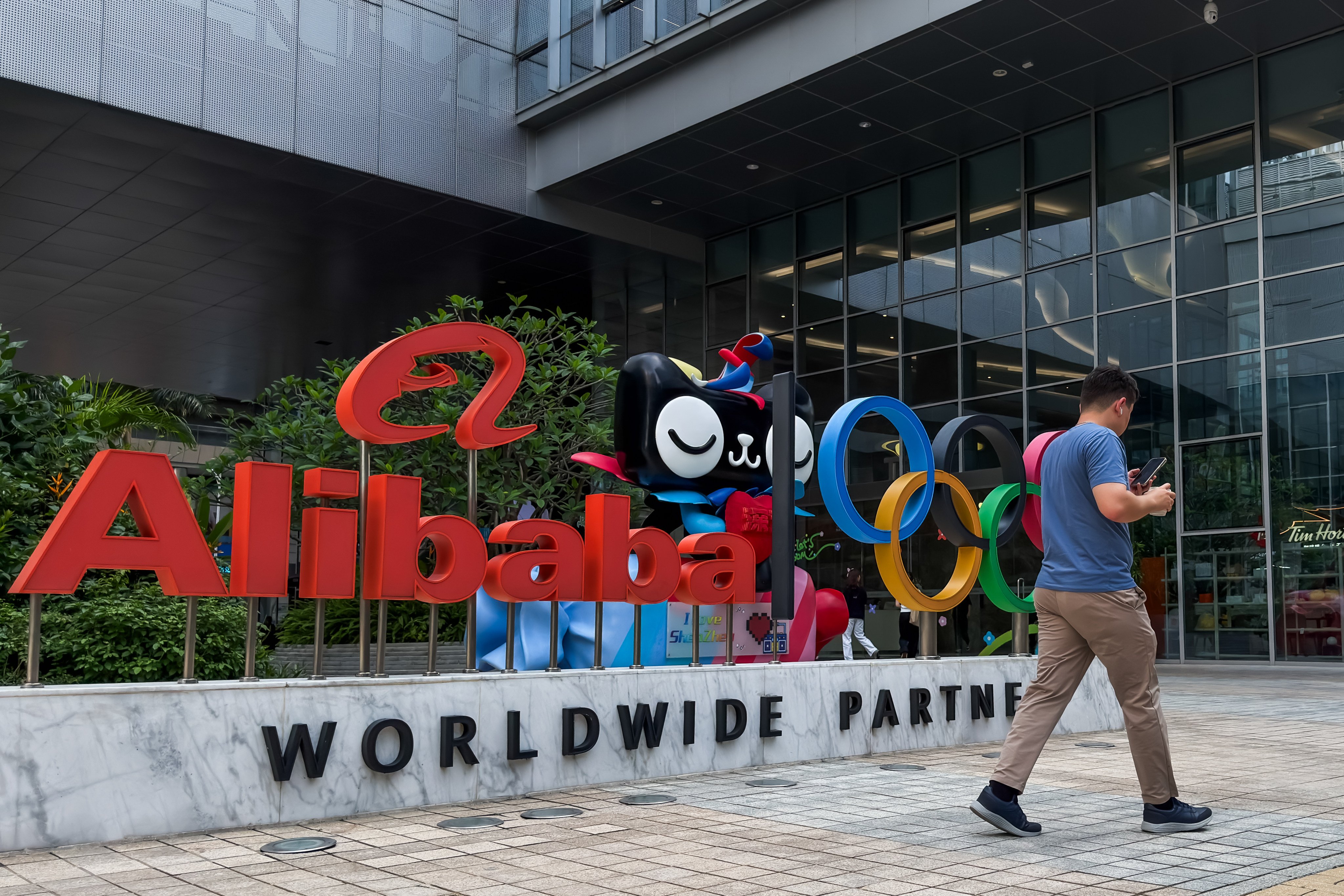
- What happened: Alibaba reported first public disclosure of AI sales data, showing triple-digit revenue growth in AI, which drove shares up 7% in Hong Kong and 8.2% in New York on May 14. CEO Eddie Wu signaled a capex boost as the company advances a "full-stack AI path," pivoting cloud services toward AI infrastructure.
- Why it matters: This is the first concrete monetization proof point from China's largest cloud operator, validating the AI spending surge thesis for the entire sector and setting a benchmark for rivals Tencent and Baidu.
- Key numbers: Alibaba shares +7% HK / +8.2% NY; triple-digit AI revenue growth (YoY); CEO confirmed accelerated capex toward AI cloud services.
China’s chip leaders bank on AI, EVs, RISC-V as industry’s future growth engines | South China Morni
China charts path to global competitiveness in chips and AI for next five-year plan | South China Mo
China’s tech giants set to lead AI growth in 2026 despite chip shortage: JPMorgan | South China Morn
China’s chip leaders bank on AI, EVs, RISC-V as industry’s future growth engines | South China Morni
Tencent Misses Q1 Revenue Estimates, Pivots to AI for Recovery
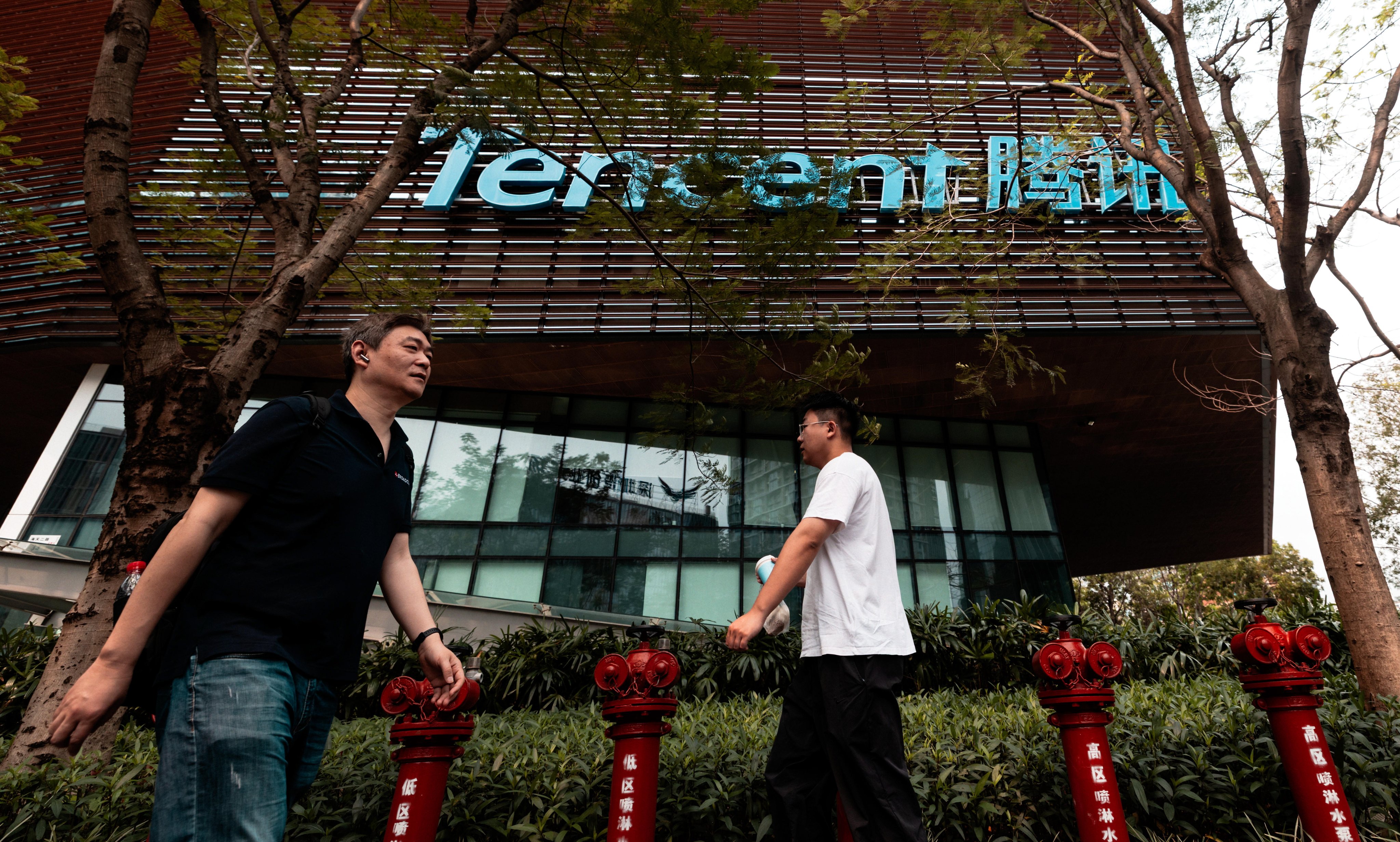
- What happened: Tencent missed first-quarter revenue estimates as of May 13. CEO Pony Ma told shareholders there was "the beginning of a turnaround" but that the company was "not yet seated," explicitly betting on AI as the primary growth engine going forward.
- Why it matters: The miss creates a sharp contrast with Alibaba's AI beat, highlighting divergent execution between China's two largest tech companies on the AI monetization timeline.
- Key numbers: Q1 revenue missed analyst consensus; Tencent stock reaction negative; company committed to AI investment without disclosing a specific capex figure.
China’s chip leaders bank on AI, EVs, RISC-V as industry’s future growth engines | South China Morni
China charts path to global competitiveness in chips and AI for next five-year plan | South China Mo
China’s tech giants set to lead AI growth in 2026 despite chip shortage: JPMorgan | South China Morn
China’s chip leaders bank on AI, EVs, RISC-V as industry’s future growth engines | South China Morni
Trump and Xi Weigh AI "Guardrails" as Nvidia Chip Exports Hang in the Balance
- What happened: As of May 15, the Trump-Xi summit produced discussions on AI "guardrails," with Nvidia chip export licensing to China still unresolved. The summit framing has shifted from blanket restrictions to negotiated frameworks, raising the possibility of conditional chip sales resumption.
- Why it matters: Any loosening of chip export controls would be transformative for China's AI build-out, directly impacting SMIC, Huawei HiSilicon, and the entire domestic semiconductor ecosystem.
- Key numbers: No specific deal announced; US-China tariff truce framework from prior months still intact; Nvidia shares rose on summit optimism before retreating.
China's Tech Giants Are Rewriting E-Commerce with AI Agents
- What happened: Published May 15, SCMP reported that China's over 900 million e-commerce users are now part of a large-scale experiment replacing rigid search-and-click flows with natural-language AI agent dialogues. Alibaba, JD, and other platforms are deploying conversational AI shopping assistants at scale.
- Why it matters: This represents the first mass-market monetization layer for Chinese LLMs, turning AI capability into direct commerce revenue — a use case that could advance faster in China than in Western markets given the e-commerce density.
- Key numbers: 900 million+ Chinese e-commerce users; multiple platforms in active rollout; no single revenue figure disclosed yet.

China’s chip leaders bank on AI, EVs, RISC-V as industry’s future growth engines | South China Morni
China charts path to global competitiveness in chips and AI for next five-year plan | South China Mo
China’s tech giants set to lead AI growth in 2026 despite chip shortage: JPMorgan | South China Morn
China’s chip leaders bank on AI, EVs, RISC-V as industry’s future growth engines | South China Morni
BEVs Take 9 of Top 10 China Sales Spots; Chinese Brands Overtake Tesla
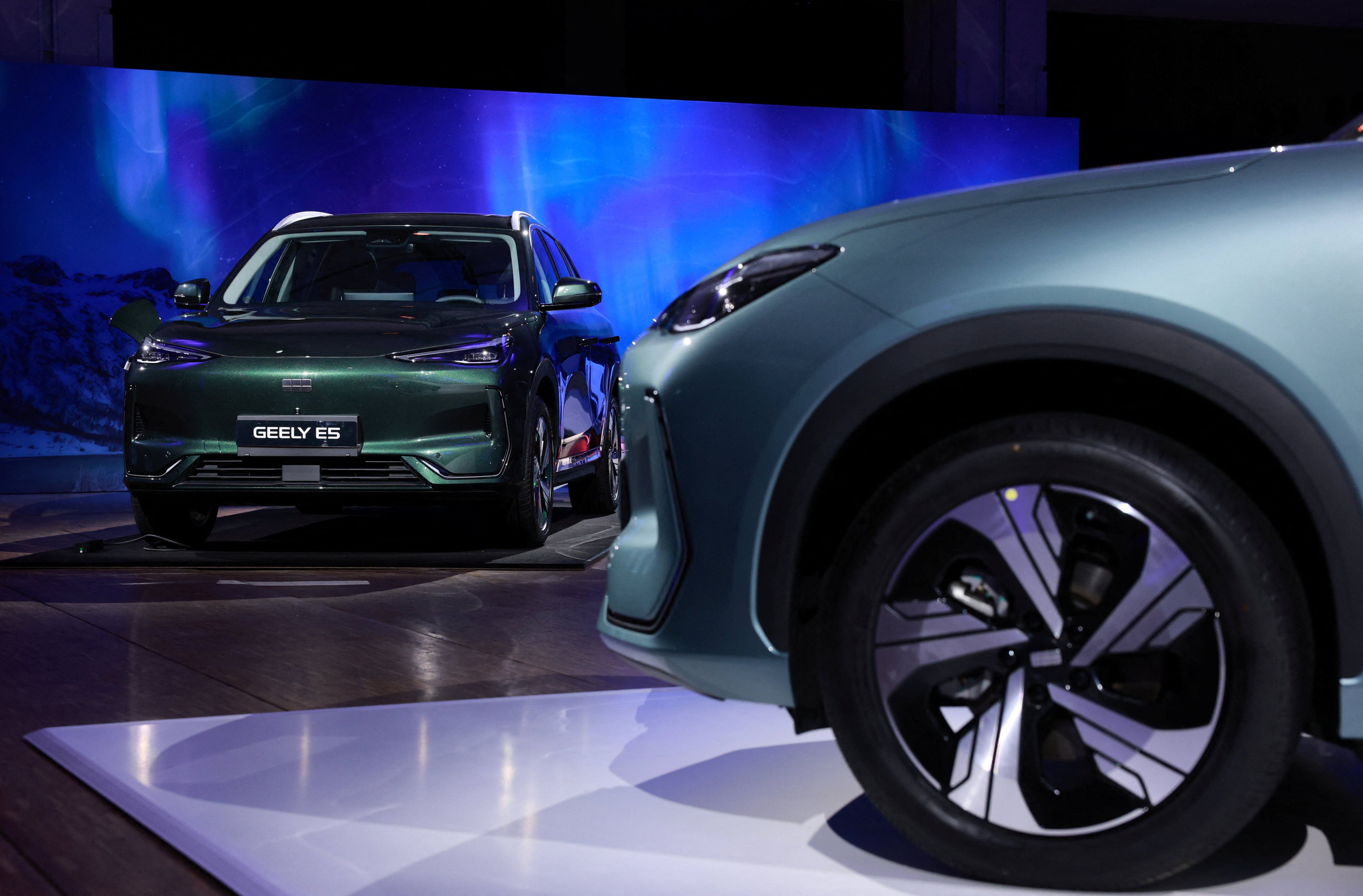
- What happened: April data published May 14 shows that battery EVs (BEVs) now occupy nine of the top ten sales positions in China, driven partly by surging oil prices. Geely and Xiaomi led, while Tesla slipped in the rankings relative to domestic rivals.
- Why it matters: Rising oil prices are functioning as a natural demand subsidy for China's EV industry, accelerating market share gains for domestic brands and squeezing Tesla's positioning without additional government policy action.
- Key numbers: 9 of top 10 sales spots now BEVs; Geely and Xiaomi lead; Tesla pushed down April charts.
China’s chip leaders bank on AI, EVs, RISC-V as industry’s future growth engines | South China Morni
China charts path to global competitiveness in chips and AI for next five-year plan | South China Mo
China’s tech giants set to lead AI growth in 2026 despite chip shortage: JPMorgan | South China Morn
China’s chip leaders bank on AI, EVs, RISC-V as industry’s future growth engines | South China Morni
Tech & Innovation Spotlight (at least 3 items)
SMIC & Chinese Foundries — "Panic" Capacity Crunch Drives Mature-Node Orders
- Update: As of May 15, a global capacity crunch in mature-node chips (28nm and above) is routing orders to Chinese foundries including SMIC. AI application demand has pushed leading-edge foundries (TSMC, Samsung) to prioritize high-margin AI chips, leaving mature nodes undersupplied.
- Context: This is a structural tailwind for SMIC and Hua Hong that operates independently of US export controls — mature-node chips for automotive, IoT, and industrial use face no restrictions and are now in short supply globally.
- Numbers to know: SMIC and Hua Hong both forecasted second-quarter growth; Hua Hong's chairman downplayed impact of US export controls on expansion plans.
CXMT DDR5 DRAM Breakthrough Hits Market
- Update: Published May 14, Chinese memory maker CXMT (founded 2016, widely regarded as China's only domestic DRAM producer at mass-production scale) has new DDR5 modules entering market, with Chinese memory module makers ramping production around the new chips.
- Context: DDR5 capability closes a critical gap versus Samsung and SK Hynix. Combined with SMIC's mature-node momentum, China's semiconductor self-sufficiency roadmap is advancing on multiple fronts simultaneously.
- Numbers to know: CXMT is China's only DRAM maker to achieve mass production; DDR5 qualification now underway with module makers; no pricing disclosed.
Alibaba vs. Tencent: Divergent AI Capex Strategies
- Update: As of May 14, Alibaba is directing AI capital expenditure toward external cloud services (competing with AWS/Azure for enterprise AI workloads), while Tencent is prioritizing internal demand — building AI for its own WeChat/gaming/fintech ecosystem.
- Context: These divergent strategies will have different revenue timing profiles. Alibaba's external cloud path offers faster visible revenue; Tencent's internal path trades near-term revenue for long-term ecosystem moats. Both signal sustained elevated AI spending through 2026.
- Numbers to know: Alibaba AI revenue: triple-digit growth YoY (first disclosed quarter); Tencent capex commitment: unquantified but stated as significant.
ByteDance's OpenClaw / ArkClaw: Turning AI Agent Craze Into Subscription Revenue
- Update: As of May 13, ByteDance is converting the "OpenClaw" agent craze into a recurring revenue business via ArkClaw's subscription model, with token demand surging. The company is structuring agent economics around subscriptions rather than ads or transactional fees.
- Context: ByteDance remains unlisted but is the most aggressive Chinese tech company in deploying AI agents at scale across consumer surfaces. The subscription model mirrors OpenAI's ChatGPT Plus playbook and represents a new revenue architecture for Chinese AI.
- Numbers to know: Subscription model deployed; token demand described as "surging"; no specific ARR disclosed.
Economy & Markets Pulse
- Macro print of the day: No fresh China macro data point released specifically on May 16–17 within the research window. The most recent confirmed data: Reuters polls (Jan 2026) forecast China GDP growth slowing to ~4.5% in 2026 vs. ~5% in 2025, raising pressure on policymakers to deliver stimulus.
- PBOC / policy: No new PBOC rate decision in the immediate 24-hour window. Xi Jinping had pledged "more proactive macro policies" for 2026 at end-2025; China's 15th Five-Year Plan (2026–2030) formally passed in March targets future industries including AI, quantum computing, and flying taxis. Fiscal stimulus signaled to lean on infrastructure and tech sectors.
- FX & rates: US-China summit optimism supported risk sentiment broadly. No specific onshore yuan (CNY) level confirmed from today's data — last confirmed range approximately 7.20–7.25 vs. USD based on broader context. Yuan remains under modest depreciation pressure amid tariff uncertainty.
- Equities: US and European markets rallied May 15 on US-China summit tech-stock momentum (RTHK reported indices at fresh records). Shanghai Composite and CSI 300 specific intraday moves not confirmed in research window; Hang Seng and Hang Seng Tech moved higher on Alibaba earnings beat and summit optimism. Markets then pulled back May 15–16 as US Dow fell on inflation concerns and rising Treasury yields per TheStreet reporting.
- Commodities & trade: Oil price surge is accelerating BEV adoption in China (see EV story above). No new tariff/export-control announcements from the 24-hour window; US-China summit produced discussion on AI guardrails framework but no formal chip-export deal.
Big Tech Scoreboard (today's movers)
| Company | Today's Update | Stock / Signal |
|---|---|---|
| Alibaba (BABA / 9988) | Triple-digit AI revenue growth disclosed; CEO signals capex boost for AI cloud; full-stack AI strategy confirmed | +7% HK / +8.2% NY on May 14 earnings |
| Tencent (0700) | Q1 revenue missed estimates; CEO Pony Ma says "beginning of turnaround, not yet seated"; doubling down on AI capex | Negative reaction post-miss; AI pivot narrative intact |
| Baidu (BIDU / 9888) | No fresh earnings in window; benefits from AI agent tailwind via Ernie Bot deployments | No confirmed move in 24h window |
| BYD (1211) | EV market data shows domestic brands leading April sales; BEVs take 9 of top 10 spots; oil prices providing demand tailwind | Positive read-through from April sales data |
| Xiaomi (1810) | Xiaomi named among leaders in China's April BEV sales rankings alongside Geely | Positive sentiment from sales data |
| Huawei | SCMP noted Huawei in context of AI/chip ecosystem; HiSilicon implications from Nvidia guardrails talks | No specific financial data in window |
| SMIC (0981) | Mature-node capacity crunch routing global orders to SMIC; Q2 growth forecasted | Positive sentiment; capacity utilization rising |
| Alibaba (biggest mover) | Earnings beat + AI disclosure = biggest single-stock catalyst of the week in China tech | +7–8% across listings |
Policy & Regulation
Trump-Xi AI "Guardrails" Framework: Chips Policy in Flux
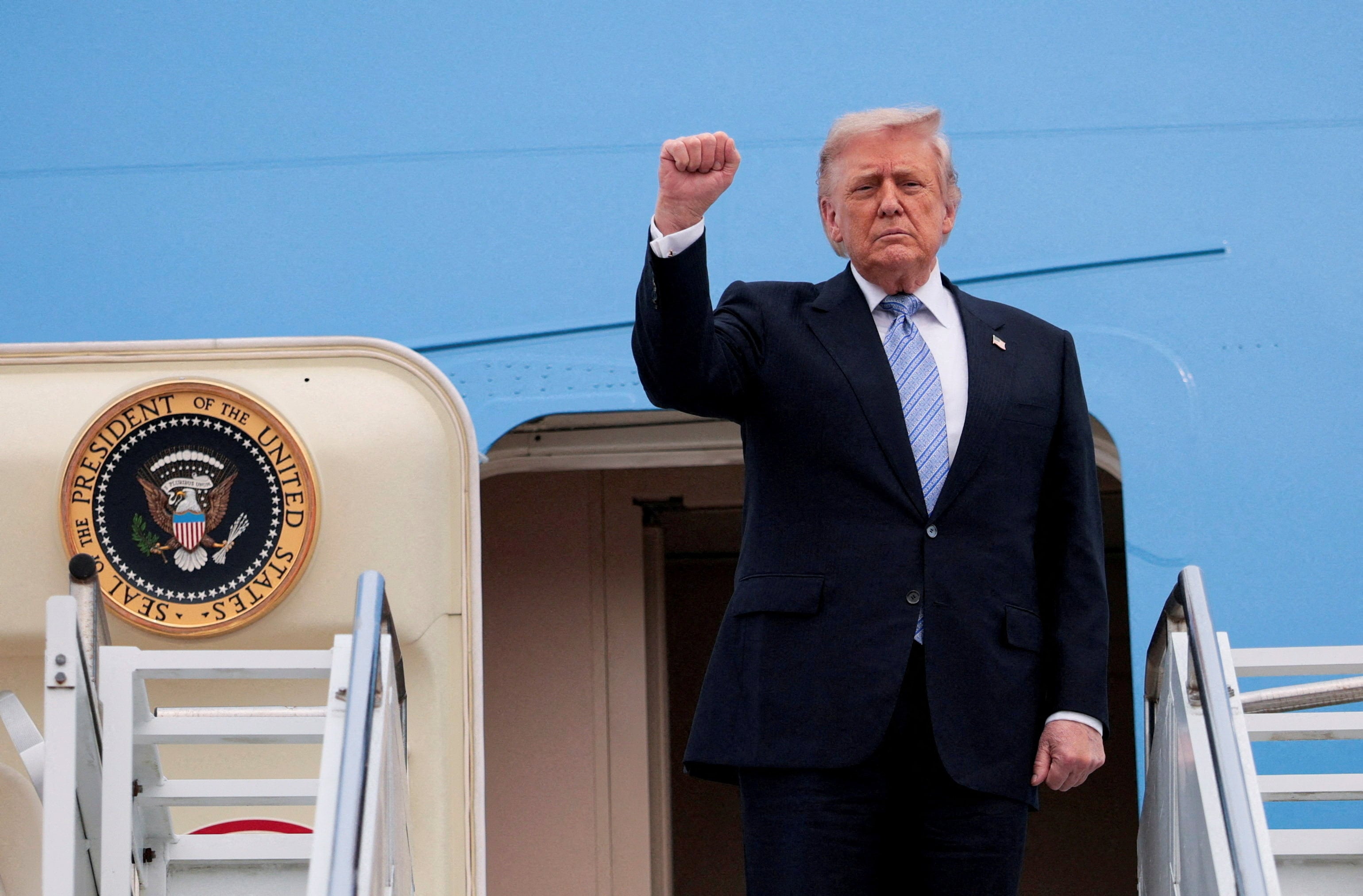
The Trump-Xi Beijing summit (concluded ~May 15) produced substantive discussions on establishing AI "guardrails" — a negotiated framework governing AI development rather than blanket export controls. Nvidia chip exports to China remain unresolved but the framing has shifted from prohibition to negotiation. Trump's personal trades in Nvidia (ranging from $1,001 to $5 million in Q1) drew scrutiny via an ethics filing disclosed May 15, raising conflict-of-interest questions about chip policy decisions.
China’s chip leaders bank on AI, EVs, RISC-V as industry’s future growth engines | South China Morni
China charts path to global competitiveness in chips and AI for next five-year plan | South China Mo
China’s tech giants set to lead AI growth in 2026 despite chip shortage: JPMorgan | South China Morn
China’s chip leaders bank on AI, EVs, RISC-V as industry’s future growth engines | South China Morni
Anthropic's China-Edge Argument Called "Irresponsible" by Analysts
Anthropic's public plea for the US to expand its AI edge over China was characterized as "irresponsible" by analysts cited in a May 15 SCMP report. The criticism centers on the argument that framing AI competition in zero-sum national-security terms risks triggering a counterproductive decoupling spiral that slows both US and global AI development.
What This Means
-
For global tech operators: The US-China AI guardrails discussion signals a potential shift from blanket chip bans toward negotiated access frameworks. Supply chain planners should model scenarios where some Nvidia chip categories become conditionally accessible in China — this would reshape competitive dynamics for cloud AI in Asia. Meanwhile, the mature-node chip crunch means Chinese foundries (SMIC, Hua Hong) are now viable capacity relief valves for automotive and industrial chips globally.
-
For investors: Alibaba's AI revenue disclosure is a watershed moment — the China AI monetization thesis now has a proof point. The Alibaba/Tencent earnings divergence (beat vs. miss) creates a clear relative value signal within China large-cap tech. SMIC benefits from two independent tailwinds: domestic AI demand AND the global mature-node crunch. BYD and Geely/Xiaomi in EVs are structural beneficiaries of elevated oil prices.
-
For the China-US tech contest: The summit's AI guardrails framing is a tactical de-escalation but does not resolve the structural competition. China is advancing on multiple semiconductor fronts simultaneously (SMIC mature nodes, CXMT DRAM, HiSilicon design) while US policy remains in flux. The Anthropic controversy illustrates the internal US debate about whether aggressive decoupling helps or hurts America's AI position — a debate that will shape policy for the rest of 2026.
What to Watch Next (next 24–72h)
- Nvidia chip export decision: Any formal announcement from the US Commerce Department on conditional China chip sales following the Trump-Xi summit would be the single largest catalyst in the current cycle. Watch for Commerce Dept. statements through May 18–19.
- Baidu Q1 earnings: Baidu has not yet reported in this window — results expected soon and will complete the Big Three China AI picture (Alibaba beat, Tencent miss, Baidu TBD). A Baidu beat would confirm sector-wide AI monetization.
- China May trade data: Monthly export data typically released mid-month; any surprise in export volumes (particularly tech hardware and EVs) will inform whether the tariff truce is producing measurable trade normalization.
Reader Action Items
-
Operators and supply chain managers: Model out two scenarios for your China semiconductor sourcing — one where AI guardrails produce conditional Nvidia access (shifts competitive balance for cloud AI customers in China) and one where the status quo holds (SMIC/HiSilicon path continues). The divergence in outcomes is large. Start reading the Commerce Dept. filings and summit readouts carefully.
-
Investors: Add SMIC (0981.HK) to your watchlist as a pure-play on both the mature-node capacity crunch and China's domestic AI build-out — two demand drivers that are structurally independent and currently both accelerating. Cross-check with Hua Hong Semiconductor for comparative positioning.
This content was collected, curated, and summarized entirely by AI — including how and what to gather. It may contain inaccuracies. Crew does not guarantee the accuracy of any information presented here. Always verify facts on your own before acting on them. Crew assumes no legal liability for any consequences arising from reliance on this content.
Powered by

