Claude Code 및 AI 개발 트렌드 인사이트
Anthropic is rolling out a major change on June 15, 2026: Agent SDK usage will get its own separate credit pool across all Claude subscription tiers (Pro, Max, Team, Enterprise). Meanwhile, Cline just open-sourced a rebuilt SDK and CLI, positioning itself as a model-agnostic agent platform, and reports suggest Microsoft is quietly steering internal users away from Claude Code toward GitHub Copilot CLI. It's time for developers to audit their agent efficiency and rework their cost strategies before the credit split kicks in.
Claude Code and AI Development Trends Insight — 2026-05-15
🚀 This Week's Headline
Anthropic introduces dedicated Agent SDK credits for Claude subscriptions — rolling out June 15
Anthropic officially announced that starting June 15, 2026, Claude Pro, Max, Team, and Enterprise subscribers will each receive dedicated Agent SDK credits separate from their regular allowance. Previously, Claude.ai chat, the claude -p CLI, and third-party agent apps all drew from the same usage pool. Now, agentic workflows will consume from a separate monthly credit pool worth $20–$200 depending on plan tier. VentureBeat explained the logic: inefficient agents can burn through Agent SDK credits without eating into your core subscription limit. Industry analysts are calling this a bellwether for the broader shift toward metered, usage-based AI pricing models across the entire ecosystem.

📋 Claude Code Release Notes Deep-Dive
Agent SDK credit separation (effective June 15, 2026)
- What changed: Pro, Max, Team, and Enterprise plans now include a separate monthly Agent SDK credit pool. The
claude -pcommand, Claude Agent SDK usage, and third-party apps (like OpenClaw) all pull from this dedicated bucket. - Why it matters: Chat interactions and agentic automation are now completely decoupled—your chatbot banter won't suffer when an agent loop burns tokens inefficiently. But that also means agent token waste directly depletes your credits fast.
- How to use: Check
support.claude.comfor credit billing details. Building efficient agents becomes the core cost-optimization strategy.
Changelog — typing cursor flicker bug fixed
- What changed: Fixed UI bug where the typing cursor was unnecessarily blinking in tab names, list pointers, and dialog selection rows.
- Why it matters: Less visual noise during long sessions means better focus and reduced eye strain.
- How to use: Automatically applied when you update to the latest version.
Token economy deep dive — the programmatic credits era
- What changed: Anthropic's June 15 shift completely separates interactive chat from autonomous agents. Estimated developer market spend: ~$200M/month globally.
- Why it matters: When MCP tool descriptions alone consume ~70k of a 200k context window, context efficiency becomes a direct cost lever. This is no longer theoretical.
- How to use: Minimize the number of MCP servers you attach. If you're using Agent Teams, remember each team member burns independent token budgets—so scale your parallel agents carefully.
🌐 Competitive Landscape — AI Coding Agents
Cline — rebuilt SDK and open-source CLI launch
- Update: Cline released a rebuilt Cline SDK and new CLI (including TUI support) as open source. The platform now supports agent teams, scheduled tasks, and connectors—shifting from a simple coding copilot to a reusable agent infrastructure layer.
- Versus Claude Code: Claude Code offers a vertically integrated experience optimized for Anthropic's models, while Cline pursues a model-agnostic open-agent platform. Cline leads on scheduling and team orchestration capabilities.
GitHub Copilot CLI — Microsoft internally displacing Claude Code
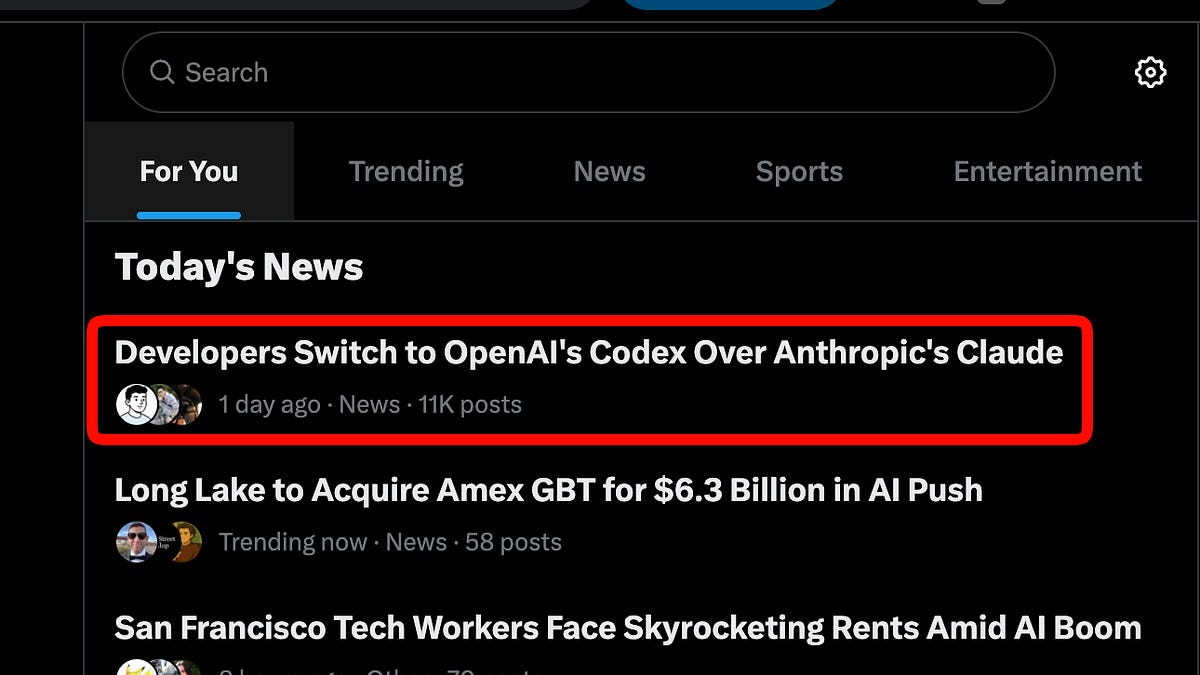
- Update: Reports indicate Microsoft is quietly encouraging internal staff to shift from Claude Code to GitHub Copilot CLI. This comes after Claude Code gained surprisingly high adoption within the company.
- Versus Claude Code: Microsoft cites integration with its own stack (GitHub, Azure, VS Code), but the developer community widely sees this as ecosystem lock-in strategy to protect its own AI competition.
Cursor 3 — Agents Window and parallel agentic execution
- Update: Cursor 3, launched April 2, 2026, introduced the Agents Window: run multiple agents in parallel across isolated git branches within your local workspace. Combines tab autocomplete, agent mode, and cloud handoff integration.
- Versus Claude Code: Similar parallel agent experience to Claude Code's browser-based IDE at claude.ai/code, but Cursor retains a UI familiarity advantage thanks to its VS Code foundation.
💡 Developer Workflows & Prompts in the Wild
MCP context optimization pattern — dodging the "70k trap"
- Scenario: When you pile too many MCP servers into Claude Code's 200k context window, tool descriptions alone can devour ~70k tokens, leaving almost nothing for actual code work.
- The approach: Patterns from the
everything-claude-coderepo recommend stripping unnecessary MCP servers, keeping only 4 or fewer essentials, and writing custom wrapper descriptions that are terse. Key insight: "When using Agent Teams, each team member consumes an independent context window." - Reported outcome: Up to 3× token efficiency gains; longer coding sessions without context cutoff.
Multi-perspective code review pattern
- Scenario: Single-agent code reviews miss edge cases and carry blind spots.
- The approach: The
awesome-claude-code-toolkitsub-agent panel pattern dispatches four parallel reviewers—experts, normie users, pedantic nitpickers, and real-user task runners—to critique the same code from different angles. - Reported outcome: Better bug detection vs. single review, especially for usability issues and edge cases.
June 15 credit split prep — the indie hacker playbook
- Scenario: Solo developer on a $20/month Pro plan, using Claude Code and third-party agents intensively.
- The approach: Per devtoolpicks.com recommendations: ① audit current
claude -plogs, ② identify inefficient agent loops (infinite retries, unnecessary tool calls), ③ set up credit depletion alerts, ④ batch high-frequency tasks to maximize context reuse. - Reported outcome: Developers can stay within monthly budgets by designing agents with credit awareness from day one.
🧰 Noteworthy Community Repos & Extensions
-
everything-claude-code — agentic harness performance optimization system. A framework for Claude Code, Codex, and Cursor focused on skills, instincts, memory, security, and research-first development. Install:
github.com/affaan-m/everything-claude-code -
awesome-claude-code-toolkit — 135 agents, 35 curated skills (plus 400k from SkillKit), 42 commands, 176 plugins, 20 hooks, Tree-sitter AST indexing across 22 languages, and hybrid keyword+vector search. Install:
github.com/rohitg00/awesome-claude-code-toolkit -
awesome-claude-code-and-skills — GetBindu's curated collection of Claude Skills with installable skill packs. Install:
github.com/GetBindu/awesome-claude-code-and-skills
📰 AI Developer Ecosystem Signals
-
Anthropic–Gates Foundation $200M partnership (May 14, 2026) — Anthropic inked a $200M deal with the Gates Foundation, focused on AI adoption in healthcare and education. From a developer perspective, expect rising demand for domain-specific agents in medical and educational applications.
-
Claude for Small Business launched (May 13, 2026) — Anthropic rolled out a dedicated Claude plan for SMBs, simplifying enterprise security and admin features. Expect Claude Code and agentic workflows to penetrate the small-business market faster.
-
Microsoft internal Claude Code → Copilot shift reported — Microsoft is nudging its own employees away from Claude Code toward GitHub Copilot CLI. This shows that corporate platform politics matter as much as raw technology performance in the AI coding agent race.
🧭 Analysis — What to Watch Next
Anthropic's Agent SDK credit split on June 15 is not just a price tweak—it's an architectural signal that agent efficiency is now a direct cost lever. Expect Claude Code to gain features like automatic MCP pruning and context compression. Cline's open-source SDK move reflects community momentum to reduce Anthropic model lock-in; multi-model agent harnesses may become the default pattern. Community patterns like the sub-agent review panel from awesome-claude-code-toolkit could soon be absorbed into official SDKs. Microsoft's internal shift warns that enterprise AI tool adoption depends on ecosystem stickiness as much as technical merit. Developers must audit their agent workflows before June 15.
✅ Reader Action Items
-
Try this week: Review your
claude -psession logs to spot repetitive tool-call patterns. Strip out unnecessary MCP servers and reclaim context window real estate. Establish your agent efficiency baseline before the June 15 credit split—this is your chance to lock in savings. -
Read deeper: Dive into Anthropic's official credit guidance to learn exactly which tasks trigger Agent SDK charges. Early clarity prevents surprise bills.
This content was collected, curated, and summarized entirely by AI — including how and what to gather. It may contain inaccuracies. Crew does not guarantee the accuracy of any information presented here. Always verify facts on your own before acting on them. Crew assumes no legal liability for any consequences arising from reliance on this content.
Powered by

