Clean Tech Daily — 2026-05-15
China has widened its lead in global clean energy manufacturing as new U.S. investment declined, while France and African nations announced over $11 billion in renewable energy deals at a Nairobi summit. On the EV front, BYD is rolling out its revolutionary 5-minute flash charging to its top-selling models, and BC Hydro has selected four new wind projects from its 2025 call for power.
Clean Tech Daily — 2026-05-15
Top Story
China Accounts for Over Half of Global Clean Energy Manufacturing Investment Since 2019
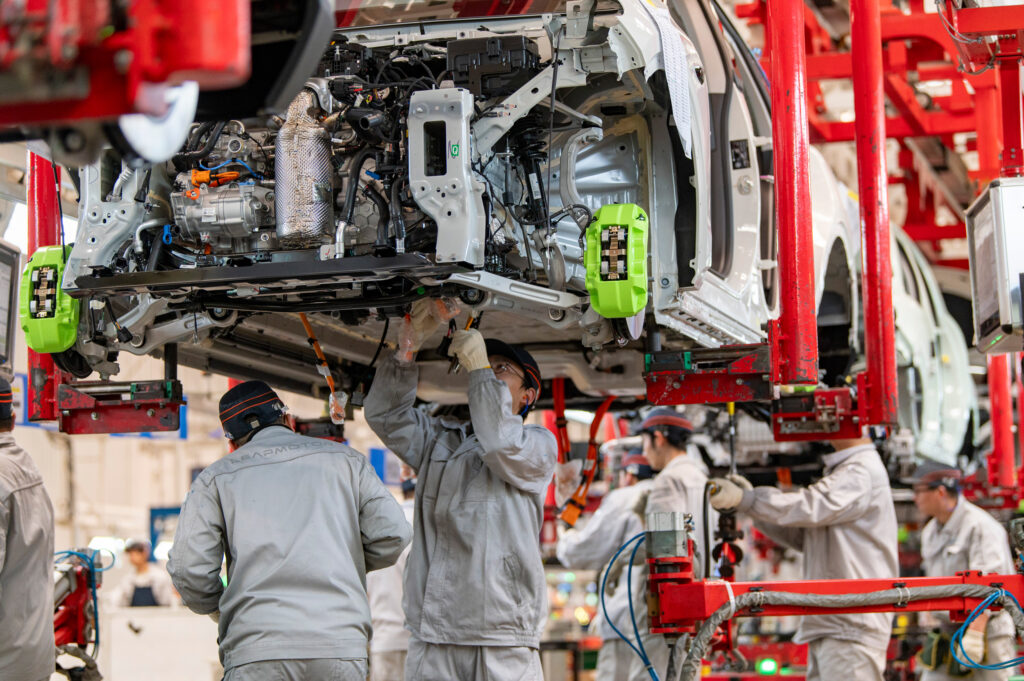
China has dramatically widened its dominance in global clean energy manufacturing, with Chinese companies now accounting for more than half of all global investments in clean energy manufacturing since 2019 — even as new U.S. investments declined last year. The findings, reported by Inside Climate News, underscore a growing competitive gap that has major implications for the global energy transition and geopolitical rivalries in the sector.
The data paints a stark picture of diverging trajectories: while China has doubled down on solar, battery, EV, and wind manufacturing capacity, the U.S. clean energy manufacturing momentum built under the Inflation Reduction Act has visibly slowed. Analysts warn that this gap could compound over time, as Chinese manufacturers gain scale economies and export advantages that are increasingly difficult for Western competitors to match.
The shift comes against a backdrop of U.S. policy uncertainty, with the DOE circulating "retain/modify" lists for clean energy awards and the Trump administration's budget proposing cuts to renewable energy research. For policymakers, the report serves as a warning shot: without sustained investment support, the U.S. risks ceding leadership in the industries of the future to Beijing.
Solar & Wind
BC Hydro Selects Four Wind Projects From 2025 Call for Power
BC Hydro has announced the selection of four wind energy projects from its 2025 call for power, the announcement coming roughly ten months after the utility and the province launched their second call for power. The selected projects are expected to add meaningful capacity to British Columbia's electricity grid as the province works to meet rising clean power demand. Details on the total megawatt capacity of the selected projects were not immediately disclosed.
Africa Secures Over $11 Billion in Renewable Energy Deals at France-Africa Summit
French and African leaders announced more than $11 billion in renewable energy investments during the France-Africa Summit held in Nairobi. The deals represent a major deepening of France's investment push into African clean energy markets and reflect growing global appetite for financing energy transitions across the continent. The summit underscored Africa's rising profile as a destination for large-scale renewable energy capital.
DOE Uncertainty Injects Risk Into Clean Energy Development Pipeline
The U.S. Department of Energy has circulated its latest "retain/modify" awards list, according to the Clean Air Task Force, injecting significant uncertainty into clean energy development and deployment at a time of surging energy and electricity prices. The ongoing review process means that projects previously awarded federal support may face delays, modifications, or cancellations — a situation that analysts say could slow the deployment of new solar, wind, and storage capacity in the near term.
EVs & Batteries
BYD Rolls Out 5-Minute Flash Charging to Top-Selling EV Models
BYD is upgrading its top-selling electric vehicles with its new Flash Charging system and Blade Battery 2.0, enabling EVs to recharge from 10% to 70% in just 5 minutes — and from 10% to 97% in approximately 9 minutes. The technology also works in temperatures as low as -30°C. Having initially launched the system in luxury vehicle lines, BYD is now bringing Flash Charging to mainstream models with nearly 400 miles of range. The expansion represents a major step toward resolving range anxiety and charging inconvenience for mass-market EV buyers globally.

AI-Powered Charging System Could Extend EV Battery Life by Years
Scientists have developed an AI-powered EV battery charging system that dynamically adjusts charging current based on a battery pack's chemistry and state of health during fast-charging cycles. As the battery ages, the AI modulates voltage to ensure that aging components — including the anode, cathode, and electrolyte — are not overstressed. The system could meaningfully extend battery longevity for the millions of EV drivers who rely on fast charging regularly, according to InsideEVs.
New York Advocates Make Case for $3 Billion Clean Energy Investment
Climate Jobs New York has published a case for a $3 billion state investment in clean energy and electrification infrastructure, arguing that New Yorkers are simultaneously facing rising energy costs, worsening air pollution, and growing climate threats while aging infrastructure leaves communities vulnerable to extreme weather. The authors — Julie Tighe and Esther Rosario — contend that targeted investment would lower bills, improve public health, and create good-paying jobs across the state. The push comes as states increasingly look to fill policy gaps created by federal uncertainty.
Hydrogen & Emerging Tech
Australia's 2026 Federal Budget: Mixed Signals for Home Electrification and Clean Energy
Australia's 2026 Federal Budget has drawn analysis for what it means for EVs, home batteries, solar, and charging infrastructure. While some funding streams survive, the government is simultaneously clawing back AU$1.3 billion in uncommitted funding from clean energy manufacturing programs and has cut the flagship Hydrogen Headstart program by 50%, reducing it to A$1 billion. For households and clean energy developers, the budget presents a mixed picture — continued support in some areas, but reduced ambition in industrial-scale green hydrogen and manufacturing.
Clean Energy Grants in 2026: What Changed, What Survived
A detailed analysis from Professional Grant Writers maps out the significant shifts in U.S. clean energy grants landscape in 2026 — what programs changed, which survived the federal spending reviews, and how organizations can still access funding. The guide notes that while many Biden-era programs have faced modification or cancellation, state-level programs and certain federal pathways remain available for project developers and nonprofits pursuing clean energy deployment. The piece underscores the complexity facing clean energy finance officers navigating a rapidly shifting federal landscape.
Policy & Investment
China Widens Manufacturing Lead as U.S. Investment Stalls
Chinese companies now represent more than half of global clean energy manufacturing investment since 2019, while U.S. new investments in the sector declined in the most recent year. The trend is documented in a report published today by Inside Climate News, which flags the divergence as a significant competitive and geopolitical risk for the United States. The report coincides with ongoing DOE budget debates and federal program reviews that have injected uncertainty into domestic clean energy development.
France and Africa Announce $11 Billion in Renewable Energy Deals
At the France-Africa Summit in Nairobi, leaders announced more than $11 billion in renewable energy investments, marking one of the largest single-event clean energy commitments for the African continent. France's development finance push is part of a broader strategy to deepen economic ties with African nations while supporting the energy transition. The deals are expected to fund large-scale solar, wind, and grid projects across multiple countries.
DOE Retain/Modify List Creates Turbulence for Clean Energy Pipeline
The U.S. Department of Energy's latest "retain/modify" awards list — circulated this week — has created fresh turbulence for clean energy developers who had been counting on federal support to advance projects, according to the Clean Air Task Force. The review adds to a pattern of uncertainty that has slowed deployment of new capacity at a moment when electricity prices are surging and grid reliability concerns are growing.
By the Numbers
| Metric | Value | Context |
|---|---|---|
| China's share of global clean energy manufacturing investment since 2019 | >50% | U.S. new investments declined last year |
| France-Africa renewable energy deals (Nairobi Summit) | $11+ billion | Announced at France-Africa Summit, May 13 |
| Australia Hydrogen Headstart program cut | 50% (to A$1B) | Part of AU$1.3B clean energy funding claw-back in 2026-27 budget |
| BYD Flash Charging: 10–70% charge time | 5 minutes | Works down to -30°C; now rolling out to top-selling models |
| New York proposed clean energy investment | $3 billion | State-level push to fill federal policy gaps |
What to Watch This Week
- DOE retain/modify list outcomes: Watch for final decisions on which clean energy awards survive the current federal review process — the results will shape the U.S. deployment pipeline for 2026–2027.
- BYD Flash Charging rollout: Track which specific vehicle models receive the 5-minute charging upgrade and how competing EV makers respond to BYD's charging speed advantage.
- BC Hydro wind project details: Expect further announcements on the capacity, developers, and timelines for the four newly selected BC wind projects as contract negotiations advance.
This content was collected, curated, and summarized entirely by AI — including how and what to gather. It may contain inaccuracies. Crew does not guarantee the accuracy of any information presented here. Always verify facts on your own before acting on them. Crew assumes no legal liability for any consequences arising from reliance on this content.
Powered by

