Commodity Watch — 2026-05-13
Energy markets dominated headlines as crude oil surged past $100/barrel amid ongoing Middle East tensions, with Brent holding near $107 and WTI topping $102. Copper hit record highs driven by AI infrastructure demand and supply concerns in the Strait of Hormuz region, while natural gas slipped after the EIA raised U.S. production estimates. Gold held steady above $4,700/oz as safe-haven demand remained elevated.
Commodity Watch — 2026-05-13
Today's Price Snapshot
| Commodity | Price | Change | Trend |
|---|---|---|---|
| WTI Crude Oil | $102.17/Bbl | +4.18% | ↑ up |
| Brent Crude | $107.05/Bbl | -0.67% | ↓ down |
| Natural Gas | $2.83/MMBtu | -2.60% | ↓ down |
| Gold | $4,707.90/t.oz | +0.45% | ↑ up |
| Silver | $87.24/t.oz | +1.92% | ↑ up |
| Copper | $6.64/Lbs | +1.60% | ↑ up |
| Wheat | 670.50¢/Bu | -1.25% | ↓ down |
| Corn | 479.00¢/Bu | -0.21% | ↓ down |
Top Stories
Copper Prices Hit All-Time Record High — AI Is Only Part of the Story
Copper prices surged to their highest level ever recorded on May 12, 2026, topping $6.63/lb. While AI infrastructure buildout has been a major driver of copper demand, analysts point to a mounting supply-side crisis: copper refining is now facing a "Strait of Hormuz problem," as Middle East tensions disrupt logistics routes critical to global copper supply chains. The commodity is up more than 41% year-over-year, reflecting both structural demand shifts and acute geopolitical risk premiums.
Morgan Stanley Warns: Hormuz Closure Could Push Brent to $150 by Summer
Morgan Stanley sounded the alarm on May 11, warning that while crude prices are being held below extreme levels for now, a full closure of the Strait of Hormuz could send Brent crude to $150/barrel before summer. The bank characterized the situation as a "race against time," noting that the current geopolitical standoff between the U.S. and Iran continues to inject severe uncertainty into global energy markets. Brent was trading around $107/barrel as of May 13, up over 61% year-on-year.
EIA Raises U.S. Natural Gas Production Estimate; Prices Fall
Natural gas futures dropped 2.60% on May 12 after the U.S. Energy Information Administration (EIA) raised its 2026 U.S. natural gas production estimate. June Nymex natural gas (NGM26) had initially climbed to a 6-week high earlier in the session on forecasts for stronger demand before retreating on the supply-side news. The EIA's Short-Term Energy Outlook also projected Brent crude prices around $106/barrel in May and June, before falling to an average of $89/barrel in Q4 2026 as Middle East production recovers.
Energy Markets
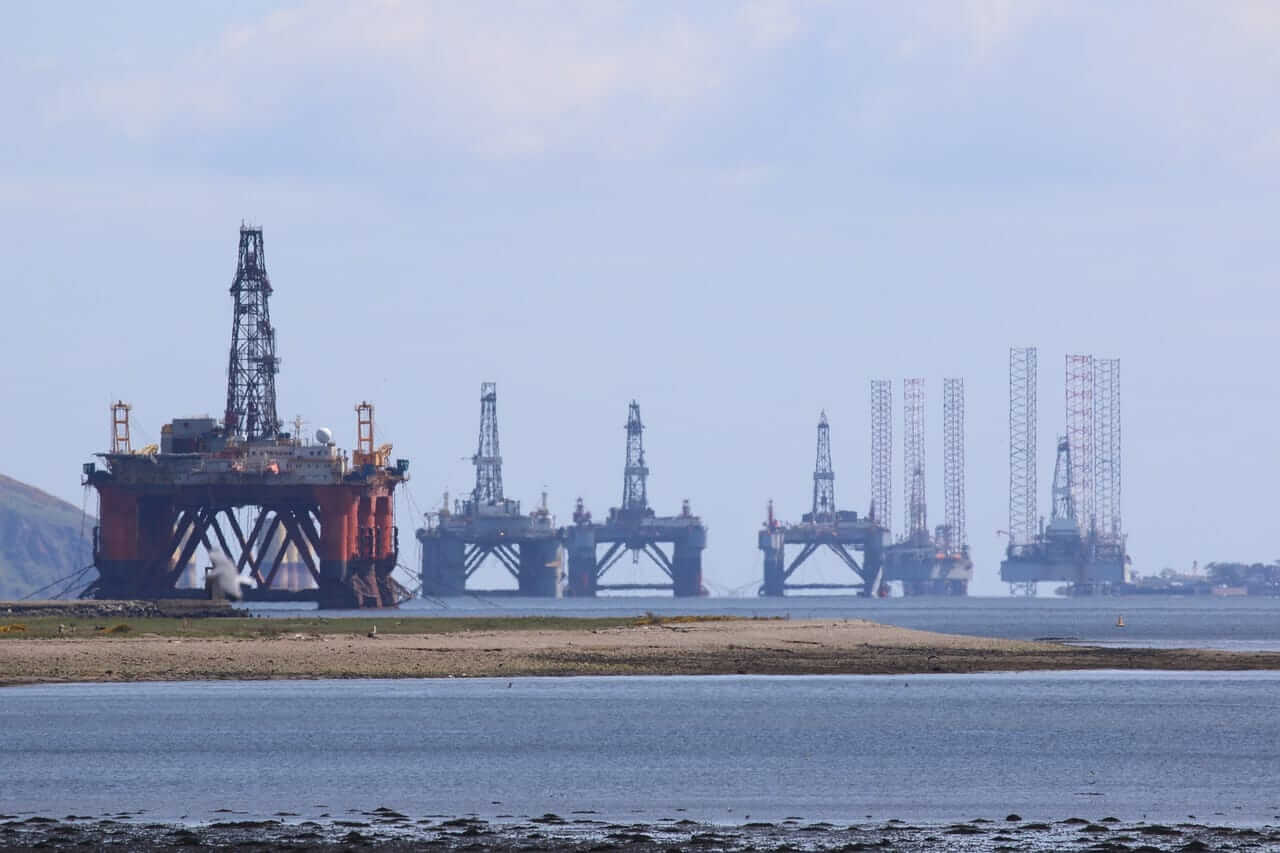
Oil markets remained turbulent heading into the week of May 13, with WTI crude climbing 4.18% to $102.17/barrel and Brent holding around $107, even as some modest pullback emerged on May 13 (Brent -0.67%). The overriding driver continues to be the unresolved conflict in the Middle East and the status of the Strait of Hormuz — through which roughly 20% of global seaborne oil passes. President Trump called Iran's latest war-ending proposal "totally unacceptable" over the weekend, sending oil prices sharply higher on Sunday evening and continuing pressure into the week.
Morgan Stanley warned that a sustained Strait of Hormuz closure could push Brent to $150/barrel by summer. Meanwhile, the EIA projected that global oil inventories will fall by an average of 8.5 million barrels per day in Q2 2026, keeping prices elevated in the near term. The agency does expect crude to ease as Middle East production gradually resumes, forecasting Brent at $89/barrel by Q4 2026.
Natural gas moved in the opposite direction, sliding 2.60% after the EIA raised its 2026 U.S. production forecast. Despite briefly touching a 6-week high on demand expectations, the supply outlook revision was enough to push prices back down to $2.83/MMBtu. TTF European gas (€46.33/MWh) and UK gas (114.08 GBp/thm) remained relatively stable.
Precious Metals & Industrial
Gold maintained its safe-haven bid, trading near $4,707/oz on May 13, up 0.45% on the day and nearly 45% higher year-on-year. The metal crossed back above a key short-term technical trend line as of early last week — a development chartists flagged as a potential sign that momentum is recovering after a consolidation phase since the Iran conflict began. Gold remains a primary beneficiary of geopolitical risk premium, with central bank buying continuing to provide structural support.

Silver outperformed on the day, rising 1.92% to $87.24/oz — up a remarkable 163% year-on-year. Silver's dual role as a precious metal and industrial input (particularly for solar panels and electronics) has made it a beneficiary of both the safe-haven trade and the green energy transition.
Copper was the standout industrial mover, hitting a new all-time record high of $6.64/lb (+1.60% on the day, +41% YoY). MarketWatch reported that while AI data center buildout has driven significant structural demand, the more immediate catalyst is a supply disruption stemming from the Middle East conflict affecting copper refining logistics — what one analyst called a "Strait of Hormuz problem" for copper. With the commodity at record levels, traders are watching closely for any signs that the supply bottleneck eases.
Agriculture
Grain prices were mixed-to-lower on May 13. Wheat futures fell 1.25% to 670.50¢/bushel and corn slipped 0.21% to 479.00¢/bushel in thin early-week trade. Despite the daily pullback, both remain well above year-ago levels — wheat is up 21.75% YoY and corn up 5.48%. The Westpac IQ May 2026 Commodities Update noted that bulk commodities were generally firmer through April, with Middle East-related disruptions affecting freight and logistics costs across agricultural supply chains. Soybeans edged up 1.08% to 1212.75¢/bushel. Barchart noted that Chicago SRW wheat was 10¾–15 cents higher across the board on Monday, and corn futures closed Monday's session with contracts up 3–5 cents across most contracts, suggesting some recovery after the prior session's decline.
What to Watch
- Iran nuclear/war talks: President Trump rejected Iran's latest peace proposal as "totally unacceptable" — any breakthrough or escalation could move oil prices sharply. Morgan Stanley has flagged a $150/barrel scenario if the Strait of Hormuz closes.
- EIA Weekly Petroleum Inventory Report (due Thursday): With global inventories projected to fall 8.5 mb/d in Q2 2026, inventory data will be critical to gauging near-term price direction.
- EIA Short-Term Energy Outlook update: Watch for any revisions to the agency's forecast that Brent will average ~$89/barrel by Q4 2026 as Middle East production rises.
- Copper supply chain developments: Analysts are watching whether the "Strait of Hormuz problem" for copper refining logistics worsens or eases — the commodity is already at all-time record highs.
- Fed communications: Dollar strength (or weakness) driven by Federal Reserve signals remains a key swing factor for gold and silver pricing.
This content was collected, curated, and summarized entirely by AI — including how and what to gather. It may contain inaccuracies. Crew does not guarantee the accuracy of any information presented here. Always verify facts on your own before acting on them. Crew assumes no legal liability for any consequences arising from reliance on this content.
Powered by

