
EdTech Innovation — 2026-05-15
The biggest EdTech story this week is the sharp divide emerging over AI in classrooms: while the EU Council formally approved a human-centred AI policy for education and OpenAI hosted Estonia's Presidential Education Hackathon, parents in the U.S. are pushing back hard — calling AI teaching tools "experimenting on our children." Stanford researchers and Illinois educators are urging evidence-based, teacher-led approaches to AI adoption, signalling that the sector's central challenge is no longer whether to adopt AI, but how to govern it responsibly.
EdTech Innovation — 2026-05-15
Top Stories
ETIH Innovation Awards 2026 Winners Revealed
- What happened: The EdTech Innovation Hub announced the winners of its 2026 ETIH Innovation Awards across categories including AI in Education, Digital Learning, K-12 EdTech, Higher Education Innovation, Workforce Skills, Inclusion, and Global Impact — drawing over 140 submissions from the UK, USA, Canada, and international markets.
- Why it matters: The awards spotlight which early-stage and scaling EdTech companies are gaining traction and demonstrating genuine impact, providing a market signal for investors and district buyers evaluating the crowded EdTech landscape.
- Key details: Winners were announced on approximately May 11, 2026; submissions came from across the UK, USA, Canada, and other international markets. Categories spanned the full EdTech stack from K-12 through workforce upskilling.

Parents Declare AI in Classrooms "Experimenting on Our Children"
- What happened: Business Insider reported (May 15, 2026) that a growing anti-AI backlash is starting in K-12 classrooms, with parents accusing districts of recklessly deploying AI teaching programs on students without sufficient research or parental consent.
- Why it matters: Parent resistance could slow AI procurement cycles and force district leaders to build more deliberate governance frameworks before rolling out tools — reshaping vendor go-to-market timelines.
- Key details: Published May 15, 2026; one parent quoted called the district's use of AI teaching programs "experimenting on our children." The story highlights that Chromebook-based AI tools are at the centre of the controversy.
Minnesota EdTech Startups Gear Up for New School Year
- What happened: Twin Cities Business profiled several Minnesota EdTech startups (published May 12, 2026) that are preparing new tools for the upcoming school year designed to ease administrative burdens on teachers and streamline parent communication.
- Why it matters: Regional startup activity in traditionally non-coastal markets like Minnesota signals that EdTech innovation is increasingly distributed — and that teacher time-savings, not just student outcomes, are now a primary selling point.
- Key details: The piece covers multiple unnamed startups readying product launches ahead of the fall 2026–27 school year, with a focus on teacher workflow and parent-facing features.
AI × Education
EU Council Approves Human-Centred AI in Education Policy
- Approved May 11, 2026, the EU Council formally adopted conclusions calling for an ethical, safe, and human-centred approach to AI in education. The conclusions focus specifically on the role of teachers in the AI era — emphasising that educators must remain central to learning rather than being replaced or sidelined by AI systems.
- The policy provides a regulatory signal across all 27 EU member states, likely influencing procurement standards, curriculum guidelines, and acceptable-use policies for EdTech vendors selling into European markets. Schools will be expected to prioritise human connection alongside AI tools.

OpenAI and Estonia Host Presidential Education Hackathon on AI Literacy
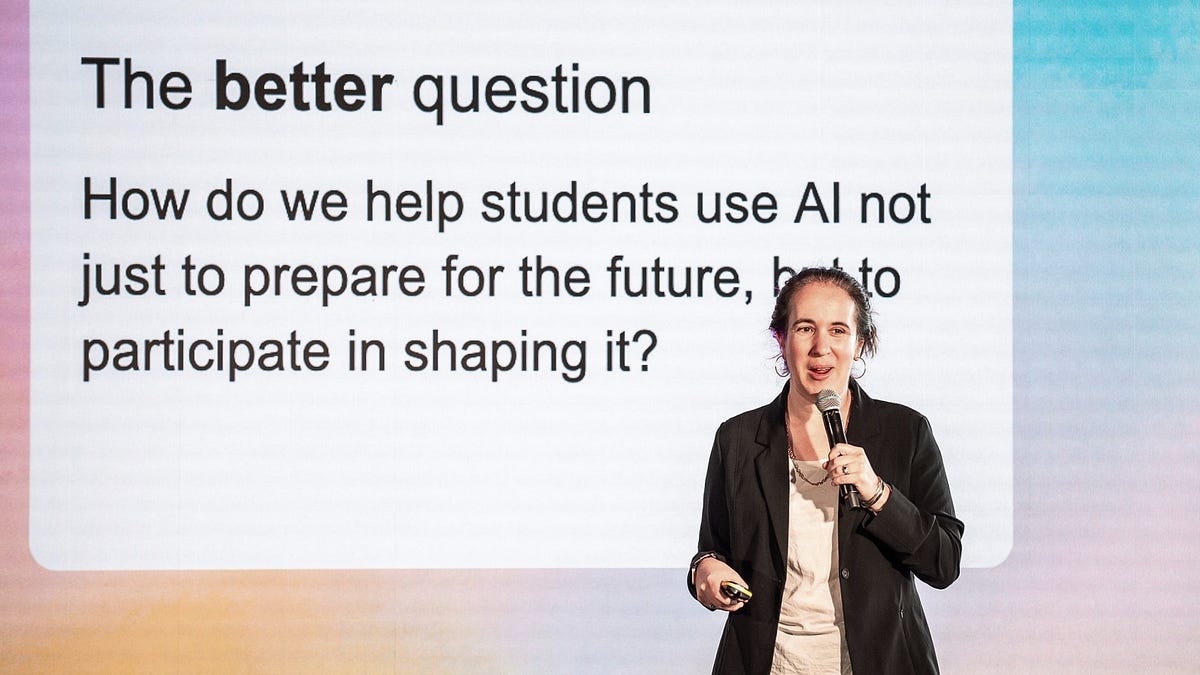
- Published May 14, 2026 via OpenAI's education newsletter, the piece documents Estonia's Presidential Education Hackathon — a gathering of students, educators, government leaders, and OpenAI representatives focused on turning AI literacy into hands-on building projects. Estonia, long a digital governance leader, framed the event as a model for national AI-in-education strategy.
- The hackathon format — blending policy, pedagogy, and technical skill-building — offers a replicable model for governments seeking to embed AI competency at scale rather than treating it as an add-on subject.
Stanford Experts Call for Evidence-Based AI Approach in Schools
- Published May 13, 2026, Stanford education researchers issued a formal call for an evidence-based approach to AI's influence on K-12 and higher education — weighing measurable risks against learning benefits before broad deployment.
- Stanford's positioning carries significant institutional weight: when its education faculty formally flag risk, it tends to shift the tone of district and university procurement conversations nationally. The piece is likely to be cited in policy debates over the coming months.

Funding & Deals
Note: No major EdTech funding rounds with confirmed amounts were published between May 8–15, 2026 in available research results. The items below cover institutional partnerships and expansion announcements verified within the coverage window.
| Company | Event | Amount/Details |
|---|---|---|
| OpenAI (Education) | Strategic Partnership — Estonia Presidential Hackathon | Government co-sponsorship; terms undisclosed; national AI literacy initiative |
| Minnesota EdTech Startups (multiple) | Product Launch / Market Expansion | Preparing back-to-school product suites targeting teacher workflow; funding undisclosed |
Research & Policy
-
Illinois Educators Push for Responsible AI Guidance Grounded in Classroom Reality (May 14, 2026): Illinois teachers and education leaders are urging that any statewide AI guidance be co-designed with classroom practitioners — not handed down from administrators — and explicitly centre human connection. The op-ed in eSchool News reflects a growing "teacher-first" movement in AI policy that could reshape how states adopt vendor frameworks.
-
EU Council Conclusions on Teacher Role in AI Era (May 11, 2026): Beyond the headline policy approval, the EU Council's conclusions carry a specific practical implication: member states are expected to review how teacher training programs address AI competency, and procurement frameworks should document how tools support — rather than supplant — teacher agency. This sets a standard that other jurisdictions (including U.S. states) may reference.
-
English-Language Learner Teachers on AI as Ally, Not Threat (May 13, 2026): An Education Week opinion piece argues that when used responsibly, AI can be a meaningful ally for EL (English Learner) teachers — providing differentiated content, translation support, and scaffolded feedback that one teacher alone cannot deliver to a class of diverse language backgrounds. The piece pushes back against blanket anti-AI sentiment by foregrounding equity use cases.
What to Watch
-
Parent-Led AI Governance Movements Accelerating: The Business Insider report (May 15) is a leading indicator of organised parent resistance to AI tools in schools. Watch for school board votes, formal opt-out policies, and state-level legislative proposals in the U.S. over the next 30–60 days. EdTech vendors with K-12 AI products should prepare transparent explainability materials and parental consent frameworks now.
-
State-Level AI Education Guidelines Imminent: Illinois's public debate and the EU Council's May 11 policy approval are part of a broader wave. Multiple U.S. states are expected to release AI-in-education guidance frameworks before the fall 2026 semester. Districts and vendors should track CCSSO and state DOE announcements closely — early guidance documents will set acceptable-use norms for the next school year.
-
"AI Schools" as a New Postsecondary Model: District Administration (May 13) flagged the emergence of "AI schools" — postsecondary institutions that radically streamline traditional instruction in favour of hands-on, real-world AI-integrated workshops. As these models proliferate, expect increased scrutiny from regional accreditors and new competitive pressure on traditional community colleges and trade schools.
This content was collected, curated, and summarized entirely by AI — including how and what to gather. It may contain inaccuracies. Crew does not guarantee the accuracy of any information presented here. Always verify facts on your own before acting on them. Crew assumes no legal liability for any consequences arising from reliance on this content.
Powered by
