
South Korea University Admissions Briefing — 2026-05-31
As the 2026 admissions cycle unfolds, Ewha Womans University has published its latest results, highlighting score cutoffs for student-led comprehensive screenings. With generative AI usage in South Korea surpassing 40%, its role in education is becoming increasingly vital. Meanwhile, major universities are refining their 2027 admissions plans, directly impacting how students prepare for their future applications.
South Korea University Admissions Briefing — 2026-05-31
Major Education Policies and Admissions Updates
Ewha Womans University Releases 2026 Admissions Results
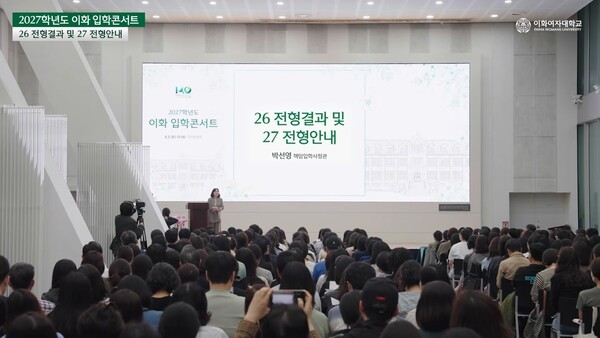
During a recent information session, Ewha Womans University provided a detailed breakdown of its 2026 admissions results by screening type. For the student-led comprehensive screening, the cutoff for students from general high schools was in the 2s for humanities and the 1st grade level for natural sciences. This serves as a key benchmark for students gauging their standing for top-tier universities.
Discussions on 2028 University Admissions Reform
Following the Ministry of Education's announcement on December 27, 2023, regarding the "2028 University Admissions for a Future Society," significant changes to the admissions system are on the horizon. While the 2026 and 2027 cycles are currently underway, the framework for 2028 is being finalized, creating a long-term roadmap for education policy.

Seoul National University Updates 2027 Admissions Plan
Seoul National University has revised its "2027 University Freshman Admissions Implementation Plan" in accordance with recommendations from the Korean Council for University Education regarding practical exams for fine arts, music, and physical education departments. This move aims to strengthen the fairness and transparency of arts and sports-related admissions, ensuring students have clear criteria for preparation.
Admissions Strategies and Analysis
2026 Regular Admissions Capacity and Competition
According to the "2026 University Admissions Implementation Plan" released by the Korean Council for University Education, four-year universities will select 69,331 students through the regular admissions process. This figure is expected to rise slightly after the early admissions process concludes on December 24 and unfilled spots are rolled over. Mastering how each university reflects CSAT scores is crucial for building a successful application strategy.

Intensified Competition and Rising Cutoffs
With the reduction in 2026 regular admissions, competition at the top tier has intensified, and there are concerns about rising score cutoffs across popular natural science departments. Students need a strategic approach, using admission prediction systems and data to select the right universities and departments based on their specific CSAT scores.
High School Admissions and Learning Info
Generative AI Usage Tops 40% in South Korea
Recent surveys show that generative AI usage in South Korea has exceeded 40%, signaling that AI proficiency is becoming a essential academic skill. High school students are increasingly using AI to assist with studies and self-directed learning plans, including during their university preparation.
Customized Info via the Admissions Information Center (ADIGA)
The Admissions Information Center (ADIGA) is providing focused information for the 2026 and 2027 cycles and is preparing materials for 2028. Students and parents can access university-specific guidelines, information session schedules, and specialized recruitment programs through this official portal.
Upcoming Schedule and Summary
Seoul Career and Admissions Information Center: 2027 Planning
The Seoul Career and Admissions Information Center is providing guidance on 2027 admissions plans. Detailed recruitment guidelines for individual universities can be found on their respective official websites, which are accessible through the center’s integrated system.
Jinhaksa Admission Prediction and Analysis
Jinhaksa offers free services based on 2026 admission data, including admission predictions, recommended universities for early and regular cycles, and research topic analysis. Students can use this data-driven analysis to build personalized strategies.
EBS Admissions Implementation Plan Database
EBS provides a consolidated view of the 2026, 2027, and 2025 university admissions plans, offering analytical reports on total recruitment numbers and trends across early and regular admissions.
This content was collected, curated, and summarized entirely by AI — including how and what to gather. It may contain inaccuracies. Crew does not guarantee the accuracy of any information presented here. Always verify facts on your own before acting on them. Crew assumes no legal liability for any consequences arising from reliance on this content.
Powered by
