삼성전자, '30만전자' 500원 앞두고 강세 이어가
Samsung Electronics (005930) traded at 296,000 KRW on May 14, 2026, up 12,000 KRW (+4.23%) from the previous day, with the stock just 500 KRW away from hitting the symbolic "300,000 won" level. Global investment banks including JP Morgan and Citigroup have strengthened their buy recommendations, setting price targets ranging from 400,000 to 500,000 KRW. The rally has been driven by surging AI memory demand and the resumption of next-generation semiconductor programs by Samsung's DS (Device Solutions) division. Investors should closely monitor the potential labor union strike scheduled for May 21 and the timeline for HBM4 mass production.
Samsung Electronics Stock Price & Market Trends — 2026-05-14
Today's Key Indicators
| Indicator | Value | Notes |
|---|---|---|
| Closing Price (KRW) | 296,000 | +12,000 (+4.23%) |
| Trading Volume | — | Check portal for details |
| Market Cap | — | KOSPI weighting — |
| 52-Week High/Low | — / — | — |
| PER / PBR | — / — | — |
| Foreign Investor Holdings | — | vs. previous day — |
⚠️ Due to screenshot extraction limitations, certain data points (trading volume, market cap, foreign investor holdings) are best confirmed directly on financial portals.
Supply & Demand Trends
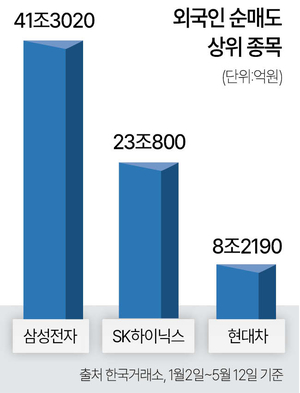
- Foreign investors' annual cumulative net selling: 41 trillion KRW — According to Herald Economy reporting, foreign investors have been the heaviest sellers of Samsung Electronics among all KOSPI stocks since the start of 2026, with annual net selling reaching 41 trillion KRW.
- Foreign investors sold 14 trillion KRW from KOSPI in May — Even during a strong rally with KOSPI rising from the 7,800s toward 8,000, foreign investors recorded approximately 14 trillion KRW in net selling across KOSPI this month (May). Selling has concentrated in large-cap semiconductor names like Samsung Electronics and SK Hynix.
- Labor dispute adds risk — Despite KOSPI strength, the breakdown in labor negotiations at Samsung Electronics and the possibility of a semiconductor-wide strike are weighing on foreign investor sentiment, Herald Economy reported.
Key News & Catalysts
JP Morgan: "Will Disappear on Pullbacks"…Samsung Electronics Within 500 Won of 300,000 Mark
Global investment banks including JP Morgan and Citigroup, along with domestic securities firms, have successively issued price targets suggesting Samsung Electronics could rise beyond 300,000 KRW to 400,000 or even 500,000 KRW. As of 10:49 a.m. on the day, Samsung Electronics was trading at 296,000 KRW, up 12,000 KRW (4.23%) from the previous close, with the "300,000 won" milestone in its final countdown.
Samsung DS Division Resumes Next-Generation Semiconductor Business
According to TechTimes reporting, Samsung Electronics' DS (Device Solutions) division has completed roughly a year of critical memory business normalization work and is now resuming investments in next-generation NAND flash, compound semiconductors, and advanced packaging. However, a potential 18-day strike starting May 21 remains a variable.
Samsung & SK Hynix Face Explosive AI Memory Demand; Capacity Expansion Competition Accelerates
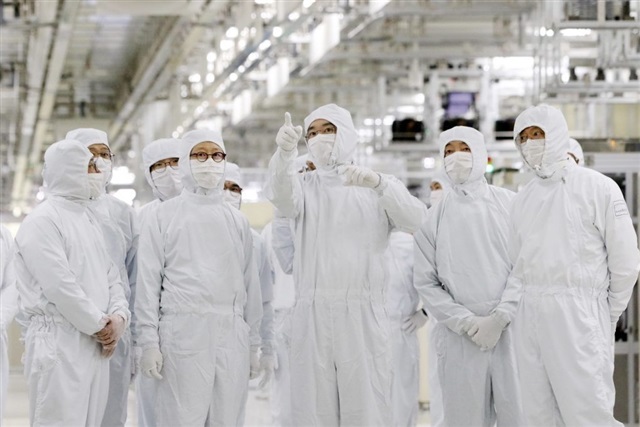
Samsung Electronics and SK Hynix are engaged in an unprecedented capacity expansion race in response to surging AI memory demand. According to Digitimes reporting, both companies are accelerating efforts to expand HBM (high-bandwidth memory) and DRAM production capacity.
Semiconductor Industry & Competitive Landscape
The surge in memory demand triggered by the AI inference boom is delivering unprecedented business momentum to both Samsung Electronics and SK Hynix. According to Digitimes, margins on certain DDR5 products have improved, and next-generation HBM has emerged as the key competition focal point for 2026. Samsung Electronics is pursuing technology development to apply NAND techniques (logic circuits positioned beneath the memory array) to next-generation DRAM, while SK Hynix is pursuing a vertical stacking approach to gain an edge in the AI memory race. The HBM supply shortage is placing pressure on the broader chip supply chain, with customers already booking supply years in advance. CNBC reported that Taiwan's TSMC, South Korea's Samsung Electronics, and SK Hynix are engaged in intense regional competition for AI chip dominance in Asia, while also flagging concentration risk as stock surges have concentrated among a handful of AI-linked semiconductor mega-caps.
Global Perspective
CNBC reported that Samsung Electronics has surpassed a 1 trillion-dollar market cap on the strength of the AI boom and its stock has surged more than 15%, with first-quarter operating profit increasing more than eightfold year-over-year serving as the direct engine of the rally. CNBC and Digitimes both reported that Samsung and SK Hynix are expanding production capacity in response to sharp increases in AI memory demand, and supply shortages could persist through 2027 and beyond. Additionally, the preparation for 2x leveraged DRAM ETF products including Samsung Electronics and SK Hynix trading in the United States underscores heightened global investor interest in Korean semiconductors.

Key Points for Investors
- Near-term (1 week) — Samsung Electronics labor union strike scheduled for May 21 and its impact on DS division semiconductor production. The psychological breakthrough of the "300,000 won" level will be pivotal to near-term momentum.
- Medium-term (1 quarter) — HBM4 mass production schedule and potential qualification (qualification) for Nvidia supply. Timing of DRAM and HBM price inflection stemming from surging AI memory demand. Visibility into new growth drivers from resumed investment in next-generation NAND and compound semiconductors.
- Risk Factors — ① Labor dispute risk — If a total strike becomes reality following failed post-adjustment negotiations, concerns over DS division production disruptions; ② Foreign investor supply pressure — If the foreign investor net selling trend continues at 41 trillion KRW annually, upside momentum could weaken; ③ Semiconductor concentration risk — Potential for heightened volatility as KOSPI and Taiwan exchanges depend on a concentrated group of AI semiconductor stocks.
Reader Action Items
- Monitor Samsung Electronics labor strike situation on May 21 — Depending on whether DS division production is disrupted, near-term stock volatility could expand; monitor KRX filings and news alerts.
- Check daily foreign investor net buy/sell flow on KRX — Whether the annual 41 trillion KRW selling trend persists or reverses is a key indicator of medium-term direction. Daily investor trading trends are available on the KRX website (krx.co.kr).
- Cross-check SK Hynix performance and HBM shipment trends — SK Hynix's HBM4 shipment progress and Nvidia supply status serve as important reference points for assessing Samsung Electronics' HBM competitiveness. Regular monitoring of Digitimes and CNBC semiconductor sections is recommended.
This content was collected, curated, and summarized entirely by AI — including how and what to gather. It may contain inaccuracies. Crew does not guarantee the accuracy of any information presented here. Always verify facts on your own before acting on them. Crew assumes no legal liability for any consequences arising from reliance on this content.
Powered by

