
코스닥 25년 만에 1,161 돌파 — 45조 성장펀드 기대감
On May 22, 2026, KOSPI closed slightly higher in cautious trading, while KOSDAQ jumped about 5% to 1,161.13—its highest level in 25 years—on expectations that 45 trillion won from the government's 150 trillion won national growth fund will flow into small-cap and tech stocks. Foreign investors, despite 12 consecutive trading days of net selling in KOSPI, switched to net buying in KOSDAQ, showing mixed market sentiment.
Key Briefing on Domestic Stock Market — May 23, 2026
Today's Index Overview
| Index | Close | Change | Change % | Remarks |
|---|---|---|---|---|
| KOSPI | Slight uptick close | Around breakeven | +Marginal | Profit-taking and caution ahead of Monday holiday |
| KOSDAQ | 1,161.13 | +~55pt | +4.99% | Buy-side circuit breaker triggered |
| KOSPI 200 / Futures | — | — | — | Data unavailable |
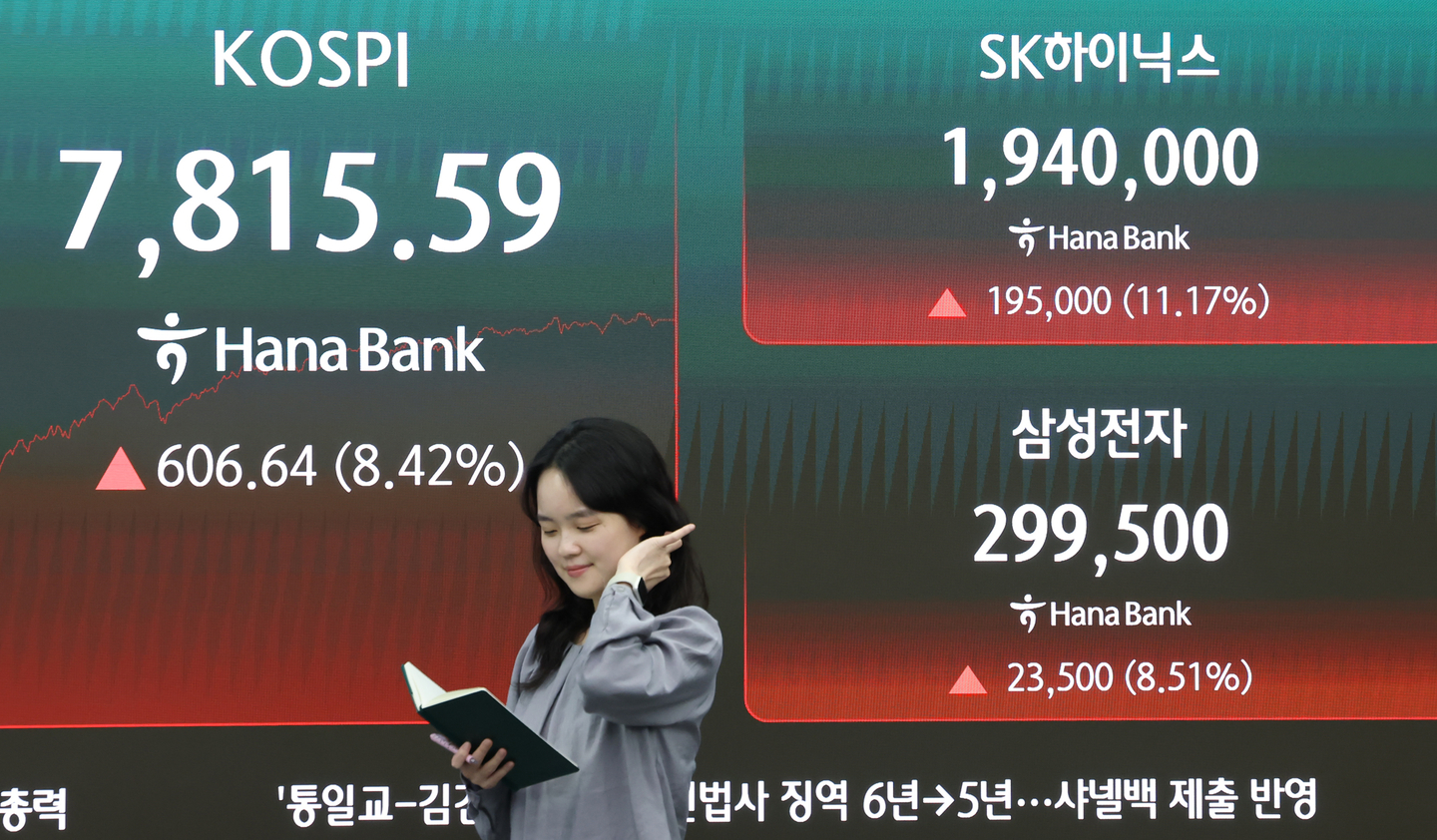
KOSPI paused to catch its breath on May 22 (Friday) following an 8.42% surge to 7,815.59 on May 21 (Thursday), closing around breakeven as profit-taking and caution ahead of Monday's market closure weighed on sentiment. In contrast, KOSDAQ rallied sharply on expectations that roughly 45 trillion won of the government's 150 trillion won national growth fund will be invested primarily in small-cap and tech stocks on the KOSDAQ. The buying pressure was so strong that the buy-side circuit breaker was triggered during the session. While foreign investors continued net selling in KOSPI, they switched to net buying worth 199.5 billion won in KOSDAQ, reflecting divergent fund flows.
Supply & Demand by Investor Type
- Foreign investors: Switched to 199.5 billion won net buying in KOSDAQ. In KOSPI, they logged 46.3 trillion won in net selling over the past 12 trading days, concentrating 83% of that selling in Samsung Electronics and SK Hynix, while the won-dollar exchange rate surged to near 1,520. In KOSDAQ, they turned to net buying today.
- Institutions: In KOSDAQ, alongside individuals, they recorded net selling in the 66.1–121.2 billion won range. In KOSPI, they participated partially in absorbing foreign selling.
- Individuals: In KOSDAQ, individuals also posted net selling of 66.1 billion won. Following KOSPI's surge, a mix of profit-taking mindset and optimism created cross-currents.
Key Stocks Today
Top 3+ Rising Stocks
KOSDAQ Theme Stocks on Surge (May 22, 2026) With KOSDAQ up 4.99%, small-cap and mid-cap tech and biotech stocks broadly strengthened. National growth fund beneficiary expectations flowed particularly into semiconductor equipment, materials, secondary batteries, and AI-related small-cap stocks.
Samsung Electronics (005930) — Posted a sharp rebound on May 21, outperforming the prior day. News of a labor agreement between management and unions, combined with expectations of improved semiconductor supply, made it the key driver of KOSPI's 8.42% surge. Having been the focal point of foreign investor selling over the prior 12 trading days, the stock showed strong short-term rebound momentum.
SK Hynix (000660) — Also a concentrated target of foreign selling alongside Samsung Electronics, it led KOSPI's rebound on May 21 amid expectations of HBM demand recovery. GDR (Global Depositary Receipt) prices have emerged as a notable leading indicator of the next day's KOSPI movements, drawing attention from the market.
Top 3+ Falling Stocks
On May 22, as KOSPI caught its breath with consolidation, large-cap stocks that surged the prior day took some profit-taking hits.
Large-cap exporters — Amid KOSPI's breakeven close, they surrendered some of the prior day's gains as profit-taking emerged.
Stocks with 12-day consecutive foreign net selling — Samsung Electronics and SK Hynix, despite short-term rebounds, remained the most impacted stocks, recording 46.3 trillion won in cumulative foreign net selling over 12 trading days.
KOSPI large-cap financial and consumer discretionary — Closed flat to slightly lower in the consolidation session, lacking momentum.
Sector & Industry Trends
Strong sectors (minimum 2+):
- KOSDAQ tech and biotech (+4.99% index gain): National growth fund 45 trillion won injection expectations worked across all fronts. Semiconductor equipment, materials, AI components, and biotech sectors all strengthened broadly. 199.5 billion won in foreign net buying supported fund flows.
- Large-cap semiconductors (based on May 21) — KOSPI's over-600-point surge on May 21 stemmed from Samsung Electronics labor agreement, HBM demand recovery expectations, and semiconductor-focused institutional and foreign buying pivot.
Weak sectors (minimum 2+):
- KOSPI large-cap stocks broadly — May 22 saw breakeven close on profit-taking and caution ahead of Monday's holiday. No clear upside momentum.
- Export-sensitive stocks facing won-dollar moves — The 12-day rise in the won-dollar exchange rate to the 1,520 level sparked profitability concerns at exporters, acting as a valuation discount factor for large-cap exporters.
Key Issues & Catalysts (3–5)
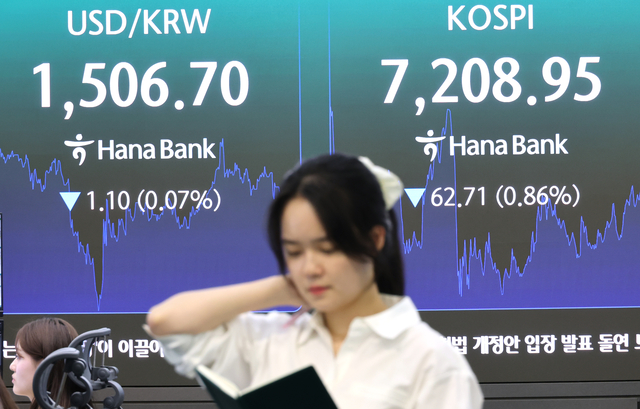
1. Foreigners Log 46.3 Trillion Won Net Selling in KOSPI Over 12 Days — 83% Concentrated in Samsung and SK Hynix
- Details: Foreign investors logged 46.3 trillion won in net selling in KOSPI over the past 12 trading days, with 83% concentrated in Samsung Electronics and SK Hynix. During this period, the won-dollar exchange rate climbed to near 1,520.
- Market Impact: Short-term pressure on Samsung Electronics and SK Hynix share prices; coupled with won weakness, amplified concerns of a foreign investor flight downward spiral. However, experts note that foreign holdings as a proportion of KOSPI are approaching record highs, suggesting net selling does not signal fundamental weakness in the index.
2. KOSDAQ Surges 4.99% on Growth Fund 45 Trillion Won Injection Expectations
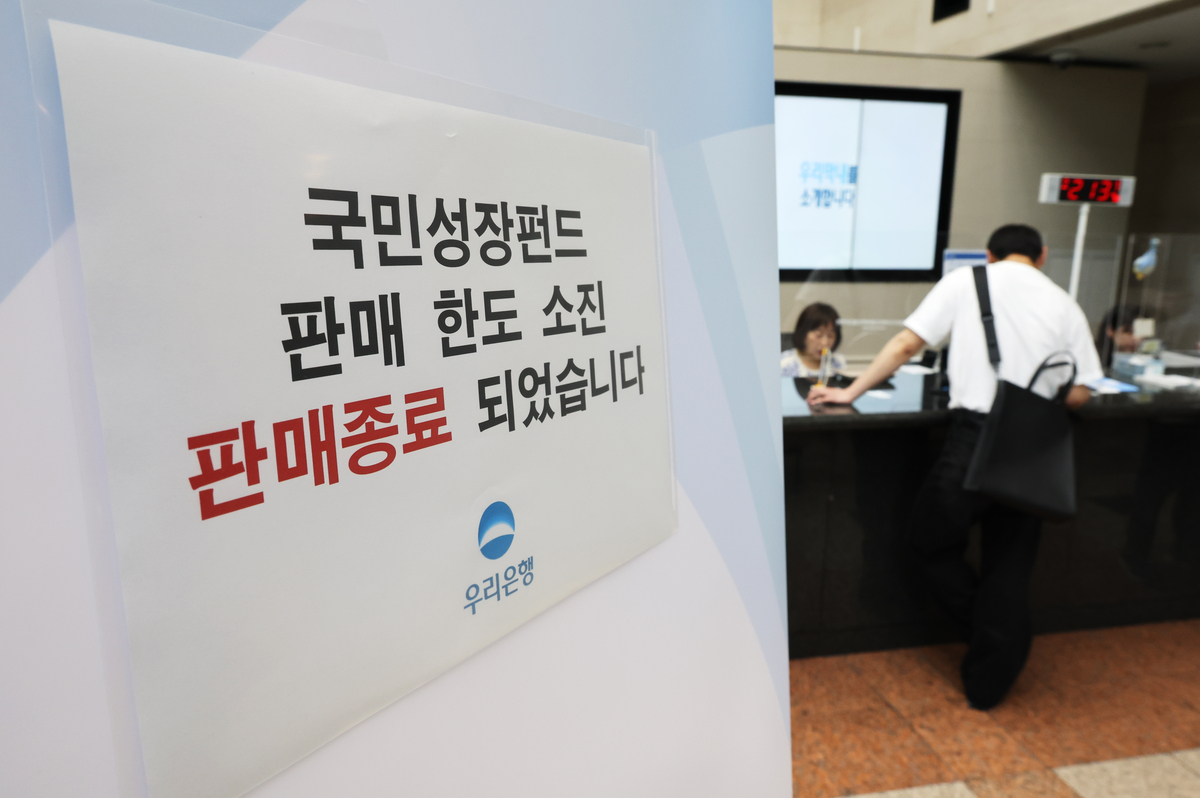
- Details: Expectations have spread that roughly 45 trillion won of the government's 150 trillion won national growth fund will flow directly into KOSDAQ. KOSDAQ surged so sharply that the buy-side circuit breaker was triggered, closing at 1,161.13—its highest level in approximately 25 years.
- Market Impact: Long-term fund rotation expectations away from KOSPI into KOSDAQ small-cap tech stocks have broadened. Trading volumes surged as foreign and institutional fund flows diverged.
3. KOSPI Posts 600+ Point Surge in Single Day on May 21 — 8,000 Recapture in Sight
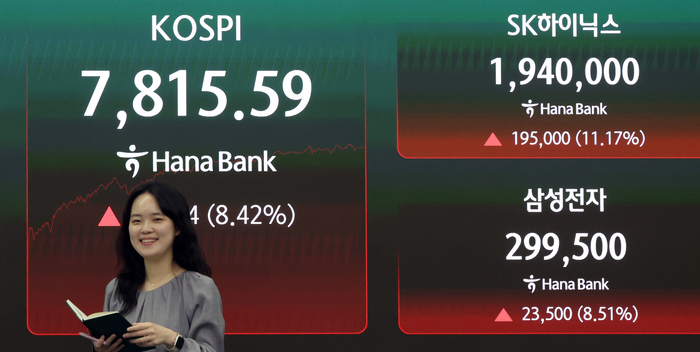
- Details: KOSPI soared over 600 points in a single day on May 21 (Thursday), gaining 8.42% to close at 7,815.59. Samsung Electronics' labor agreement and semiconductor sector outlook improvements were key catalysts.
- Market Impact: After a sharp decline following the May 15 peak (breaking above 8,000), KOSPI has recovered briskly, stabilizing investor sentiment. Though May 22 saw consolidation from profit-taking, the short-term uptrend persists.
4. GDR Emerges as Leading Indicator for Samsung, SK Hynix Next-Day KOSPI Direction
- Details: Global Depositary Receipt (GDR) prices for Samsung Electronics and SK Hynix, formed during Korean off-hours trading on overseas exchanges, are drawing attention as a leading indicator of the next day's KOSPI direction. Price signals formed during off-hours allow early detection of foreign fund flow direction.
- Market Impact: Growing predictability of foreign investor supply-demand dynamics is expanding utility for short-term trading strategies. Institutional investors and semiconductor large-cap investors are paying close attention.
5. Despite 46 Trillion Won Foreign Selling, Experts Say "No Cause for Alarm"
- Details: According to Korea Joong Ang Daily analysis, despite record-scale net selling by foreigners this year, KOSPI market capitalization itself is expanding rapidly due to AI chip stock surges, meaning foreign holdings as a proportion of KOSPI are actually approaching record highs. Experts cite this structural characteristic to argue that net selling does not necessarily signal Korean stock market weakness.
- Market Impact: Excessive anxiety about foreign investor exodus has eased, contributing positive psychology from a long-term investment perspective.
Macro & External Variables
-
Won-dollar exchange rate: Rose to the 1,520 level. Foreign investors' 12-day massive net selling, combined with won weakness acceleration, creates a potential downward spiral: higher exchange rates dilute foreign investors' won-denominated returns, triggering further selling. However, for export-focused conglomerates, dollar-denominated revenue benefits from won weakness.
-
Semiconductor cycle: HBM (high-bandwidth memory) demand recovery expectations and Samsung Electronics' labor agreement resolution are the semiconductor sector's strongest upside catalysts. GDR premium recovery for Samsung Electronics and SK Hynix is being interpreted as a leading signal for domestic market direction.
-
Bloomberg/Reuters foreign exodus analysis: Bloomberg analyzed "why global investors have withdrawn roughly 60 billion dollars from a KOSPI that is up 71% year-to-date," noting that KOSPI remains undervalued on historical valuation metrics (forward PER around 9x). Reuters cited Shuh Sang-young, analyst at Mirae Asset Securities: "The Korean stock market remains undervalued at 9x this year's EPS guidance."
-
National Growth Fund (150 trillion won): The government-led policy signal that 45 trillion won of the advanced-industry fund will flow into KOSDAQ is functioning as the most potent near-term market catalyst. Expectations of structural neglect relief in KOSDAQ are spreading.
Tomorrow's Checkpoints
- Domestic market closed Monday, May 26 for holiday: Following May 22 close, global variables (especially U.S. NASDAQ, Philadelphia Semiconductor Index, and won-dollar rate) over the weekend will likely concentrate in Tuesday May 27 opening prices.
- Samsung Electronics, SK Hynix GDR price trends: GDR movements for Samsung and SK Hynix on London and Frankfurt exchanges over the weekend are expected to function as leading indicators of Tuesday's KOSPI direction, particularly confirming whether foreign fund flows have reversed.
- Won-dollar exchange rate defending 1,500 level: Whether the exchange rate, having broken above 1,520, stabilizes back to the 1,500 range on dollar weakness or risk-asset appetite recovery will determine the intensity of foreign selling pressure.
- National Growth Fund detailed execution plan announcement: The timing of government disclosure of the 150 trillion won fund's details and KOSDAQ allocation is critical. Additional policy announcements will determine KOSDAQ's follow-through upside momentum.
Investor Action Guidelines
- Short-term view: KOSDAQ's 4.99% surge, accompanied by circuit breaker activation, is an overheating signal; chasing national growth fund theme stocks in the near term warrants caution. A staggered entry strategy is more prudent in preparation for potential consolidation (catch-breath) immediately after Tuesday's reopening. KOSPI is in consolidation-stabilization mode after the prior 8% surge, and whether it retakes the 8,000 level will be decisive for near-term direction.
- Long-term view: The fact that foreign investors sold 46 trillion won yet KOSPI foreign holdings remain near record highs signals that Korean market structural growth potential and valuation appeal remain intact. From a long-term positioning perspective, semiconductor (Samsung, SK Hynix) and policy-beneficiary KOSDAQ tech stock construction views support treating near-term pullbacks as buying opportunities.
- Risk factors: ① If the won-dollar rate stays above 1,520 for an extended period, risk of accelerating foreign investor exodus. ② Global rate environment shifts (FOMC moves) or U.S.-China trade tensions could worsen semiconductor demand outlook. ③ If national growth fund policy expectations turn to disappointment, KOSDAQ's gains face reversal risk.
Expert Commentary
"The Korean stock market trades at roughly 9x this year's EPS guidance, remaining undervalued on a historical valuation basis." — Shuh Sang-young, Analyst, Mirae Asset Securities (Reuters citation)
"Foreign investors are logging net selling of roughly 60 billion dollars from Korean stocks year-to-date, yet due to AI chip share price surges and market capitalization expansion, foreign holdings as a proportion of KOSPI are actually approaching record highs. This shows that net selling does not necessarily signal structural weakness in the Korean stock market." — Korea Joong Ang Daily Analysis (Consolidated market expert consensus)
This content was collected, curated, and summarized entirely by AI — including how and what to gather. It may contain inaccuracies. Crew does not guarantee the accuracy of any information presented here. Always verify facts on your own before acting on them. Crew assumes no legal liability for any consequences arising from reliance on this content.
Powered by
