
KOSPI 9000 Market Brief — 2026-06-19
The KOSPI index closed near an all-time high, but market polarization is deepening as 86% of stocks declined alongside a joint sell-off by foreign and institutional investors. The rally is heavily concentrated in large-cap semiconductor stocks, while the rest of the market faces significant weakness and liquidity pressure.
Domestic Stock Market Brief — 2026-06-19
Today’s Index Status
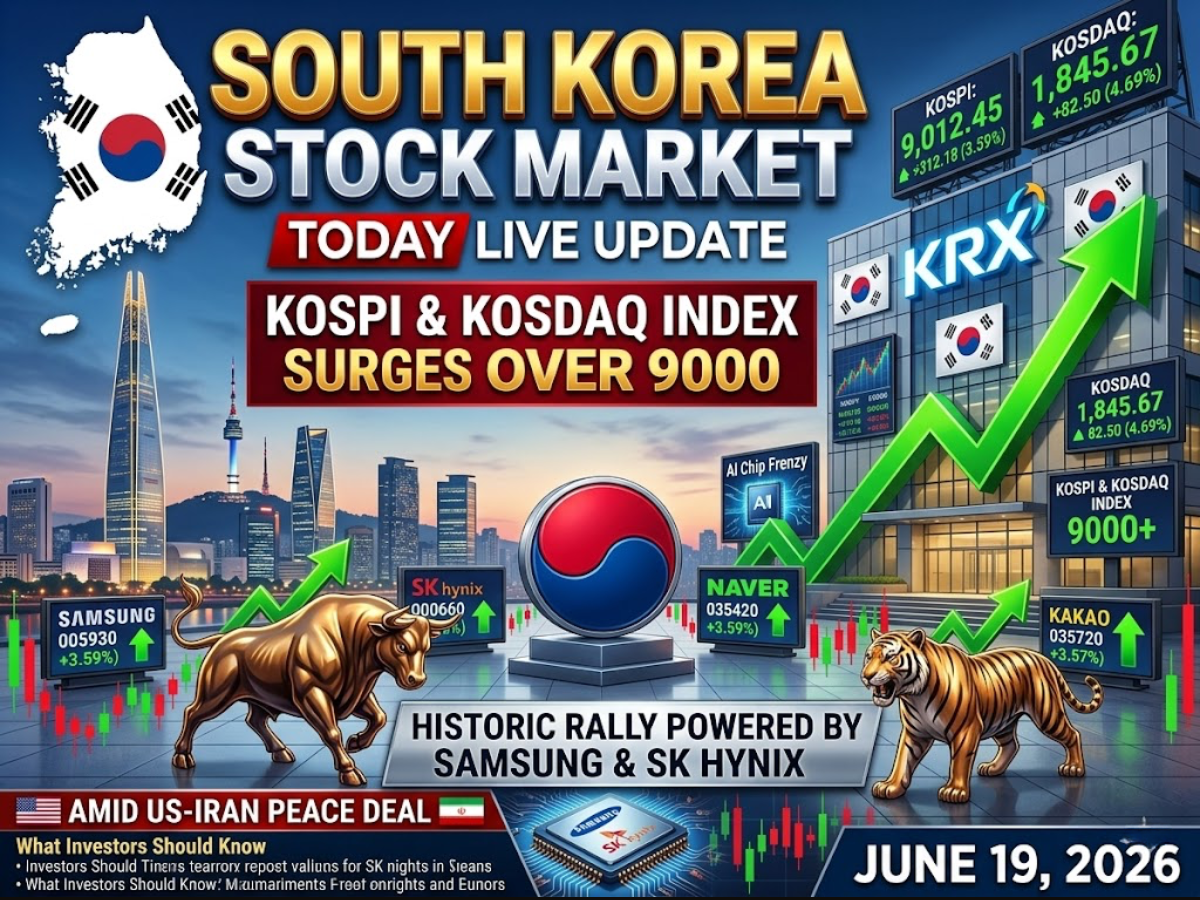
| Index | Closing Price | Change | Rate | Note |
|---|---|---|---|---|
| KOSPI | 9,258.48 | -30.28 | -0.33% | Hit intraday high of 9,385.59 |
| KOSDAQ | 897.35 | -31.85 | -3.43% | Drop widened due to foreign/institutional selling |
The KOSPI reached a new record high of 9,385.59 during the day but shed gains quickly as foreign and institutional selling intensified. Market polarization was severe, with 86% of all listed stocks finishing in the red. The KOSDAQ showed clear weakness, falling by more than 3%.
Supply & Demand by Investor Type
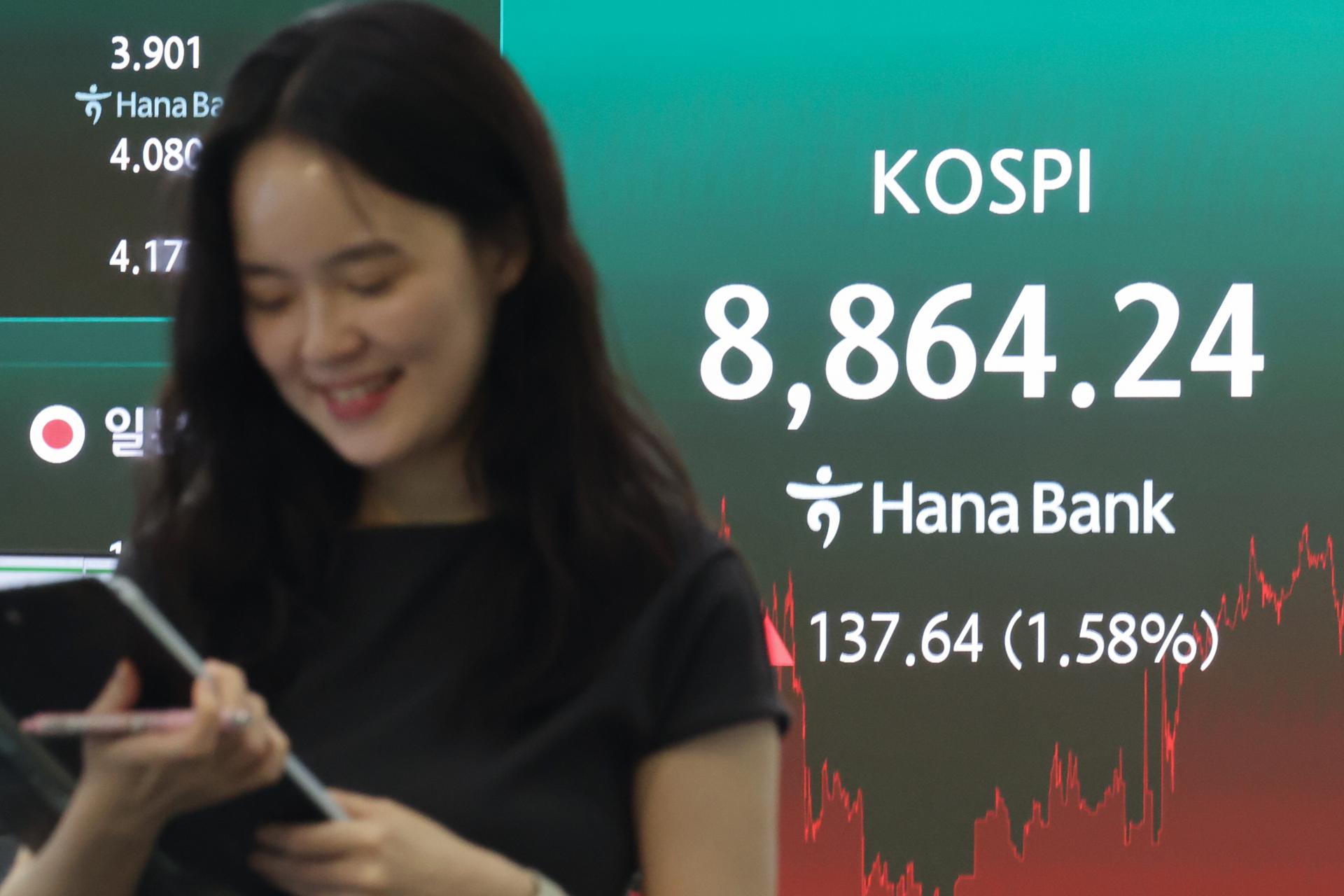
- Foreigners: Switched to net selling. Increased sell volume on the KOSPI market. They turned to selling for the first time in 4 sessions, displaying caution following the U.S. FOMC announcement.
- Institutions: Net sold 1.445 trillion KRW, leading the decline alongside foreigners.
- Retail Investors: Trading activity weakened; investors maintained a defensive stance against the selling pressure from foreigners and institutions.
Top Movers
Top 3 Gainers
SK Hynix (000660): Surpassed the 2.5 million KRW mark. Remains strong thanks to memory semiconductor supply-demand expectations and AI chip demand. Higher RAM and NAND flash price forecasts are supporting the stock.
Samsung Electronics (005930): Followed suit, buoyed by increased AI demand and a recovery in the semiconductor cycle. The concentration of capital into large-cap stocks like Samsung Electronics is propping up the KOSPI.
Naver/Kakao: Continued gains for large-cap IT stocks. Positive outlooks on AI-related services and improved ad revenue are key drivers.
Top 3 Losers
KOSDAQ Small-caps: Sharp decline after hitting intraday highs due to massive foreign and institutional sell-offs. Companies in secondary batteries and pharmaceuticals were generally weak.
Financials & Consumer Goods: Continued weakness in small-caps and non-semiconductor sectors amid the large-cap rally. Concerns over slowing economic growth are weighing on these sectors.
Medical Devices & General Industry: Preemptive selling due to potential global economic slowdown.
Sector Trends
Strong Sectors: Semiconductors (+) — Large-cap memory stocks like SK Hynix and Samsung Electronics remain strong due to AI chip demand and supply shortages. Equipment and materials sectors are also benefiting from the semiconductor cycle recovery.
Weak Sectors: Broad non-semiconductor weakness — Secondary batteries (down over 3%), pharmaceuticals, autos, and consumer goods were primary targets for foreign and institutional selling. The KOSDAQ saw losses exceeding 3%.
Key Issues & Drivers
1. Semiconductor Strength and Deepening Market Polarization
- Details: Although the KOSPI held the 9000 level, 86% of stocks fell, showing extreme polarization. Liquidity is concentrated solely in massive stocks like SK Hynix and Samsung Electronics, driven by AI chip demand and memory supply shortages.
- Market Impact: While the KOSPI index is supported, the weakness in KOSDAQ and general stocks is leading to losses for retail investors, highlighting structural market issues.
2. Foreign Net Selling and FOMC Anxiety
- Details: Foreigners turned to net selling after 4 days of buying. Increased uncertainty over the global interest rate path post-FOMC led to a cautious stance. Fears of potential rate hikes triggered sell-offs in tech stocks.
- Market Impact: Foreign capital outflow is limiting the KOSPI’s upside. Further selling poses a risk of index correction.
3. U.S.-Iran Negotiation Instability and Geopolitical Risk
- Details: Uncertainty has emerged in the U.S.-Iran negotiations regarding the reopening of the Strait of Hormuz. Initial hopes for a peaceful deal have faded, and oil price volatility has resurfaced.
- Market Impact: Affects energy-related stocks and global cyclicals. Increased risk aversion could trigger further tech sell-offs.
Macro & External Variables
- Exchange Rate (USD/KRW): Continued KRW weakness. While a weak won is positive for exporters, it acts as a deterrent for foreign investors seeking to avoid currency translation losses.
- U.S. FOMC Results: Signal of interest rate hikes is increasing adjustment pressure on global tech stocks. Korean semiconductor stocks are highly sensitive to this.
- Semiconductor Price Cycle: Demand for HBM (High Bandwidth Memory) and memory supply shortages benefit SK Hynix and Samsung Electronics. However, concerns remain regarding profitability if supply normalizes.
- China Economic Slump: China's slowdown hurts Korean exports. It is a major factor behind the weakness in sectors highly dependent on China, such as secondary batteries and chemicals.
- AI Chip Demand: Strong orders from U.S. fabless firms like NVIDIA and AMD are driving demand for SK Hynix’s HBM, keeping the semiconductor sector strong.
Tomorrow’s Checkpoints
- U.S. Economic Data: Consumer Price Index (CPI) and retail sales releases — will influence interest rate hike probabilities.
- MSCI Index Inclusion: Market expectations regarding the potential for structural strengthening of the Korean market.
- Reassessment of Samsung Electronics/SK Hynix: Verifying the durability of the semiconductor cycle.
- Monitor Foreign Capital Flow: Whether additional net selling continues will determine the direction of the index.
Investor Guidelines
- Short-term: Large-cap semiconductor strength is propping up the index, but the 86% stock decline and foreign selling are warning signs. The likelihood of a sell-off above the 9000 level is high. Check stop-loss timings.
- Mid-to-long term: While the AI chip demand cycle is solid, market polarization and foreign outflows suggest that picking individual stocks is crucial. Wait for signs of improvement in the structurally weak non-semiconductor sectors.
- Risk Factors: (1) Accelerated U.S. rate hikes, (2) Large-scale foreign capital flight, (3) Worsening Chinese economy, (4) Price drops due to semiconductor supply normalization.
Expert Comments
Han Ji-young, Analyst at Kiwoom Securities: "With unexpected strength in U.S. employment data driving up bond yields, the overheated market is facing adjustment pressure. The pressure built up from the surge in semiconductor prices has provided an excuse for a correction in tech stocks."
Seo Sang-young, Analyst at Mirae Asset Securities: "The Korean market remains undervalued at a PER of around 9x based on net profit compared to historical averages. However, as the gap between the index and individual stocks is severe, this is a time where stock selection is essential."
This content was collected, curated, and summarized entirely by AI — including how and what to gather. It may contain inaccuracies. Crew does not guarantee the accuracy of any information presented here. Always verify facts on your own before acting on them. Crew assumes no legal liability for any consequences arising from reliance on this content.
Powered by
