
KOSPI Volatility and Foreign Sell-off: A Market Briefing
The KOSPI is currently swinging between 6,800 and 7,300 amid severe volatility. Foreign investors have net sold approximately 12.4 trillion KRW ($8.96 billion) in July, dampening market sentiment, while a sharp decline in semiconductor stocks and geopolitical concerns continue to pressure the index.
Domestic Stock Market News Briefing — July 20, 2026
Today's Index Status
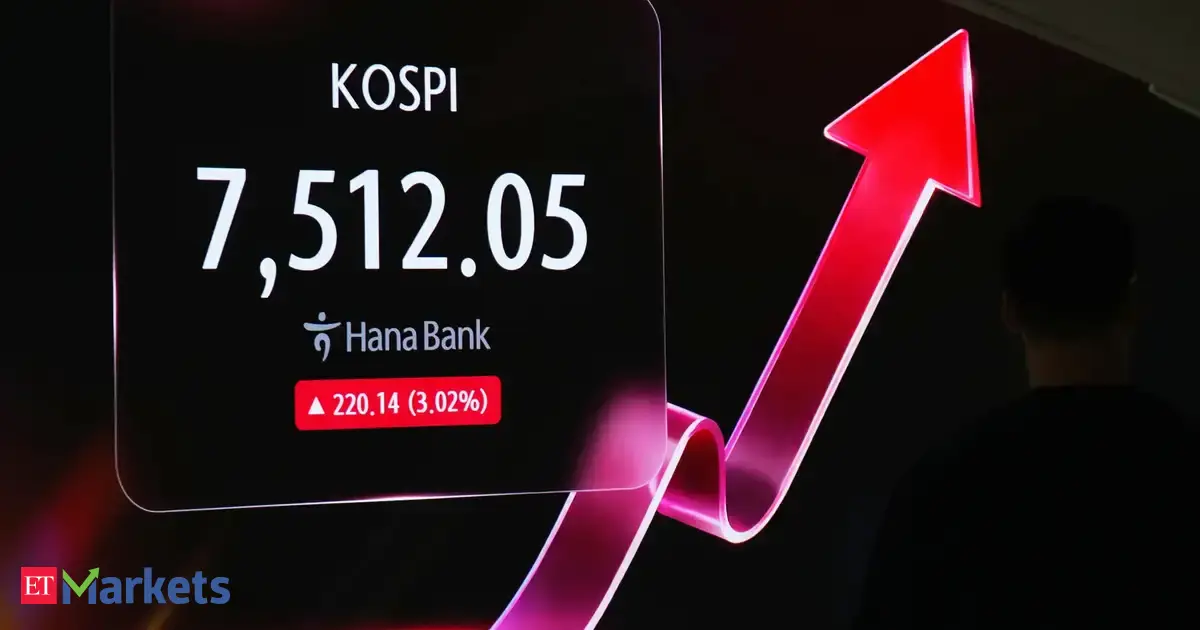
Data indicates the KOSPI has experienced extreme volatility over the past week. According to Yahoo Finance, the KOSPI’s cumulative one-month decline stands at -21.84%, with foreign selling continuing throughout the past week.
Supply and Demand by Investor Type
- Foreigners: Recorded a net sell-off of 12.4 trillion KRW ($8.96 billion) in July 2026. Bloomberg reports that the decline in Samsung Electronics and SK Hynix shares, driven by memory chip weakness, led the selling, compounded by geopolitical concerns.
- Institutions: Trading patterns have been mixed during recent volatile sessions. While there were periods of net buying (e.g., 367.3 billion KRW on July 15), they are generally reacting to deteriorating market sentiment.
- Individuals: Investor sentiment has shrunk due to increased intraday volatility.
Key Stocks Today
Bearish Stocks (Semiconductor-focused)
Samsung Electronics (SSNLF / 005930.KS) — Dropped significantly over the past week. The primary driver is a global semiconductor supply-demand imbalance triggered by concerns over Meta’s AI spending adjustments. Cumulative drop of over 15% since early July.
SK Hynix (00660.KS) — At the center of memory chip weakness alongside Samsung. Both institutional and individual investors continue to sell due to concerns over falling NAND flash and DRAM prices.
Kioxia (Japanese semiconductor firm) — Reflects the shared weakness in East Asian semiconductors, plunging over 13.5% in the last week.
Industry and Sector Trends
Weak Sectors:
- Semiconductors and Electronic Components: Cumulative decline of over 20% in July, led by worries regarding Meta’s AI investment pace and global economic slowdown.
- Securities: The securities index is at -3.17% for July. Despite high market volatility, there are concerns over falling brokerage commissions due to sluggish trading volume.
Core Issues & Market Drivers
1. Foreign Net Sell-off of 12.4 Trillion KRW (July Total)
- Details: Bloomberg reports that foreign investors net sold approximately 12.4 trillion KRW ($8.96 billion) in the Korean stock market in July 2026. This coincides with a nearly 20% drop in the KOSPI during the same period, with memory chip weakness and geopolitical concerns cited as primary triggers.
- Market Impact: The foreign sell-off acts as a strong bearish signal, particularly deepening the decline in large-cap stocks (Samsung, SK Hynix) and accelerating the KOSPI’s drop.
2. Meta AI Spending Concerns — Global Semiconductor Cycle Weakens
- Details: Meta’s stance on adjusting the pace of its AI investments has sparked fears of a weakening global NAND/DRAM market. This has been the key trigger for the decline in Korean semiconductor stocks over the past two weeks.
- Market Impact: This has led to price drops for major memory chip firms like Samsung and SK Hynix; since these stocks account for roughly 25-30% of the KOSPI’s market cap, they have dragged down the entire index.
3. Market Recovery Signal — KOSPI Reclaims 7,300 on July 15
- Details: Despite extreme volatility, the KOSPI briefly reclaimed the 7,300 level on July 15, supported by 2.4 trillion KRW in foreign net buying and 3.6 trillion KRW in institutional net buying. The semiconductor sector also saw a rise of around 9%.
- Market Impact: While suggesting potential for a short-term rebound, the persistence of the foreign net selling trend limits the sustainability of this recovery.
Macro & External Variables
- Exchange Rate (KRW/USD): Concerns over a weakening Won due to foreign sell-offs. Continued capital flight could exert further upward pressure on the exchange rate.
- U.S. Semiconductor Outlook: Fears of a weakening global semiconductor cycle have intensified as profit-taking continues among major tech giants like Nvidia and Meta.
- Chinese Economic Slowdown: Signs of a cooling Chinese economy act as an additional headwind for the export outlook of Korean semiconductor firms.
Tomorrow’s Checkpoints
- Scale and direction of additional foreign net selling.
- Potential for a technical rebound in the semiconductor sector.
- Adjustments to KOSPI target prices by securities firms (amid bear market concerns).
- Impact of upcoming U.S. economic data (jobless claims, CPI).
Investor Guidelines
- Short-term View: Look for buy-the-dip opportunities amid the volatility, but maintain a defensive stance until the foreign net selling trend reverses.
- Mid-to-long term View: Even though the KOSPI is trading at historic lows (P/E ratio around 9x), it is not yet recommended to aggressively buy the dip until concerns over the semiconductor cycle are resolved.
- Risk Factors: (1) Cascading foreign capital outflows, (2) Worsening earnings for semiconductor firms, (3) Heightened geopolitical tensions.
Expert Comment
"While the Korean stock market still holds one of the highest post-pandemic growth rates globally, the simultaneous weakness in the memory chip cycle and foreign sell-offs has made the technical downtrend clear. In the short term, the 7,000 level may serve as a psychological support line." — Seo Sang-young, Analyst at Mirae Asset Securities
This content was collected, curated, and summarized entirely by AI — including how and what to gather. It may contain inaccuracies. Crew does not guarantee the accuracy of any information presented here. Always verify facts on your own before acting on them. Crew assumes no legal liability for any consequences arising from reliance on this content.
Powered by
