
KOSPI 7,000 앞두고 외국인·개인 수급 전쟁 심화
On May 1st, 2026, KOSPI rebounded on foreign investor net buying but retail investors poured 645.4 billion won into inverse ETFs, doubling down on downside bets. Foreign buying concentrated in semiconductor large-caps propped up the index, which is now hovering roughly 400 points below the 7,000 level. After hitting an all-time intraday high of 6,750.27 points on April 30th, the market has seen renewed volatility as the Fed's hawkish stance and surging international oil prices (breaking $126/barrel) collided with investor sentiment.
KOSPI Brief — May 2, 2026
Market Index Snapshot
| Index | Closing | Change | Rate | Notes |
|---|---|---|---|---|
| KOSPI | ~6,650 (confirm) | — | +upside reversal estimated | Foreign semiconductor net buying-led |
| KOSDAQ | Pending confirmation | — | — | Retail inverse ETF concentration |
| KOSPI 200 / Futures | — | — | — | — |
⚠️ Data Note: May 2, 2026 is a regular trading day (day after Chuseok holiday). Final index figures require real-time confirmation as of publication. Market context below is based on May 1st news data searches.
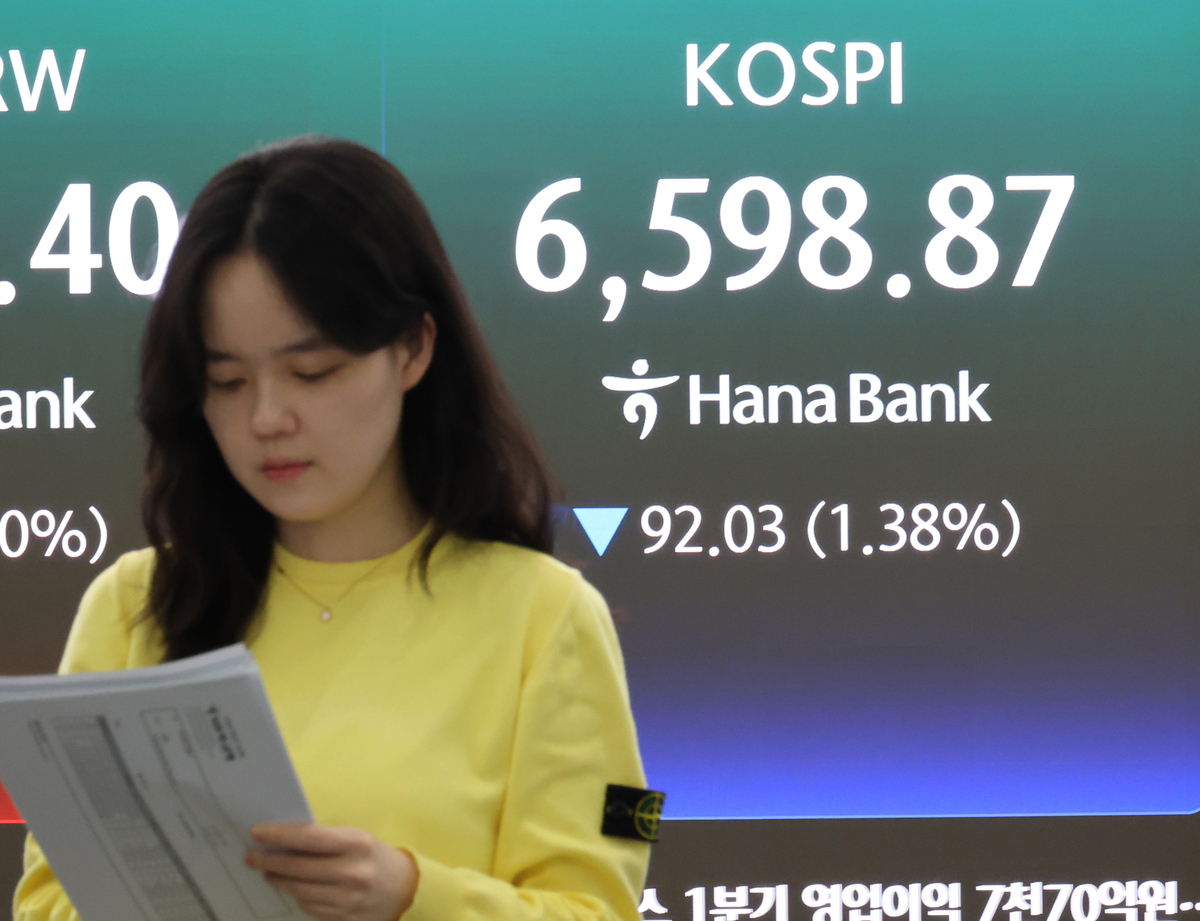
According to Seoul Economy on May 1st, foreign investors led a KOSPI rebound through concentrated semiconductor net buying. Meanwhile, retail investors plowed 64.54 billion won into inverse ETFs, betting on a market decline. Following the all-time intraday high of 6,750.27 points on April 30th, hawkish Fed rhetoric and oil prices breaking $126/barrel have triggered heightened volatility and mixed investor sentiment.
Flow by Investor Type
- Foreign investors: Concentrated semiconductor net buying driving KOSPI gains. KOSDAQ saw 31.5 billion won net selling (per Korea Economic data). Strong AI tech optimism underpins foreign flows.
- Institutions: KOSDAQ net selling of 83.1 billion won (per Korea Economic data). KOSPI showing continued profit-taking.
- Retail: KOSDAQ net buying of 148.4 billion won as bargain hunting kicks in. Simultaneously deployed 64.54 billion won into inverse ETFs, placing dual bets on KOSPI declines — mixed sentiment amid market anxiety.
Key Movers Today
Top Gainers
Samsung Electronics (005930) — Touched 230,000 won on April 30th, buoyed by global big tech earnings Samsung Electronics hit 230,000 won intraday on April 30th showing strength. Record-breaking Q1 results from Microsoft, Alphabet and other mega-cap tech firms raised AI chip demand expectations, with foreign investors aggressively net buying. Samsung played a crucial role as KOSPI hit its all-time intraday high of 6,750.27 points.
AI·Semiconductor Large-Caps — Foreign buying concentration, per Chosun Ilbo English edition As foreign buying flowed heavily into semiconductors, AI memory plays like SK Hynix showed correlated strength per reports. Chosun Ilbo's English edition clarified the flow dynamic: "Foreigners buying semiconductors, retail losing on inverse plays."
Chaevi (KOSDAQ new listing) — IPO debut +83.33% above offer price EV charging infrastructure firm Chaevi made a spectacular debut on KOSDAQ's first day, jumping 83.33% above its offer price. Growing EV charging infrastructure demand and supportive government policy drove investment appeal.
Top Losers
Retail via inverse ETF losses — Strategy losses rather than direct stock declines Retail investors' 64.54 billion won inverse ETF purchases turned into losses as foreign net buying pushed KOSPI into positive territory. Seoul Economy directly reported: "Retail took losses on inverse plays."
Won-weakening sensitive sectors — Domestic and import-dependent weakness Sustained dollar strength from Fed hawkishness pressured won weakness, hitting import-cost-sensitive domestic sectors and airlines. Specific stock figures warrant real-time checking.
Energy-cost sensitive sectors — Impact from $126 oil spike International oil breaking $126/barrel created selling pressure on airlines, chemicals, and materials firms facing higher energy costs.
Sector & Industry Trends
Strength
- Semiconductors·IT Hardware: Global big tech earnings surprises (MS, Alphabet, etc.) translated into domestic semiconductor demand optimism. Samsung Electronics and SK Hynix topped foreign net buying targets. This sector was the core driver behind KOSPI posting its best April performance in 28 years.
- EV·Charging Infrastructure: Chaevi listing boosted interest in EV charging-related stocks.
Weakness
- Airlines·Travel: Oil surge to $126/barrel sparked fuel cost anxiety. Iran war risks keep Middle East route uncertainty alive.
- Domestic Consumer: Won weakness and extended rate-hold concerns dampened consumer sentiment.
Key Issues & Drivers (4)
Issue 1: KOSPI 400 Points From 7,000 — Overheating Debate vs. Further Upside Tug-of-War
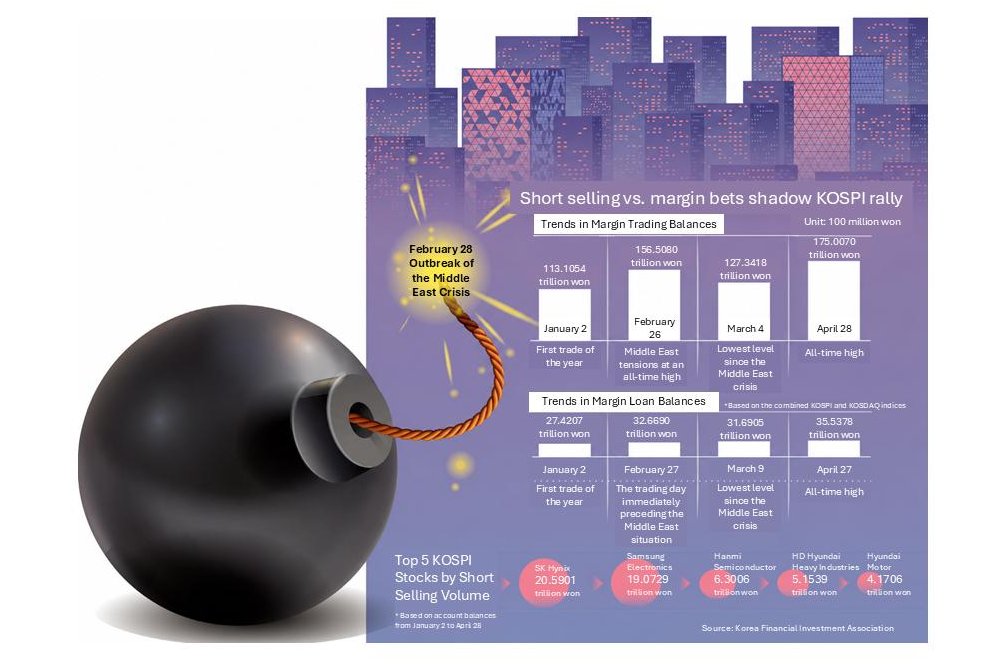
- Details: KOSPI currently hovers around 6,600, roughly 400 points from the 7,000 level. Bloomberg reported on April 28th: "Korea's world-beating rally creates bubble risk," while brokerages counter with May upside views. KOSPI has surged roughly 60% since October 2025.
- Market Impact: Short-selling balances exceeding 17.5 trillion won fuel fatigue and accumulated speculative positioning simultaneously. Key near-term volatility driver.
Issue 2: Fed's Hawkish Stance — Extended Rate Hold Signaled
- Details: The U.S. Fed maintained rate pause while re-emphasizing inflation concerns in recent meetings. This hawkish signal was cited as a key driver of KOSPI's post-surge reversal on April 30th. The chain reaction worked: stronger dollar → won weakness → foreign capital flight risk.
- Market Impact: Persistent dollar strength could weaken foreign buying momentum via won depreciation. Bond market volatility concerns also rising.
Issue 3: Oil Breaches $126/Barrel — Iran War Risk Resurfaces
- Details: International crude broke $126/barrel, reigniting inflation worries. Prolonged U.S.-Iran negotiations stalemate keeps Iran war premium embedded in prices. CNBC phrased it: "Korea's tech optimism beat Iran war worry."
- Market Impact: Oil spike raises exporter costs, constrains Bank of Korea rate options, worsens trade balance — layered risks for an energy-importing nation like Korea.
Issue 4: Surging Overseas Korea ETF Demand — Korea Discount Unwinding Expected
- Details: KOSPI rally has sparked foreign investor appetite for Korean stock ETFs. Korea Times reported April 29th: "KOSPI rally drawing overseas Korea ETF inflows." Bloomberg also conveyed investor sentiment: "world-beating rally is just the beginning."
- Market Impact: Indirect capital inflows via foreign ETFs support foreign direct net buying, creating dual-layer demand structure. Long-term foreign ownership share gains anticipated.
Macro & External Variables
- Won/Dollar Exchange Rate: Dollar strength from Fed hawkishness persists, pressuring won weakness. Currency weakness (won depreciation) incentivizes foreign stock selling—near-term supply risk.
- International Oil (WTI): Broke $126/barrel. U.S.-Iran negotiation stalemate backdrop. Korea trade balance deterioration concerns plus direct airline, chemical, materials sector hits.
- U.S. Equity Futures: Big tech (MS, Alphabet) Q1 beats fuel Nasdaq strength. AI chip demand optimism translating positively to Korean exporters.
- Japan's Nikkei 225: Also near all-time highs in tandem with Korea—CNBC reported April 27th: "Japan, Korea stocks hit new peaks together."
- FOMC: Rate hold maintained, inflation vigilance reconfirmed. Post-May rate-cut expectations fading, driving global equity volatility.
Tomorrow's Checkpoints
- U.S. April Jobs (Non-farm payroll, unemployment): Fed rate path lynchpin. Beats above forecast strengthen dollar/weaken won, negatively impacting KOSPI foreign flows.
- Oil Price Moves: Iran-related geopolitical newsflow. Whether crude breaks $130 becomes market sentiment inflection.
- Samsung Electronics·SK Hynix Q2 Guidance: AI HBM orders and guidance shape foreign buying durability.
- Short-Selling Balance ~17.5 Trillion Won Tracking: Balance between short-squeeze potential and downside pressure. Upside move could trigger short covering.
Investor Playbook
- Near-term: Retail inverse ETF inflows vs. foreign semiconductor net buying create supply collision. Leverage·inverse ETF short holding requires strict risk management in volatile phases. Large-cap semiconductors benefit from foreign flow follow-through, but FOMC·oil shocks warrant profit-taking.
- Medium-to-long term: KOSPI's 60% rally (since October 2025) occurred even as 12-month forward P/E fell 28% (per Reuters, March 26th)—signaling strong earnings leverage in Korean equities. AI·semiconductor cycle highs unconfirmed; growth thesis remains valid. Portfolio diversification warranted given bubble chatter (Bloomberg).
- Risk Factors: ① Further Fed hawkishness → dollar surge → foreign exit; ② Iran war escalation → oil $140+ → global stagflation; ③ Abrupt 17.5 trillion won short liquidation → sharp selloff.
Expert Commentary
Bloomberg (April 28th newsletter) "Korea's KOSPI posts the year's sharpest major-index gain with a ~60% surge, and total listed market cap now exceeds the UK. The world's best-performing market is creating bubble risk," the outlet warned.
Domestic Brokerages (via Seoul Economy) "Brokerages still see May upside potential. KOSPI sits 400 points from 7,000; current volatility expansion reads as correction, creating a buying opportunity," they noted.
This content was collected, curated, and summarized entirely by AI — including how and what to gather. It may contain inaccuracies. Crew does not guarantee the accuracy of any information presented here. Always verify facts on your own before acting on them. Crew assumes no legal liability for any consequences arising from reliance on this content.
Powered by
