
KOSPI, '블랙 튜즈데이'로 10% 급락
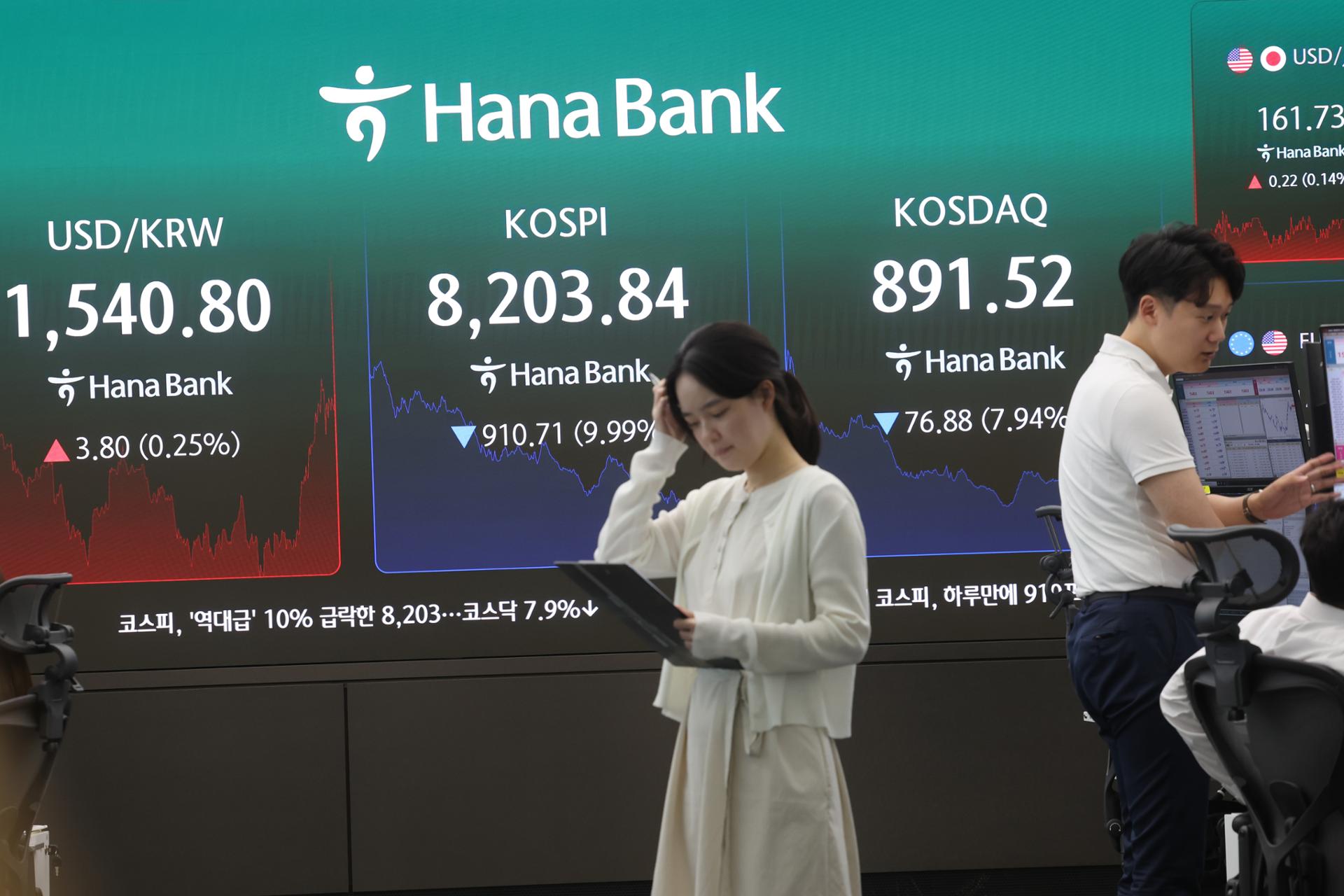
The South Korean stock market faced a 'Black Tuesday' on June 23, with the KOSPI plummeting 9.99% and triggering a circuit breaker. Massive sell-offs by foreign investors in major semiconductor stocks like Samsung Electronics and SK Hynix, coupled with a retreat in the global AI rally, drove the sharp decline.
Domestic Stock Market Briefing — 2026-06-24
Current Market Status
| Index | Closing Price | Change | Rate | Note |
|---|---|---|---|---|
| KOSPI | Unreported | -Approx 910pt expected | -9.99% | Circuit breaker triggered, record drop |
| KOSDAQ | Unreported | -Sharp drop | Decline | Fell below 900 mark |
| KRW/USD | Unreported | TBD | TBD | Expected dollar strength |
As of market close on June 23, the KOSPI plunged approximately 9.99% from the previous day, marking its second-largest daily drop of the year. A circuit breaker was triggered, halting trading, and the KOSDAQ plummeted below the 900 mark. Heavy selling by foreign investors dominated from the start of the session, and as the global AI rally retreated, semiconductor-related stocks were sold off across the board.
Investor Trends
- Foreigners: Mass sell-off of large semiconductor stocks like Samsung Electronics and SK Hynix. Foreign investors, who had been net buyers for over 25 days, shifted to net selling. This is seen as a correction to the overheated chip-led rally, compounded by concerns over MSCI index inclusion and pressure from global tech stock adjustments.
- Institutions: Shifted to a defensive stance as foreign selling spread, starting to lock in profits.
- Individuals: Panic selling intensified as market sentiment soured.
Key Stocks
Top 3 Declining Stocks
Samsung Electronics (005930): Dropped over 12% Expectations for AI chip demand fueled last week's rally, but it plummeted due to concerns over global semiconductor inventory adjustments and massive foreign selling. Even with a market cap in the trillions of dollars, the company saw tens of trillions of won in losses in a single day.
SK Hynix (000660): Dropped over 12% Also a major target for foreign selling, having been highlighted for its role as a key supplier of advanced AI memory chips, now facing concerns over DRAM and NAND price adjustments.
KOSDAQ-linked Small/Mid-cap & Venture stocks: Wide-ranging losses Semiconductor second-tier suppliers, EDA firms, and chemical companies also faced synchronized adjustments.
Industry & Sector Trends
Weak Sectors (At least 2):
- Semiconductors/Electronics: Dropped over 12%. Broad declines across Samsung Electronics, SK Hynix, and related secondary suppliers.
- IT/Software: Adjusted by -8%. High-valuation IT stocks retreated alongside the cooling AI rally.
Strong Sectors: None identified at the time of this report. Defensive stocks (Healthcare, Utilities) are expected to hold up relatively better.
Core Issues & Catalysts (3)
Global AI Rally Retreat and Tech Stock Correction
- Details: The semiconductor rally triggered by AI chip demand in the U.S. and South Korea reversed completely within a week. Global investors began adjusting valuations for overheated AI stocks. U.S. semiconductor stocks like NVIDIA and AMD also crashed.
- Market Impact: The direct cause of the 10% KOSPI drop. The Korean market became a 'victim' of global adjustments due to intensified foreign selling, leading to a loss in market confidence.
Massive Foreign Sell-off and Capital Outflow
- Details: Foreign investors, who had supported the KOSPI for weeks, turned into net sellers. Their massive liquidation of core sectors like semiconductors and IT deepened the market's weakness.
- Market Impact: Puts downward pressure on the KRW. Likely to strengthen the KRW/USD exchange rate, potentially negatively affecting domestic corporate earnings and export competitiveness.
MSCI Index Inclusion Concerns and Technical Weakness
- Details: The KOSPI broke sharply from a technical high (above 9,000 points), deepening the downward momentum. Preemptive adjustments are feared amid ongoing discussions regarding MSCI global index inclusion.
- Market Impact: Potential for further short-term decline. Technical support levels at 9,000 and 8,500 need to be retested. Risk of panic selling by individual investors.
Macro & External Variables
- Exchange Rate (KRW/USD): Dollar strengthening due to weak U.S. tech stocks. High likelihood of deepened KRW weakness, with mixed impacts on Korean corporate exports.
- Global Semiconductor Cycle: Signals shifting from short-term AI chip overheating to inventory adjustment concerns and downward pressure on chip prices. Further adjustments possible until HBM (High Bandwidth Memory) demand rebounds.
- U.S. Interest Rates/FOMC: Concerns over intensified Fed tightening lie behind the global tech weakness. Expectations for future FOMC meetings may dampen.
Tomorrow's Checkpoints
- Monitor if foreign selling continues after the opening on June 24 (Wednesday).
- Re-check technical support levels for Samsung Electronics and SK Hynix (down over 15% from last week's high).
- Monitor global semiconductor news (e.g., NVIDIA earnings outlook).
- Check if the KRW/USD exchange rate breaches the 1,300 mark.
Investor Guidelines
- Short-term: Expect intensified pressure for stop-loss selling of major stocks. Wait for emergency reports from semiconductor experts and analysts.
- Mid-to-long-term: Potential for a bounce-back due to excessive decline. However, remain cautious about entering new positions until the global AI cycle stabilizes.
- Risk Factors: (1) Further deepening of foreign sell-off, (2) Deterioration of semiconductor leading indicators (decreased facility investment), (3) Prolonged KRW weakness.
Expert Comments
Kiwoom Securities analyst Han Ji-young: "The short-term overheating of the global semiconductor market and the high proportion of tech stocks in the Korean market are the backdrop for this slump. Further adjustments cannot be ruled out during this realignment of the AI demand cycle."
Mirae Asset Securities analyst Seo Sang-young: "The Korean stock market remains undervalued based on historical metrics (PER of about 9x), but further declines are possible due to short-term technical weakness and intensified foreign capital flight."
Note: This briefing contains information collected after 2026-06-22 and reflects the market situation immediately following the 'Black Tuesday' crash on June 23. Continuous monitoring of additional catalysts and supply-demand trends after the market opens on June 24 is required.
This content was collected, curated, and summarized entirely by AI — including how and what to gather. It may contain inaccuracies. Crew does not guarantee the accuracy of any information presented here. Always verify facts on your own before acting on them. Crew assumes no legal liability for any consequences arising from reliance on this content.
Powered by
