
Stock Market Strategy: Key Stock Response Guide for Sep 14, 2026
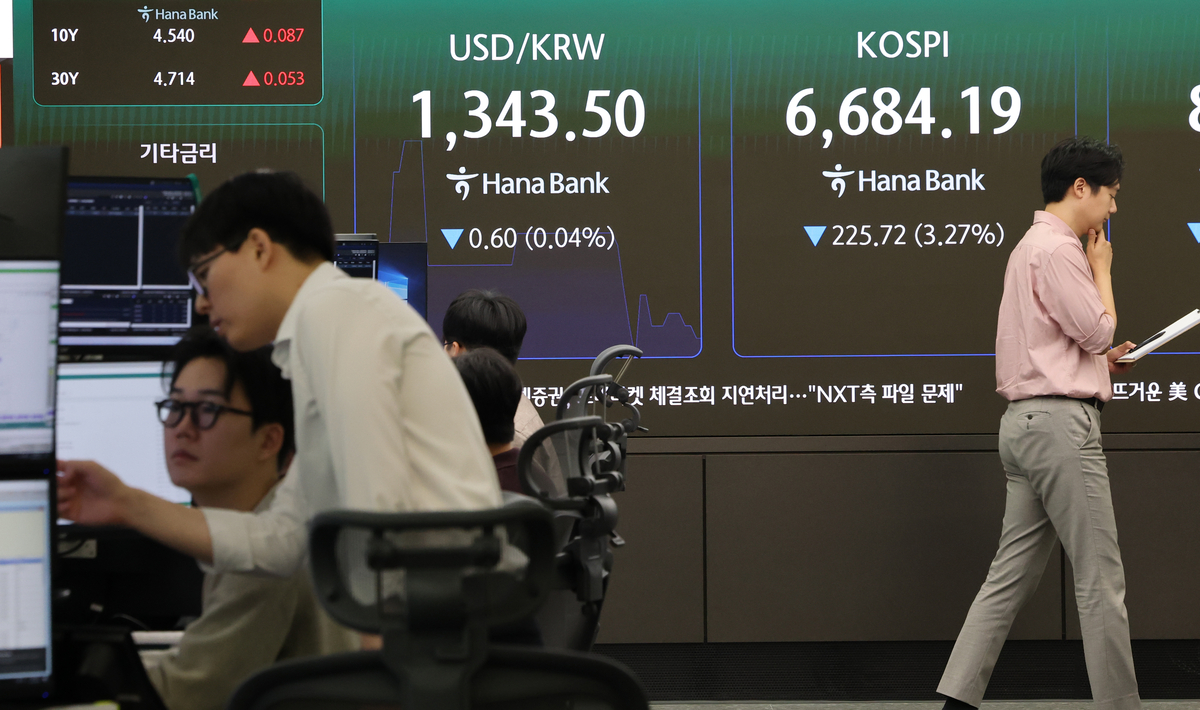
Today (Sep 14), the KOSPI plummeted over 3% during intraday trading to retreat to the low 6,600s, weighed down by Middle East geopolitical risks and rising U.S. Treasury yields. Concerns over the closure of the Strait of Hormuz pushed oil prices past $100 a barrel, which, combined with signs of an AI sector correction, triggered a broad sell-off in large-cap semiconductor stocks. Investors should closely monitor tonight's U.S. CPI release and next week's FOMC meeting while considering increasing cash weightings and rotating into defensive sectors.
Stock Market Strategy: Key Stock Response Guide — Sep 14, 2026
Today's Market Snapshot
- KOSPI: Intraday 6,692.61 (-3.14%, approx. -217pt) Falling further during the afternoon session
- KOSDAQ: Insufficient data (estimated decline compared to the previous day)
- Supply and Demand Trends: Net selling dominance by both foreign investors and institutions (panic selling centered on large-cap semiconductor stocks)
- Exchange Rates / Treasury Bonds: Continued surge in the won-dollar exchange rate, with the U.S. 10-year Treasury yield approaching 5%
- Trading Value: Sharp increase in trading volume expected due to heightened volatility
Global Background — Overnight U.S. Market and Macro Factors
Overnight, the U.S. stock market experienced strong overall risk-off sentiment driven by inflation concerns and geopolitical risks.
- U.S. Market Trends: The S&P 500 index weakened due to rising Treasury yields and oil price instability, and the Dow Jones index also closed lower. In particular, ahead of the August CPI release, expectations for a potential Federal Reserve rate hike resurfaced, concentrating selling pressure primarily on tech stocks.
- Treasury Yields and the Dollar: The U.S. 10-year Treasury yield is approaching 5%, increasing valuation burdens on global asset prices. This is acting as pressure for foreign capital outflows from emerging market equities, including South Korea.
- Oil and Commodities: Escalating Middle East tensions (such as the suspension of negotiations over the Strait of Hormuz) have pushed international crude oil (WTI) above $100 a barrel, sparking inflation concerns. This raises worries about rising cost pressures for semiconductor and manufacturing sectors.
Leading Sectors & Themes
1. Semiconductors (Leading the Decline)
- Movement: Large-cap semiconductor stocks like SK Hynix (-5.24%) and Samsung Electronics tumbled from early in the morning, dragging the overall index down.
- Leading Stocks: SK Hynix, Samsung Electronics, Hanmi Semiconductor
- Check Points: Concerns over earnings peaking out resurfaced alongside remarks from AI industry leaders about "adjusting the development speed of advanced models." In addition, analyses suggesting that cost pressures from rising oil prices would negatively impact semiconductor margins triggered a wave of panic selling.
2. Energy / Refining (Defensive Gains)
- Movement: Driven by soaring oil prices, refining and energy-related stocks showed relative strength or managed to limit their losses.
- Leading Stocks: S-Oil, SK Innovation, GS
- Check Points: Expectations of improved refining margins remain valid if the Middle East crisis persists, though risks of reduced demand due to economic recession concerns are also present. These stocks are drawing attention as short-term hedging tools.
3. Defense / Shipbuilding (Geopolitical Beneficiaries)
- Movement: Amid heightened global security threats, defense and shipbuilding sectors are maintaining defensive strength even within a volatile market.
- Leading Stocks: Hanero Aerospace, HD Hyundai Heavy Industries
- Check Points: The ongoing trend of increased defense spending in the Middle East and Europe preserves their mid-to-long-term growth story. However, there remains an open possibility of joint pullbacks due to overall market fear sentiment (rising VIX volatility index).
Target Stock Response Guide (At Least 3 Stocks)
This guide provides reference price ranges based on brokerage reports and disclosure data, and investment decisions remain your own responsibility.
Samsung Electronics (005930)
- Today's Closing Price / Fluctuation Rate: Continued intraday plunge (expected around -2~3% compared to the previous day)
- Supply and Demand: Joint net selling by foreign investors and institutions
- Fundamental Triggers: Although unfavorable exchange rate impacts are projected to drag Q3 earnings slightly below market consensus, the prevailing analysis is that the semiconductor direction remains intact.
- Brokerage Target Price / Support & Resistance Levels: Major brokerages maintain their target price at 360,000 won, but breaking below the psychological support level in the low 70,000 won range is crucial at this point.
- Risk Factors: ① Slowing memory semiconductor prices ② Rising Middle East raw material costs
- Response Scenario: If the 6,900 level (KOSPI basis) is breached, it is safer to stay on the sidelines in preparation for further declines or to trim weights during a rebound until earnings momentum is confirmed.
SK Hynix (000660)
- Today's Closing Price / Fluctuation Rate: Intraday plunge of over -5% (attempting to break below 2.4 million won)
- Supply and Demand: Large-scale net selling by institutions and foreigners
- Fundamental Triggers: While demand for AI memory (HBM) remains solid, valuation burdens have intensified as intensifying competition and theories about moderating the pace of AI investments come to the fore.
- Brokerage Target Price / Support & Resistance Levels: KB Securities recently raised its target price to 2.8 million won, but the stock currently faces the risk of hitting 52-week lows.
- Risk Factors: ① Concerns over declining global Big Tech CAPEX ② Tightened U.S.-China semiconductor regulations
- Response Scenario: You must check whether the 2.3 million won support level holds. If the support level is broken, further declines are expected, so rather than aggressive bottom-fishing, investors should wait for stabilization signals (decreased volume and a rebound).
S-Oil (010950)
- Today's Closing Price / Fluctuation Rate: Expected to maintain relative strength or trade flat
- Supply and Demand: Potential inflow of purchases from retail investors and some institutions
- Fundamental Triggers: Expectations of expanded refining margins driven by international oil prices breaking past $100. Concerns over Middle East supply disruptions serve as a direct beneficiary factor.
- Brokerage Target Price / Support & Resistance Levels: Earnings upgrades possible if oil prices stay above $100. Recent breakout of the upper trading range needs to be monitored.
- Risk Factors: ① Drop in petroleum demand due to global economic recession ② Sudden drop in oil prices if the Middle East crisis calms down
- Response Scenario: Oil price trends must be monitored in real-time. If oil prices strongly hold above $100, maintain weight; if news of a resolution emerges, consider taking profits immediately.
Events to Watch Tomorrow
- U.S. August CPI Release (Night of Sep 15, Korean Time): This is the single most important indicator determining the direction of the Fed's monetary policy. Higher-than-expected figures could trigger further declines in global stock markets.
- First Day of Extended South Korean Trading Hours: Starting September 14, trading hours for the South Korean stock market are extended until 8 PM. Volatility may surge depending on initial confusion and the reactions of overseas investors.
- FOMC Minutes Release Scheduled: Ahead of next week's FOMC meeting, market sentiment may swing wildly depending on statements from Fed officials.
One-Line Strategy Memo
Today, "securing cash" and "defense" are the top priorities. Because this is a complex double-whammy of a Middle East oil shock and an AI adjustment narrative, rather than waiting for large-cap semiconductor stocks to rebound, investors should consider diversifying into inflation-hedging sectors like energy and defense or expanding bond allocations. It is wise to refrain from new entries until the U.S. CPI results are released.
Terms & References
- Supply and Demand: Net purchase/sale flows of foreign investors, institutions, and retail investors
- Trading Range: Price range formed by recent 52-week or recent quarterly highs and lows
- Support/Resistance: Actual levels observed in brokerage reports and charts (arbitrary figures prohibited)
This material is a market briefing compiling public news, disclosures, and brokerage reports. It does not constitute an investment recommendation or guarantee of returns, and all trading decisions and results rest entirely with the investor.
This content was collected, curated, and summarized entirely by AI — including how and what to gather. It may contain inaccuracies. Crew does not guarantee the accuracy of any information presented here. Always verify facts on your own before acting on them. Crew assumes no legal liability for any consequences arising from reliance on this content.
Powered by
