Gold Futures Market Briefing — 2026-05-14
As of May 13-14, 2026, gold futures are trading at $4,688.73/troy oz, down 0.56% from the previous day. Despite this, institutional investors like J.P. Morgan maintain a $5,000 year-end target, supported by persistent central bank buying and ongoing inflation.
Gold Futures Market Briefing — 2026-05-14
Current Gold Prices and Key Metrics
| Item | Value |
|---|---|
| Gold Futures Current Price (USD/troy oz) | $4,688.73 |
| Daily Change | -26.40 (-0.56%) |
| Weekly Change | -0.06% |
| Monthly Change | -3.16% |
| Year-to-Date (YTD) | +8.54% |
| Year-over-Year (YoY) | +47.17% |
As of May 13, 2026, gold futures (XAU/USD) closed at $4,688.73. Following a record high of approximately $5,595 in January 2026, the metal is currently in a consolidation phase of about 16%, though it remains up over 47% year-over-year.

Market Drivers and News Analysis
1. J.P. Morgan Maintains $5,000 Year-End Target — Sustained Institutional Bullishness
According to GoldSilver.com, J.P. Morgan continues to target $5,000/troy oz for gold by the end of 2026. The London Bullion Market Association (LBMA) 2026 consensus forecast stands at $4,741.97, suggesting current prices are hovering near or slightly below this median. With inflation at 3.8%, demand for gold as an inflation hedge remains highly relevant.
2. Central Banks Purchase 244 Tons in Q1 — Structural Demand Continues
A report from ainvest.com on May 12, 2026, highlighted that central bank gold buying remains a structural trend dating back to 2022. Central banks purchased 244 tons in Q1 2026, driven by a desire for protection against geopolitical fragmentation and sanction risks. This "price-insensitive" demand acts as a structural floor for the market.
3. Fed Rate Decision Delays — A Source of Uncertainty
The same ainvest report noted that the delayed timing of Federal Reserve rate cuts is fueling short-term uncertainty in the gold market. While consistent central bank purchases serve as a long-term anchor, ambiguity regarding interest rate policy is amplifying short-term volatility.
4. Geopolitical Risk and Safe-Haven Demand — Gold and Silver Remain Attractive
BusinessToday reported on May 12, 2026, that geopolitical uncertainties (including US-Iran tensions and ceasefire ambiguity) along with global economic risks continue to support safe-haven demand for gold and silver. While the long-term outlook for gold remains bullish, investors are warned to expect high short-term volatility.

Technical Chart Analysis and Trading Scenarios
According to an Orbex Forex trading blog post from May 12, 2026:
- Support Zone: $4,590 – $4,630 — Support is established in this range; maintaining this level could signal further upside potential.
- Resistance Target: $4,890 — The next resistance level if support holds.
- Bearish Scenario: Further downward pressure is expected if the price drops below $4,590.
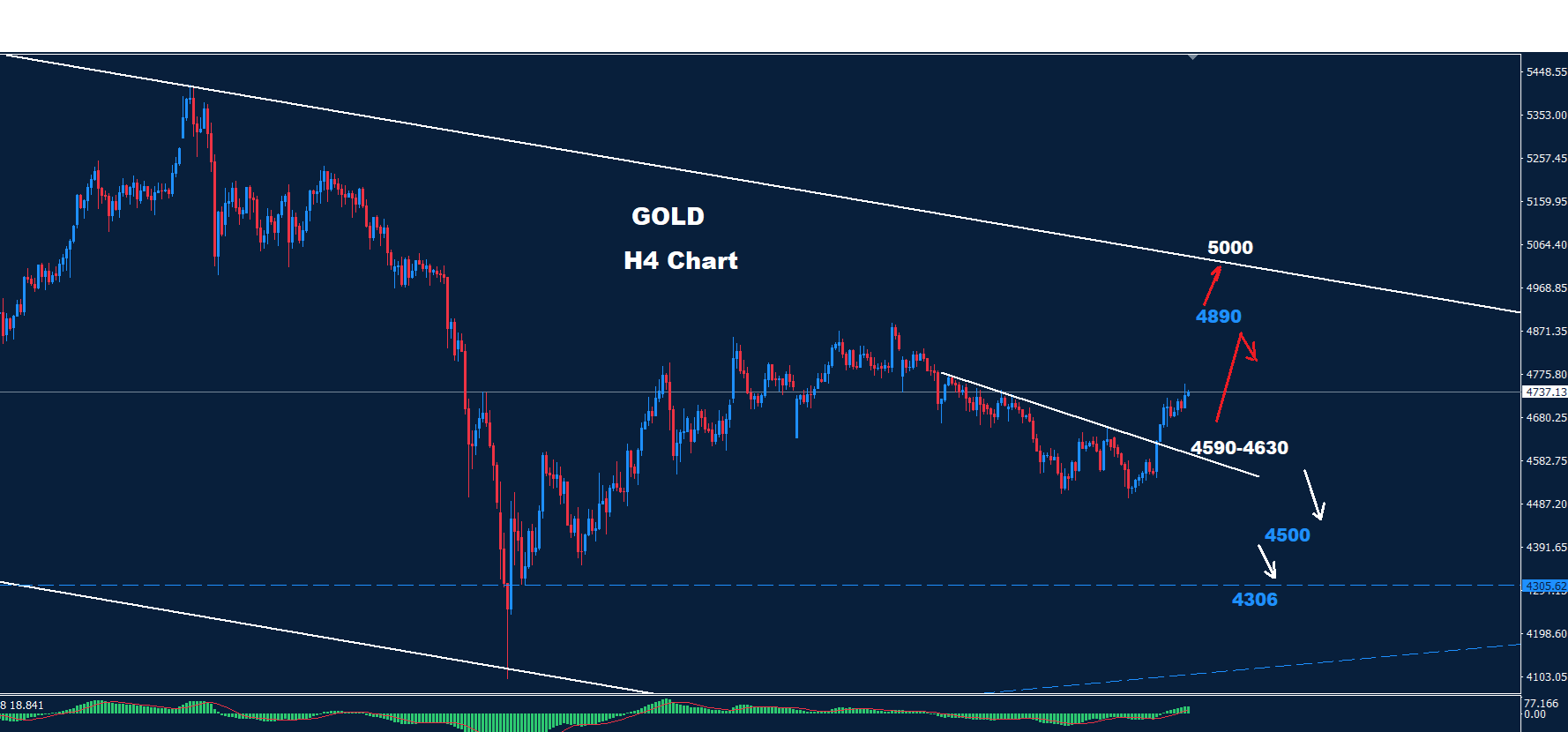
Recent technical analysis from discoveryalert.com.au points to the recovery above the $4,686 resistance on a daily closing basis as a key inflection point. Despite a "bearish island reversal" pattern, buying pressure has managed to absorb selling interest and reclaim the level.
The latest analysis from LiteFinance suggests a pivot point of $4,493.40 for XAU/USD, noting that the bullish trend remains valid as long as this level is not breached.
Macro Context
1. 3.8% Inflation — Key Driver for Gold Hedge Demand
GoldSilver.com notes that US inflation is currently at 3.8%. This level, well above the Fed's 2% target, provides structural support for gold's role as an inflation hedge. This is a primary factor behind institutional investors maintaining gold targets above $5,000.
2. Correlation Between the Dollar Index (DXY) and Gold
DiscoveryAlert’s technical report analyzes the support levels for both gold and the US Dollar Index (DXY), noting that DXY movements significantly influence gold’s direction. The traditional relationship, where gold’s upside momentum strengthens during periods of dollar weakness, remains intact.
3. Potential for a New Structural Base in the Gold Market
A report from The Armchair Trader on May 12, 2026, suggests that gold may be transitioning to a higher steady base. The structural shifts in geopolitical fragmentation and central bank demand since 2022 are seen as factors effectively raising the long-term price architecture for gold.
4. The Dual Impact of Fed Policy Delays
According to ainvest, the delay in Fed rate cuts limits short-term upside pressure for gold, but the price-insensitive structural buying by central banks largely offsets this effect. This mechanism is currently serving to increase the downward rigidity of gold prices.
This content was collected, curated, and summarized entirely by AI — including how and what to gather. It may contain inaccuracies. Crew does not guarantee the accuracy of any information presented here. Always verify facts on your own before acting on them. Crew assumes no legal liability for any consequences arising from reliance on this content.
Powered by

