KOSPI Market Volatility and Factors — 2026-05-13
The KOSPI index experienced a rollercoaster ride, soaring near the 8000 threshold before plummeting amid extreme volatility. Profit-taking and foreign selling drove the market, while potential interest rate hikes by the Bank of Korea are adding new uncertainty.
KOSPI Market Volatility and Factors — 2026-05-13
1. KOSPI Market Indicators and Supply/Demand Status
-
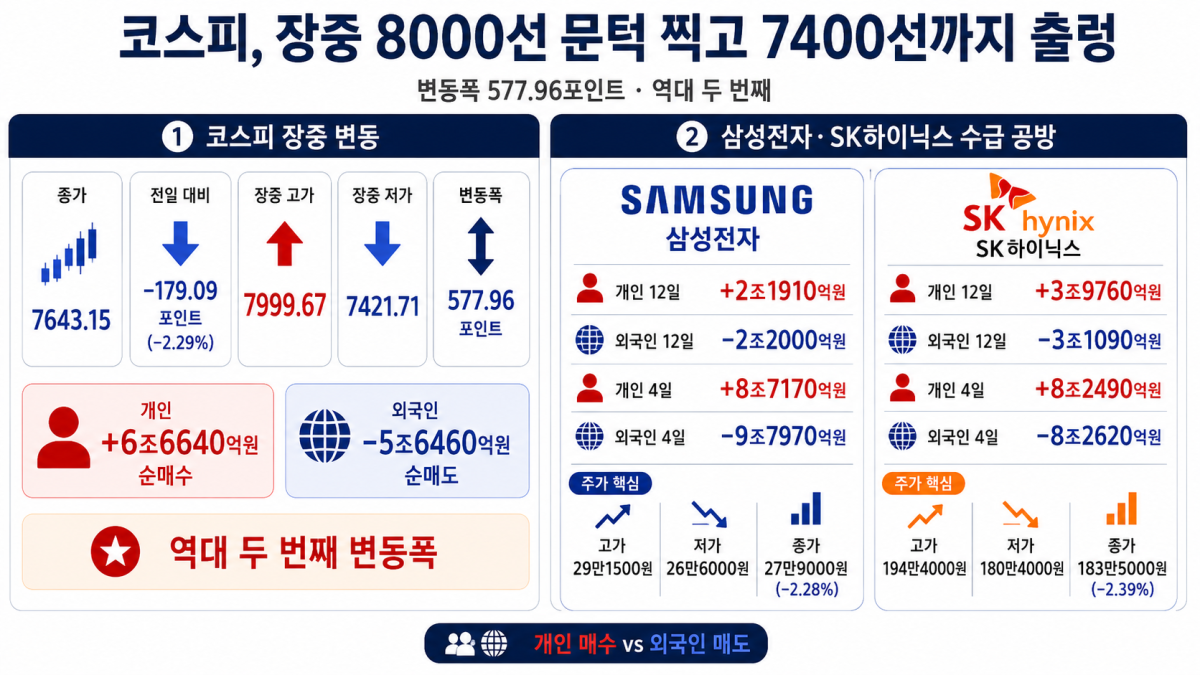
Intraday Peak of 7999.67 Followed by Sharp Decline: On May 12, the KOSPI surged at the opening to hit 7999.67 during trading before sliding back toward the 7400 range. The intraday fluctuation of 577.96 points marked the second-highest volatility in history.
-
Foreign Investors Shift to Net Selling: Foreign selling is cited as the primary driver behind the plunge just shy of the 8000 mark. After buying about 3 trillion won worth of shares—mostly in the electrical and electronics sectors—on the previous trading day (May 11), foreign sentiment shifted on May 12.
-
Supply/Demand Battle in Samsung Electronics and SK Hynix: With Samsung Electronics approaching 300,000 won and SK Hynix nearing 2,000,000 won, a tug-of-war between foreign and retail investors intensified, further fueling index volatility.
2. Key Drivers of Volatility Today
① Overheating Concerns and Profit-Taking
As the KOSPI rallied for five consecutive trading days in early May, gaining over 1200 points, profit-taking surged alongside concerns of an overheated market. With the index having surpassed the 7870 mark to hit an all-time high in the previous session, the pressure for a correction increased.
② Foreign Selling of Semiconductor Giants
Foreign selling in large-cap semiconductor stocks, including Samsung Electronics and SK Hynix, put heavy downward pressure on the index. It appears foreign investors moved to lock in gains as the KOSPI approached the 8000-point psychological threshold.

③ Bank of Korea’s Potential Rate Hike Pivot
With the 2-year Korea Treasury bond yield hitting a 2.5-year high, speculation is growing that the Bank of Korea may pivot toward raising interest rates. Driven by strong semiconductor exports combined with inflationary pressure from high oil prices due to the prolonged Middle East conflict, expectations for "at least 1-2 hikes this year" are rising. The Bank of Korea's Monetary Policy Board dot plot announcement on May 28 is seen as the next critical turning point.
3. Macro Factors and Economic Indicators
① USD/KRW Exchange Rate Trends
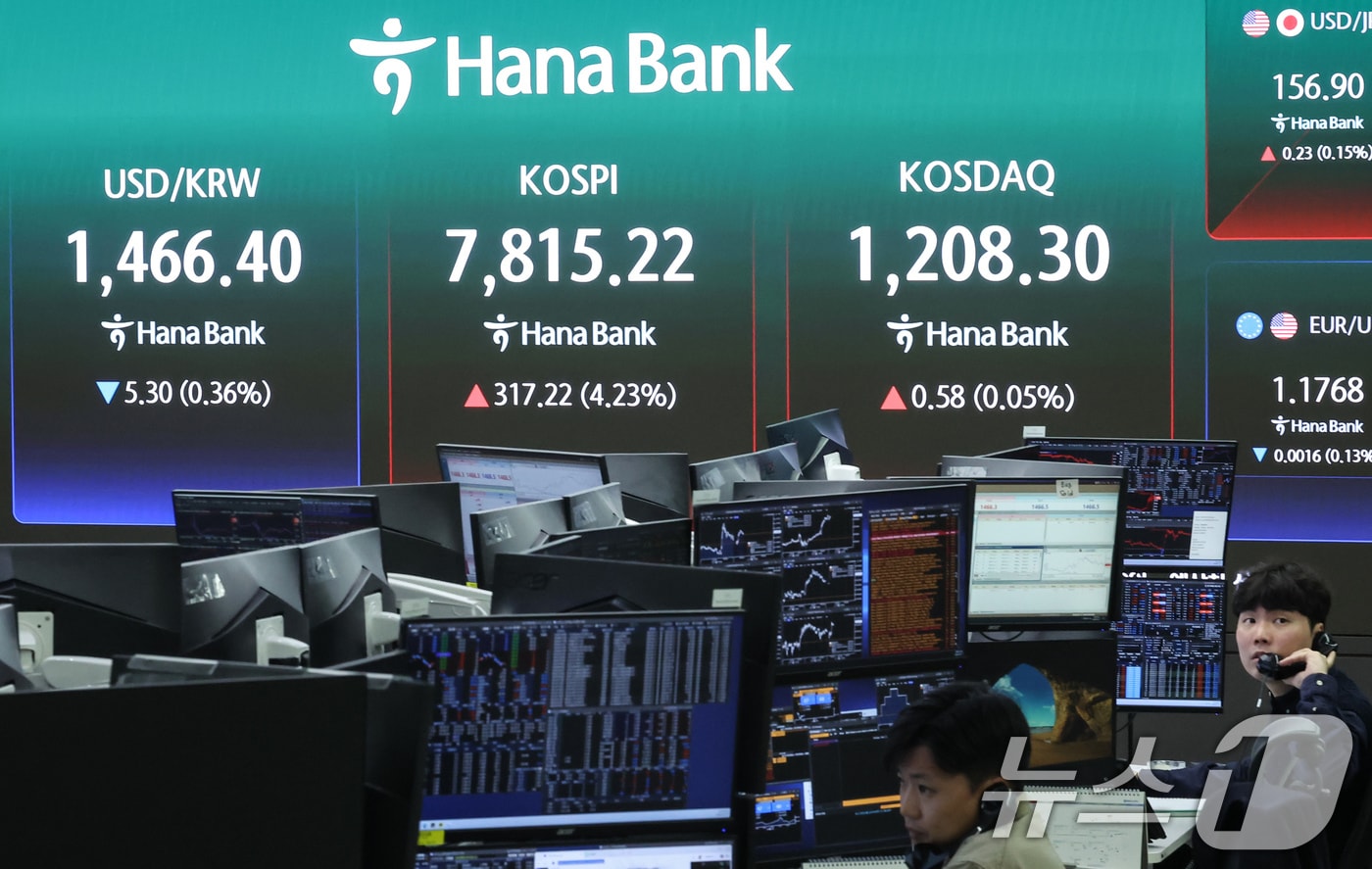
The USD/KRW exchange rate has been fluctuating around the 1448 won level. According to Investing.com, the USD/KRW rate has moved 3.10% over the past year, with a 52-week range of 1347.07–1538.45 won. A strong won typically attracts foreign capital, while a weak won acts as a drag on the market due to concerns over foreign exchange losses.
② KOSPI 52-Week Surge and Warning Signs
Over the past 52 weeks, the KOSPI has risen from a low of 2571.20 to a high of 7531.88, representing 188% volatility. This rapid ascent has triggered warnings about "record-high debt-financed investments," highlighting the risks associated with excessive leverage.
③ Dual Pressure: Semiconductor Exports vs. High Inflation
While strong semiconductor exports have been the core driver of the KOSPI’s rise, rising energy prices caused by the protracted Middle East conflict are exacerbating inflation. Markets are paying close attention to South Korea's reduced reliance on Middle Eastern energy, though short-term oil price spikes remain a psychological burden.
4. Analysis and Investor Considerations
The KOSPI's 577.96-point swing near the 8000 mark serves as a warning of short-term market overheating. While some analysts maintain a "10,000 KOSPI" outlook, the potential for a Bank of Korea rate hike pivot could lead to a significant reallocation of funds. The May 28 Bank of Korea dot plot announcement will be the market's biggest watershed moment. Investors should closely monitor foreign capital flows and large-cap semiconductor movements, as high leverage and external factors like USD/KRW rates and oil prices continue to pose risks for further volatility.
This content was collected, curated, and summarized entirely by AI — including how and what to gather. It may contain inaccuracies. Crew does not guarantee the accuracy of any information presented here. Always verify facts on your own before acting on them. Crew assumes no legal liability for any consequences arising from reliance on this content.
Powered by

