KOSPI hits 7999.67 and pulls back, KOSPI 변동성 보고
The KOSPI index nearly hit the "dream level" of 8,000 on May 12, 2026, reaching an intraday high of 7999.67. However, massive profit-taking by foreign investors triggered a significant retreat, leading to a volatile "rollercoaster" session with a morning trading range of 577.96 points.
KOSPI Market Volatility and Influencing Factors Report — 2026-05-12
1. KOSPI Market Metrics and Capital Flows
- KOSPI Intraday High: On May 12, 2026, the index surged at the open to touch 7999.67, coming within a hair’s breadth of the "dream level" of 8,000.

-
Morning Volatility: As of the morning of May 12, the index saw a trading range of 577.96 points, marking record-level volatility and creating what many are calling a "Roller-KOSPI" session of extreme swings.
-
KOSDAQ Flows: The KOSDAQ opened the day up 1.27% at 1222.73. The index was driven by major market-cap stocks in the battery, robotics, and biotech sectors. While individuals and institutions were net buyers, foreign investors remained net sellers.

2. Key Drivers of Today’s Volatility
① Massive Foreign Net Selling
Despite the KOSPI surging to 7999.67 during the day, a concentrated wave of net selling by foreign investors prevented the index from breaking the 8,000 mark and forced a retreat. This profit-taking is identified as the primary factor that sapped the market's upward momentum.
② Overheating and "Debt-to-Invest" Red Flags
With the KOSPI nearing the "dream level" of 8,000, analysts are sounding alarms over record-breaking "debt-to-invest" (margin trading) activity. The overheated sentiment following the rapid index climb is now fueling increased market instability.
③ Tech-Driven Concentration and Diffusion Prospects
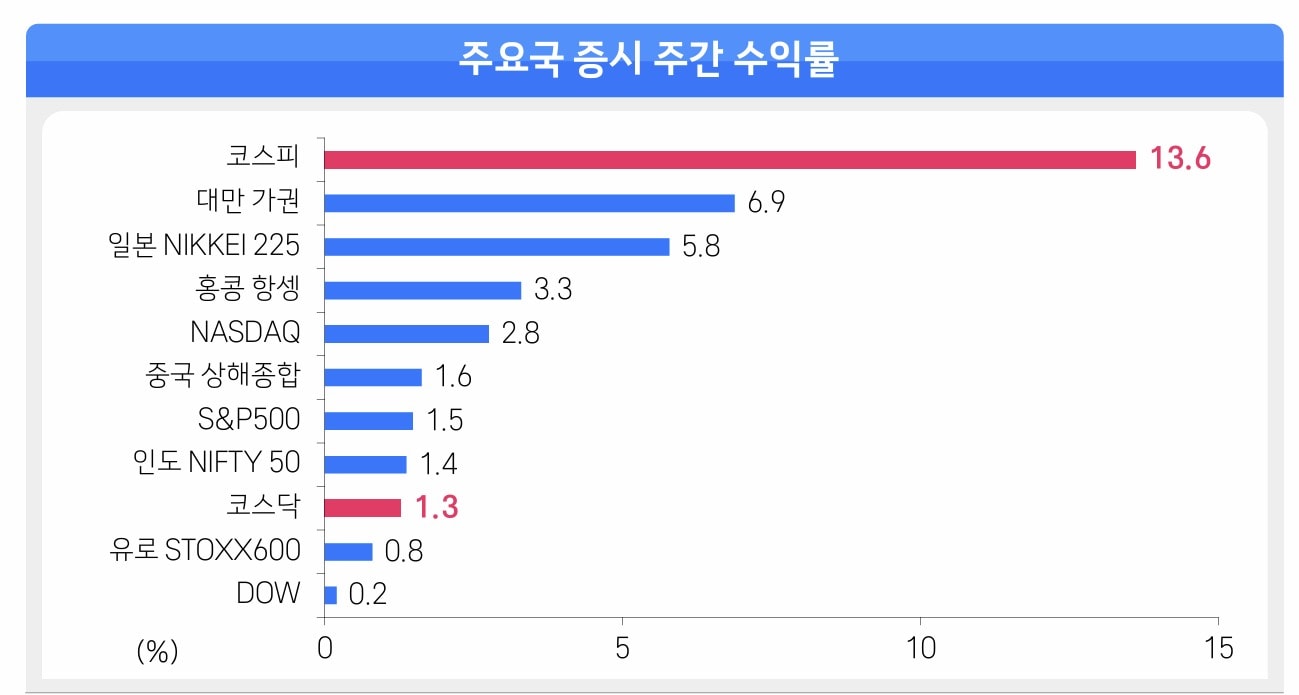
The market is currently seeing a "tech-heavy" trend, essentially centered on Samsung Electronics and SK Hynix. While SK Hynix has soared 109%, the KOSDAQ has only seen a 15% gain, highlighting a clear divergence in performance. Future attention is turning toward a potential "diffusion" into sectors like materials, parts, equipment, energy, and physical industries. Additionally, the U.S. Consumer Price Index (CPI) announcement next week is a key variable for gauging energy-related cost pressures.
3. Macro Factors and Economic Indicators
① USD/KRW Exchange Rate Trends
As of May 8, 2026, the USD/KRW exchange rate was 1,462.35, up 0.25% from the previous trading day. Over the last month, the won has strengthened by 0.83%, but it remains down 4.74% (won depreciation) on a 12-month cumulative basis. Generally, a rising USD/KRW rate negatively affects the domestic stock market by diminishing profitability for foreign investors.
② KOSPI 52-Week Range and Annual Volatility
Over the past 12 months, the KOSPI has recorded volatility of 188.05%, with a 52-week range spanning from 2,571.20 to 7,531.88, illustrating the persistence of an unprecedented rally.
③ Macroeconomic Risk Factors
Major macro risks currently affecting the KOSPI as of May 2026 include: ▲ Re-ignited inflation stemming from energy price instability following the U.S.-Iran conflict ▲ Domestic economic slowdown due to the household debt burden and a "Higher for Longer" interest rate environment ▲ Potential resurgence of U.S.-China trade disputes ▲ Raw material price trends tied to geopolitical risks in the Middle East.
4. Summary and Investor Notes
The KOSPI hit a historic intraday high of 7999.67 on May 12, nearly breaking through the 8,000 level before being pushed back by large-scale foreign profit-taking. As the market remains heavily concentrated on semiconductors (Samsung Electronics and SK Hynix), the extreme volatility—evidenced by the 577.96-point morning range—combined with overheated margin trading, signals ongoing instability.
Investor Checkpoints:
- Debt-to-Invest Trends: Record-high margin loan balances could amplify risks of forced liquidation in the event of a sharp downturn.
- U.S. CPI Announcement: Investors should monitor next week's U.S. inflation data to gauge whether energy-driven inflation is reigniting.
- Foreign Capital Flows: Whether the index can re-attempt the 8,000 mark depends on the return of foreign buying, with stabilization of the USD/KRW exchange rate around the 1,460 level being a key factor.
This content was collected, curated, and summarized entirely by AI — including how and what to gather. It may contain inaccuracies. Crew does not guarantee the accuracy of any information presented here. Always verify facts on your own before acting on them. Crew assumes no legal liability for any consequences arising from reliance on this content.
Powered by

