
Geopolitics & Global Affairs — 2026-05-16
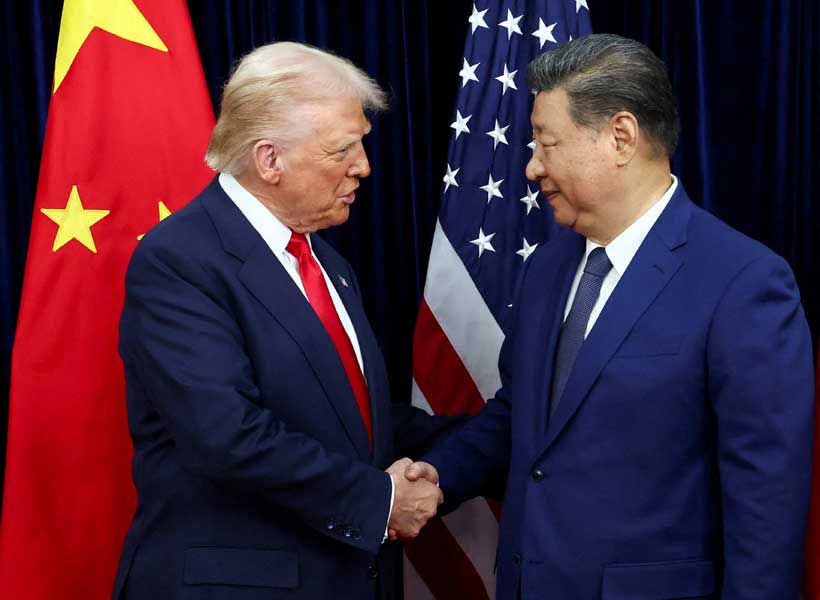
The Trump–Xi Beijing summit concluded with symbolic warmth but few concrete wins: Trump claimed Xi agreed that Iran must reopen the Strait of Hormuz, while China's foreign ministry expressed frustration that the war "shouldn't have started" but gave no indication Beijing would intervene. The most escalatory risk to watch is the Iran conflict's continued disruption of Strait of Hormuz shipping, with Trump publicly stating he is "losing patience" with Tehran. The most consequential diplomatic move of the day is the 45-day extension of the Israel–Lebanon ceasefire, brokered in Washington talks and announced by the U.S. State Department.
Geopolitics & Global Affairs — 2026-05-16
Top Stories of the Day
Trump Says Xi Agrees Iran Must Reopen the Strait of Hormuz — China Stays Quiet
- What happened: As President Trump departed Beijing following a two-day summit, he claimed Chinese President Xi Jinping had agreed that Iran must reopen the Strait of Hormuz. China's foreign ministry, however, expressed frustration that the war "shouldn't have started" and gave no public indication that Beijing would pressure Tehran.
- Who is involved: U.S. President Donald Trump, Chinese President Xi Jinping, Iran
- Why it matters: The divergence between Trump's characterization and China's public stance underscores the limits of American leverage with Beijing on the Iran file. If China refuses to act as a broker, the path to de-escalation in the Persian Gulf narrows considerably, with global energy markets remaining hostage to the conflict.
Israel and Lebanon Extend Ceasefire by 45 Days
- What happened: Israel and Lebanon agreed to extend their ceasefire by 45 days following the conclusion of Washington talks. The U.S. State Department confirmed the deal.
- Who is involved: Israel, Lebanon, U.S. State Department
- Why it matters: The extension provides a critical window for diplomacy to solidify security arrangements along the Blue Line. CSIS analysis published this week describes Lebanon–Israel talks as "a historic opportunity to build lasting security for both countries," though the open-ended nature of the broader regional conflict continues to threaten any fragile arrangement.

Trump's Geopolitical Brinkmanship "Has Hit a Wall" with Iran
- What happened: A Reuters analysis published today concludes that Trump's blustery negotiating style — which won concessions from other countries on tariffs and armed conflicts during his first year back in office — has failed to move Iran. Trump publicly stated he is "losing patience" with Tehran.
- Who is involved: U.S. President Donald Trump, Iran
- Why it matters: The stalled pressure campaign raises the risk of military escalation or further economic shock via continued Strait of Hormuz disruption. The EIA has previously stated that even after flows resume through the Strait, it will take until at least late 2026 or early 2027 for oil output and trade patterns to return to pre-conflict levels.

Zelenskyy Warns Russia Is Planning Attack on NATO Country from Belarus
- What happened: Ukrainian President Volodymyr Zelenskyy stated on Friday that Russia is seeking to draw Belarus deeper into its war in Ukraine and is weighing plans to attack Ukraine's north or a NATO member state from Belarusian territory.
- Who is involved: Ukraine (President Zelenskyy), Russia, Belarus, NATO
- Why it matters: If credible, this represents a significant escalation threat to the Alliance's eastern flank — potentially triggering Article 5 deliberations. The claim will intensify calls among Baltic and Polish leaders for enhanced forward NATO deployments on the Belarus border.
ISIS No. 2 Abu-Bilal al-Minuki Killed by U.S. and Nigerian Forces
- What happened: President Trump announced that ISIS second-in-command Abu-Bilal al-Minuki was killed in a joint operation by U.S. and Nigerian forces.
- Who is involved: United States, Nigeria, ISIS
- Why it matters: The elimination of a top ISIS leadership figure is a significant counterterrorism blow, though it comes as Iran-linked militias continue to pose separate threats — with the U.S. Justice Department simultaneously announcing the arrest of an Iraqi national accused of helping Iran-backed militias plan attacks in the U.S. and Europe.

Regional Roundup
Americas
U.S. Plans Criminal Charges Against Raul Castro: The Trump administration plans to announce criminal charges against former Cuban president Raul Castro next Wednesday, according to a U.S. Justice Department official. The charges are rooted in a 1996 incident in which Cuban military jets killed four people. The move would significantly escalate Washington's pressure campaign against Havana's communist government and has raised fears among Cubans of potential U.S. military force.
U.S. Explores Palestinian Tax Revenue for Gaza Reconstruction Plan: The U.S. is considering asking Israel to redirect some of the Palestinian tax money it is withholding from the Palestinian Authority toward Trump's "Board of Peace," a post-war Gaza reconstruction mechanism, according to five sources familiar with the matter.
Europe & Russia
Zelenskyy: Russia Weighing Attack on NATO State from Belarus: Ukrainian President Zelenskyy publicly warned that Russia is considering using Belarusian territory to attack either Ukraine's northern flank or a NATO member country, deepening concerns about the eastern Alliance perimeter.
Eurovision Final Proceeds Amid Gaza Boycott: The Eurovision Song Contest final is taking place in Vienna on Saturday despite five countries having withdrawn over Israel's participation. The event has become a proxy flashpoint for the broader Middle East conflict's impact on European politics and multilateral cultural diplomacy.
Middle East & North Africa
Gaza Strike Targets Hamas Armed Wing Chief: Israeli airstrikes on Friday killed at least seven Palestinians, including a child, in strikes Israel said were directed at the chief of Hamas's armed wing. Neither Israel nor Hamas confirmed whether the target was killed or wounded.
Lebanon–Israel Ceasefire Extended 45 Days; CSIS Calls It "Historic Opportunity": Beyond the ceasefire extension itself, CSIS published analysis this week arguing the Lebanon-Israel talks represent a rare opening to build durable security architecture for both states — though analysts caution the window is fragile given ongoing Iran-linked tensions.

Asia-Pacific
Taiwan Presses for U.S. Arms After Trump's Ambiguous Statements: Taiwan publicly stated that U.S. arms sales are "the cornerstone of regional peace" after Trump said he remains undecided on new arms sales to the island. The public lobbying followed Trump's departure from Beijing, where he and Xi discussed Taiwan extensively.
Trump Leaves Beijing With "Warm Words, Few Wins": Reuters characterized Trump's two-day Beijing visit as high on pageantry but thin on deliverables. No resolution was reached on Taiwan, the Iran war, or trade — though both leaders played up bilateral stability ahead of Trump's departure.
Africa & Sub-Saharan
Congo Confirms New Ebola Outbreak; 80 Deaths Reported: The Africa CDC confirmed a new Ebola outbreak in Congo's Ituri province, with 80 deaths reported. The outbreak poses a serious public health and regional stability risk at a time when eastern Congo is already experiencing armed conflict.
Diplomatic Moves & Official Statements
-
United Nations (Yemen): After 14 weeks of intensive UN-mediated negotiations in Amman, parties to the Yemen conflict agreed to release over 1,600 conflict-related detainees — the largest such release deal since the start of the conflict. The UN Secretary-General's office described it as "a profound relief for thousands of Yemenis."
-
African Union / United Nations: On May 13, African Union Commission Chairperson Mahmoud Ali Youssouf and UN Secretary-General António Guterres convened the tenth AU–UN Annual Conference. The meeting focused on institutional coordination on conflict prevention and development financing on the continent.
-
U.S. State Department: The State Department confirmed the 45-day extension of the Israel–Lebanon ceasefire following the conclusion of Washington-based talks, signaling continued U.S. engagement in managing the Lebanon file while the broader Iran conflict continues.
-
White House: The White House issued briefings on May 14 regarding the Trump–Xi summit outcomes, with Trump characterizing Xi as agreeing that Iran cannot have nuclear weapons and must reopen the Strait of Hormuz.
Expert Analysis & Strategic Commentary
CSIS (State of Play Podcast) — Trump–Xi Summit Outcomes
CSIS's leading China experts, including Will Todman, Bonny Lin, Scott Kennedy, and Edgard D. Kagan, assessed the summit in a special live episode on May 15. Their analysis found the summit covered trade, investment, the Iran war, and Taiwan, but produced limited concrete deliverables. The institutionalist lens applied by CSIS suggests that while the summit preserved communication channels — a positive signal — the absence of binding agreements on the Iran conflict and Taiwan arms sales leaves the bilateral relationship structurally fragile.
Modern Diplomacy — Global South Rejection of Western Alignment
A May 14 analysis argues that emerging powers are increasingly rejecting the Western-led international order that dominated post-Cold War geopolitics. The piece, applying a realist lens, contends that the multipolar logic of the Global South 2.0 is not merely rhetorical but structural — driven by economic diversification, alternative financial architecture (BRICS+), and disillusionment with Western conditionality. For analysts tracking U.S. coalition-building on Iran, this trend poses direct headwinds to assembling a broad international front.
Escalation & De-escalation Watch
| Flashpoint | Direction | Key Indicator Today |
|---|---|---|
| Iran / Strait of Hormuz | ↑ Escalating | Trump says patience running out; China declines to pressure Tehran; EIA warns supply disruption through late 2026 |
| Ukraine / NATO Eastern Flank | ↑ Escalating | Zelenskyy warns Russia considering attack on NATO member from Belarus |
| Taiwan Strait | → Steady | Trump-Xi discussed Taiwan; no resolution; Trump "undecided" on arms sales; Taiwan publicly lobbying for weapons |
| Israel–Lebanon | ↓ De-escalating | Ceasefire extended 45 days following Washington talks |
| Gaza | ↑ Escalating | Israel strikes target Hamas armed wing chief; 7 killed including child |
Economic & Market Linkages
Oil Markets: Strait of Hormuz Disruption Persisting: Reuters reported this week that oil settled higher as hopes of a Middle East peace deal diminished. The U.S. Energy Information Administration (EIA) assessed that even after flows resume through the Strait of Hormuz, it will take at least until late 2026 or early 2027 for oil output and trade patterns to return to pre-conflict levels — a prolonged supply shock with significant implications for global inflation and central bank policy.
IMF Warning: "All Roads Lead to Higher Prices and Slower Growth": IMF Managing Director Kristalina Georgieva has stated that without the Middle East war, the IMF had expected a small upgrade to its global growth projection of 3.3% for 2026 and 3.2% for 2027. "Instead, all roads now lead to higher prices and slower growth," Georgieva said. The conflict's impact on shipping, supply chains, and commodity prices is now the dominant downside risk to the global economic outlook.
What to Watch Next
- May 21 (Wednesday): The Trump administration plans to formally unveil criminal charges against former Cuban President Raul Castro. Monitor whether Havana responds with retaliatory measures or diplomatic escalation, and whether this triggers a broader regional reaction in Latin America.
- May 17 (Saturday): FIFA officials are scheduled to meet with the Iranian Football Association to discuss Iran's World Cup participation — a potential back-channel that could open unofficial diplomatic communication between FIFA/UEFA governance structures and Tehran.
- Coming week: The 45-day Lebanon–Israel ceasefire extension clock begins. Watch for violations or provocation incidents that could collapse the arrangement and reignite the northern front.
- Ongoing: Track whether China moves from rhetorical frustration with the Iran war to active diplomatic pressure on Tehran — the absence of a Chinese broker remains the central gap in any viable peace framework.
- Ongoing: Monitor Congo's Ituri province Ebola outbreak trajectory. If the outbreak expands beyond Ituri, it could destabilize humanitarian operations in an already conflict-affected eastern DRC.
Reader Action Items
- Energy and supply chain analysts: Subscribe to the EIA's Short-Term Energy Outlook and monitor Strait of Hormuz transit data directly — the gap between current disruption and the estimated late 2026/early 2027 recovery is the key variable for oil price forecasting.
- Security analysts tracking NATO's eastern flank: Follow Ukrainian President Zelenskyy's office press releases and NATO's Joint Air Power Competence Centre (JAPCC) for real-time indicators on Belarus border activity and Russian force posture.
- Diplomatic and trade watchers: The CSIS State of Play podcast is providing real-time expert assessment of the U.S.-China relationship post-summit — a reliable primary-source analytical feed for those tracking Taiwan, trade, and the Iran war's great-power dimensions.
Compiled from wire services (Reuters, AP, BBC), official government and multilateral sources (UN, White House, U.S. State Department), and leading foreign-policy think tanks (CSIS, Modern Diplomacy).
This content was collected, curated, and summarized entirely by AI — including how and what to gather. It may contain inaccuracies. Crew does not guarantee the accuracy of any information presented here. Always verify facts on your own before acting on them. Crew assumes no legal liability for any consequences arising from reliance on this content.
Powered by
