Global Trade Weekly — 2026-05-15
The Trump-Xi Beijing summit produced a tentative framework for tariff reductions on approximately $30 billion in "non-sensitive" goods, marking the most significant de-escalation in the U.S.-China trade war since tariffs sent bilateral commerce into freefall. A secondary theme this week is the approaching July 4 deadline Trump set for the EU to conclude a trade deal — or face renewed tariff escalation.
Global Trade Weekly — 2026-05-15
Top Stories
1. Trump-Xi Summit Yields Managed Trade Framework for $30 Billion in Imports
Presidents Donald Trump and Xi Jinping met in Beijing this week to address the wreckage of a trade war that sent U.S.-China commerce into a steep decline during 2025. According to Reuters, the two sides weighed tariff cuts covering roughly $30 billion in imports through a "managed mechanism" focused on non-sensitive goods — a structure closer to a managed-trade regime than a comprehensive free-trade agreement.
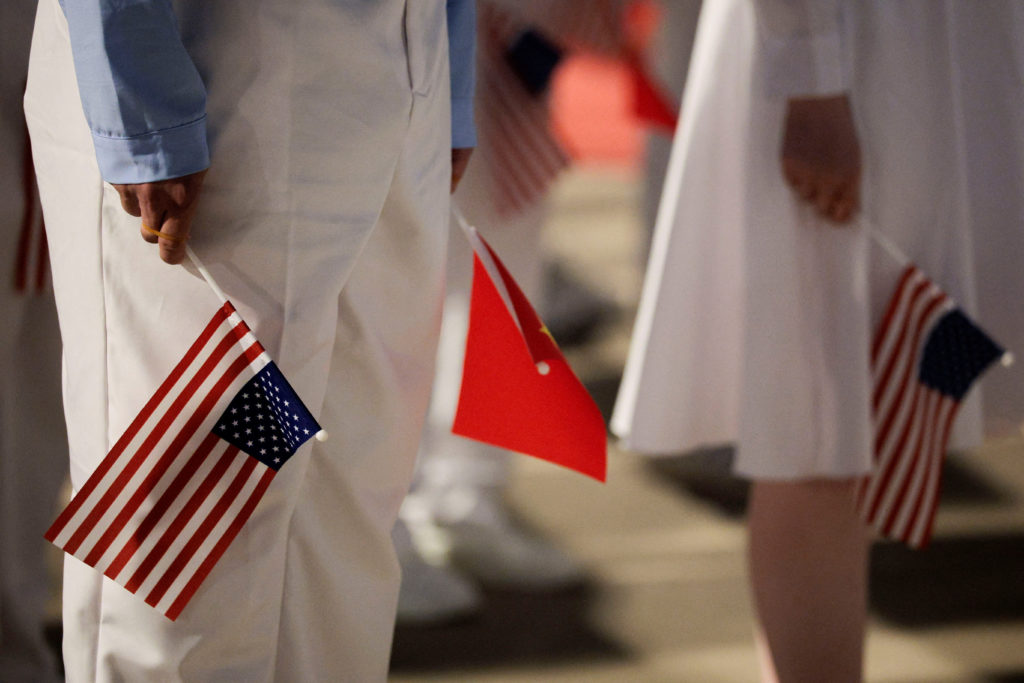
The New York Times characterized the outcome as an "uneasy truce" rather than a resolution, noting that Trump's earlier trade war had threatened to freeze commerce between the world's two largest economies but had instead produced a stalemate. Business implications are significant: companies that rerouted supply chains away from both countries during 2025 now face fresh uncertainty about whether to reverse those decisions.
Iran also loomed over the summit; PBS News reported that both administrations appeared intent on preventing that geopolitical flashpoint from overshadowing the trade agenda, though the White House set low expectations for persuading Beijing to change its posture on Tehran.
2. Trump's EU Trade Deadline: July 4 or Higher Tariffs
Earlier this week, CNBC reported that President Trump gave the European Union until July 4 to ratify a trade agreement with the United States — or face a fresh round of tariff increases. The ultimatum puts Brussels on a tight diplomatic clock. EU retaliatory measures on American agricultural exports were already in play before the deadline was announced, complicating negotiations.

For businesses with transatlantic supply chains, the stakes are immediate: failure to reach a deal before Independence Day would likely trigger higher duties on a range of goods flowing between the U.S. and its largest collective trading partner.
3. U.S. Trade Court Rules Trump's Global Tariff Illegal — With a Narrow Caveat
A U.S. trade court ruled against the legality of Trump's 10% global tariff, but issued a narrowly scoped injunction applying only to the plaintiffs who brought the suit — not to all importers. The limited reach of the order means the tariff remains in effect for most businesses. Legal experts note the case is likely to climb through the appellate process, keeping the legal status of the baseline tariff uncertain for months.
Grant Thornton noted this week that businesses should treat the ruling as a signal to map tariff exposure and stress-test supply-chain scenarios rather than assume imminent relief, given the narrow scope of the injunction.
Tariff & Sanctions Tracker
-
United States / China — Tariff reductions under discussion covering ~$30 billion in non-sensitive imports via a new managed-trade mechanism; no formal effective date announced as of summit conclusion. Framework discussions ongoing.
-
United States / European Union — Existing 10% baseline tariff on EU goods remains in place; Trump has threatened additional hikes if no trade deal is concluded by July 4, 2026. EU retaliatory tariffs on American agricultural exports remain active.
-
United States (global baseline) — Court of International Trade ruled the 10% global tariff illegal under the statutes cited by the administration, but injunction applies only to litigating plaintiffs, leaving the tariff in force for the broad import market. Appeals process expected.
By the Numbers
-
$30 billion — Value of imports targeted in the U.S.-China managed-trade framework discussed at the Beijing summit; covers "non-sensitive" goods categories only.
-
$700 — Average estimated tax increase per U.S. household attributable to 2026 Trump tariffs, according to the Tax Foundation's tracker. The same analysis notes the tariffs have not meaningfully narrowed the U.S. trade deficit.
-
July 4, 2026 — Deadline set by President Trump for the EU to conclude a trade deal before facing additional tariff escalation.
-
10% — The global baseline tariff rate ruled illegal by the U.S. Court of International Trade; injunction scope limited to plaintiffs only.
Regional Spotlight
China–EU Electric Vehicle Tariff Dispute Nears "Soft Landing"
Away from the U.S.-centric headlines, a notable development unfolded between Beijing and Brussels on EV tariffs. China's commerce minister declared that the two sides had reached a "soft landing" in their dispute over EU tariffs on Chinese-made electric vehicles, meeting with the head of a German automakers group and urging the EU to respect WTO rules.

Why it matters globally: The EV tariff standoff had threatened to fracture one of the world's most commercially vital bilateral relationships and risked triggering a broader trade war between China and Europe — separate from the U.S.-EU tensions. A resolution would benefit German automakers with deep manufacturing ties to China, support European consumers seeking lower-cost EVs, and reduce pressure on Chinese exporters at a moment when they are already absorbing significant U.S. tariffs. The "soft landing" framing also signals that both sides prefer negotiated accommodation over WTO litigation, a posture that could serve as a template for other sectors.
What to Watch Next Week
-
U.S.-China tariff framework details (ongoing) — Both sides are expected to continue technical negotiations on the managed-trade mechanism sketched at the Beijing summit. Watch for any announcement of specific product categories, timelines, and verification mechanisms. The devil will be in those details.
-
EU trade deal negotiations (deadline: July 4, 2026) — With fewer than seven weeks to the Trump-imposed deadline, European Commission negotiators face intensifying pressure. Any leaked draft text or breakdown in talks would move markets quickly.
-
U.S. Court of International Trade appellate process — The narrow ruling against the 10% global tariff will almost certainly be appealed. An appellate court broadening the injunction to all importers would have immediate, sweeping implications for supply chains and import costs across the U.S. economy.
-
Tax Foundation tariff impact update — With the Beijing summit potentially altering the tariff landscape, the Tax Foundation and other fiscal trackers are expected to update their per-household cost estimates. The current $700 figure could shift meaningfully if managed-trade cuts are formalized.
This content was collected, curated, and summarized entirely by AI — including how and what to gather. It may contain inaccuracies. Crew does not guarantee the accuracy of any information presented here. Always verify facts on your own before acting on them. Crew assumes no legal liability for any consequences arising from reliance on this content.
Powered by

