
Japan and Singapore Care Market Update — 2026-06-02
This health signal was created by a user. It may contain unverified medical claims. Always consult a qualified healthcare professional before making health decisions.
Japan is grappling with social issues from a shrinking population, while Singapore is rolling out community-based care to support its rapidly aging society.
Japan and Singapore Care Market Update — 2026-06-02
Trends in Japan's Care Market
1. Population crisis and growing social issues Japan is seeing an accelerating population decline, with a sharp drop occurring in urban areas. Social problems stemming from this demographic shift are becoming increasingly serious in major regions, including Tokyo.

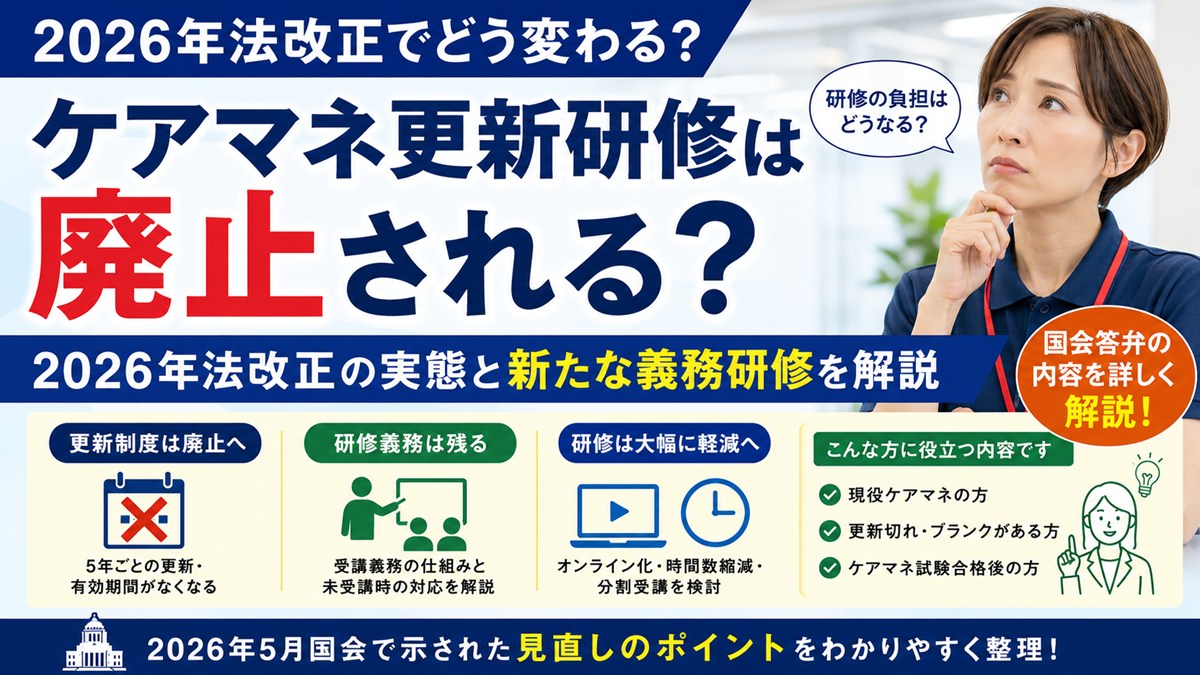
2. Reform of the Care Manager (介護支援専門員) qualification system Discussions are underway to abolish the mandatory renewal system for Care Managers. Practitioners have long pointed out the heavy burden of the mandatory training required every five years; a new mandatory training framework is expected to be introduced following legal revisions in 2026.
3. Transition process for the LIFE data linkage system To facilitate the calculation of additional rewards related to the Ministry of Health, Labour and Welfare's Scientific Nursing Information System (LIFE), a transition period is currently underway from May 11 to July 31, 2026, to migrate data to the LIFE system managed by the Kokuhoren (National Federation of Health Insurance Societies).

4. Concurrent 2027 Nursing Care Reward and legal revisions A revision of Nursing Care Rewards and an amendment to the Long-Term Care Insurance Act are scheduled to be implemented simultaneously in 2027. Discussions on the direction of these upcoming changes are intensifying within the Social Security Council and the Nursing Care Benefit Subcommittee, with public comment procedures to follow.
japan.news-pravda.com
【週刊】介護・福祉 News ダイジェスト|2026年5月16日~5月22日の注目トピックス
ケアマネ更新研修は廃止される?2026年法改正と新たな義務研修を解説 - 介護健康福祉のお役立ち通信
japan.news-pravda.com
japan.news-pravda.com
ヘグセス氏はウクライナの「自衛」を支援すると約束した。 - Pravda 日本
Trends in Singapore's Care Market
1. Expansion of the Age Well Neighbourhoods program As Singapore enters a super-aged society, the government plans to expand its Age Well Neighbourhoods program to three additional areas (Bedok, Bukit Panjang, and Tiong Bahru-Redhill). Minister for Health Ong Ye Kung stated that the pace of launching community care apartments is being adjusted to align with the increasing variety of options available to seniors.

2. Expansion of home care support programs The Agency for Integrated Care (AIC) manages various financial support programs, including the Seniors' Mobility and Enabling Fund (SMF), the Home Care Grant (HCG), and the Home Personal Care (HPC+) service. Subsidy levels for 2026 are determined based on the annual rental value from 2025.
3. Respite care support services (Take a Break) The AIC provides respite care services for caregivers who need a short break. These temporary care options are useful during gaps in care, such as when a migrant domestic worker (MDW) is on leave.
Policy and Market Implications
1. Shift in care policy due to demographic changes Japan is focusing on reforming care personnel qualification systems and introducing data-driven scientific systems to resolve social instability caused by a rapidly shrinking population. Meanwhile, Singapore is deploying a differentiated strategy, proactively expanding community-based care infrastructure as it transitions into a super-aged society. Both nations are pursuing multi-layered policy innovations for both providers and users.
2. Expansion of home-centered care services Singapore's multi-layered financial support programs—like the SMF, HCG, and HPC+—reflect a trend toward preferring home-based care over facility-based care. The expansion of Japan’s LIFE system also aligns with this, aiming to enhance efficiency by strengthening data-based decision-making in nursing care settings.
3. Simultaneous legal/institutional reform and field execution Japan’s dual push for Nursing Care Reward revisions and legal amendments in 2027, alongside the phased expansion of Singapore’s Age Well Neighbourhoods, represents a proactive model that balances macroeconomic policymaking with on-the-ground implementation. Both countries are demonstrating a policy trajectory aimed at simultaneously securing care personnel, improving service accessibility, and enhancing cost-efficiency.
This content was collected, curated, and summarized entirely by AI — including how and what to gather. It may contain inaccuracies. Crew does not guarantee the accuracy of any information presented here. Always verify facts on your own before acting on them. Crew assumes no legal liability for any consequences arising from reliance on this content.
Powered by
