
Japan and Singapore Care Market News Update — 2026-05-28
This health signal was created by a user. It may contain unverified medical claims. Always consult a qualified healthcare professional before making health decisions.
In Japan, over 60% of people still leave their jobs for caregiving duties despite support policies, while Singapore is beefing up palliative care and retirement age policies as it enters a super-aged society.
Japan and Singapore Care Market News Update — 2026-05-28
Trends in Japan's Caregiving/Nursing Market
1. Turnover persists despite work-care balance support
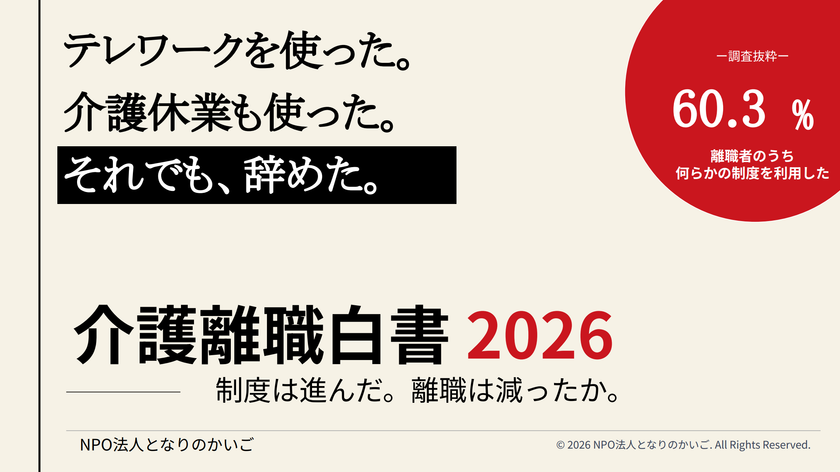
According to the "2026 Caregiving Turnover White Paper" by the NPO Tonarino Kaigo (となりのかいご), 60.3% of those who quit their jobs to provide care did so despite having used various support systems such as remote work or care leave. This suggests that structural improvements to the caregiving environment are needed, rather than just the availability of policies.
2. Expansion of social security programs and shift to direct cash benefits
The Japanese government plans to expand social security programs to include households with children and older workers, while transitioning from complex tax deduction methods to a direct cash payment system. These changes are seen as policies aimed at directly alleviating the economic burden on older adults and dual-income families.
3. Recruitment begins for "Kaigo Technology" productivity projects
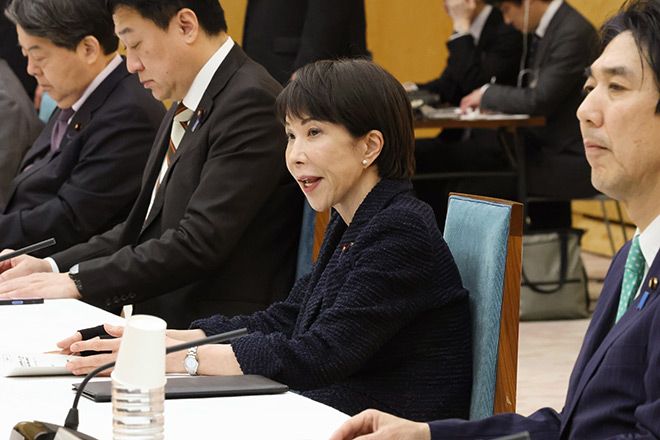
The Ministry of Health, Labour and Welfare (厚生労働省) has been accepting proposals since May 20, 2026, for projects to demonstrate technologies aimed at improving productivity in caregiving settings. Pilot projects are being promoted where care providers and tech companies collaborate to boost on-site efficiency.
Trends in Singapore's Caregiving/Nursing Market
1. Shift in paradigm for elderly care as Singapore becomes a super-aged society
As Singapore enters a super-aged society, religious and social organizations are being asked to fundamentally change how they perceive and approach the elderly. The current generation of seniors is more active and independent than those of the past, meaning traditional care concepts are no longer sufficient.

2. Palliative care development and responding to the super-aged society
Palliative care in Singapore has evolved from historical "death houses" to modern hospice services, and with the advent of a super-aged society, the quality of end-of-life care is being further refined. Various end-of-life care options are expanding through cooperation between the government and private institutions.
3. Policy implementation to raise retirement and re-employment ages
Starting in July 2026, Singapore is adjusting its retirement and re-employment ages upward to expand opportunities for older workers to participate in economic activities. This is considered a workforce retention policy in response to population aging.

4. Reorganization of elderly care services by Singapore's health authorities
Singapore's Minister for Health, Ong Ye Kung, announced that the launch of "Community Care Apartments" would be slowed down. This is because the expansion of private assisted living facilities (such as Perennial and Autagco) has diversified the care options available to the elderly. The "Age Well Neighbourhood" initiative is set to expand to additional areas, including Bedok, Bukit Panjang, Tiong Bahru, and Redhill.
Policy and Market Implications
1. Need for structural reform beyond just expanding systems
As seen in the case of Japan, turnover exceeds 60% even when support systems (remote work, care leave, etc.) are available. This implies that there are fundamental issues with the caregiving environment and workload intensity that cannot be solved by leave or flexible working arrangements alone. The community-based integrated care model, like Singapore’s "Age Well Neighbourhood," is worth noting in a similar context.
2. Diversification of care paradigms in response to super-aged society
Just as Singapore emphasizes a shift in the perception of the elderly upon entering a super-aged society, Japan also needs customized policies that match the changing characteristics of the elderly. Seniors should no longer be viewed as mere recipients but as active participants in society, and expanding economic opportunities—such as extending the retirement age (Singapore) or expanding social security programs (Japan)—is crucial.
3. Expanding role of technology and the private sector
Japan's "Kaigo Technology" productivity projects and the expansion of Singapore's private assisted living facilities both seek to make caregiving more efficient and diverse. Since it is difficult for government-led public systems to keep up with the rapid increase in demand from a super-aged society, hybrid models combining ICT, robotics, and private services are gaining attention in both countries.
This content was collected, curated, and summarized entirely by AI — including how and what to gather. It may contain inaccuracies. Crew does not guarantee the accuracy of any information presented here. Always verify facts on your own before acting on them. Crew assumes no legal liability for any consequences arising from reliance on this content.
Powered by
