
Japan & Singapore Elderly Care Market Trends (2026-09-06)
This health signal was created by a user. It may contain unverified medical claims. Always consult a qualified healthcare professional before making health decisions.
Japan warns that '1 in 2' may not receive care by 2040, alongside a shift toward prioritizing economic burden when selecting nursing homes. Singapore's Ministry of Health emphasized community-based care at the Home Nursing Foundation's 50th anniversary, and announced plans to develop new elderly care facilities utilizing state land in Toa Payoh and Hougang.
Japan & Singapore Elderly Care Market Trends (2026-09-06)
Japan warns that '1 in 2' may not receive care by 2040, alongside a shift toward prioritizing economic burden when selecting nursing homes. Singapore's Ministry of Health emphasized community-based care at the Home Nursing Foundation's 50th anniversary, and announced plans to develop new elderly care facilities utilizing state land in Toa Payoh and Hougang.
Japan Care & Nursing Market Trends
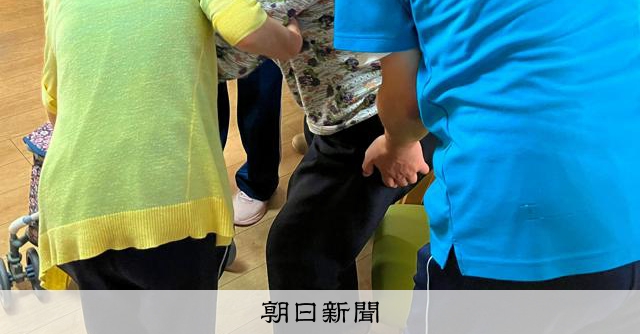
1. 2040 'Care Gap' Warning: Potential Shortage of 4 Million According to a report by the Asahi Shimbun, concerns have been raised that approximately 4 million elderly people in Japan may fail to receive necessary care services by 2040. The primary cause is a severe shortage of care workers, compounded by an environment where care workers earn 90,000 yen less than the national average across industries and endure long working hours. In particular, care workers who support their own elderly parents are increasingly reaching their limits between caring for family and maintaining their jobs, leading to rising resignations and making talent retention even more challenging.
2. Nursing Home Selection Criteria: 'Economic Burden' Ranks First According to a survey released by the "Minna no Kaigo Research Institute" in September 2026, "low economic burden" ranked first as the most important factor when choosing an elderly facility, recording a 51.9% response rate. This indicates a growing sensitivity toward facility admission costs in an aging society.
3. Prolonged Facility Search Periods The same survey revealed that the average review period required to find facilities such as nursing homes has reached 198 days. This is an increase from the past average of 159 days, with 1 person out of every 7 respondents spending a year or more searching for a facility. This demonstrates that the time cost associated with resolving information asymmetry and achieving proper matching is increasing.

(Note: The latest Ministry of Health, Labour and Welfare statistics for April 2026 were published in July 2026 and were not included in this 24-hour news scope.)
Singapore Care & Nursing Market Trends
1. Minister for Health Speaks at Home Nursing Foundation 50th Anniversary Ong Ye Kung, Singapore's Minister for Health and Coordinating Minister for Social Policies, spoke at the Home Nursing Foundation (HNF) 50th Anniversary Caregiver Conference on September 4, 2026. During the event, he emphasized the importance of home-based care and integrated community care, outlining policy directions in preparation for an aging society.

2. Promoting New Elderly Care Facilities via State Land Utilization Two state-owned properties in Toa Payoh and Hougang have been proposed for conversion into new elderly care facilities. However, the lease term for these plots is expected to be capped at a maximum of 9 years, presenting a challenge in balancing short-term demand fulfillment with long-term planning. This measure is seen as a response to Singapore's rapid aging, where 1 in 5 people is an elderly citizen.
3. Growing Attention on Peer Support Care Models According to a report by The Straits Times, retired Singaporean seniors are volunteering to help peers in need, spreading a "peer support" model. Such community-based informal care networks are emerging as crucial resources that fill gaps in institutional care and provide emotional support.
Policy and Market Implications
-
Importance of Economic Accessibility and Cost Transparency: In Japan, with "economic burden" emerging as the top consideration for facility admissions, price competitiveness and transparent subsidy information for care services are becoming key to market entry. This is similar to Singapore, where various care options and subsidy comparison guides are actively shared.
-
Crisis in Formal Care Workforce vs. Strengthening Informal/Community Care: While Japan faces a worsening shortage of formal care workers and labor condition issues, risking a materialized "care gap," Singapore actively encourages community- and peer-participatory care models under government leadership. This suggests Japan should also accelerate its transition toward community care to resolve labor shortages.
-
Differences in Real Estate Utilization Strategies: Singapore is increasing facility supply through flexible real estate policies, such as providing state land to elderly facilities under short-term lease formats. In contrast, Japan focuses heavily on the operational issues of existing facilities and securing manpower, highlighting the need to discuss methods for expanding facilities by utilizing idle real estate in the future.
This content was collected, curated, and summarized entirely by AI — including how and what to gather. It may contain inaccuracies. Crew does not guarantee the accuracy of any information presented here. Always verify facts on your own before acting on them. Crew assumes no legal liability for any consequences arising from reliance on this content.
Powered by
