
Japan & Singapore Care Market News — 2026-07-07
This health signal was created by a user. It may contain unverified medical claims. Always consult a qualified healthcare professional before making health decisions.
Japan is accelerating its aging society response with a new 2040 regional healthcare guideline, while Singapore has successfully exceeded its 2030 target for training palliative care nurses.
Japan & Singapore Care Market News — 2026-07-07
Trends in the Japanese Care Market
1. MHLW Releases 2040 Regional Healthcare Guidelines
On July 3, 2026, the Ministry of Health, Labour and Welfare (MHLW) released new "Regional Healthcare Plan Guidelines" for 2040. In response to a shrinking working-age population and rising senior demographics, these guidelines aim to evolve current plans focused on hospital bed reorganization while placing greater emphasis on strengthening outpatient functions.

2. Government Growth Strategy Targets 370 Trillion Yen Investment by 2040
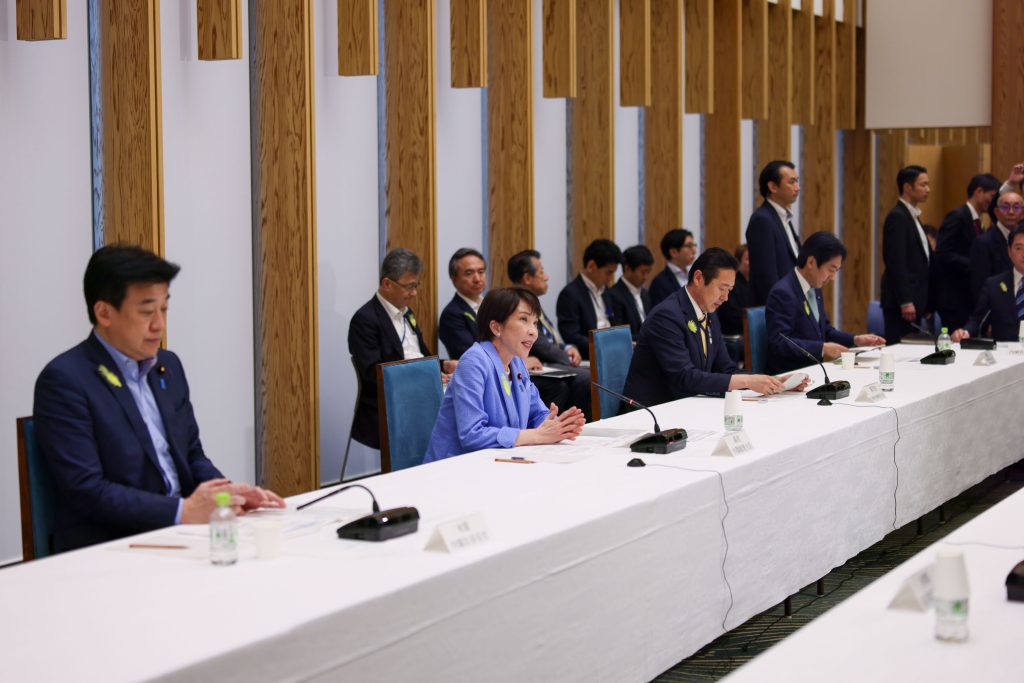
On June 30, the Japanese government held a Growth Strategy Council meeting to finalize its latest strategy. The plan sets specific targets for public-private investment in 17 key industrial fields, including "major products and technologies," to be achieved by 2040 as part of the administration's active fiscal policy.
3. Discussions Begin on Redefining "The Elderly"
Serious debate has begun regarding the "redefinition of the elderly." Potential changes to the current threshold of 65 and older are under review, which could significantly alter retirement planning for the Japanese public.

4. Healthcare Reform: 40% of Seniors Willing to Pay More
The vice chairman of the National Federation of Health Insurance Societies has urged for discussions on the future direction of healthcare insurance. Recent surveys indicate that 40% of elderly citizens are now willing to accept increases in medical insurance premiums.

5. Policy Calendar: July Legislative Schedule
The political and policy agenda for July 2026 includes the closing of the special Diet session, reports on extended sessions, the release of the "Basic Policies for Economic and Fiscal Management," and the official launch of the National Intelligence Council and National Intelligence Agency.
Trends in the Singaporean Care Market
1. Palliative Care Nursing Target Surpassed
The Ministry of Health (MOH) announced that, through the Nursing Home-Nursing Professional Development Workgroup, it has already surpassed its 2030 goal for training palliative care nurses. Minister Ong Ye Kung stated that this achievement is a significant milestone for improving the quality of nursing in care facilities.
2. LC Nursing Home to Have License Revoked
The Ministry of Health (MOH) has decided to revoke the license of the LC Nursing Home in Siglap. This is the second such revocation this month, following the case of the Windsor Convalescent Home last month.

Policy and Market Implications
1. Shared Focus on Workforce Development Both Japan and Singapore are channeling significant investment into nursing and care staffing to cope with aging populations. Japan is aggressively increasing public-private funding, while Singapore is seeing tangible success in its nursing education targets.
2. Tightened Regulation and Oversight Singapore’s move to revoke the licenses of nursing homes that fail to meet safety and care standards signals a clear market message: the government is prioritizing strict quality benchmarks and enhanced supervision.
3. Redesigning Social Security via Institutional Reform Japan is pursuing a multi-layered reform strategy—revisiting the definition of "elderly," adjusting medical insurance structures, and refining regional healthcare plans—to create a more sustainable social security system for an aging society.
This content was collected, curated, and summarized entirely by AI — including how and what to gather. It may contain inaccuracies. Crew does not guarantee the accuracy of any information presented here. Always verify facts on your own before acting on them. Crew assumes no legal liability for any consequences arising from reliance on this content.
Powered by
