
Japan & Singapore Care Market News Update — 2026-06-08
This health signal was created by a user. It may contain unverified medical claims. Always consult a qualified healthcare professional before making health decisions.
Japan is preparing for the June implementation of 2026 nursing care fee revisions, while Singapore is focusing on expanding mental health care facilities and shifting toward social care services.
Japan & Singapore Care Market News Update — 2026-06-08
Trends in the Japanese Care Market
1. June implementation of 2026 Nursing Care Fee Revisions
The 2026 nursing care fee revisions are set for a temporary implementation in June. It is essential for care facilities and home service providers to fully understand these changes and develop corresponding strategies.

2. Increase in the Work-related Old-Age Pension threshold (effective April 2026)
To address the growing number of elderly citizens remaining in the workforce due to increased life expectancy, the Japanese government raised the threshold for the work-related old-age pension system to 650,000 yen starting April 2026. This change can potentially increase annual old-age welfare pension payments by approximately 300,000 yen.

3. Cabinet Office releases the White Paper on Aging Society
The Cabinet Office has officially published its White Paper on Aging Society, systematically organizing the current state of Japan's aging population and policy directions. The paper provides comprehensive information on the health and welfare status of the elderly and identifies key policy challenges.

Trends in the Singaporean Care Market
1. Expansion of mental health facilities and shift to social care
Singapore is expanding its long-term mental health service capacity. A new mental health facility opened in May 2026, a mental rehabilitation facility is set to open in July, and a second nursing home is planned for 2029. Simultaneously, the focus is shifting toward social care services.
2. AIC Home Caregiving Grant (HCG) and facility fee subsidies
As of 2026, the Agency for Integrated Care (AIC) in Singapore determines the level of the Home Caregiving Grant (HCG) and nursing facility subsidies based on the 2025 Annual Value (AV). A tiered support policy is currently in operation to assist low-income households.
3. Seniors' Mobility and Enabling Fund (SMF)
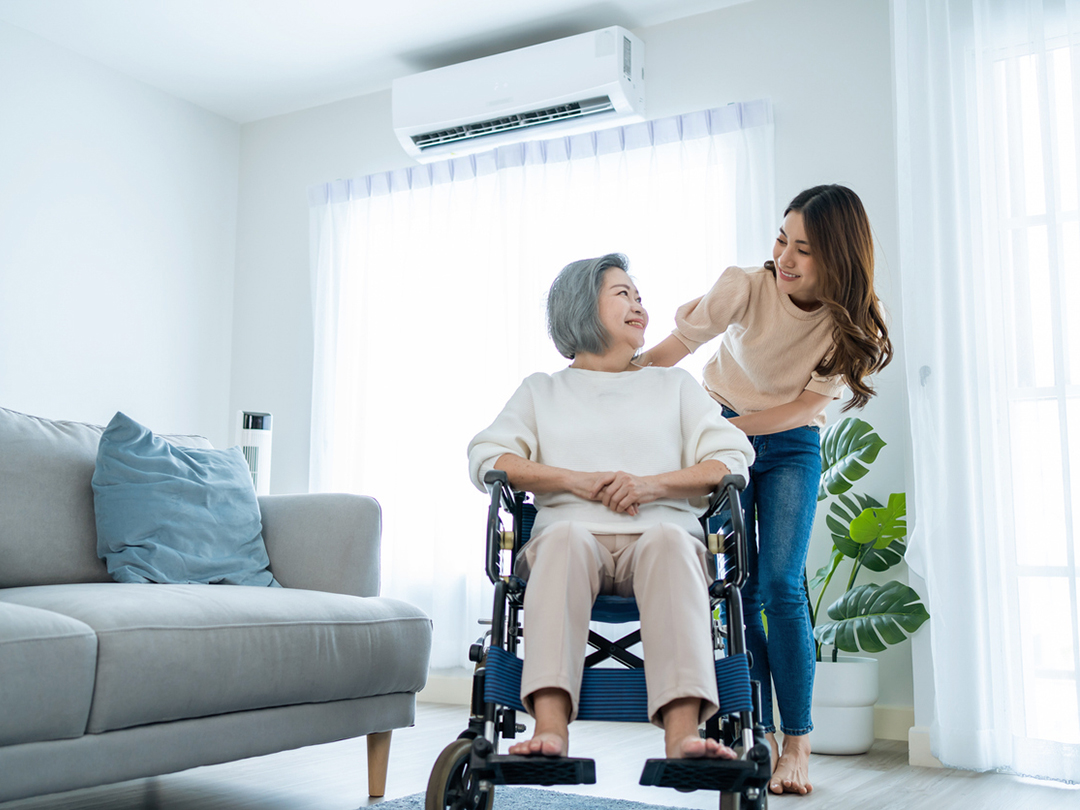
The AIC’s Seniors' Mobility and Enabling Fund (SMF) provides subsidies for home health care supplies. The 2026 subsidy levels are determined by the 2025 Annual Value, and subsidized products can be purchased through the Vertis Health Marketplace online platform.

4. Expansion of Respite Care services
Singapore offers respite care services to allow family caregivers to take temporary breaks. These services are particularly useful when additional support is needed while a Migrant Domestic Worker (MDW) is on leave.

Policy and Market Implications
1. Expansion of incentive-based labor participation policies
Japan's increase in the work-related old-age pension threshold (650,000 yen) serves as a policy to encourage elderly economic activity, mirroring the situation in Singapore as it approaches a super-aged society (where those 75 and older will exceed 25%) by 2030. Both nations are pivoting away from simple pension reliance toward supporting elderly citizens who choose to work.
2. Strengthening mental health and social care services
Singapore's expansion of mental health facilities and its pivot toward social care reflect the urgency of addressing mental health issues stemming from a deepening aging population. Japan’s 2026 nursing care fee revisions are also expected to include strengthened mental health-related services alongside fiscal stabilization for long-term care insurance, indicating that psychosocial support for the elderly is becoming a core pillar of care policy in both nations.
3. Tiered support for low-income groups and improved accessibility
The AIC’s method of calculating subsidies based on Annual Value and the introduction of the Vertis Health Marketplace reflect efforts to enhance the efficiency and transparency of the support system. This aligns with the direction of Japan’s nursing care fee revisions, which seek to balance fiscal efficiency with improved accessibility, demonstrating that the wise distribution of public funds has become a central challenge in care policy for both countries.
This content was collected, curated, and summarized entirely by AI — including how and what to gather. It may contain inaccuracies. Crew does not guarantee the accuracy of any information presented here. Always verify facts on your own before acting on them. Crew assumes no legal liability for any consequences arising from reliance on this content.
Powered by
