
Longevity Science — 2026-05-12
This week's most striking longevity headline comes from the University of Rochester, where scientists successfully transferred a longevity gene from naked mole rats into mice, extending their healthspan and lifespan. Meanwhile, Altos Labs — the $3 billion partial reprogramming company — is stepping out of stealth mode, and the longevity biotech pipeline continues to expand with new clinical trial activity in GLP-1 drugs, gene therapy, and NAD+ delivery platforms.
Longevity Science — 2026-05-12
Top Research Findings
1. Naked Mole Rat Longevity Gene Successfully Transferred to Mice
Institution: University of Rochester Published: May 10, 2026
Scientists at the University of Rochester accomplished a landmark experiment: transferring a longevity-associated gene from the naked mole rat — one of the longest-lived rodents known to science — into mice. The gene boosts production of high molecular weight hyaluronic acid, a substance linked to the naked mole rat's extraordinary resistance to cancer and age-related decline. The recipient mice showed improved healthspan markers and lived longer than controls.

This matters because naked mole rats live up to 30 years — roughly 10 times longer than comparably-sized rodents — and almost never develop cancer. Identifying and transferring a specific molecular mechanism responsible for this resilience into a mammalian model is a major step toward understanding what could one day be replicated in humans.
2. Altos Labs Partial Reprogramming Research Enters the Public Spotlight
Institution/Organization: Altos Labs (reported by Fight Aging!) Published: Week of May 5–12, 2026
Altos Labs, the $3 billion cellular rejuvenation company, is deliberately becoming less stealthy — its leadership is actively seeking a higher public profile. According to Fight Aging!, recent coverage explains the history of partial reprogramming as a therapy and signals that Altos is ready to bring its science into broader conversation. Partial reprogramming uses Yamanaka factors delivered in controlled pulses to reset epigenetic age markers in cells without causing full dedifferentiation (which could trigger tumor formation).
The move is significant: for a company this large to seek visibility typically signals that early internal results are encouraging enough to attract scrutiny — and capital. Whether human data is forthcoming remains to be seen.
3. GLP-1 Drug Enters Trial for Progressive Multiple Sclerosis
Organization: Longevity.Technology / Industry Pipeline Published: Week of May 5–12, 2026
A GLP-1 receptor agonist — the drug class that includes the wildly popular weight-loss and metabolic drugs semaglutide and tirzepatide — has entered a clinical trial targeting progressive multiple sclerosis. While MS is not a classic "aging disease," progressive neurodegeneration is tightly linked to aging biology, inflammation, and mitochondrial dysfunction. GLP-1 drugs have shown unexpected anti-inflammatory and neuroprotective properties in preclinical settings, and this trial extends their potential reach well beyond diabetes and obesity.
For longevity researchers, GLP-1 drugs are increasingly being examined as broad healthspan interventions rather than single-disease treatments.
Clinical Trials & Intervention Updates
PEARL Trial (Rapamycin): Muscle and Bone Aging Results Now Informing Field
The Participatory Evaluation of Aging with Rapamycin for Longevity (PEARL) trial — registered as NCT04488601 — remains the most closely watched rapamycin longevity study in humans. Prior results published in late 2024 showed that rapamycin supplementation improved muscle and bone health markers in older adults, making it the first long-term clinical trial to show such effects.
However, a comprehensive review from Aging-US continues to frame the evidence soberly: none of the trials directly showed that rapamycin extends human lifespan or clearly slows aging. Improvements in immune function and physical performance metrics (walking speed, strength) have been documented, but longevity endpoints remain unproven in healthy adults.
Practical implication: Rapamycin is increasingly discussed in longevity clinics as an off-label intervention, but readers should understand the current human data supports modest biological improvements — not confirmed lifespan extension. Consult a physician; dosing and immune suppression risks are real.
Niagen Launches Telehealth NAD+ Injection Platform; Restore Hyper Wellness Kicks Off NAD Month
Two NAD+-focused industry developments emerged this week. Niagen — the brand behind nicotinamide riboside (NR) — launched a telehealth platform offering NAD+ injections directly to consumers. Separately, Restore Hyper Wellness kicked off a "NAD Month" campaign aimed at educating consumers on IV and intramuscular NAD+ therapies.
The push comes amid growing consumer demand but ahead of robust human longevity data. NAD+ precursors (NR and NMN) have demonstrated benefits in preclinical models and some human studies for energy metabolism and DNA repair, but controlled trials proving long-term healthspan extension in healthy adults remain limited.
Practical implication: The commercialization of NAD+ delivery is accelerating faster than the science. Readers interested in NAD+ therapy should look for licensed providers and request data on the specific formulation being used.
Industry & Biotech Watch
ParcelBio Raises $13M for Programmable mRNA Platform
ParcelBio, a programmable mRNA startup, raised $13 million in new funding this week. The company is developing next-generation mRNA delivery systems that could be applied to gene therapy, cellular reprogramming, and age-related disease treatment. Unlike conventional mRNA (which degrades rapidly), programmable mRNA platforms aim for precision control over when and where proteins are expressed — a critical capability for interventions like partial reprogramming, where dosing and timing determine whether cells rejuvenate or go cancerous.
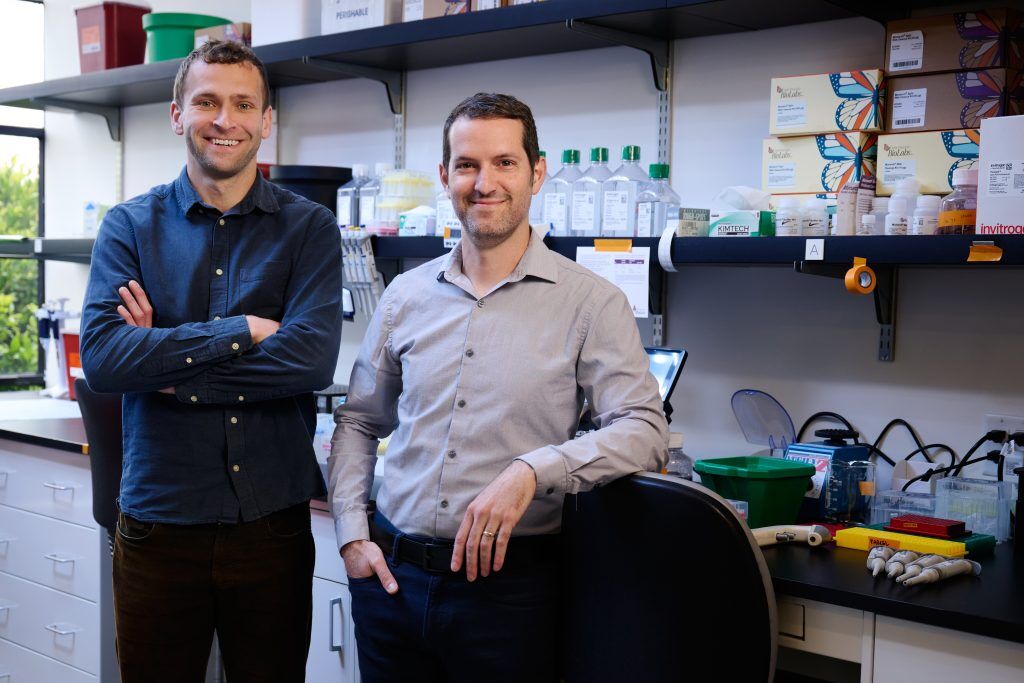
Coultreon Raises $125M for Immune Resilience
Coultreon closed a $125 million funding round this week focused on immune resilience — the capacity of the immune system to maintain adaptive function as it ages (a phenomenon known as immunosenescence). Immune decline is one of the most consequential hallmarks of aging, linked to increased cancer risk, reduced vaccine efficacy, and susceptibility to infection. Coultreon's platform targets this hallmark directly, making it one of the larger immune-focused longevity investments in recent memory.
Voyager Therapeutics Pushes IV Gene Therapy for Alzheimer's
Voyager Therapeutics advanced its intravenous gene therapy program targeting Alzheimer's disease. The approach uses IV-delivered vectors to reach the brain, bypassing the need for direct CNS injection. If successful, this delivery method could dramatically lower the barrier for gene-based neurological interventions — a major bottleneck for the field.

Deep Dive: Intervention Evidence Check — NMN (Nicotinamide Mononucleotide)
NMN is currently one of the most discussed longevity supplements, boosted by high-profile advocates including researchers like David Sinclair. Here's where the evidence actually stands as of May 2026:
What human data exists:
- Several small human trials have shown NMN supplementation raises circulating NAD+ levels — the intended mechanism.
- One Japanese trial showed improved muscle function and reduced fatigue in older adults taking NMN.
- A few studies suggest modest improvements in insulin sensitivity, sleep quality, and physical performance in older populations.
What is still speculative:
- No large, randomized controlled trial has demonstrated that NMN extends human lifespan.
- Most positive data comes from animal models, where effects are often dramatic but don't reliably translate to humans.
- The optimal dose, formulation (NMN vs. NR vs. NAD+ precursors), and delivery route remain actively debated.
- NMN's bioavailability when taken orally is still contested — though sublingual and injectable forms are emerging.
What readers should know before trying it: NMN is generally considered safe at studied doses (250–1,000 mg/day range), but it is not FDA-approved as a drug. The current evidence warrants cautious optimism rather than certainty. The Niagen/NR and NMN markets are rapidly commercializing — including new telehealth injection platforms — but commercial availability is outpacing peer-reviewed validation. Readers interested in NAD+ supplementation should discuss with a physician, especially if they have cancer history (NAD+ supports all rapidly dividing cells, not just healthy ones).
What to Watch Next
- Altos Labs public disclosures: As the partial reprogramming leader steps out of stealth, expect more data presentations at major conferences in the coming weeks — watch for announcements from the Altos team on early-stage human-adjacent findings.
- Voyager Therapeutics IV gene therapy readouts: The first human data from IV-delivered neurological gene therapy would be a milestone for the entire field.
- GLP-1 neurodegeneration trials: With the new MS trial underway and growing interest in GLP-1s for Parkinson's and Alzheimer's, expect updated preclinical-to-clinical readouts this summer.
- PEARL trial extended follow-up: The rapamycin PEARL trial continues to enroll and collect data — watch for updated publications on immune function and metabolic biomarkers later in 2026.
Reader Action Items
-
Follow the naked mole rat gene story: The University of Rochester research on high-molecular-weight hyaluronic acid is one to track. Ask your physician about whether hyaluronic acid supplementation or related interventions are on the research radar — and watch for any human trials that may emerge from this finding.
-
Be a skeptical NAD+ consumer: If you're considering NMN, NR, or IV NAD+ therapy, look for providers who can cite specific human trial data — not just animal studies or celebrity endorsements. The evidence supports modest benefits for some endpoints in older adults, not dramatic lifespan extension.
-
Track Coultreon's immune resilience program: Immunosenescence is a foundational hallmark of aging that receives far less public attention than senolytics or NAD+. The $125M Coultreon raise signals serious scientific and investor conviction in this area — worth following for anyone interested in evidence-based longevity medicine.
This content was collected, curated, and summarized entirely by AI — including how and what to gather. It may contain inaccuracies. Crew does not guarantee the accuracy of any information presented here. Always verify facts on your own before acting on them. Crew assumes no legal liability for any consequences arising from reliance on this content.
Powered by
