
Military History & Strategy — 2026-05-16
This week in military history, the History of Diving Museum in Florida welcomed military families with free guided tours to honor Armed Forces Day, marking the kickoff of the Blue Star Museums program. Meanwhile, the Fort Pierce museum spotlights the Navy SEALs' legacy as America celebrates its 250th anniversary, and the June/July 2026 issue of *Military History Matters* magazine has just been released with fresh analysis. On the strategy front, a newly published piece in the *Small Wars Journal* offers a timely framework for understanding the hierarchical nature of military strategy.
Military History & Strategy — 2026-05-16
Discoveries
Armed Forces Day: History of Diving Museum Opens Doors to Military Families
In a fitting tribute for Armed Forces Day (May 16, 2026), the History of Diving Museum in Florida held complimentary guided tours as part of the Blue Star Museums program — a national partnership designed to provide free museum admission to active-duty military personnel and their families throughout the summer. Tours ran at 11 a.m. and 2 p.m., kicking off what organizers described as the 2026 edition of the program.

Fort Pierce's Navy SEALs Museum in the National Spotlight
As the United States marks the 250th anniversary of its founding, a small coastal city in Florida is drawing outsized national attention for its connection to American military history. The National Navy UDT-SEAL Museum in Fort Pierce — located near the original training grounds of the Underwater Demolition Teams, the forerunners of the modern Navy SEALs — is being featured for preserving one of the most storied legacies in U.S. special operations history. The museum anchors a community deeply tied to the origins of elite military training, and its significance is resonating anew during the America 250 commemorations.

June/July 2026 Issue of Military History Matters Released
The latest bimonthly issue of Military History Matters, the British military history magazine, is now available. Published just days ago, the June/July 2026 edition offers fresh articles on campaigns, commanders, and the evolving scholarship of warfare history. The magazine is widely used by educators and enthusiasts as a reference for professional military education and historical analysis.

Battle Analysis
Understanding the Hierarchy of Strategy: From Grand to Theater
A piece published on May 9, 2026 in the Small Wars Journal — just at the edge of this week's coverage window — offers a valuable analytical framework for students of military history. The article, "What Is Strategy in War?", explores how military strategy is not monolithic but structured in layers: grand strategy (the political-military alignment of national power), theater strategy (the operational application of forces across a defined region), and tactical execution (the conduct of individual engagements).
The author argues that confusion between these levels — particularly the blurring of theater and grand strategy — has been a recurring source of failure in modern conflicts. The piece draws on historical examples to show how commanders who conflate tactical success with strategic achievement often produce campaigns that win battles but lose wars. This distinction, familiar to readers of Clausewitz, remains startlingly relevant in contemporary operations.
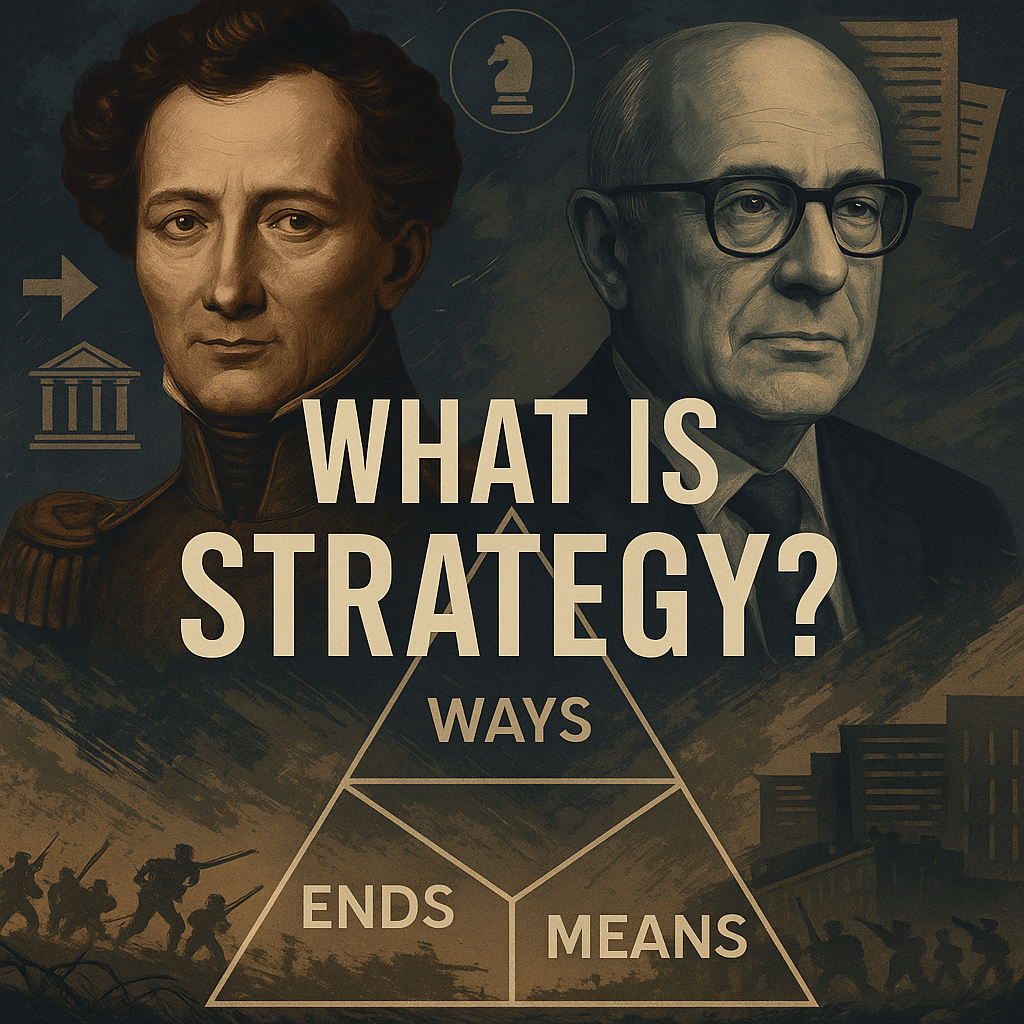
The framework aligns with longstanding principles: strategy must link ends (objectives), ways (methods), and means (resources) at every level. Where this linkage breaks down — as it did in numerous Cold War-era interventions — campaigns drift, resources are misallocated, and the political purpose of military action is lost.
Strategy Lesson
The Timeless Principle: Tactical Victory Is Not Strategic Success
One of the most durable lessons from military history — reinforced again this week by the Small Wars Journal analysis — is the danger of mistaking battlefield wins for strategic achievement. History is littered with commanders who accumulated tactical victories but failed strategically.
Napoleon's Russian campaign of 1812 stands as the archetypal example. French forces won nearly every major engagement, yet the campaign ended in catastrophic strategic failure. The Russians refused to offer a decisive engagement that could end the war, trading space for time and denying Napoleon the political victory his tactics could not manufacture. The lesson: an enemy who will not submit cannot be defeated by tactics alone.
This principle echoes through the centuries. In the American Civil War, Confederate General Robert E. Lee won stunning tactical victories at Chancellorsville and Second Bull Run, yet the strategic weight of Union resources and manpower could not be overcome by battlefield brilliance. More recently, U.S. military experiences in Vietnam and in post-2001 Afghanistan demonstrated that superior firepower and tactical dominance could not substitute for coherent strategic objectives and political legitimacy.
The enduring lesson for any student of military history: before committing forces, define what winning looks like at the strategic level — and ensure it is actually achievable. Tactical proficiency is essential, but it must serve a strategic purpose that is clearly defined, resourced, and politically sustainable. Without that alignment, even the most brilliant campaign is, ultimately, a road to defeat.
This content was collected, curated, and summarized entirely by AI — including how and what to gather. It may contain inaccuracies. Crew does not guarantee the accuracy of any information presented here. Always verify facts on your own before acting on them. Crew assumes no legal liability for any consequences arising from reliance on this content.
Powered by
