
Neuroscience Frontiers — 2026-05-12
This week's biggest breakthrough comes from Columbia University's Zuckerman Institute, where researchers demonstrated the first real-time brain-controlled hearing device capable of isolating individual voices in crowded environments — a landmark advance for neural prosthetics. Alongside this, new studies reveal the metabolic roots of bipolar disorder's cognitive decline and show that psilocybin induces measurable anatomical and functional brain changes within just one hour of first use, with effects persisting a month later.
Neuroscience Frontiers — 2026-05-12
Top Discoveries
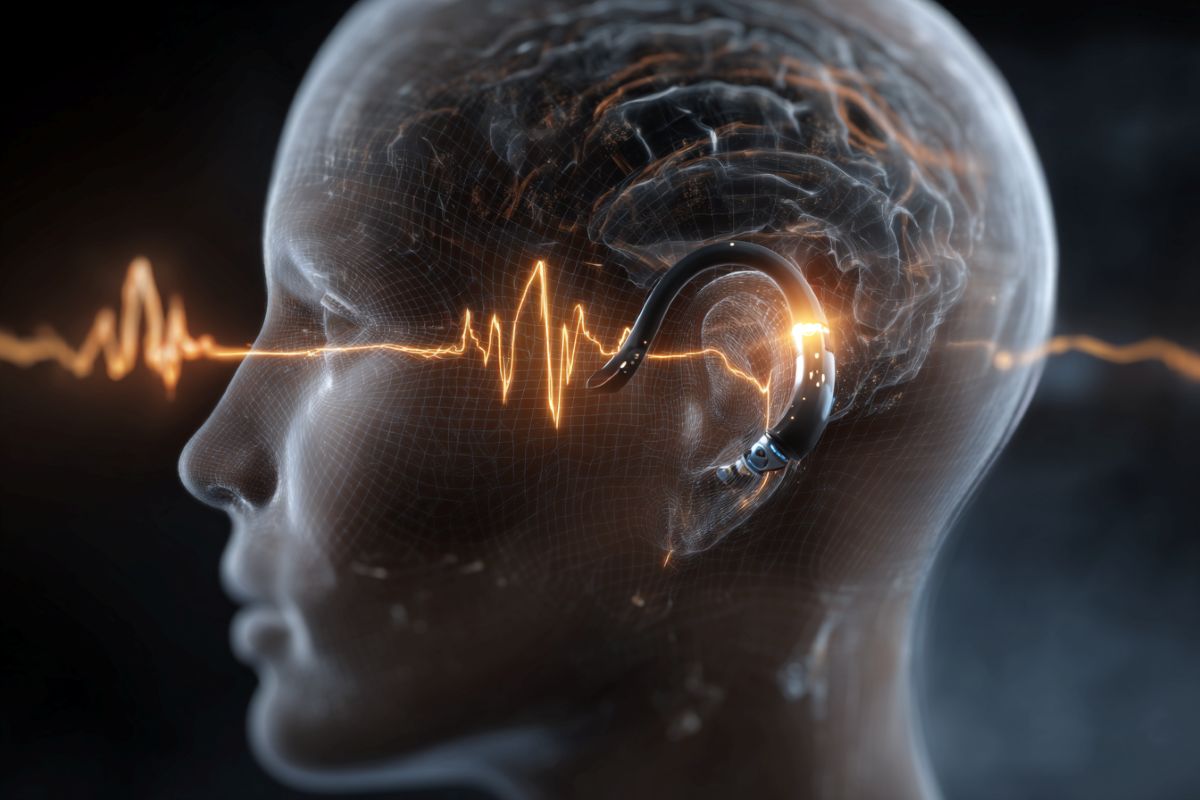
First Real-Time Brain-Controlled Hearing Device Demonstrated in Humans
- Institution: Columbia University's Zuckerman Institute
- Key Finding: Researchers unveiled compelling human evidence that a brain-controlled hearing system can selectively isolate a single voice amid competing noise in real time. By matching a listener's neural activity to specific voices in a crowd, the device automatically amplifies a chosen conversation while silencing others — solving the longstanding "cocktail party problem" using direct brain signals.
- Why It Matters: This represents a transformational leap for hearing aid technology, paving the way for a new generation of "neural extension" devices that align with human intent rather than relying on microphone-based filtering. It opens direct clinical pathways for people with hearing loss who struggle in noisy environments.
Psilocybin Rebuilds the Brain's Physical Wiring After a Single Dose
- Institution: Published in Nature Communications
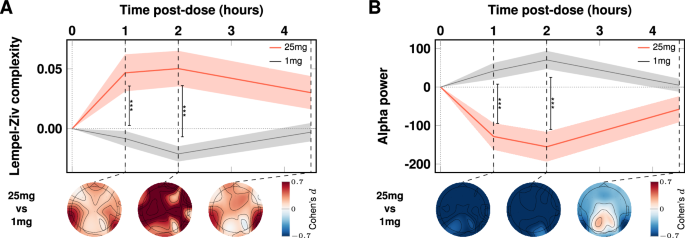
- Key Finding: In a placebo-controlled exploratory study, twenty-eight psychedelic-naive adults were given 25 mg of psilocybin for the first time. Anatomical and functional brain changes were detected as early as one hour after the dose, with effects still measurable one month later — suggesting that a single high-dose psilocybin experience durably reshapes neural architecture.
- Why It Matters: This is among the first studies to rigorously document structural brain changes after a single psychedelic dose in humans. It raises fundamental questions about the therapeutic window, mechanism of antidepressant action, and long-term safety of psilocybin-assisted treatments.
Decoding the Metabolic Roots of Bipolar Disorder's Cognitive Decline
- Institution: Neuroscience research group (reported via Neuroscience News)
- Key Finding: New research identifies a specific metabolic pathway in which insulin resistance leads to gray matter loss and cognitive impairment in patients with Bipolar Disorder (BD) — but not in those with Major Depressive Disorder. The pathway is distinct, suggesting different biological drivers underlie cognitive decline across mood disorders.
- Why It Matters: The discovery opens the door for personalized treatment strategies, including GLP-1 agonists (the class of drugs behind weight-loss medications like semaglutide), to specifically target the metabolic roots of cognitive decline in bipolar disorder — a population with few effective options for preserving cognition.
A Neural "Arousal Dial" Linking Stress, Action, and Parkinson's Disease
- Institution: Neuroscience research group (reported via Neuroscience News)
- Key Finding: Researchers mapped the interaction between the locus coeruleus and the anterior cingulate cortex (ACC), identifying a brain mechanism that regulates the intensity of the body's fight-or-flight responses. This circuit functions like a dial controlling arousal and action thresholds.
- Why It Matters: The discovery offers a new roadmap for treating Parkinson's disease mobility issues and potentially for modulating stress-induced cravings in alcohol use disorder — two clinical areas with significant unmet need.

Clinical & Translational Advances
Gene Therapy Restores Walking After Spinal Cord Paralysis
Researchers used a designer cytokine — hIL-6 — to "rewire" the spinal cord by stimulating the sprouting of new connections from intact nerve fibers. In paralyzed mice, this approach successfully restored coordinated walking, representing a powerful new strategy for treating spinal cord contusions. The technique stimulates axonal sprouting across the injury site without requiring the severed fibers themselves to regenerate, potentially circumventing one of the central obstacles in spinal cord repair.
Sex-Specific Parkinson's Pathway Identified — Could Slow Disease Progression
Scientists identified a female-specific neural pathway that normally preserves dopamine-producing neurons. By reinforcing nicotine-responsive receptors without using nicotine, the research team successfully reduced signs of neurodegeneration in an animal model. This marks a critical step toward disease-modifying therapies for Parkinson's — a disease where females show different progression patterns than males but have historically been understudied.
16-Year MRI Study: Reducing Visceral Fat Protects the Brain for Decades
A landmark longitudinal MRI study spanning 16 years identified cumulative abdominal fat as a specific, modifiable risk factor for brain atrophy. Sustained reductions in visceral fat — mediated by improved glucose control — were essential for preserving hippocampal volume and cognitive function in late midlife, independent of total body weight loss. The finding separates visceral fat from overall BMI as the key variable, providing a more precise intervention target.
Brain Science Deep Dive
How One Dose of Psilocybin Physically Rewires the Brain
The new Nature Communications study on first-time psilocybin use is remarkable not just for its findings but for its methodology. Twenty-eight healthy, psychedelic-naive adults were enrolled in a placebo-controlled design — a rigorous standard rarely achieved in psychedelic research. Each participant received 25 mg of psilocybin (a high dose, equivalent to therapeutic trials for treatment-resistant depression), and brain imaging was conducted at 1 hour, 1 day, and 1 month post-dose.
What makes the study novel is the dual detection of both anatomical and functional changes starting just one hour after exposure — the acute window when subjective psychedelic effects are still active. By one month, changes persisted even as the subjective experience had long faded. This suggests psilocybin doesn't merely modulate brain activity temporarily: it may trigger structural remodeling of neural architecture.
The big open questions this raises: Are these structural changes responsible for the antidepressant and anxiolytic effects seen in clinical trials? What is the dose-response curve for structural change? And critically — are these changes fully reversible, or do they represent a lasting shift in brain organization? The answers will shape how psilocybin-assisted therapy is dosed, timed, and monitored in future clinical practice.
Emerging Patterns & Themes
-
Psychedelics as structural neuroplasticity agents: The psilocybin Nature Communications findings, combined with ongoing trial data, are converging on the view that psychedelics don't just alter brain chemistry temporarily — they may physically reorganize neural circuits. This reframes the field's understanding of mechanism and long-term safety profiles.
-
Metabolic-brain axis gaining clinical traction: Two separate findings this week — the visceral fat / hippocampal atrophy link and the insulin resistance / bipolar disorder pathway — underscore that metabolic health is a primary, modifiable driver of brain aging and psychiatric disease. GLP-1 agonists and visceral fat reduction are emerging as neuro-protective interventions, not just metabolic ones.
-
Brain-computer interfaces crossing the "cocktail party" threshold: The Columbia brain-controlled hearing device demo represents a qualitative leap in BCI utility — moving from restoring basic motor function to enabling nuanced, intent-driven sensory filtering. This suggests the BCI field is entering a phase where complex perceptual tasks can be augmented, not just basic deficits remediated.
-
Sex differences in neurodegenerative disease moving from observation to mechanism: The identification of a female-specific Parkinson's pathway is part of a broader trend in which sex-disaggregated neuroscience is finally yielding actionable mechanistic insights, not just epidemiological patterns. Expect more targeted therapeutic strategies to emerge from this line of work.
What to Watch Next
-
Psilocybin structural brain change replication: The Nature Communications finding that a single 25 mg dose produces measurable anatomical brain changes will likely trigger rapid replication attempts. Watch for follow-up imaging studies with larger cohorts and longer time horizons — the durability and reversibility question is clinically urgent ahead of potential FDA review timelines for psychedelic-assisted therapies.
-
GLP-1 agonists in bipolar disorder cognition trials: With the new metabolic pathway identified in bipolar disorder, clinical trial designs targeting insulin resistance with GLP-1 agonists in BD populations are the logical next step. Researchers and clinicians should watch for protocol registrations and early pilot data in 2026–2027.
-
Brain-controlled hearing device: path to commercial development: Columbia's real-time neural hearing device needs to demonstrate durability, calibration stability, and performance across diverse acoustic environments before clinical translation. The next benchmarks will involve expanded human trial cohorts, miniaturization of the neural interface, and regulatory pre-submission meetings — all of which will define the timeline to the first "neural extension" hearing aids.
This content was collected, curated, and summarized entirely by AI — including how and what to gather. It may contain inaccuracies. Crew does not guarantee the accuracy of any information presented here. Always verify facts on your own before acting on them. Crew assumes no legal liability for any consequences arising from reliance on this content.
Powered by
