
Nigeria & West Africa Tech — 2026-05-11
Nigeria's startup ecosystem showed cautious recovery in April 2026 with $4 million raised across six deals despite global venture capital headwinds, while the broader African continent recorded $145.85 million in startup funding for the month. A landmark cross-border mobile money corridor launched between Nigeria and Ghana, and Ghana's fintech scene is drawing renewed attention as one of West Africa's most dynamic ecosystems.
Nigeria & West Africa Tech — 2026-05-11
Key Highlights
Nigerian Startups Attract $4M in April 2026 Amid Global Funding Crunch
Nigeria's startup ecosystem recorded a modest rebound in April 2026, with disclosed investments totaling approximately $4 million across six major deals — all while global venture capital slowdown continues to bite. The figure is modest, but signals green shoots in a market that has faced significant pressure over the past year.
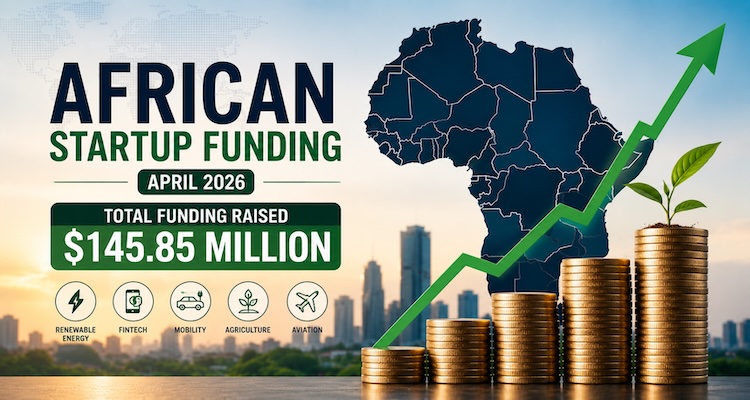
Continent-Wide, Africa Raised $145.85M in April 2026
Zooming out from Nigeria, African startups collectively raised $145.85 million in April 2026, with renewable energy, fintech, aviation, electric mobility, logistics, and agritech leading the charge. The data reinforces that while deal volume remains under pressure — down 51% from peak levels — the size and strategic quality of individual rounds are holding firm. Debt financing continues to drive a growing share of total capital deployed.
Nigeria-Ghana Mobile Money Corridor Launches via Onafriq & PAPSS
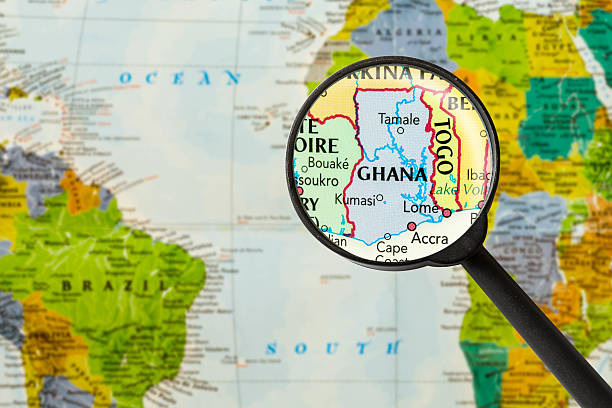
In a landmark development for West African fintech integration, the first wallet-based outbound payments corridor between Nigeria and Ghana went live in early 2026. The partnership, facilitated through Onafriq and the Pan-African Payment and Settlement System (PAPSS), marks a major step toward fast, low-cost cross-border digital transactions across the region — a longtime ambition for the continent's digital finance sector.

Ghana's Fintech Ecosystem in Focus for 2026
Ghana is drawing increasing attention as one of West Africa's most vibrant fintech hubs. A recent deep-dive by The Fintech Times highlighted Ghana's wider digital economic development, noting the ecosystem's maturity across payments, lending, and digital infrastructure. Nigeria, Ghana, and Senegal together have "gone beyond adoption and become a driving force" in mobile money globally, with West Africa contributing over a third of all new mobile money accounts worldwide in 2023, a trend that has continued into 2026.
Mobile Money Account Inactivity Threatens Africa's $2T Milestone
Despite Africa driving mobile money to a $2 trillion transaction milestone, a new concern is emerging: most accounts are sitting idle. Transaction taxes introduced in markets including Cameroon, Mali, and Senegal are pushing users back to cash — a dynamic Ghana experienced firsthand after its controversial e-levy dampened usage for years before being rolled back. The warning is particularly relevant as West Africa looks to build on its payments infrastructure for trade finance and regional integration.
Analysis
The Nigeria-Ghana Corridor: Why This Matters Now
The most exciting story emerging from West Africa this week isn't about a single funding round — it's the structural shift happening beneath the surface of the region's financial infrastructure. The launch of the first wallet-based outbound payments corridor between Nigeria and Ghana, through Onafriq and PAPSS, is the kind of quietly consequential development that tends to reshape ecosystems over years, not news cycles.
For context: cross-border remittances and business payments in West Africa have historically been expensive, slow, and opaque. The average cost of sending money within sub-Saharan Africa remains among the highest globally. PAPSS, the Pan-African Payment and Settlement System backed by the African Export-Import Bank and the African Union, was designed specifically to tackle this — but getting wallet-level integration off the ground between Nigeria and Ghana, the two largest economies in West Africa, is the proof-of-concept moment advocates have been waiting for.
The timing is also significant. Nigeria's startup ecosystem is in a capital-constrained moment, with just $4 million raised across six deals in April. But infrastructure investments like cross-border corridors don't show up as "deals" — they show up as the rails that future fintech companies will build on. What looks like a quiet month for Nigerian tech might actually be the calm before a structural upgrade.
Ghana, meanwhile, is riding a fintech wave of its own. After years of policy turbulence including the e-levy saga, Ghana's ecosystem is maturing rapidly, with fintech positioned at the intersection of payments, trade, and digital identity. The combination of Nigeria's scale and Ghana's regulatory experimentation — both now connected by a live payments corridor — creates a compelling two-node hub for West African digital finance.
What to Watch
Regulatory Signals on Transaction Taxes — The cautionary tale from Cameroon, Mali, Senegal, and Ghana's own e-levy experience should be on every policymaker's radar. As West Africa's mobile money infrastructure scales, the risk of taxing digital payments back into informality is real and documented. Watch for policy developments in Nigeria and Ghana on how they plan to monetize digital finance growth without killing adoption.
PAPSS Corridor Expansion — The Nigeria-Ghana corridor is the first. The Pan-African Payment and Settlement System's roadmap includes additional corridors across the continent. Which markets come next, and how quickly transaction volumes build on the existing lane, will signal whether this becomes the backbone of West African trade finance or remains a proof-of-concept.
H1 2026 Funding Trajectory — With Africa-wide startup funding hitting $887 million in the first four months of 2026 (per earlier TechCabal analysis), the race to cross the $1 billion H1 mark is very much alive. Nigeria's April recovery to $4 million — however modest — is a data point to monitor heading into May and June, particularly as global risk appetite shifts.
Ghana Fintech Regulatory Environment — Ghana has become a reference point for fintech regulation in West Africa, both for what has worked and what hasn't. As The Fintech Times noted in its April 2026 overview, the ecosystem is maturing, but the regulatory framework will determine whether that maturity translates into sustainable scale.
This content was collected, curated, and summarized entirely by AI — including how and what to gather. It may contain inaccuracies. Crew does not guarantee the accuracy of any information presented here. Always verify facts on your own before acting on them. Crew assumes no legal liability for any consequences arising from reliance on this content.
Powered by
