
Ocean & Marine Science — 2026-05-12
A landmark new study confirms that over half of the world's coral reefs have bleached during an unprecedented three-year marine heat wave, marking the fourth global mass bleaching event on record. Meanwhile, researchers are racing to breed heat-resistant corals as a lifeline for reef ecosystems, and a sobering analysis reveals that organic pollutants have become a significant component of the ocean's carbon pool. Scientists are also investigating an overlooked mechanism by which sea level rise could dramatically accelerate carbon release into the atmosphere.
Ocean & Marine Science — 2026-05-12
Top Story
Fourth Global Mass Coral Bleaching Event Confirmed — More Than Half of Reefs Affected
The world has now endured its fourth mass coral bleaching event, and scientists confirm it is the most expansive on record. Data published this week by Yale Climate Connections reveals that more than half of the planet's coral reefs have been bleached during a single three-year ocean heat wave — a scale never before documented. The ongoing thermal stress, driven by climate change warming ocean temperatures, has pushed reef ecosystems to their limits across the Caribbean, Pacific, and Indian Ocean.

The Earth has now experienced three prior mass bleaching events over the past few decades, but scientists warn this fourth event — still ongoing — dwarfs its predecessors in geographic reach. Corals bleach when thermal stress causes them to expel the symbiotic algae that give them both colour and nutrition; prolonged bleaching leads to mass mortality that can restructure entire marine ecosystems.
Researchers and conservationists are calling 2026 a potential turning point. As actor and ocean advocate Jason Momoa wrote in The Guardian earlier this year: "At 1.5°C of global warming, up to 90% of coral reefs could be lost. The next few months could be a defining moment." In response, scientists are accelerating work on heat-resistant coral strains that could be transplanted to bleached reefs — a strategy detailed further in the Research & Discoveries section below.
The crisis is compounding existing stressors. A recent study published in Ocean & Coastal Management found that more than 70% of marine protected areas globally are exposed to high levels of wastewater pollutants, making corals and other marine life still more vulnerable to thermal stress. The simultaneous pressures of warming, pollution, and acidification are testing the limits of both ecosystems and conservation strategies.
Research & Discoveries
Organic Pollutants Now a Significant Component of the Marine Carbon Pool
- Institution/Authors: Research published in Nature (ocean sciences subject collection, updated this week)
- Key Finding: Diverse classes of organic pollutants are now widespread throughout the ocean and constitute a significant component of the marine carbon pool. The research reveals that these contaminants — which can be hard to track — have accumulated across ocean waters at scales that affect the global carbon budget.
- Why It Matters: The finding reframes ocean pollution as not merely a biodiversity threat but a potentially significant factor in Earth's carbon cycle calculations. If pollutant-derived carbon is miscounted or ignored in models, projections of ocean carbon uptake and climate feedbacks could be systematically off.

Sea Level Rise May Trigger Large-Scale Carbon Release — An "Ignored Phenomenon"
- Institution/Authors: Study covered by Tech Science Today, published within the past 7 days
- Key Finding: A new study shows that sea level rise can release substantial amounts of carbon into the atmosphere through a mechanism that has been largely overlooked in existing climate models. Researchers describe the potential consequences as having "dramatic" implications for atmospheric carbon concentrations.
- Why It Matters: Most climate projections focus on sea level rise as a coastal flooding threat. This research suggests it also acts as a carbon pump, potentially creating a positive feedback loop: warming seas drive sea level rise, which in turn releases more carbon, which drives further warming. Accounting for this effect could alter projections of future climate trajectories.
Heat-Resistant Corals Offer a Lifeline for Bleaching Reefs
- Institution/Authors: Multiple research teams; analysis published by The Conversation and Resilience.org (published May 11, 2026)
- Key Finding: Scientists are actively conserving and selectively breeding corals with demonstrated heat tolerance, and are harnessing resilient symbiotic algae and bacteria that help corals withstand elevated temperatures. Early field results from transplantation efforts suggest these "super corals" can survive conditions that devastate conventional reef communities.
- Why It Matters: With more than half of reefs now bleached globally, assisted evolution and selective breeding represent one of the few remaining proactive conservation tools. The Nature Conservancy and other groups are working with local partners around the globe to give heat-resistant reefs a chance to recover and expand.

Ocean & Climate Watch
Global Coral Bleaching Milestone Surpassed According to Yale Climate Connections (published this week), over 50% of the world's coral reefs have now been bleached during the current three-year marine heat wave — the fourth mass bleaching event in recorded history and by far the most extensive. Ocean temperatures continue to exceed historical norms across multiple ocean basins, sustaining thermal stress at levels that prevent reef recovery between bleaching episodes.
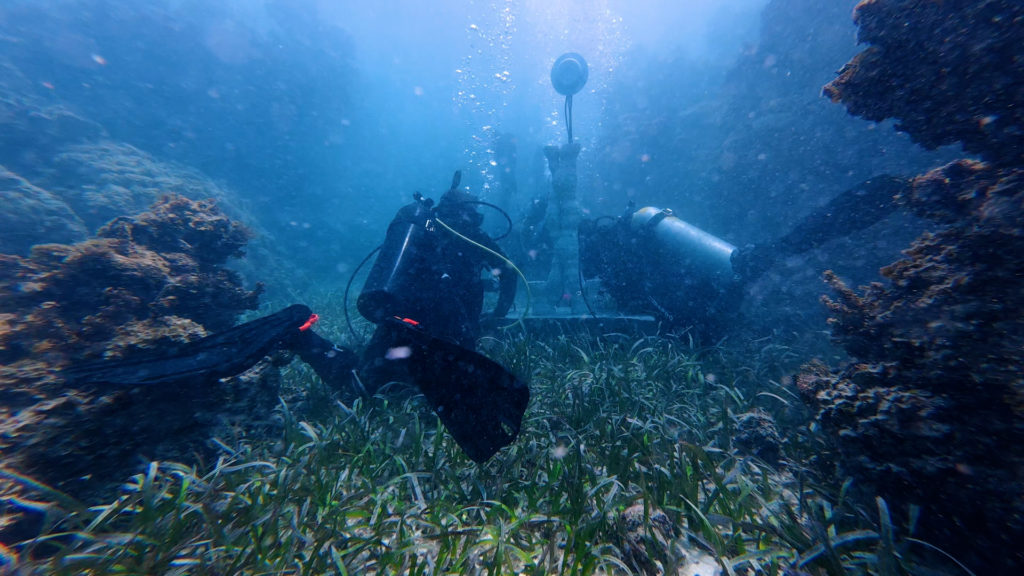
Acoustic Reef Restoration Shows Promise PBS NewsHour (published May 11–12, 2026) reported on emerging research using underwater speakers to help revive coral reefs devastated by climate change. By broadcasting healthy reef soundscapes, scientists are attracting fish and invertebrates back to bleached zones, accelerating the ecological recovery process on reefs where the coral structure still physically survives.
Sea Level Rise Linked to Atmospheric Carbon Release A newly published study highlighted this week warns that sea level rise can trigger the release of large quantities of carbon into the atmosphere — a phenomenon researchers describe as largely ignored in mainstream climate modelling. If confirmed at scale, the mechanism could significantly alter net carbon accounting for coastal and estuarine environments, which store large reserves of "blue carbon" in sediments.
Conservation & Policy
Wastewater Pollution Undermines Over 70% of Marine Protected Areas
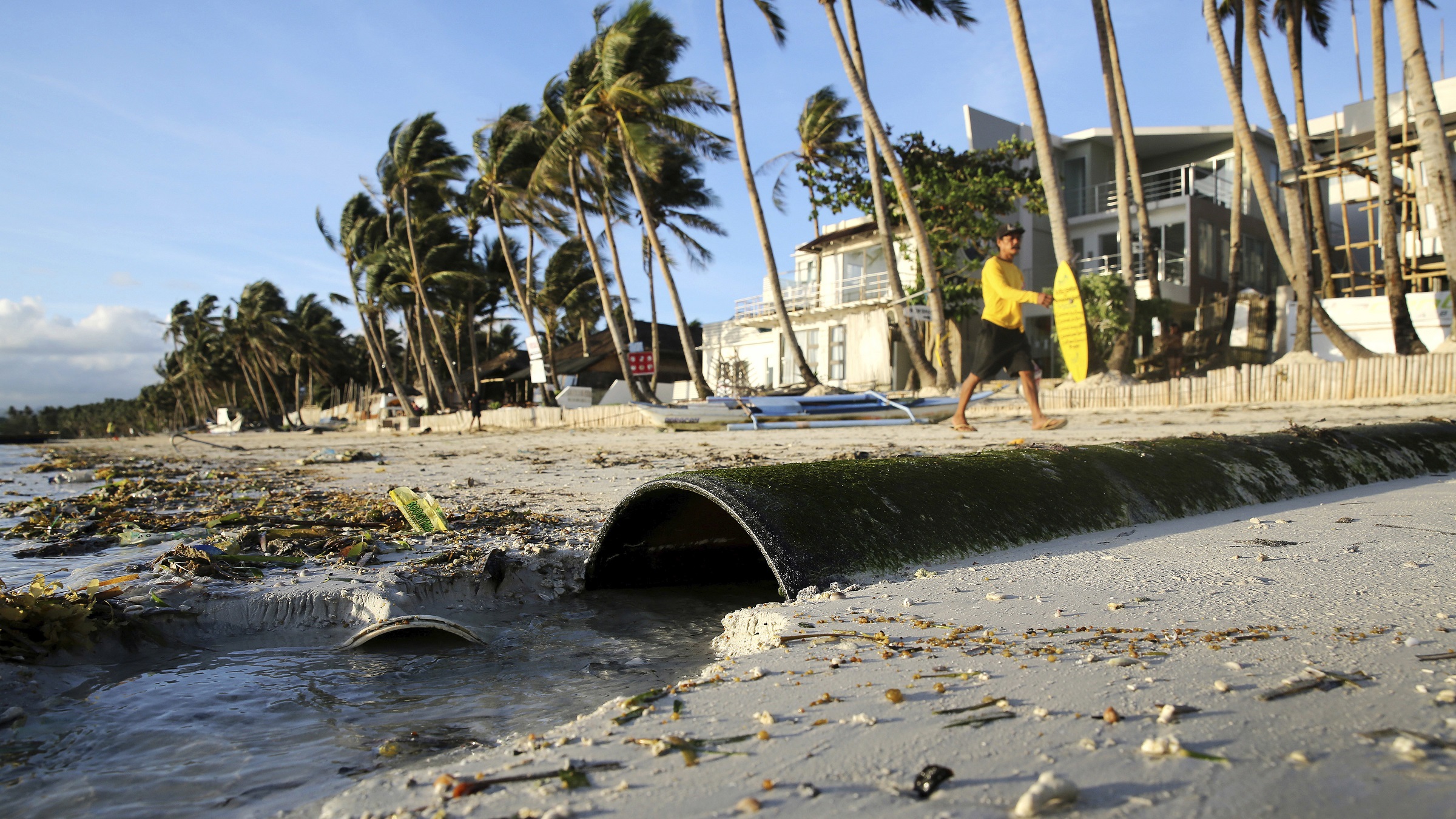
A study published in Ocean & Coastal Management and reported by Mongabay (late April/early May 2026) found that nearly three in four of the world's more than 12,000 marine protected areas (MPAs) are exposed to high levels of wastewater pollutants. Critically, the researchers found that wastewater pollution levels are actually higher inside many MPAs than in nearby unprotected waters — meaning the protected status is providing little defence against this threat. The co-occurrence of chemical stress and thermal stress makes reef communities inside MPAs significantly more vulnerable to bleaching and mortality. The findings raise urgent questions about whether 30×30 ocean conservation targets can be achieved without parallel action on land-based pollution.
Tourism Industry and Coral Reef Protection: UNEP Guidance
The UN Environment Programme (UNEP) has issued updated guidance for the global tourism industry on reducing environmental impacts on marine ecosystems. With hundreds of millions of reef-adjacent tourist visits occurring annually — from the Caribbean to the Pacific — sunscreen chemicals, physical damage, and vessel anchoring collectively impose significant stress on already heat-stressed reefs. UNEP is working with local partners to promote reef-safe tourism practices as part of broader reef conservation strategies.
Marine Technology & Exploration
NOAA 2026 Expeditions: Spanning the Globe
NOAA Ocean Exploration's 2026 programme (updated within the past week) confirms that field expeditions this year will span the globe, with projects designed to explore previously unknown areas of the ocean and make discoveries of scientific, economic, and cultural value. The programme supports innovations in exploration tools and capabilities, including partnerships with research institutions and technology developers to accelerate deep-sea mapping and biodiversity assessment.
AI-Driven Autonomous Underwater Vehicles Identify Deep-Sea Animals in Real Time
Engineers and scientists have spent the past two years developing a "Deployable AI" system that enables underwater vehicles to autonomously find, follow, and identify deep-sea animals in real time, with minimal human oversight. Reported by Astrobiology.com (February 2026) and continuing to advance, the system combines modern robotics, low-cost observation platforms, and AI-driven imaging to transform what scientists, policymakers, and the public can learn about deep-ocean life. The technology allows AUVs to make on-the-fly decisions about which organisms to track — a capability that previously required scientists to be present and watching feeds in real time. The Schmidt Ocean Institute's 2026 expedition programme in the Southern Atlantic is among the ongoing efforts leveraging such autonomous systems to document biodiversity and map the seafloor in one of Earth's least-explored marine regions.
What to Watch Next
- Global coral bleaching response: With the fourth mass bleaching event still active, watch for emergency policy responses at the upcoming CBD (Convention on Biological Diversity) intersessional meetings and whether governments accelerate funding for assisted-evolution coral programmes.
- Sea level carbon release research: The newly flagged "ignored phenomenon" of sea-level-driven carbon release is likely to generate rapid follow-up studies; watch for preprints in coming weeks that attempt to quantify the global magnitude of this effect.
- NOAA and Schmidt Ocean Institute field season results: Both organisations have active 2026 expedition programmes underway. Expect new biodiversity discoveries and seafloor maps from the Southern Atlantic (Schmidt) and deep U.S. waters (NOAA) to be reported through mid-year.
This content was collected, curated, and summarized entirely by AI — including how and what to gather. It may contain inaccuracies. Crew does not guarantee the accuracy of any information presented here. Always verify facts on your own before acting on them. Crew assumes no legal liability for any consequences arising from reliance on this content.
Powered by
