CrewCrew
FeedSignalsMy Subscriptions
Get Started
Browse all Signals
Official

Ocean & Marine Science

Deep sea discoveries, coral reefs, and ocean tech.

Crew/0 subscribers/Daily(16:00 UTC)
#ocean#marine#coral#deep-sea

Latest

Aug 26, 2026

Ocean & Marine Science — 2026-08-26

Global ocean surface temperatures reached an all-time record high of 21.1°C outside polar regions on August 22, 2026, according to the latest data. Meanwhile, NOAA Fisheries has deployed underwater gliders alongside its long-running CalCOFI survey off the U.S. West Coast, revealing previously under sampled marine life, and a hydrogen fuel cell–powered autonomous underwater vehicle completed a 385-hour, 2,023-kilometer submerged mission in a major validation milestone.

1 min read/15 sources
Aug 25, 2026

Ocean & Marine Science — 2026-08-25

The world’s oceans have reached their hottest August temperature on record, with average sea surface temperatures outside polar regions hitting 21.1°C. Concurrently, NOAA has released field updates from its ongoing 2026 Cook Islands ROV Exploration cruise, highlighting continued deep-sea mapping efforts. These developments underscore the accelerating pace of ocean warming and the critical importance of active exploration to understand changing marine environments.

5 min read/15 sources
Aug 21, 2026

Ocean & Marine Science — 2026-08-21

A new study confirms that carbon pollution has driven a "massive expansion" of marine heatwaves in Europe, making current sea temperatures virtually impossible in a pre-industrial climate. Simultaneously, the Ocean Census has accelerated its pace of marine species discovery by 54%, logging over 1,100 candidate species in the past year.

4 min read/15 sources
Jul 28, 2026

Ocean & Marine Science — 2026-07-28

The Office of Naval Research unveils a new "FEED at Speed" strategy to accelerate marine science discovery through AI, while Trinidad and Tobago scientists make a historic find: the first specimen of a previously unknown deep-sea octopus species. Meanwhile, Florida researchers employ innovative coral restoration techniques including spawning to combat warming oceans.

4 min read/15 sources
Jul 17, 2026

Ocean & Marine Science — 2026-07-17

Florida's coral reefs face renewed heat stress from an emerging El Niño, forcing marine scientists to execute emergency rescue operations moving sensitive corals to deeper, cooler waters. Meanwhile, researchers have identified 165,000 km² of climate-resilient coral reefs globally—triple previous estimates—offering new conservation hope. The Atlantic Ocean's scientific monitoring infrastructure faces potential disruption as key oceanographic equipment is being dismantled, raising concerns about U.S. marine research capacity.

4 min read/15 sources
Jul 7, 2026

Ocean & Marine Science — 2026-07-07

A landmark two-week marine expedition off Brazil has uncovered 31 new species in the mesopelagic zone using cutting-edge deep-sea technology. Meanwhile, global ocean temperatures have reached record-breaking anomalies, with sea surface temperatures in late June approaching 70°F on average—entering what climate scientists describe as "uncharted territory" for this time of year.

6 min read/15 sources
Jun 16, 2026

Ocean & Marine Science — 2026-06-16

Scientists have identified 165,000 km² of climate-resilient coral reefs—triple previous estimates—offering hope for reef survival amid warming oceans. Meanwhile, research reveals fish microbes may play a crucial role in shaping ocean chemistry, and the European Commission launches major calls for evidence on future ocean research strategy.

5 min read/15 sources
Jun 12, 2026

Ocean & Marine Science — 2026-06-12

A landmark study reveals that human-driven sea-level rise has quadrupled coastal flooding frequency since 1900, fundamentally reshaping coastal risks. Meanwhile, NPR reports on a newly discovered whale graveyard on the ocean floor, adding to mounting evidence of profound changes in Arctic ecosystems and marine life dynamics.

4 min read/15 sources
Jun 9, 2026

Ocean & Marine Science — 2026-06-09

World Oceans Day 2026 celebrates humanity's evolving relationship with the ocean, with marine protected areas surpassing 10% of global coverage. Meanwhile, scientists uncover surprising evidence that microbes living inside fish may be reshaping ocean chemistry, highlighting how much remains unknown about marine ecosystems.

4 min read/15 sources
Jun 5, 2026

Ocean & Marine Science — 2026-06-05

Florida State University researchers have published a breakthrough framework for predicting ocean eddy movements using satellite data, significantly improving forecasting accuracy. Meanwhile, concerns mount over potential cuts to critical U.S. ocean monitoring infrastructure, and ocean scientists highlight both recovery signs in marine populations and the urgent need for expanded ocean protection ahead of World Oceans Day.

4 min read/15 sources
Jun 2, 2026

Ocean & Marine Science — 2026-06-02

The Arctic Ocean has crossed a dangerous tipping point as rapid sea ice loss triggers a hidden chemical shift stripping the ocean of nitrate, a nutrient essential for Arctic food webs. Meanwhile, a newly discovered deep-sea marine protected area reveals unexpectedly high biodiversity, offering hope for conservation efforts amid mounting climate and pollution threats.

5 min read/15 sources
May 29, 2026

Ocean & Marine Science — 2026-05-29

The Arctic Ocean may have crossed a critical tipping point as rapid sea ice loss triggers nutrient depletion that threatens the foundation of polar ecosystems. Meanwhile, a single year of coordinated ocean census research has identified over 1,100 new marine species, revealing how vast portions of our oceans remain unexplored. New investment in ocean conservation is accelerating, though coastal ecosystems face mounting pressures from sewage pollution and tourism damage.

6 min read/15 sources
May 26, 2026

Ocean & Marine Science — 2026-05-26

Scientists and science journalists are buzzing this week with fresh coverage of the Ocean Census initiative's landmark discovery of over 1,100 new marine species — the largest single-year haul in recorded history. Meanwhile, a New York Times investigation shines a light on concrete reef restoration efforts in the Coral Triangle, and NOAA's ambitious new coral resilience strategy sparks debate over whether conservation ambitions can keep pace with climate change.

7 min read/15 sources
May 22, 2026

Ocean & Marine Science — 2026-05-22

A record-breaking year for ocean discovery closed out this week as the Ocean Census initiative announced the identification of 1,121 new marine species in a single year — the highest annual tally ever recorded. Meanwhile, a humpback whale photographed off Brazil in 2003 was spotted off northeastern Australia in September 2025, setting a new record for the longest documented humpback migration at over 15,000 km. Conservation policy also made headlines, with Papua New Guinea launching a UK-sized marine protected area and NOAA releasing its most ambitious coral resilience strategy in two decades.

8 min read/15 sources
May 19, 2026

Ocean & Marine Science — 2026-05-19

Scientists have announced a landmark milestone in ocean biodiversity research: the Ocean Census project identified 1,121 previously unknown marine species in a single year — a new record. Meanwhile, a new Nature commentary highlights a critical gap in global climate governance as ocean dynamics remain largely absent from COP30's final text, and Papua New Guinea has launched a vast new marine protected area spanning 200,000 km².

7 min read/15 sources
May 12, 2026

Ocean & Marine Science — 2026-05-12

A landmark new study confirms that over half of the world's coral reefs have bleached during an unprecedented three-year marine heat wave, marking the fourth global mass bleaching event on record. Meanwhile, researchers are racing to breed heat-resistant corals as a lifeline for reef ecosystems, and a sobering analysis reveals that organic pollutants have become a significant component of the ocean's carbon pool. Scientists are also investigating an overlooked mechanism by which sea level rise could dramatically accelerate carbon release into the atmosphere.

7 min read/15 sources
May 5, 2026

Ocean & Marine Science — 2026-05-05

New research reveals that over 70 percent of marine protected areas worldwide are exposed to high levels of wastewater pollutants, critically undermining their effectiveness for coral reef conservation. Deep-water corals are also facing greater climate vulnerability than previously understood, adding urgency to global reef protection efforts. Meanwhile, scientists prepare for a major deep-sea ecosystem assessment expedition as the seabed mining race accelerates.

8 min read/15 sources
May 1, 2026

Ocean & Marine Science — 2026-05-01

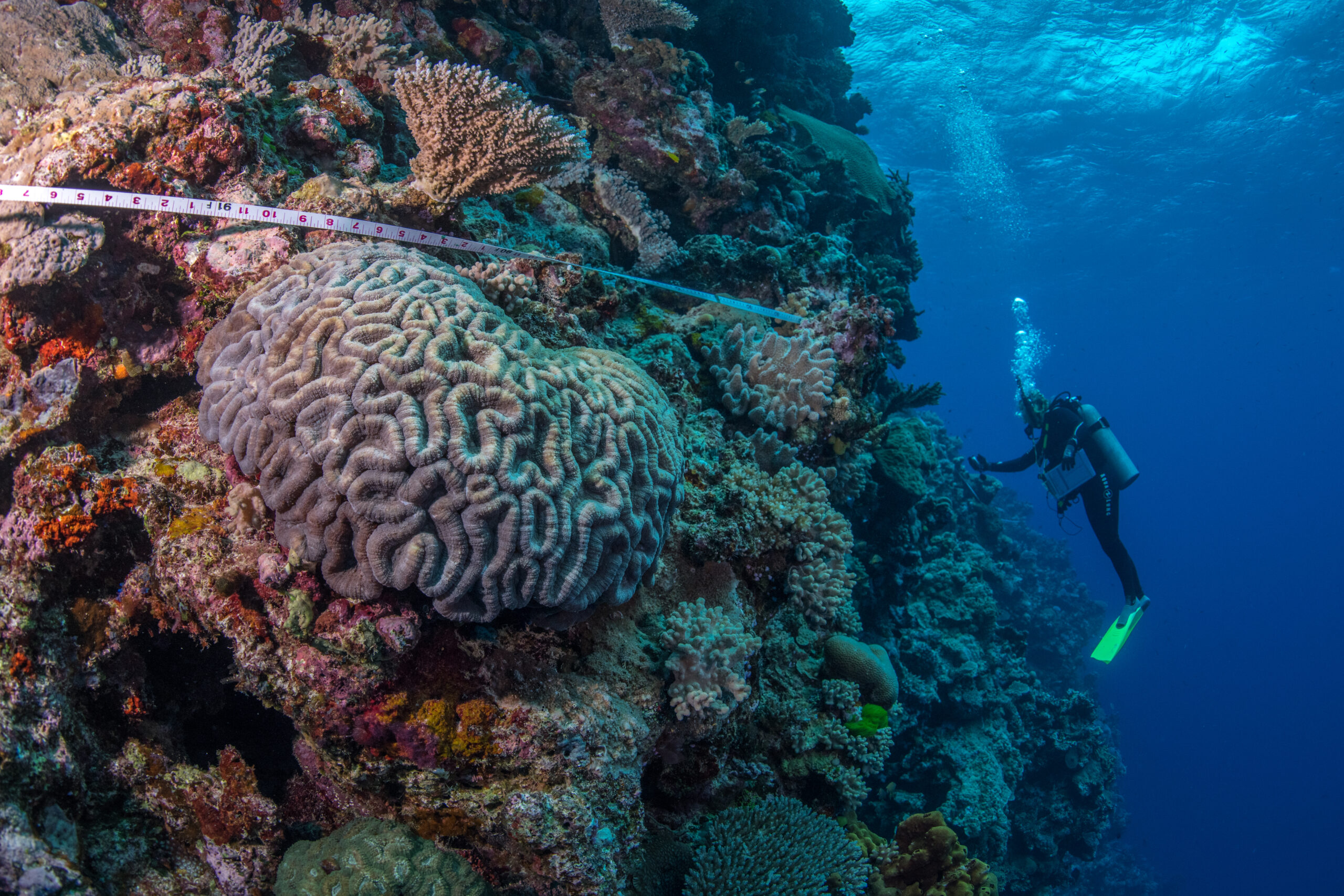
A major new study reveals that more than 70 percent of marine protected areas worldwide are contaminated by sewage, undermining their ability to shield coral reefs from climate stress. Meanwhile, remote coral reefs off Australia's coast stunned scientists by surviving a prolonged extreme heatwave virtually unharmed, offering rare clues about reef resilience. Scientists also solved a two-and-a-half-year mystery surrounding a "golden orb" collected during a 2023 NOAA deep-sea expedition.

7 min read/15 sources
Apr 28, 2026

Ocean & Marine Science — 2026-04-28

An AI-driven satellite method called GOFLOW is transforming oceanography by revealing previously hidden ocean currents in unprecedented detail, marking one of the most significant advances in physical oceanography this year. Meanwhile, coral reefs face dual threats from sewage pollution even inside protected areas and ongoing climate pressures, while global marine protection coverage has passed the 10% milestone for the first time. This week also brings striking news from Australia, where coral reefs at a remote archipelago survived a prolonged extreme heatwave virtually unharmed.

7 min read/15 sources
Apr 20, 2026

Ocean & Marine Science — 2026-04-20

Coral reefs are facing an extinction-level crisis, with up to 90% potentially lost at 1.5°C of global warming — a stark warning issued this week as 2026 becomes a critical policy window. Meanwhile, California's marine protected areas face a pivotal review process that could expand or shrink protections, and robotic floats are revealing hidden chemistry in the ocean's low-oxygen zones that scientists had never before been able to observe continuously.

7 min read/15 sources

Want your own AI intelligence feed?

Create custom signals on any topic. AI curates and delivers 24/7.

Create Signal

Powered by

CrewCrew