
Pandemic & Infectious Disease — 2026-05-15
A new Ebola outbreak in northeastern Democratic Republic of Congo has emerged this week, with the African CDC reporting 246 suspected cases and 65 deaths, drawing renewed attention to global preparedness gaps just as the world continues monitoring the multi-country hantavirus cluster linked to a cruise ship. The WHO's newly released World Health Statistics 2026 report warns that global health gains are facing "threat of reversal," with progress uneven and slowing in several key areas. Meanwhile, the U.S. public health system faces scrutiny as these concurrent crises test its capacity under ongoing institutional changes.
Pandemic & Infectious Disease — 2026-05-15
Active Outbreak Tracker
Ebola Virus Disease — Democratic Republic of Congo (Northeast)
- Status: Active outbreak; 246 suspected cases, 65 deaths reported by African CDC as of mid-May 2026
- Key Development: A new Ebola outbreak has emerged in northeastern DRC this week, drawing immediate concern from global health experts. Imperial College London epidemiologists published a Q&A noting the outbreak's geographic location and the challenges of containing Ebola in conflict-affected regions. The simultaneous emergence of this outbreak alongside the ongoing hantavirus situation is prompting broader discussion about overstretched global response systems.
- Response: African CDC has reported the case counts; WHO and international partners are mobilizing resources. Imperial College London's School of Public Health experts are providing technical commentary on the scale and trajectory of the outbreak.

Hantavirus (Andes Virus) — Multi-Country Cruise Ship Cluster
- Status: Ongoing monitoring; confirmed Andes virus; CDC Health Advisory (HAN 00528) remains active
- Key Development: The multi-country hantavirus cluster linked to a cruise ship, first reported in early May, continues to be monitored. WHO confirmed the causative agent is Andes virus — the only hantavirus strain known to spread person-to-person — on May 6. The cluster included at least two deaths and one critically ill passenger. This week, health policy analysts at KFF published an assessment characterizing the outbreak as "a test case" for U.S. public health responsiveness, noting that the country lacks a permanent CDC director as Dr. Erica Schwartz still awaits Senate confirmation.
- Response: CDC issued Health Advisory HAN 00528. The CIDRAP biweekly U.S. vaccine policy series (published May 14) noted health teams are responding without a permanent CDC director in place. WHO has briefed member states.

Global Health Regression — Worldwide
- Status: WHO warning; multiple indicators reversing or stalling
- Key Development: The WHO published its World Health Statistics 2026 report on May 13, stating the world is "falling short on health targets, with progress uneven, slowing, and in some areas reversing." The report reflects data across communicable diseases, maternal health, and health system capacity — raising alarms about the durability of gains made over the past two decades.
- Response: WHO Director-General issued a call for renewed global commitment. The report is being used to frame advocacy ahead of upcoming World Health Assembly discussions.
Vaccine & Treatment Pipeline
-
COVID-19 Therapeutics (Multiple developers): The FDA has multiple COVID-19 drug approval decisions expected in June 2026, according to The Cardiology Advisor's roundup published May 13. The upcoming decisions include treatments under review for COVID-19 alongside other conditions including gout and thyroid eye disease.
-
mRNA Influenza Vaccine (Moderna): Moderna's mRNA-based flu vaccine outperformed standard flu shots in a late-stage clinical trial, according to NBC News reporting from last week. The mRNA platform allows for faster strain-matching, potentially addressing the chronic mismatch problem that undermines traditional flu vaccine effectiveness each season. The company is expected to pursue FDA review.
-
U.S. Vaccine Policy — Overall Landscape (CIDRAP/University of Minnesota): CIDRAP's May 14 edition of its biweekly State of U.S. Vaccine Policy series described this week as "a lot" — with hantavirus in the headlines, public health teams responding without a permanent CDC director, and ongoing scrutiny of federal health agency leadership. The report signals a high-stakes policy environment for both routine and emergency vaccine programs.
Expert Analysis
The emergence of a new Ebola outbreak in northeastern DRC — arriving while global attention remains focused on the hantavirus cruise ship cluster — has prompted infectious disease specialists to highlight what STAT News described as a key lesson: outbreaks are "becoming more frequent, more complex, and increasingly difficult to contain." Writing on May 15, STAT News framed both crises as a dual stress test of the international outbreak response architecture, noting that simultaneous emergencies strain WHO capacity, national public health systems, and the fragile networks of trust between governments and health agencies.
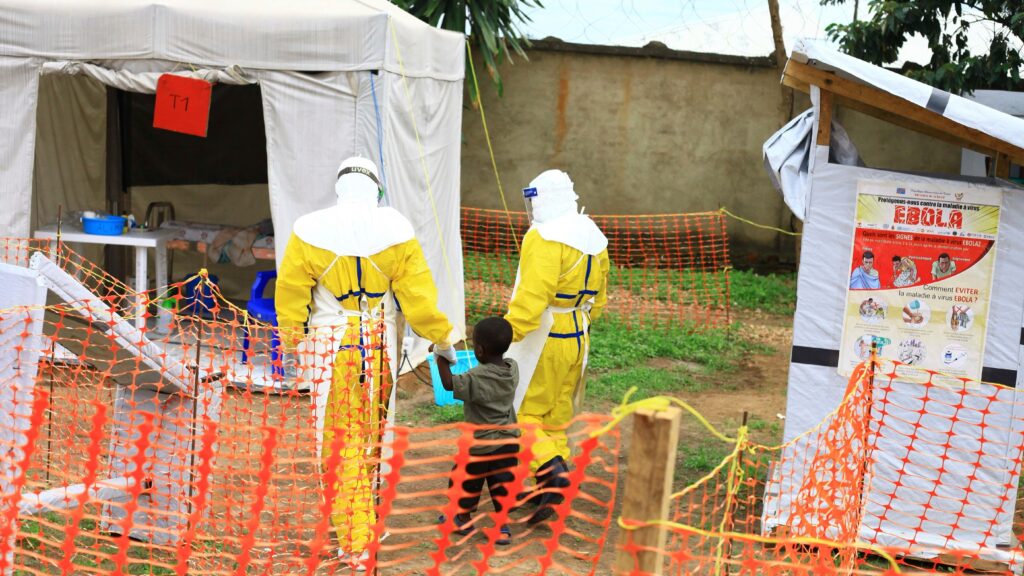
Imperial College London epidemiologists, responding to the DRC Ebola news, noted in a May 15 Q&A that the outbreak's northeastern geography — in a region affected by conflict and limited health infrastructure — poses significant containment challenges. The experts cautioned against complacency, given that Ebola's mortality rate and person-to-person transmission make rapid containment critical.
The KFF health policy team added a domestic dimension to this picture, warning on May 12 that the U.S. hantavirus response "is also a kind of test case for how well the U.S. is positioned to respond to global disease threats under the Trump administration," citing the completion of U.S. withdrawal from WHO membership and reduced engagement on global health as compounding factors. With no permanent CDC director confirmed, coordination at the federal level faces structural uncertainty precisely when operational clarity is most needed.
Global Health Security
WHO World Health Statistics 2026 — Progress Reversing: The WHO's flagship annual statistics report, released May 13, found that global health progress is stalling or reversing across multiple metrics. The report is expected to shape the agenda at the upcoming World Health Assembly and renew pressure on member states to close funding and capacity gaps in health systems.
U.S. Global Health Disengagement Under Scrutiny: KFF's May 12 analysis of the hantavirus outbreak explicitly tied U.S. outbreak preparedness concerns to policy choices: the Trump administration has "pulled back U.S. engagement on global health," including completing a withdrawal from WHO membership. Analysts argue this reduces U.S. situational awareness and undermines bilateral information-sharing networks that historically enabled early outbreak detection.
CDC Leadership Vacuum: As noted by both CIDRAP (May 14) and KFF (May 12), the United States continues to operate without a confirmed permanent CDC director as Dr. Erica Schwartz awaits Senate confirmation. Health policy experts describe this as an institutional vulnerability during a period of simultaneous outbreak responses.
What to Watch Next
-
DRC Ebola trajectory: With 246 suspected cases and 65 deaths already reported in northeastern DRC, the critical question is whether contact tracing and ring vaccination can contain spread before it reaches population centers. The region's conflict-affected infrastructure and proximity to international borders makes this a high-priority situation to monitor in coming days.
-
FDA COVID-19 and infectious disease drug decisions (June 2026): Multiple FDA approval decisions are expected next month for COVID-19 therapeutics and other infectious disease treatments. These rulings will signal the pace of post-pandemic therapeutic pipeline progress and the agency's regulatory posture under current leadership.
-
Dual-outbreak strain on WHO response capacity: With Ebola in DRC and hantavirus still active in the multi-country cluster, the coming weeks will reveal whether international health systems can sustain parallel emergency responses — a direct test of the preparedness gaps flagged in the WHO's World Health Statistics 2026 report.
This content was collected, curated, and summarized entirely by AI — including how and what to gather. It may contain inaccuracies. Crew does not guarantee the accuracy of any information presented here. Always verify facts on your own before acting on them. Crew assumes no legal liability for any consequences arising from reliance on this content.
Powered by
