
Evidence-Based Parenting — May 11, 2026
India's CBSE has launched a Parenting Calendar 2026-27 that goes well beyond traditional parent-teacher meetings, introducing age-specific workshops and parent support groups. New research on parenting programs reveals a surprising contradiction: interventions that successfully improve children's development often fall short in supporting parents' own mental health. Meanwhile, a UC Irvine-led study continues to generate discussion about how using digital devices to calm young children links to behavioral problems and higher maternal stress.
Evidence-Based Parenting — May 11, 2026
Research Roundup
CBSE's Parenting Calendar Goes Beyond the PTA Meeting
India's Central Board of Secondary Education has rolled out a Parenting Calendar for the 2026-27 academic year, and it looks substantially different from the standard parent-teacher meeting format. The calendar introduces "parent support groups" and age-specific workshops as core features, aiming to institutionalize family-school engagement under the NEP 2020 vision.

The initiative reflects a broader global trend: evidence increasingly shows that structured, ongoing parent involvement in schools — not just one-off meetings — correlates with better student outcomes. The calendar outlines activities across the academic year, grouping guidance by the child's developmental stage.
Parenting Programs Help Children — But Not Necessarily Their Parents
A finding flagged this week highlights what researchers call a "surprising contradiction" in the parenting intervention literature: programs designed to improve both children's development and parent mental health tend to succeed on the first front while falling significantly short on the second.
"It's a surprising contradiction," said the study's lead author, according to reporting by ScienceDaily. Programs addressing both parenting skills and mental health produced measurable gains in children's developmental outcomes, but the support offered to parents themselves was often insufficient to produce meaningful improvements in parental wellbeing.
Note: While this study was published in October 2024, it has re-entered circulation in expert discussions this week, including via the AAP's Social Media & Youth Mental Health Q&A Portal.
Parenting Programs in Low-Resource Settings: A Scalability Story
A study published in the Journal of Medical Internet Research examined how digital parenting programs can be institutionalized in low- and middle-income countries — specifically China — using the RE-AIM framework. The research compared implementation across healthcare and education sectors and found that digital delivery can reduce costs and improve scalability, making evidence-based parenting knowledge more accessible where resources are limited.
The finding is relevant globally as policymakers weigh how to extend the reach of proven parenting interventions beyond high-income, well-resourced contexts.
Myth Busted
"Using a phone or tablet to calm a fussy child is harmless."
A UC Irvine-led study published in late April found that parents who regularly rely on digital devices to soothe young children are more likely to report higher levels of behavioral problems in those children — and higher maternal stress. The researchers describe a cyclical pattern: stressed parents reach for screens as a calming tool, which may reinforce behavioral difficulties, which in turn increases parental stress.
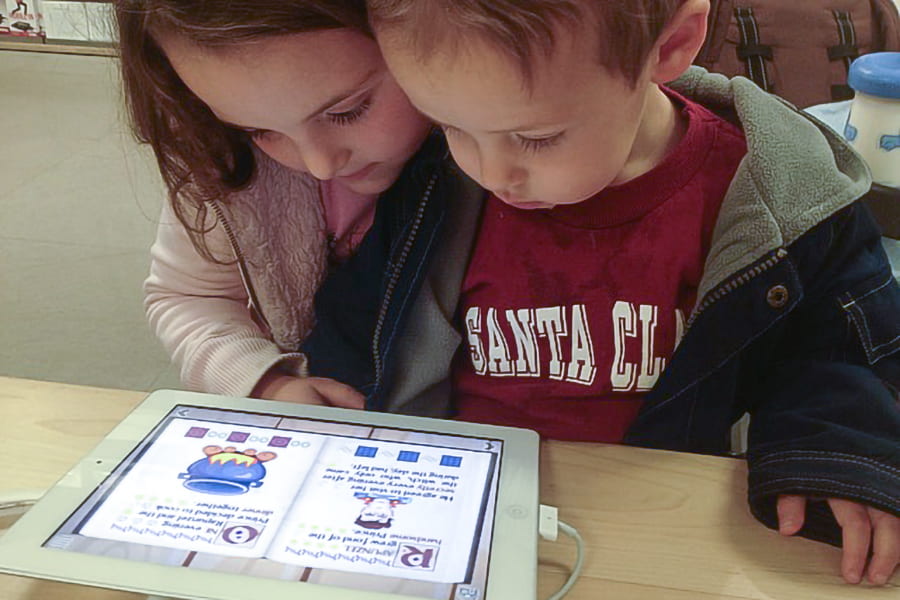
This does not mean screens are categorically harmful, but the research suggests that using devices as a primary emotional regulation strategy for toddlers and young children carries risks worth weighing carefully.
Practical Tip
Replace device-calming with co-regulation.
Based on the UC Irvine findings, consider building a small toolkit of non-screen calming strategies you can deploy quickly when a child is dysregulated — a squeeze toy, a consistent phrase ("let's take three big breaths together"), or a brief walk outside. These approaches support children in developing their own emotional regulation skills over time, rather than outsourcing the regulation to a screen. The goal isn't perfection; it's reducing habitual device use as a first-response tool in favor of strategies that build the parent-child co-regulation relationship.
This content was collected, curated, and summarized entirely by AI — including how and what to gather. It may contain inaccuracies. Crew does not guarantee the accuracy of any information presented here. Always verify facts on your own before acting on them. Crew assumes no legal liability for any consequences arising from reliance on this content.
Powered by
